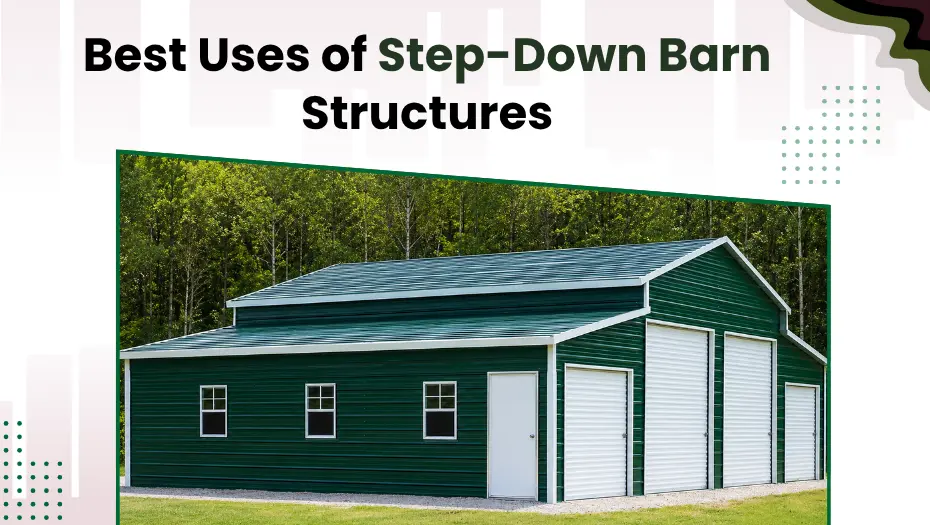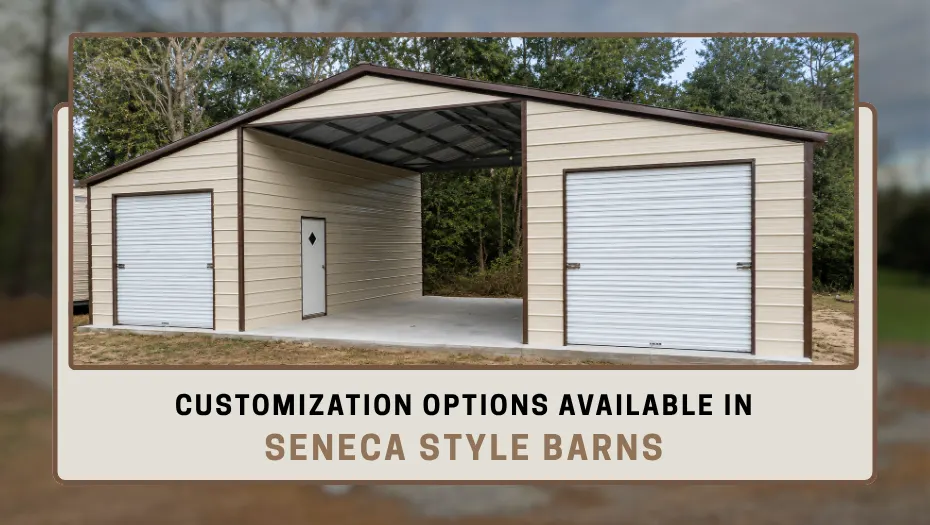
A seneca barn is a modern barn design that combines a raised center aisle with extended side sections for extra space and flexibility. This design makes it useful for multiple purposes like livestock, storage, and workshops. Today, metal seneca barns and prefab seneca barns are widely preferred because they are strong, quick to install, and easy to customize.
Customization is important because every property has different needs. Some people need more storage, others need space for animals or equipment. Prefab and metal structures make it easy to adjust size, layout, and features without a long construction time. This flexibility is what makes Seneca metal barns a smart choice today.
You Might Like: How to Choose the Best Metal Structure for Your Farm
What Customization Options Are Available in Seneca Style Barns?
Seneca style barns can be customized with different sizes, roof styles, lean-tos, doors, windows, insulation, color options, and structural upgrades. These prefab metal barns are designed for flexibility, allowing farmers and property owners to tailor layouts for storage, livestock, or multi-purpose use.
Understanding Seneca Barn Design & Structure
Before customizing, it is important to understand how a seneca style barn is designed. Its structure is what makes it flexible and useful for different purposes. The combination of a raised center aisle and side sections gives it both height and width advantages.
1. Raised Center Aisle Concept
The center aisle is higher than the rest of the barn. This creates more vertical space, which improves airflow and allows large equipment to move easily. It also helps in better ventilation and natural light.
2. Side Lean-Tos
The side sections, often called lean-tos, extend from the main structure. Designs like a 52x40x12 lean-to-barn are commonly used to add extra storage or shelter space without increasing the main structure size.
3. Multi-Purpose Usage
A seneca barn building can serve many purposes at once. For example, a 48x40x12 continuous roof style barn can be used for storing hay, housing animals, and keeping equipment. This flexibility is one of its biggest strengths.
Here is a quick table of what we are going to cover in the sections below:
|
Category |
Main Customization Options |
|
Size & Layout |
Dimensions, center aisle width, number of bays |
|
Structure & Strength |
Frame gauge, wind, and snow certification |
|
Roof Options |
Roof style and orientation |
|
Wall Design |
Fully or partially enclosed, open or closed |
|
Exterior Design |
Colors and trim finishes |
|
Lean-To Extensions |
Side extensions for storage, equipment, or animals |
|
Doors & Access |
Roll-up doors, walk-in doors, frame-out openings |
|
Ventilation & Windows |
Windows, ridge vents, gable vents |
|
Interior Layout |
Horse stalls, storage partitions, workshop space |
|
Insulation & Climate |
Fiberglass, spray foam, and moisture control |
| Use-Based Customization |
Livestock, storage, hay, or workshop setup |
Size & Layout Customization Options
The size and layout are the foundation of your barn design. Choosing the right dimensions ensures that your barn meets your current and future needs.
1. Width, Length, and Height
You can customize all dimensions based on your space and usage. Larger barns are ideal for farms, while smaller ones work well for residential storage.
2. Center Aisle Width
The center aisle can be adjusted depending on how you plan to use it. In structures like a 50x48x14 vertical commercial building, the aisle is wide enough for vehicles and equipment to move freely.
3. Number of Bays
Bays help divide the barn into sections. More bays allow better organization for different uses like storage, animals, or workspace.
Frame Gauge & Certification Options
The frame is the backbone of your barn. It determines how strong and stable your structure will be over time.
1. 12-Gauge vs 14-Gauge Steel
12-gauge steel is thicker and provides more strength. It is ideal for large barns or areas with extreme weather conditions. 14-gauge steel is lighter and suitable for smaller structures or areas with mild weather. It is still durable but may not handle heavy loads as effectively as 12-gauge steel. Choosing the right gauge depends on your usage and location. This is why you should thoroughly analyze which gauge is good for your metal barn.
2. Wind and Snow Certification
Certification ensures that your barn meets safety standards for your region. If you live in areas with strong winds or heavy snowfall, this becomes essential.
Certified structures are designed to handle specific loads, which reduces the risk of damage. It also gives you peace of mind knowing your investment is secure.
Wall Design & Panel Customization
Walls define how protected and ventilated your barn will be. This section allows you to control airflow and security.
1. Fully Enclosed vs Partially Enclosed
Fully enclosed barns are best for protecting equipment and materials from the weather. They also provide better security. Partially enclosed barns allow natural airflow, which is important for livestock. They create a balance between protection and ventilation.
2. Open vs Closed Barns
Open barns are ideal for quick access and animal comfort. Closed barns are better for storage and long-term protection. Your choice depends on how you plan to use the barn daily.
3. Color & Finish Customization
While function is important, appearance also matters. A well-designed barn adds value to your property.
4. Roof and Wall Color Options
You can choose from a variety of colors to match your surroundings. Neutral tones blend well with natural landscapes, while bold colors create a standout look.
5. Trim Customization
Trim details may seem small, but they complete the overall look. Matching trims with roof and wall colors creates a polished appearance.
Lean-To & Side Extensions
Lean-tos are one of the most practical upgrades you can add to a seneca barn. They increase usable space without increasing the main structure, which makes them cost-efficient and highly functional. These side extensions also improve the overall usability of the barn by creating separate zones. You can use them for storage, shelter, or even work areas without disturbing the main interior.
1. Utility Storage
Lean-tos are perfect for storing tools, feed, and smaller equipment that you do not want inside the main barn. This helps keep your central space clean and organized. It also makes daily operations easier because frequently used items are more accessible. Over time, this simple addition can significantly improve workflow and reduce clutter.
2. Equipment Shelter
Large machinery like tractors, trailers, and farming tools needs protection from weather exposure. Lean-tos provide a covered space that protects these assets from rain, sun, and snow. This helps in extending the lifespan of your equipment. It also reduces maintenance costs since your machinery stays in better condition.
3. Animal Shade Areas
Animals need protection from extreme weather, especially heat and rain. Lean-tos create shaded areas where livestock can rest comfortably. This improves animal health and reduces stress, which is important for productivity. It also gives animals a safe space without requiring a fully enclosed structure.
Door Options for Seneca Barns
Doors play a key role in how easily you can use your barn on a daily basis. The right door choice improves accessibility, security, and overall convenience. Since seneca barns are multi-purpose, selecting the correct type of doors ensures smooth movement of people, animals, and equipment.
1. Roll-Up Doors
Roll-up doors are ideal for large openings and are commonly used for equipment storage areas. They open vertically, which saves space and allows easy entry for large vehicles. These doors are also simple to operate and require minimal maintenance. For farms or workshops, they provide both convenience and efficiency.
2. Walk-In Doors
Walk-in doors are designed for everyday use, where you do not need to open large sections of the barn. They are convenient for quick access and help maintain security. These doors are especially useful in barns with multiple sections, allowing you to move in and out easily without disturbing other areas.
3. Frame-Out Openings
Frame-out openings give you the flexibility to install doors later as your needs change. This is useful if you are planning future expansion or upgrades. Instead of committing to a fixed design, you keep your options open. It makes your barn more adaptable and future-ready.
Window & Ventilation Options
Ventilation is essential for maintaining a healthy environment inside the barn. It helps regulate temperature, reduce moisture, and improve air quality. Proper ventilation is especially important for livestock and stored materials like hay. So, ventilation plays a critical role; without it, heat buildup and humidity can cause serious issues.
1. Window Placement
Strategic window placement allows natural light and fresh air to enter the barn. This reduces the need for artificial lighting during the day. Well-placed windows also improve visibility and create a more comfortable working environment. Proper planning ensures balanced airflow across the entire structure.
2. Ridge Vents
Ridge vents are installed at the top of the barn and allow hot air to escape naturally. Since heat rises, these vents help maintain a cooler interior temperature. They work continuously without requiring electricity, making them energy-efficient. This is especially useful in warmer climates.
3. Gable Vents
Gable vents are installed on the side walls to improve cross-ventilation inside the barn. They allow fresh air to enter while pushing out stale air. This constant air movement helps control moisture and prevent issues such as mold or odor buildup. Together with ridge vents, they create an effective ventilation system.
Interior Layout & Functional Additions
The interior layout determines how efficiently you can use your barn space. A well-planned layout helps you manage different activities without confusion. It also allows you to separate functions like storage, livestock, and workspace within the same structure.
1. Horse Stalls
Horse stalls can be customized based on the number of animals and their size. Proper spacing ensures safety and comfort for the animals. You can also include features like feeding areas and proper flooring. Well-designed stalls improve animal care and make management easier.
2. Storage Partitions
Partitions help divide the barn into organized sections for different types of storage. This prevents mixing of materials like tools, feed, and equipment. It also makes it easier to locate items quickly. Over time, this organization improves efficiency and saves effort.
3. Workshop Space
A dedicated workshop area allows you to carry out repairs and projects within the barn. This is useful for maintaining equipment without needing a separate structure. You can design this space with proper lighting and tools for better functionality. It turns your barn into a productive workspace.
Insulation & Climate Control Options
If you plan to use your barn throughout the year, insulation becomes very important. It helps maintain a stable indoor temperature and protects both animals and stored items. Good insulation also improves energy efficiency and reduces long-term maintenance issues.
1. Fiberglass Insulation
Fiberglass insulation is a common choice because it is effective and easy to install. It helps regulate temperature by reducing heat transfer. This keeps the interior cooler in summer and warmer in winter. It is suitable for most general-purpose barns.
2. Spray Foam Insulation
Spray foam insulation provides a tighter seal compared to fiberglass. It fills gaps and prevents air leakage, which improves energy efficiency. This type of insulation is ideal for barns used as workshops or garages. It offers better long-term performance.
3. Moisture Control
Moisture control is critical to prevent condensation inside the barn. Excess moisture can damage stored items and weaken the structure over time. Proper insulation and ventilation work together to manage humidity levels. This keeps the environment dry and safe.
Customizing a Seneca Barn for Different Uses
A seneca style barn is highly adaptable and can be customized for different purposes. This flexibility allows you to get maximum value from a single structure. By adjusting layout and features, you can design the barn exactly as per your needs.
1. For Livestock
For livestock, you can add stalls, ventilation systems, and shaded areas to create a comfortable environment. Proper airflow and spacing are important for animal health. You can also include feeding and watering setups. This ensures efficient animal management.
2. For Equipment Storage
Wide aisles and large doors make it easy to store and access machinery. You can also create dedicated sections for different types of equipment. This prevents clutter and improves organization. It also ensures that your equipment remains protected and easy to access.
3. For Hay Storage
Hay requires proper airflow to stay dry and usable. The raised center aisle helps improve ventilation, reducing the risk of moisture buildup. You can also allocate specific sections for stacking hay safely. This helps in preserving quality over time.
4. For Garage or Workshop Use
With insulation and layout adjustments, your barn can function as a garage or workshop. You can install lighting, storage racks, and workbenches for better usability. This turns your barn into a multi-purpose space that supports both storage and productivity.
How Custom Features Affect Seneca Barn Pricing
Customization directly impacts the overall cost of your barn. While adding features improves functionality, it also increases the total investment. Understanding these factors helps you plan better and avoid unnecessary expenses.
1. Base Price vs Custom Upgrades
Basic prefab seneca barns come at a lower price because they include only standard features. As you add upgrades like insulation, doors, and lean-tos, the cost increases. Each customization adds value but also affects your budget.
2. Key Cost Drivers
The main factors affecting cost include size, steel gauge, insulation, and additional features. Larger barns require more materials, while stronger frames increase durability but also cost more. Add-ons like windows and ventilation systems also contribute to pricing.
3. Planning Your Budget
A clear budget helps you prioritize essential features and avoid overspending. Start with your main requirements and then add optional features based on your needs. Understanding seneca metal barn cost helps you make informed decisions and get the best value.
Seneca Style Barn vs Standard Metal Barn
Choosing between a Seneca barn and a standard metal barn depends on your specific needs. Both have their advantages, but their design and functionality differ significantly. Understanding these differences helps you make a better decision.
1. Design Difference
Seneca barns feature a raised center aisle, which creates more vertical space and better airflow. Standard metal barns usually have a uniform roof design. This makes the Seneca barns more efficient in terms of ventilation and usability.
2. Use Case Difference
Seneca barns are designed for multi-purpose use. You can use them for livestock, storage, and workshops all in one structure. Standard barns are often limited to single-purpose use, which reduces flexibility.
3. Cost Difference
Seneca barns may have a slightly higher initial cost due to their design. However, they offer better functionality and long-term value. Standard barns may cost less upfront, but may not meet all your needs.
What to Consider Before Customizing a Seneca Barn
Before finalizing your barn design, it is important to evaluate a few key factors. This helps you avoid mistakes and ensures that your investment meets your expectations.
1. Land Size
Your land size determines how large your barn can be. You need enough space for construction as well as future expansion. Proper planning ensures that your barn fits comfortably on your property.
2. Purpose
Clearly defining your purpose helps you choose the right features. Whether you need storage, livestock space, or a workshop, your design should match your primary use. This avoids unnecessary customization.
3. Climate
Climate plays a major role in choosing materials and design. In areas with heavy rain or snow, stronger structures and better roofs are required. Proper planning ensures long-term durability.
4. Budget
Setting a budget helps you manage costs effectively. It also helps you prioritize features that are most important. A clear budget prevents unexpected expenses during construction.
5. Local Permits
Checking local regulations is important before building your barn. Permits ensure that your structure meets safety and legal standards. This avoids delays and potential issues in the future.
The Bottom Line:
Seneca barns offer a perfect balance of flexibility and durability. With the right customization options, you can design a structure that fits your needs exactly. Whether for livestock, storage, or workspace, a seneca barn is a smart long-term investment.
What makes them even more valuable is their ability to adapt as your needs grow over time. Instead of building multiple structures, you can rely on one well-planned barn for different purposes. This makes it a practical and efficient choice for both short-term use and future planning.
Frequently Asked Questions
Expand each item below to explore a few helpful answers before moving to the next blog post.