


Step Down Metal Barns
Your farm runs hard. So should your barn. Our step down metal barns combine the timeless raised-center silhouette with modern steel construction — giving you superior ventilation, weather resistance, and flexible space that wooden barns simply can't match. Fully custom. 100% American-manufactured. Built to last decades.
Need help? Call us at +1 (704) 579-6966 for a free consultation.
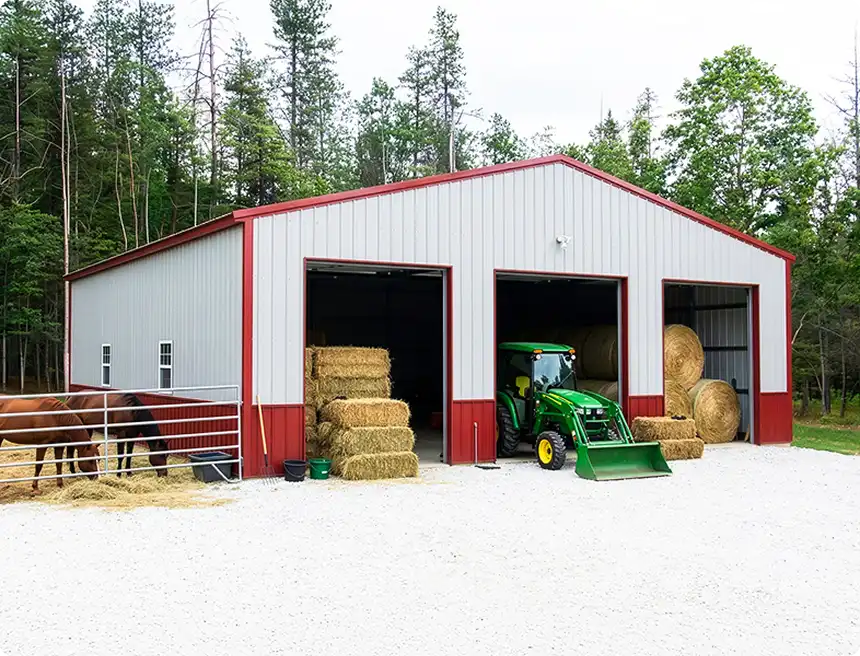
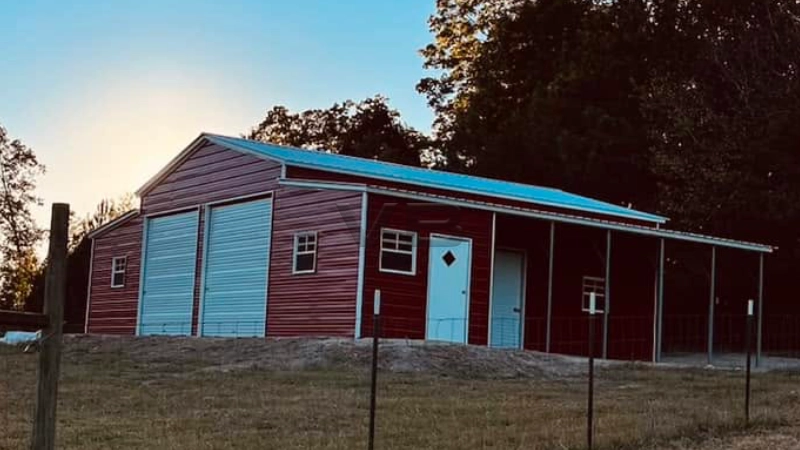
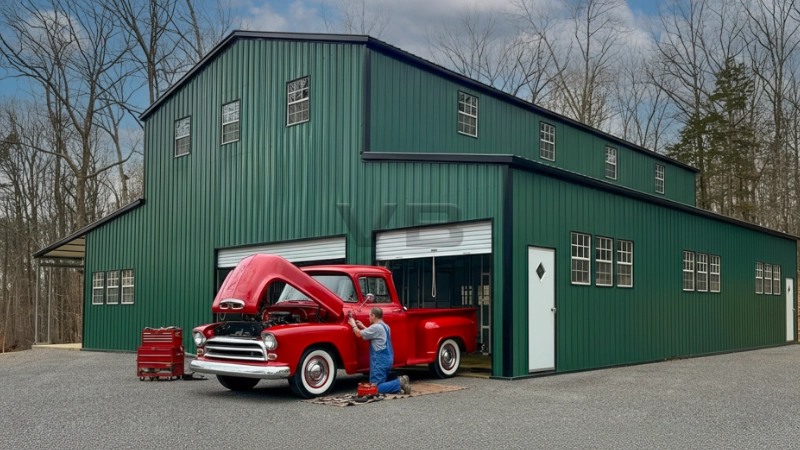
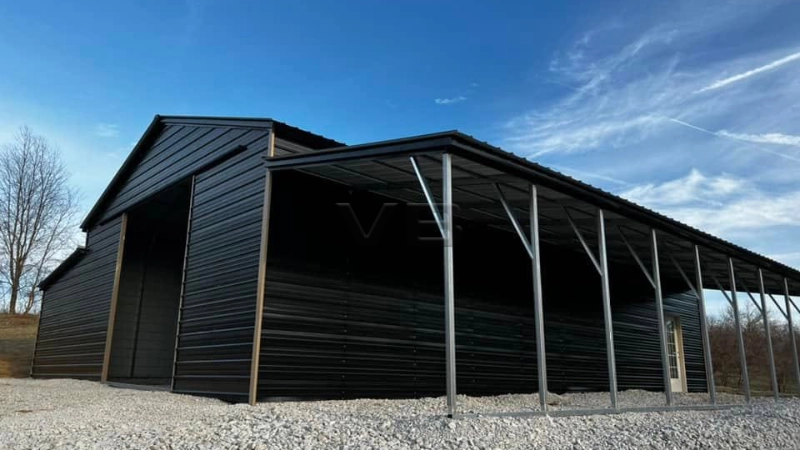



What is A Step Down Metal Barn?
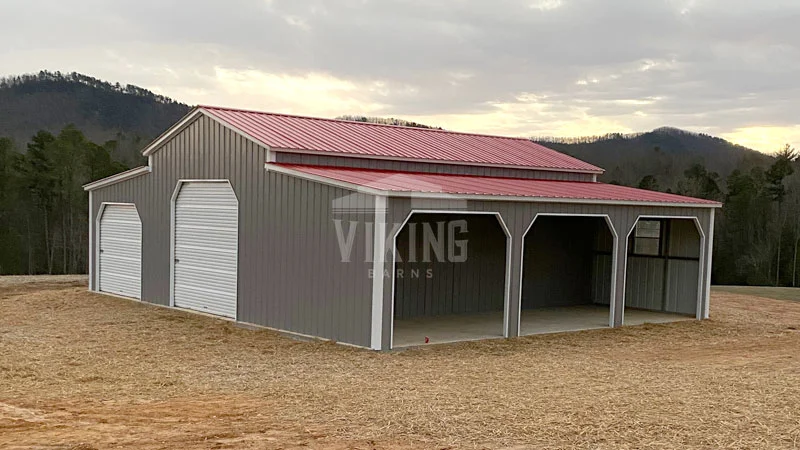
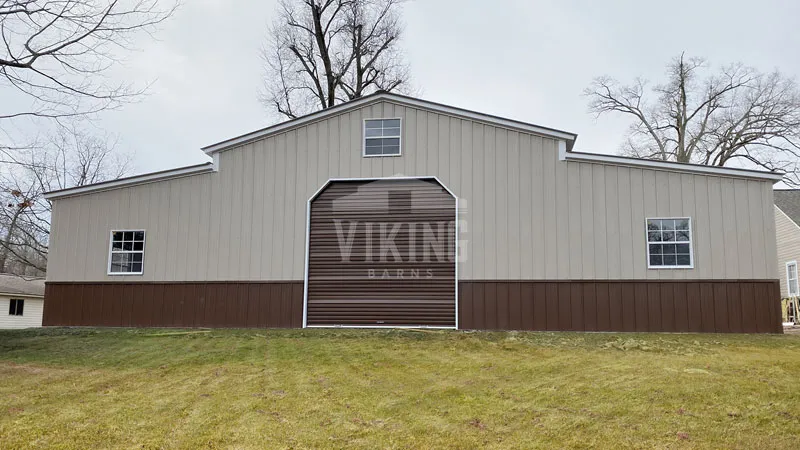
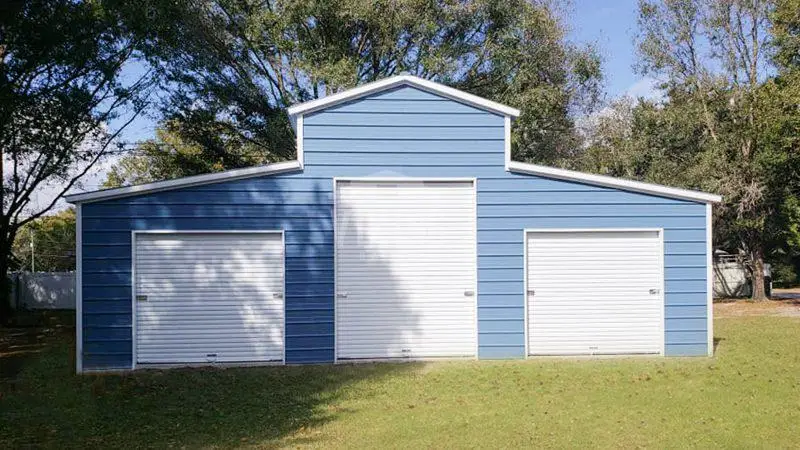
A step down barn — also called a Carolina style barn, monitor barn, or raised center aisle barn — is defined by one signature feature: a taller central section flanked by two lower lean-to sides that “step down” from the ridge.
It’s not just a visual choice. That elevated center serves a real structural and functional purpose. Hot air rises and escapes through the gap between the center span and the side walls, drawing in fresh air from the lower openings. The result is a barn that breathes — which is critical for livestock health, hay quality, and equipment longevity.
Originally rooted in traditional American barn design, today’s step-down barns are engineered with high-strength steel frames, precision-cut corrugated panels, and certifiable load ratings that far exceed those of older wooden structures.
You might also hear this style called:
- Carolina Barn
- Monitor Barn
- Raised Center Aisle Barn
- Drop Barn or Drop Down Barn
- Raised Barn
Whatever name your region uses, it’s the same dependable, high-performance design.
What Makes A Step Down Roof Barn Stand Out?
1. The Raised Center Design
The defining characteristic of any step down barn is the elevated central span with lower lean-to sides on each flank. This stepped profile gives you greater interior clearance in the center bay — ideal for equipment, feed storage, or hay stacking — while the lean-tos provide covered workspace or livestock sheltering along the perimeter. Functionally, this layout maximizes usable square footage at every height level.
2. Built-In Ventilation Through the Step
The vertical gap created by the step transition acts as a passive ventilation channel. Warm, moist air rises and exits through the raised walls while cooler air enters at the lower eave level. For livestock operations, this natural airflow regulation keeps ammonia from building up, reduces respiratory risks for animals, and prevents the condensation and mold that plague poorly ventilated barns.
3. Superior Drainage With Dual Roof Pitches
Two distinct roof pitches mean two separate drainage paths — snow and rainwater shed away from the center of the building in both directions. This dramatically reduces standing water, ice dams at eave lines, and the long-term structural stress caused by repetitive freeze-thaw cycles.
4. Classic Look, Steel-Grade Durability
Step down barns carry the unmistakable profile of traditional American farm architecture — but with the structural advantages of steel. No timber rot. No termite treatments. No warped framing after a wet season. Our step down steel barns are built with galvanized tube steel frames and high-gauge corrugated panels that hold their form and finish for decades with minimal upkeep.
5. Wide Center Aisle for Maximum Usable Space
The raised center bay typically spans 20–30 feet or more — wide enough to drive a tractor through, house a loading zone, or configure double-sided stall rows with a center aisle for easy feeding and movement. Combined with open lean-to sides, your operational flow is never constrained by internal columns.
How Step Down Metal Barns Hold Up Against American Weather
Across the United States, weather doesn’t play favorites. From tornado alley in Oklahoma and Texas to the snow-loaded winters of the Upper Midwest, from hurricane season along the Gulf Coast to the ice storms that hit the Carolinas, farm structures take a beating year after year.
Step down steel barns were designed to take it.
Snow Load and Wind Performance
Our certified step down barns are engineered to withstand up to 80 PSF snow load, and wind speeds up to 180 MPH when built with 12-gauge steel framing. The dual-pitch roof geometry naturally sheds snow, preventing accumulation and reducing the risk of structural overload after heavy storms.
For areas in tornado alley or coastal zones where high-wind certifications are required by local code, we offer engineer-stamped, certified buildings that comply with your county’s specific load requirements. Just ask when you request your quote — it’s a standard part of our process for those regions.
The Steel-vs-Wood Advantage in Extreme Weather
Wooden framing has a real vulnerability window — once moisture gets in, the cycle of swelling, rot, and structural degradation is difficult to stop. A single bad season can compromise a wood barn’s integrity in ways that aren’t obvious until years later.
Steel doesn’t absorb moisture. It doesn’t rot, crack, or shift under load the way wood does. Galvanized framing resists rust. And with 26-gauge corrugated panels, you get surface protection against hail impacts that would dent or puncture lesser materials.
Insulation to Control Your Indoor Climate
An uninsulated metal barn can see dramatic temperature swings — too hot in summer, too cold in winter. Our step down barns support multiple insulation configurations:
- Single-bubble reflective insulation — lightweight, effective in mild climates
- Double-bubble insulation — improved performance for moderate temperature zones
- Woven R-17 insulation — highest thermal resistance, ideal for livestock barns in cold-weather states
The right insulation choice depends on your local climate, your barn’s primary use (livestock vs. equipment storage vs. mixed use), and your heating/cooling system.
Our team can walk you through the right R-value for your build.
What Can You Use a Step Down Prefab Barn For?
The raised center aisle barn is genuinely one of the most versatile agricultural structures available. Here’s how farms and ranches across the country put them to work:
Livestock Housing
The natural ventilation, wide center aisle, and lean-to side areas make step down barns a preferred choice for horse operations, cattle housing, and mixed-herd facilities. Specific configurations include:
- Horse barns with box stall rows
- Cattle loafing sheds and run-in shelters
- Goat and sheep barns with lambing pens
- Combination livestock/feed barns
- Mobile vet stations (portable access points)
For dedicated horse facilities, also explore our horse barn configurations and steel horse stalls.
Hay, Feed, and Grain Storage
The elevated center bay offers exceptional ceiling clearance for hay stacking. Many operations use the lean-to sides for loose equipment storage or tack rooms while keeping the center clear for bulk hay and grain sacks. An insulated feed barn also protects against moisture-related spoilage, which directly impacts your feed costs.
Farm Equipment and Vehicle Protection
Tractors, combines, ATVs, trailers, and large implements need covered, weather-tight storage — especially in regions where UV exposure, rust, and freeze-thaw cycles are ongoing concerns. The wide open bay of a step down barn accommodates full-size farm equipment without column obstructions.
Workshop and Repair Areas
The lean-to portions of a step down barn are naturally suited to workshop setups — welding stations, maintenance areas, and cleaning zones that benefit from separation from the main storage or livestock area. A lean-to with a concrete floor and rollup door is one of the most practical additions to any working farm.
Agribusiness and Rural Commerce
Step-down barns are increasingly used as farm stands, seasonal retail spaces, and event venues. The classic barn profile gives a rustic, authentic feel that works well for farm-to-table events, agritourism, and rural pop-up businesses.
Customize Your Step Down Steel Barn — Your Farm, Your Design
No two farming operations are identical. That’s why every step-down barn we build starts with your specifications—not a standard catalog template.
Size & Dimensions
Our step down barns scale from compact single-purpose structures to large multi-function agricultural complexes:
- Width: Up to 60 ft. on the central span (lean-tos add to overall width)
- Length: Up to 200 ft.
- Height: Up to 20 ft. or more, subject to local zoning codes
- Clear Span Center Bay: Open interior with minimal post intrusion
Steel Gauge Options
- 12-gauge tubular steel framing — maximum structural strength, recommended for high-wind and heavy-snow regions, and for large spans
- 14-gauge tubular steel framing — well-suited for standard conditions and more moderate farm applications
Roof Style Options
- Vertical Roof (Recommended) — Panels run vertically from ridge to eave, with hat channels that reinforce panel strength. Superior water and debris runoff. Best choice for most farm conditions.
- A-Frame / Boxed-Eave Roof — Panels run horizontally in an A-frame profile. Stronger than regular style, appropriate for light to moderate weather zones.
- Regular Roof — Economical option for mild climates and lower-priority storage applications.
Wall & Panel Options
- 26-gauge or 29-gauge corrugated metal panels
- 3 wall panel orientations: vertical, horizontal, and horizontal lap siding
- Wainscoting available for a two-tone, finished look
Lean-To Additions
Lean-tos can be added on any side — left, right, front, or back — to expand your footprint without a full structural build. They’re ideal for covered equipment storage, hay overflow, or covered working areas adjacent to the main bay.
Doors, Windows & Openings
- Walk-in doors, rollup doors, and sliding barn doors
- Frameouts for future door or window placement
- Custom window configurations
- Ventilation openings and ridge vent options
Color Options
Choose from 17+ exterior color options for both panels and trim — including barn red, earth brown, evergreen, sandstone, charcoal, black, and more. Matching colored screws are available for a clean, finished exterior appearance.
Insulation & Anchoring
- Single-bubble, double-bubble, and woven R-17 insulation options
- Anchoring: mobile-home anchor kits or concrete brackets
Have a design in mind? Call (704)-579-6966 to walk through your project with one of our barn experts. We’ll help you configure the right structure for your land, your herd, and your budget.
How Much Does a Step Down Metal Barn Cost?
Step-down steel barns are a long-term investment — one in which the initial cost is almost always offset by dramatically lower maintenance costs over the decades ahead. That said, we believe in transparent pricing from the start.
Factors That Affect Your Final Price
Several variables move the number up or down from that baseline:
- Size is the biggest driver — more square footage means more material and more installation time.
- Steel gauge is the next significant factor: 12-gauge framing costs more than 14-gauge, but it adds meaningful structural value, particularly in harsh-weather states.
- Roof style affects cost, with vertical roof panels carrying a modest premium over regular or A-frame options.
- Lean-to additions are priced separately but remain one of the most cost-effective ways to expand usable covered space.
- Local code requirements for wind or snow load ratings may require engineering upgrades that affect material specs and final price.
- Finally, insulation, doors, windows, and specialty features are add-ons priced to your specific configuration.
The best way to get an accurate number for your project? Request a free quote — our team will price your exact build with no obligation attached
Delivery and Installation — We Handle It
Ordering a step down barn from us isn’t just a materials purchase — it includes professional delivery and expert installation from start to finish.
- Delivery to most U.S. locations
- Experienced, certified installation crews who specialize in metal agricultural structures
- Fast turnaround — most standard builds are delivered and installed within 2–6 weeks of order confirmation
- Code-compliant installation with engineer-stamped drawings available for permit applications
Before your crew arrives, your site should be level and your foundation or ground preparation complete. We don’t provide foundation services, but our team can advise on what’s appropriate for your intended use—gravel pad, compacted earth, or concrete slab —depending on your application.
Financing & Rent-To-Own Options
A new barn shouldn’t require draining your operating capital. We offer multiple payment paths designed for working farmers — not just those with perfect credit or large cash reserves.
- Flexible financing with competitive interest rates and structured monthly installments
- Rent-To-Own (RTO) — no credit check required, fast approval, minimal paperwork
- Low initial investment to get your build started.
Our financing options work alongside your farm’s cash flow cycle, so a new structure doesn’t put pressure on other operations. Ask about current terms when you request your quote.
How The Step Down Barn Building Process Works
Getting from idea to finished barn is a more straightforward process than many first-time buyers expect. Here’s how it typically unfolds:
Step 1 — Get Your Quote – Call us or submit a quote request with your desired dimensions, features, and location. We’ll price your exact build with no obligation.
Step 2 — Secure Your Permit – Most agricultural structures require a building permit from your local county or municipal office. Permit approval typically takes 1–3 weeks, depending on your location and design complexity. We provide engineer-stamped drawings for permit applications.
Step 3 — Prepare Your Site – While your order is in production, prepare your site — grading, foundation work if required, and any utility access you plan to incorporate.
Step 4 — Delivery and Installation – Our crew delivers your materials and handles complete installation. Standard builds are typically complete within days of the crew’s arrival on site.
Step 5 — Your Barn Is Ready – Final walkthrough, and you’re done. Your new step down steel barn is ready for livestock, equipment, and feed — whatever your operation demands.
Why Buy From Viking Barns
Warranty
Industry-leading warranties on structure and workmanship
Customer Support
Dedicated customer support from ordering to installation
Fast Delivery
Fast delivery timelines across most regions
Certified Structures
Certified and code-compliant steel structures
Flexible Financing
Flexible financing and RTO programs
 FAQs
FAQsStep Down Barn FAQs
Still have questions? Here's everything you need to know before ordering your step down metal barn.

Didn't Find Your Answer?
Explore our full FAQ page or reach out to our team — we're here to help with any additional questions.