


Raised Center Aisle Barn
Make a smart choice with our versatile raised center aisle barn that can be utilized for various purposes, including agriculture, farming, and numerous other purposes. Contact us today to learn how it can benefit your property!
Need help? Call us at +1 (704) 579-6966 for a free consultation.
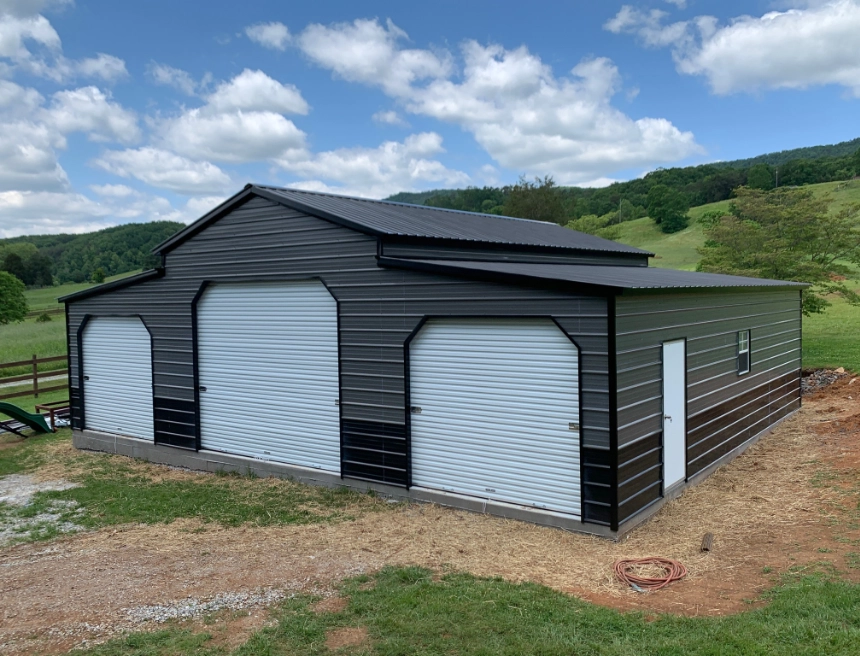
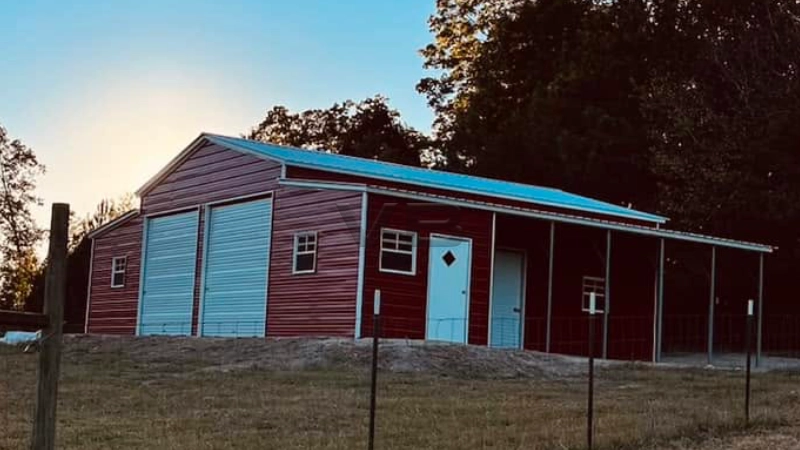
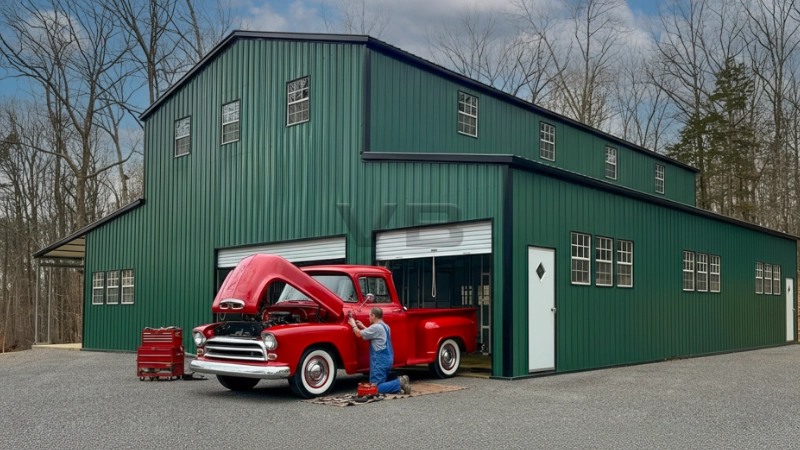
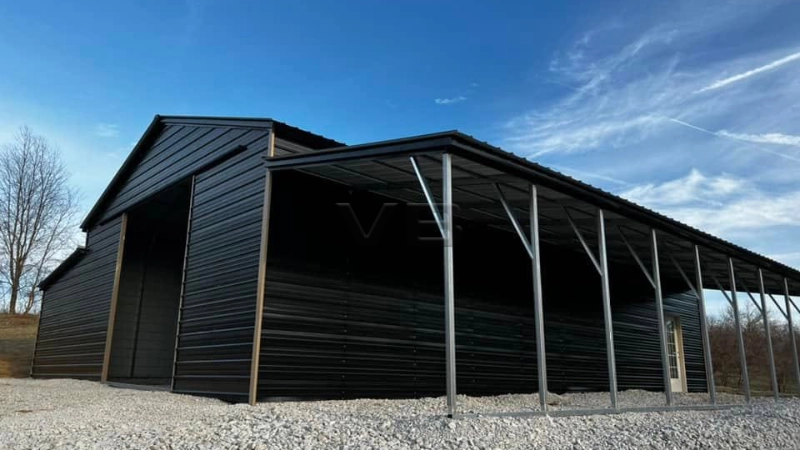
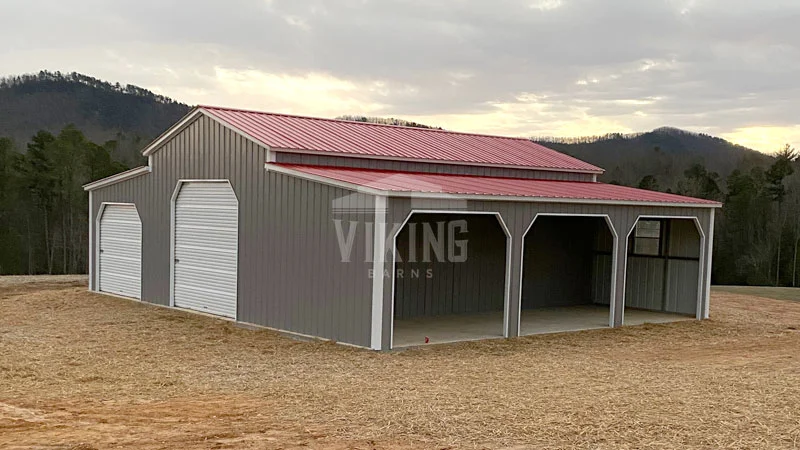
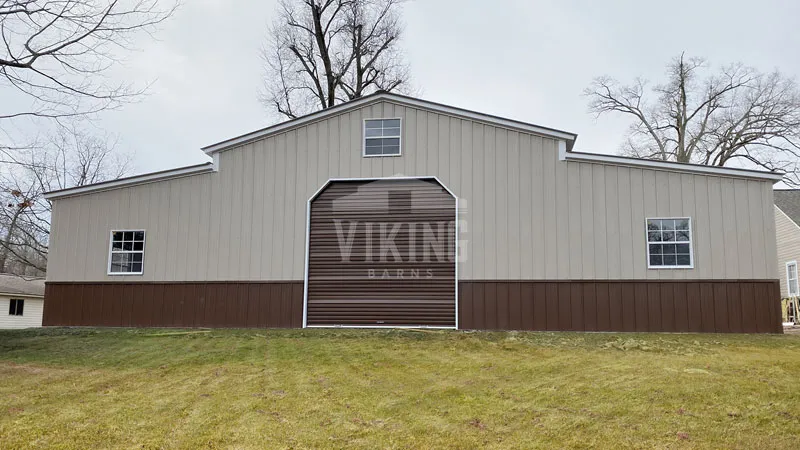
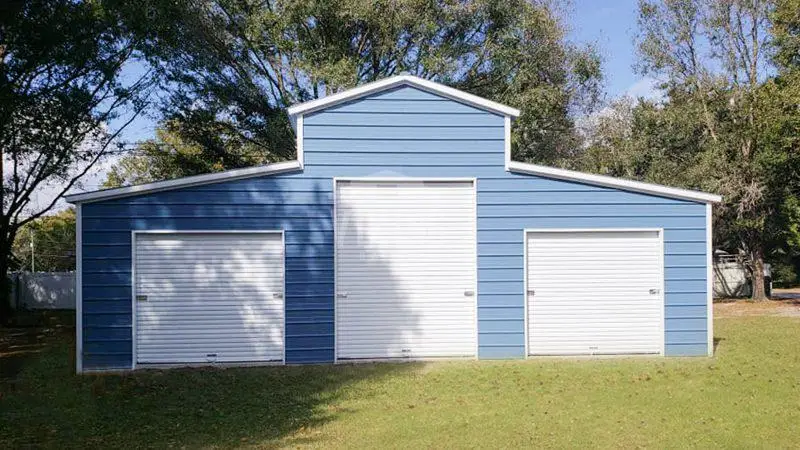



Raised Center Aisle Barns Built for Real Farm and Ranch Life
If you’ve outgrown a basic single-span barn — or if you need a building that handles horses, equipment, hay storage, and a workshop all under one roof — a raised center aisle barn is the answer.
The raised center design gives you a taller, wider main bay flanked by lower side sections, creating a naturally ventilated, multi-purpose agricultural structure that works harder than any standard barn layout. Viking Barns builds custom metal center aisle barns in every configuration — from compact horse facilities to large commercial agricultural buildings — and installs them professionally across the entire United States.
Why So Many Property Owners Are Choosing the Raised Center Aisle Design
A standard single-span barn is functional. But once your operation grows past basic hay and equipment storage — once you have horses that need proper stalls, or livestock that need separated housing, or you need a covered workspace alongside your storage — a flat single-span building starts to feel like a compromise.
The raised center aisle barn solves that limitation by design.
The elevated center bay provides exceptional headroom for the main working aisle — critical for horses with riders, tall equipment, and hay stacking. The lower side sections run the full length of the building, housing stalls, tack rooms, feed areas, equipment bays, or workshop space. The transition between the center and side sections creates natural ventilation channels that keep the interior cooler, drier, and better aired than any enclosed single-span structure can match.
You get a building that’s more functional, more efficient, and more adaptable than a standard barn — without a significantly larger footprint or budget.
This page covers everything you need to understand the design, choose the right configuration, and get your raised center aisle barn built right the first time.
What Is a Raised Center Aisle Barn?
A raised center aisle barn is an agricultural building defined by its distinctive multi-level roofline — a taller center section running the length of the building, flanked by lower attached side sections (lean-tos) on one or both sides.
The raised center creates a primary working bay with higher clearance — typically 12–16 feet at the ridge — while the side sections provide covered, functional space at a lower eave height, usually 8–12 feet. The gap between the center roofline and the side sections is where the ventilation magic happens: warm air and moisture rise naturally through the opening and exhaust out, while fresh air flows in from the sides.
In traditional wood construction, this design was called a “monitor barn” — a style that dates back to 18th-century New England and became standard on American farms for exactly this reason. Today, steel center aisle barns deliver the same time-tested layout with the structural strength, weather resistance, and low maintenance that only pre-engineered steel provides.
The result is a building that looks like a classic working barn, functions like a modern agricultural facility, and holds up for 40–60 years with minimal upkeep.
Why Choose a Metal Raised Center Aisle Barn?
Durability That Matches the Demands of Real Farm Life
Agricultural buildings take punishment. Livestock, heavy equipment, moisture, UV exposure, and severe weather all take their toll — and traditional wood construction begins to show it within a decade.
A metal raised center aisle barn is built from galvanized steel framing and panels that don’t rot, warp, splinter, or attract termites. The structure holds its shape under the daily wear of working-farm conditions for decades. No sagging ridgeline. No soft spots in the floor framing. No walls that lean after a hard winter.
A properly installed steel center aisle barn from Viking Barns is designed to perform for 40–60 years with nothing more than basic maintenance.
Multi-Purpose Use Under One Roof
The raised center aisle layout is uniquely suited to combining multiple functions in a single connected structure. Most users configure the building as follows:
- Center bay: Working aisle, hay stacking, equipment parking, or open storage
- Side sections: Individual stalls, tack rooms, feed rooms, wash bays, workshop space, or additional enclosed storage
One building. Multiple purposes. No wasted square footage. This is the design that serious horse and livestock operations across the U.S. choose when they need a facility that does more than one thing well.
Natural Ventilation Built Into the Design
The raised center section isn’t just about headroom — it’s a passive ventilation system built into the structure itself.
Hot, humid air rises naturally to the peak of the center bay and exhausts through the gap between the raised center and the side lean-tos. Cooler, fresher air flows in along the lower sidewalls. The result is continuous natural air exchange that keeps the interior cooler in summer, reduces moisture buildup year-round, and dramatically improves air quality for horses and livestock housed inside.
No power required. No fans to maintain. Just physics working in your favor — built into the barn by design.
Cost-Effective at Scale
A raised center aisle barn looks like a complex build — and in traditional wood construction, it was. But in pre-engineered steel, the multi-level design is modular and manufactured with precision. That means the cost premium over a standard single-span barn is more modest than most buyers expect, especially when you consider the additional functional square footage and the natural ventilation system you’re getting in return.
Over the lifetime of the building, the lower maintenance costs of steel versus wood make the metal center aisle barn consistently more cost-effective than any wood alternative of comparable quality.
Key Features and Design Benefits
The Raised Center Bay
The defining feature of this barn style — a taller central section that runs the full length of the building. Typical center bay eave heights range from 12 to 16 feet, with ridge heights extending above that based on roof pitch.
This gives you:
- Full clearance for horses with riders in the central aisle
- Headroom for tall agricultural equipment
- Space for hay stacking in the center without interfering with stall or work areas on the sides
- A dramatic, functional interior that works as well as it looks
Lean-To Side Sections
The lower side sections — or lean-tos — attach to both sides of the raised center structure and typically run the full building length. Eave heights in the side sections are generally 8 to 12 feet.
These sections handle the detail work of your facility:
- Individual horse or livestock stalls
- Tack room and equipment storage
- Feed room and hay storage annex
- Wash bay with drainage
- Workshop or fabrication space
- Covered outdoor workspace with open sides
The lean-to sections are enclosed by default and can be customized independently from the center bay for door placement, window configuration, and wall height.
Structural Strength Across the Full Span
A steel raised center aisle barn uses a continuous structural system across both the center and side sections — not separate buildings connected together. The framing is pre-engineered as a single integrated structure, which means it performs as a unit under wind, snow, and load conditions.
This matters in agricultural settings where large spans, open bays, and heavy roof loads from snow or hay storage are real engineering considerations. Viking Barns’ clear span barn options take this further for buyers who need maximum unobstructed interior width.
Space Optimization Across Every Square Foot
The raised center aisle layout is one of the most efficient barn designs per square foot of footprint. Because the side sections are functional full-height spaces — not just low-ceiling overflow areas — every part of the building works.
Most buyers who transition from a single-span barn to a raised center aisle barn report using more of their total building square footage simply because the design makes the space more accessible, more organized, and more purpose-fit.
Customization Options
Every raised center aisle barn from Viking Barns is built to your specifications. Here’s what you can configure.
Width, Length, and Height
The overall building width is the sum of the center bay width and both side lean-to widths. Common configurations:
- Center bay width: 20–40 ft depending on intended use
- Side section width: 10–16 ft per side
- Total building width: Typically 40–72 ft
- Building length: Any length from 36 ft up to 200+ ft
- Center eave height: 12–16 ft standard; custom heights available
- Side eave height: 8–12 ft standard
Every dimension is adjustable to the foot. If your lot, your herd size, or your equipment dimensions call for something specific — it can be built to match.
Roof Styles
Regular Roof: Most affordable, best for mild dry climates. Not recommended for a permanent agricultural barn in most U.S. regions.
Boxed-Eave Roof: Classic A-frame look with horizontal panels. Better performance than regular, solid choice for moderate climates.
Vertical Roof: The recommended choice for any raised center aisle barn. Vertical panels shed rain and snow efficiently, carry the highest certifiable wind and snow load ratings, and hold up better over the long service life of a permanent agricultural structure. If this building is going to be on your property for 40+ years — choose vertical.
Doors and Openings
- Large sliding doors for main center bay access — the classic barn entrance for equipment and livestock
- Roll-up garage doors for equipment bays and vehicle storage sections
- Walk-in steel doors for daily access to stall areas, tack rooms, and feed rooms
- Dutch doors — popular for horse stall entries (top half opens independently)
- Double-door configurations for oversized equipment clearance
- Open eave or partial-wall options on side sections for covered outdoor workspace
Windows and Ventilation
Add windows to any wall in either the center bay or side sections. Options include fixed single-pane, sliding, and gable-end windows. Ridge vents along the center bay peak enhance the natural ventilation system built into the raised center design. Translucent roof panels provide diffused natural light throughout the interior.
Color Options
Choose from 15–20 standard panel and trim colors for both the center section and side lean-tos — they can match or contrast. Classic red/white, charcoal/white, brown/tan, and green/white are popular choices for raised center aisle barns. Two-tone combinations are available.
Certifications
For buyers in jurisdictions requiring building permits, Viking Barns provides engineer-certified raised center aisle barns with stamped drawings meeting local wind speed and snow load requirements — available in all 50 states.
What Are Raised Center Aisle Barns Used For?
Horse Facilities — The Primary Use Case
The raised center aisle barn was practically invented for horse operations — and it remains the gold standard layout for equestrian facilities across the United States.
The center aisle provides full clearance for tacking up and working with horses. The side lean-tos house individual stalls, a dedicated tack room, a wash bay, and a feed room — all accessible from the central aisle without going outside. The natural ventilation system keeps air quality high, reduces humidity and ammonia buildup from stalls, and keeps the interior temperature manageable even in summer.
Whether you’re housing two horses on a hobby farm or managing a full boarding and training operation, the raised center aisle layout delivers a professional-quality facility at a fraction of the cost of traditional construction.
Explore Viking Barns’ horse barn configurations for examples of full equestrian facility builds. For individual stall options, see steel horse stalls.
Livestock Operations
Cattle, goats, sheep, and hogs all benefit from the same ventilation and separated-space advantages that make this design ideal for horses. The raised center aisle gives you a dry, well-aired working space for feeding, veterinary access, and daily animal management — while the side sections house pens, separate pasture access points, and feed storage.
For large livestock operations, the center bay can be wide enough to drive a utility vehicle or tractor through while still maintaining clear separation from the animal housing areas on the sides. Explore metal livestock barns for additional livestock-specific configurations.
Mixed Equipment and Agricultural Storage
A raised center aisle barn doesn’t have to house animals. Many buyers use the center bay for large equipment — tractors, combines, round balers, sprayers — while using the enclosed side sections for hay storage, fertilizer and chemical storage, smaller implements, and workshop space.
The elevated center accommodates tall equipment that a standard single-span barn with a 12 ft eave height can’t handle. The side sections provide organized, enclosed storage for everything else.
On-Farm Workshop
Add insulation, electrical, and proper ventilation to one or both side sections and you have a functional on-farm workshop built into the same footprint as your storage and livestock facility. Welding, fabrication, equipment repair, general maintenance — a dedicated workshop section eliminates the need for a separate building.
For buyers focused specifically on workshop use, also check out Viking Barns’ metal workshop buildings.
Multi-Use Agricultural Complex
The raised center aisle design is ideal for farm operations that need to consolidate multiple functions under one roof — reducing site footprint, cutting construction costs, and simplifying daily workflow. A single 40×120 ft steel center aisle barn can realistically house:
- 8–12 horse stalls
- A full tack and feed room suite
- A center aisle wide enough to drive through
- Hay storage in the loft or side section
- A covered equipment bay at one end
That’s five separate functions in one integrated building.
Raised Center Aisle Barn vs. Regular Single-Span Barn
| Category | Raised Center Aisle Barn | Regular Single-Span Barn |
| Center Headroom | 14–18 ft at ridge | 10–14 ft at ridge |
| Natural Ventilation | Excellent (built-in passive system) | Moderate |
| Multi-Zone Use | Excellent (center + two side sections) | Limited |
| Horse/Livestock Suitability | Excellent | Good |
| Equipment Clearance | Excellent | Moderate |
| Air Quality for Animals | Excellent | Good |
| Aesthetic Appeal | Classic barn profile | Functional |
| Construction Complexity | Moderate | Low |
| Cost | Moderate–High | Low–Moderate |
| Long-Term Value | High | Moderate |
For most horse and livestock operations, the raised center aisle design justifies its cost premium with better animal housing, better ventilation, and more functional square footage per dollar. For straightforward equipment storage with no livestock, a standard custom steel barn may be the more efficient choice.
What Does a Raised Center Aisle Barn Cost?
Pricing varies based on building dimensions, roof style, configuration, and your delivery region. Here are realistic installed price ranges to help you plan.
| Building Size | Approximate Installed Price |
| 36×48 Compact Center Aisle Barn | $18,000 – $28,000 |
| 40×60 Mid-Size Horse Facility | $28,000 – $42,000 |
| 48×80 Full-Size Agricultural Barn | $42,000 – $65,000 |
| 60×100 Large Center Aisle Complex | $65,000 – $100,000 |
| Custom / 72×120+ | Request Custom Quote |
Prices are general estimates and vary by zip code, configuration, certifications, and site conditions. Contact Viking Barns for a quote specific to your location and build.
What Affects Your Final Price
Building dimensions — overall width, total length, and the height of both the center bay and side lean-tos — are the primary cost drivers.
Roof style — vertical roofs cost slightly more than boxed-eave or regular, and are the recommended choice for any permanent barn installation.
Number and type of doors — large sliding doors, roll-up equipment doors, Dutch doors for stalls, and walk-in doors each add to the base price.
Certifications — engineer-stamped drawings for permit applications add cost but are required in many jurisdictions.
Add-ons — stall kits, tack room buildout, insulation, ventilation systems, and lean-to extensions all affect the final number.
Foundation and site prep — not included in building price. A compacted gravel base is minimum; a concrete slab or perimeter footings are recommended for permanent barn installations.
The Installation Process: From Quote to First Day of Use
Step 1 — Request Your Quote Share your desired dimensions, intended use, zip code, and any specific requirements. You’ll receive an accurate, itemized price — no hidden fees, no vague estimates.
Step 2 — Confirm Your Order Once you’re ready, confirm your configuration and place your deposit. Your build and delivery timeline begins from this point.
Step 3 — Check Permit Requirements Contact your local county or municipal building department to understand permit requirements for your structure size. Viking Barns provides engineer-certified drawings for permit applications in all 50 states.
Step 4 — Prepare Your Site Your foundation must be complete and the site accessible before the installation crew arrives. A level, compacted gravel base is standard for most barn installations; a concrete slab or perimeter footings are recommended for larger permanent buildings.
Step 5 — Delivery and Assembly The professional installation crew arrives with all pre-fabricated steel components. A standard 40×60 ft raised center aisle barn is typically assembled in 3–5 days. Larger buildings or configurations with stall kits and add-ons may take 5–8 days.
Step 6 — Final Walkthrough Walk through the completed building with the installer. Confirm the center bay clearance, side section layouts, door alignment, roof sealing, ventilation, and that every detail matches your order.
Step 7 — It’s Ready Your steel center aisle barn is operational immediately after installation. No waiting. No curing time. Animals can move in, equipment can be stored, and the facility is ready to work from day one.
Build the Barn Your Operation Has Been Waiting For
A raised center aisle barn isn’t just a structure — it’s the facility that makes your farm or ranch work the way it’s supposed to. Horses properly stalled with room to move and breathe. Equipment stored and organized where it’s actually accessible. Multiple daily operations — feeding, mucking, equipment maintenance, hay storage — all happening in a connected, covered space without the inefficiencies of separate buildings spread across your property.
Steel center aisle barns from Viking Barns deliver all of that — with the durability, low maintenance, and long-term value that only pre-engineered steel construction provides. No wood rot. No annual repainting. No structure that starts failing in the second decade of ownership.
Your animals deserve a proper facility. Your equipment deserves proper protection. And your operation deserves a barn that holds up as long as you do.
Why Buy From Viking Barns
Warranty
Industry-leading warranties on structure and workmanship
Customer Support
Dedicated customer support from ordering to installation
Fast Delivery
Fast delivery timelines across most regions
Certified Structures
Certified and code-compliant steel structures
Flexible Financing
Flexible financing and RTO programs
 FAQs
FAQsFrequently Asked Questions

Didn't Find Your Answer?
Explore our full FAQ page or reach out to our team — we're here to help with any additional questions.