September 16, 2025



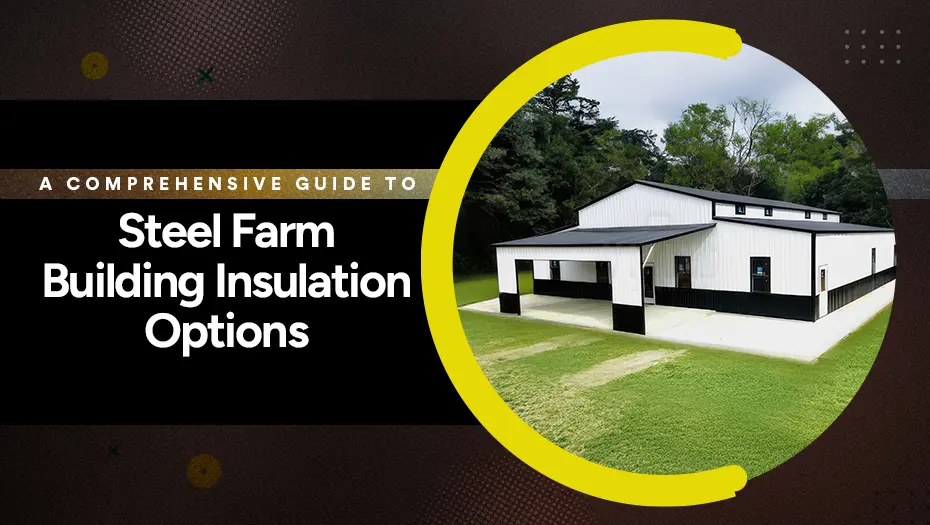
Steel structures need minimal upkeep than traditional buildings on farmland. That’s a fact! But did you know you can prolong its lifespan while maintaining structural integrity? Yes, you can do it by adding proper R-value insulation to the steel farm building. But what is it, what’s this R-value, and is it necessary? Which insulation will serve best for the rough & tough life on an American farm? Here, you will discover answers to all these crucial questions.
Also Read: How to Insulate a Metal Barn: 9 Ways to Control Heat, Cold & Condensation
Insulation is a material primarily made of fiberglass, cellulose, foam, etc., that slows down the heat transfer and sound penetration to and from the building.
When selecting an insulation, you may come across these terms. They define the properties and effectiveness of an insulator.
R-Value: It is a measure of how good an insulator is to resist the flow of heat. The higher the R-value, the better insulation against heat transfer. This value can be assigned to any part of the building, such as wall, ceiling, floor, roof, door, and window.
U-Value: It is a measure of how well heat transmits from a warm space to a cold space. The lower U-value indicates better insulation. This value is given for the whole area, like the wall.
No, these are not the same thing. A vapor barrier prevents moisture from entering walls. It is made of polyethylene plastic and is at least 0.006 inches thick. However, insulators like rigid insulation, spray form, reflective foil, etc., can act as a vapor barrier depending upon the climatic zone.
So, can I skip the vapor barrier when insulating my steel storage building? It depends on the type of insulator you are using. In fact, one of the top tips to save energy during summer in a metal barn is to install an insulator with proper R-value. Choose one that fits your needs and complies with local regulations.
The first part of your metal farm building that you must insulate is – the roof. Over 25% of the heat loss occurs via the roof. You can insulate between metal roof panels and the purlins [the horizontal beam that supports roof panels].
Next, you can insulate the walls and gaps around windows and doors. It can save as much as 35% of the heat loss. Insulate the metal wall panels and vertical framing studs for best results. You can add weatherstripping and insulation around doors and window frames.
And finally, you can insulate openings like vents, gaps, and cracks.
Yes, you can, but there are certain things that you must keep in mind, such as site preparation, foundation, transportation and assembly, securing proper permits, and complying with regulations. Also, ensure the metal building used is in pristine condition before buying.
It is safe to do a proper inspection and address any minor issues before assembling a used product.
| Pros | Cons | |
| Fiberglass insulation for metal barn |
|
|
| Spray foam to insulate farm steel building |
|
|
| Single bubble insulator |
|
|
| Double bubble insulator |
|
|
| Woven R17 insulation for Carolina barn |
|
|
| Reflective coil insulators in a metal farm building |
|
|
If you are looking for affordable metal barns or steel livestock buildings, we offer single bubble, double bubble, and woven R17 insulation options to choose from. You can also select custom features for your step-down barn, such as color, roof style, size, additional lean-tos, and much more.
Local Building Codes: Check if your local zoning laws require a specific R-value insulation for your metal farm structure. If so, you will have to comply with it.
Size Of The Metal Building: Some insulators [like fiberglass blanket, reflective, loose fill, cotton, etc.] are less effective for large metal buildings.
Purpose Of The Steel Structure: Whether you are installing a steel storage farm building or a raised center barn for livestock, both require a different R-value insulation level. So, the insulation should be chosen based on the primary function of the building.
Your Budget: Insulation comes in many price ranges, from economical, like single bubbles, to expensive, like insulated metal panels [IMPs]. Choose as per your budget.
Local Weather Pattern: Extreme hotter or colder regions require insulation with a higher R-value, while moderate climate zones require less R-value insulation.
Insulation Material: Insulator type, material, and thickness will also determine its final cost.
Installation Method: Do you want to DIY or hire a professional insulation installation team? Some types of insulations need a proper professional crew, while some can be DIY, which will save money. We provide a professional team to install your metal building, which is included in our final quote.
Initial Prep: Start by cleaning the surface to ensure it’s dry and free from dirt, debris, or protruding nails.
Suitable Material: Choose the correct R-value insulator for the best condensation and heat transfer prevention. This is one of the common mistakes to avoid when installing a steel building. You can choose spray form, fiberglass batt, foam board, double bubble, or any other based on your needs.
Safety First: Wear protective gear like goggles, gloves, masks, etc. Keep a first aid box within reach.
Start Installation: If you have chosen spray foam, you will need to mix two chemicals together before spraying it. For fiberglass & double bubble, you will need to cut the batts/ bubble sheets to fit, and for form board, you will need to apply adhesive to which the board will stick. Every insulator has a different installation process.
Final Inspection: Seal any gaps, cracks, or holes to avoid draft build-up. Try to insulate doors & windows for the best result.
From affordable fiberglass and single & double bubble insulation to excellent thermal efficiency of woven R17 and spray foam, there are a variety of options when it comes to choosing an insulator for your barn. It all boils down to the purpose of the building you want to insulate and your budget. It’s an important decision, so don’t skimp on it. For a metal barn building with insulation, contact (704) 579-6966. We provide other customization features to make your steel farm building more efficient and aesthetically pleasing.