


Metal Barns South Carolina
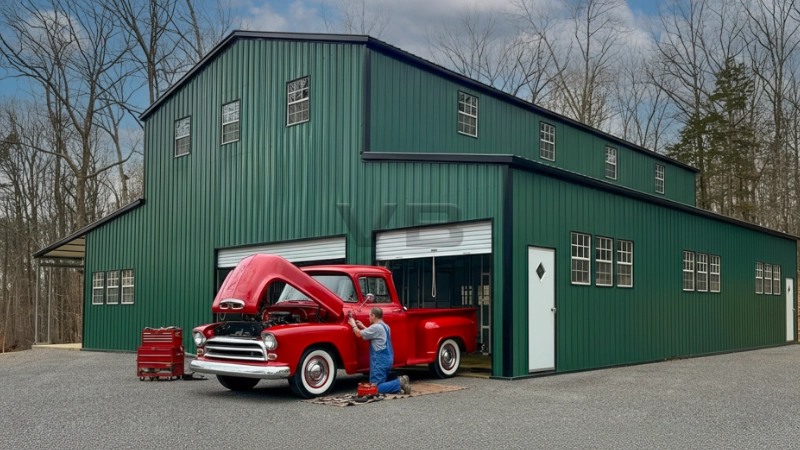
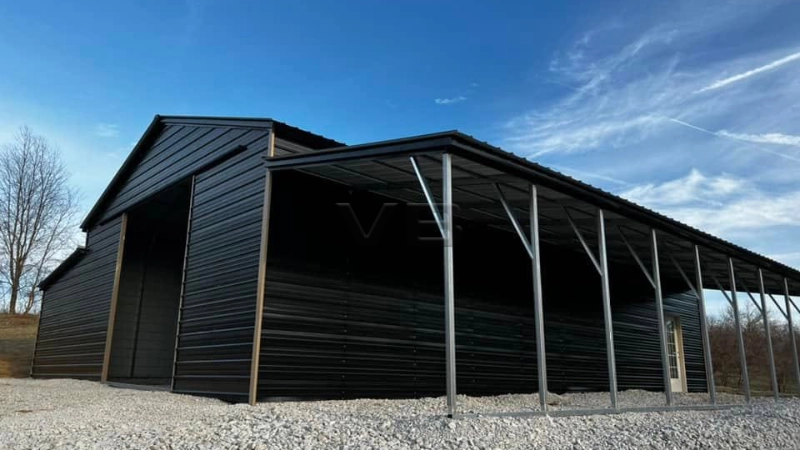
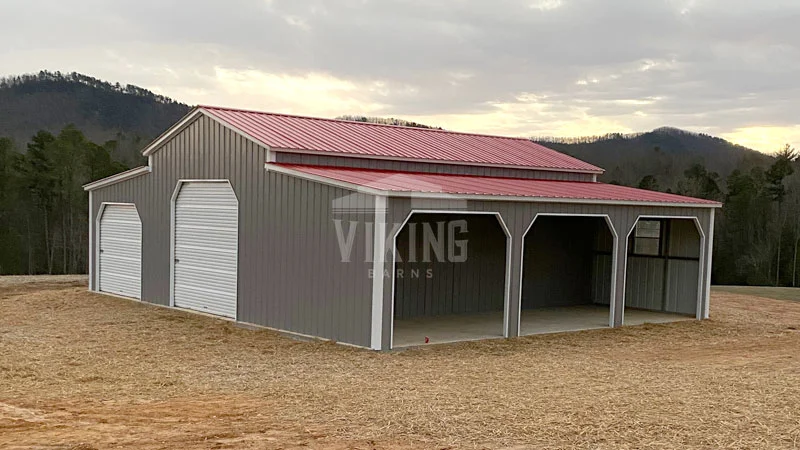
Viking Barns offers custom metal barns in South Carolina built from American-manufactured steel and engineered to meet SC wind load standards. Designed for agricultural, residential, and commercial use, our steel barn buildings provide durable, low-maintenance protection that outperforms traditional wood structures in the State’s climate.
Need help? Call us at +1 (704) 579-6966 for a free consultation.
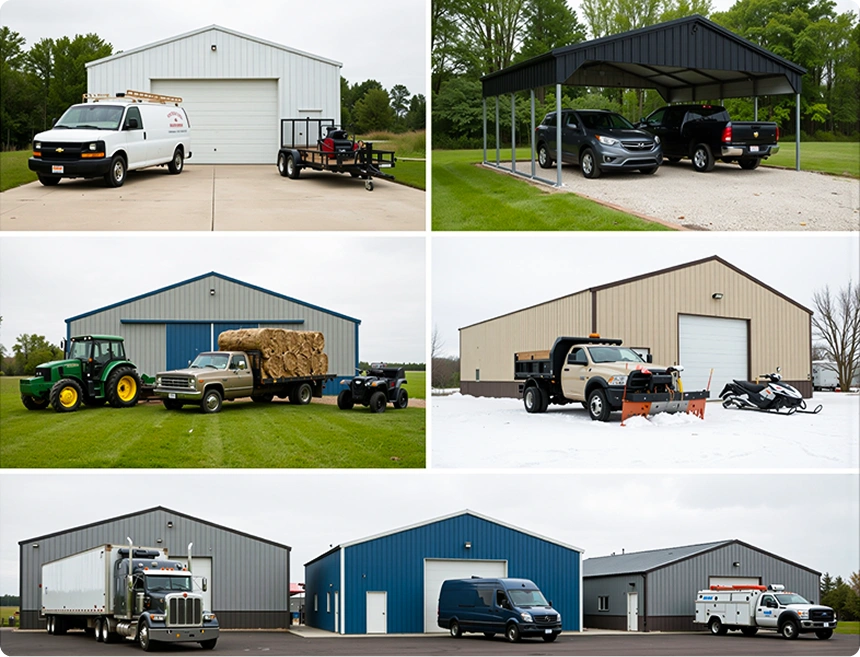
Why More South Carolina Property Owners Are Choosing Steel Barns
South Carolina has changed. Large agricultural operations still drive demand in many counties, but more rural homeowners, horse property owners, and acreage buyers now need buildings that support multiple uses.
That shift has made steel barn buildings one of the most practical long-term investments across the state.
Superior Weather Resistance
Engineered with heavy-gauge steel and sealed joints to withstand heavy moisture, snow loads, and high winds, keeping your structure safe year after year.
Flexible Payment Options
Choose from rent-to-own (RTO) & customized financing programs with low down payments, making it easy to get started with any budget.
Custom Designs & Sizes
Fully configurable from compact personal storage sheds to sprawling multi-span agricultural barns, tailored to your exact dimensions, layout, and use case.
Fast Installation
Factory-fabricated panels and pre-drilled components arrive ready to assemble, significantly cutting on-site labor hours and getting your building up faster.
Low Maintenance
Galvanized steel construction resists rust, rot, and pests, so your barn stays structurally sound and looking great for decades with little to no ongoing upkeep.
Energy-Efficient Options
Upgrade with our available insulation options to regulate interior temperatures, reduce heating and cooling costs, and enable year-round use.
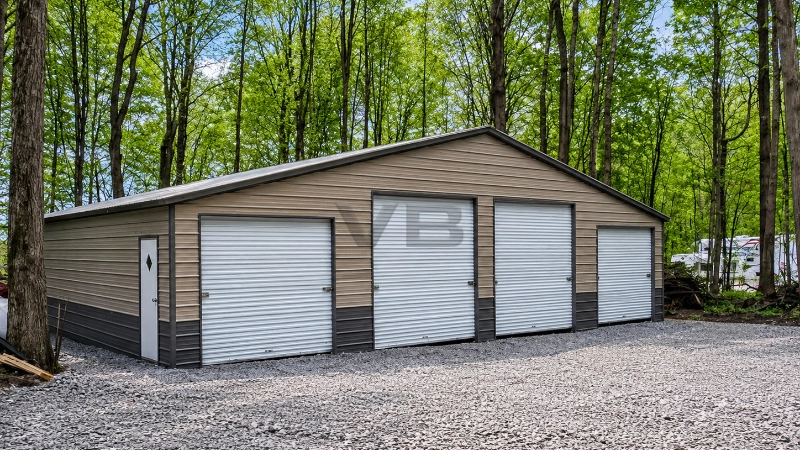
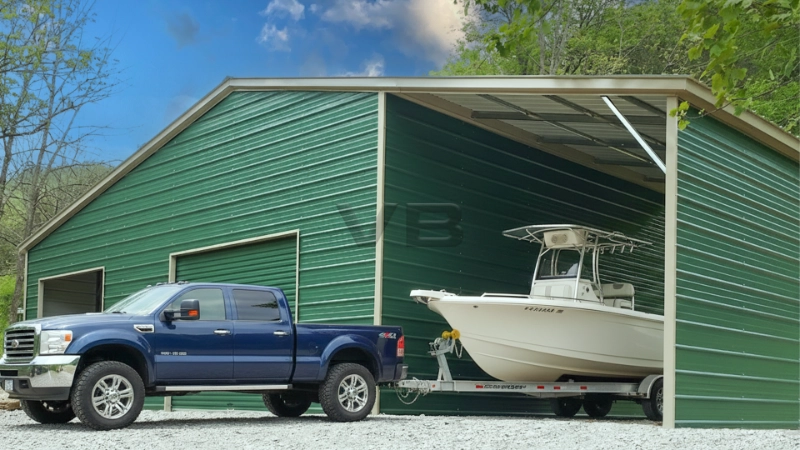
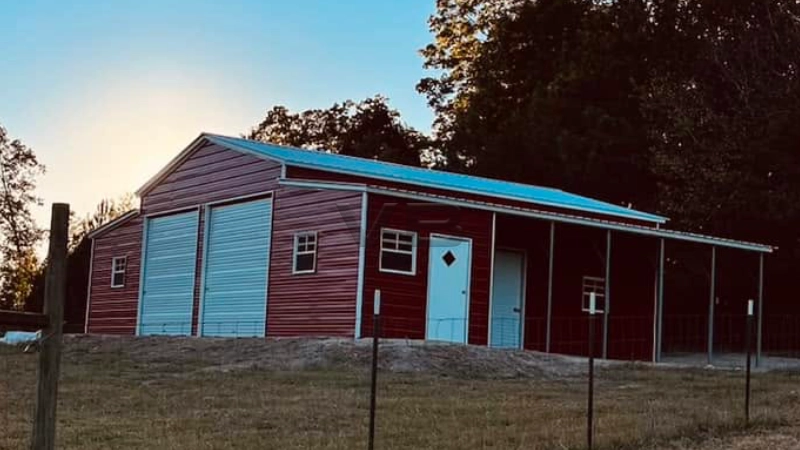



Why South Carolina’s Climate Demands a Different Building Strategy
Heat and Humidity Are the Real Test
South Carolina averages over 50 inches of rainfall annually — spread across all four seasons, not concentrated in a short wet period. Along the coast and in the Lowcountry, relative humidity sits above 70% for most of the year. That is not just uncomfortable. It is structural. Wood absorbs and releases moisture constantly, and in an environment this saturated, that cycle compounds over time — swelling framing, promoting mold, softening sills, and steadily compromising structural integrity.
Steel does not absorb moisture. It does not rot, warp, or develop the internal decay that humidity-driven wood deterioration produces. Quality-coated steel panels maintain their dimensional stability regardless of whether a day starts at 92°F and 85% humidity or ends with a hard afternoon thunderstorm.
Wind Load Engineering is Non-Negotiable Near the Coast
South Carolina’s coastal counties — including Horry, Georgetown, Charleston, Colleton, and Beaufort — fall within what building codes designate as Hurricane-Prone Regions. Design wind speeds in these zones can reach 130 mph or higher for Risk Category II structures. That requires engineered certification, not a generic estimate. Inland counties in the Midlands and Upstate face lower design wind speeds but remain exposed to severe convective storms and tornado events where wind-rated construction is still a sound investment.
Every building we deliver is certified to applicable local wind load requirements. Share your county when requesting a quote — we confirm engineering requirements before anything is finalized.
Termites Are Active Year-Round
South Carolina’s warm winters mean termite colonies never fully dormant. Both subterranean and Formosan termite species are present statewide, with Formosan populations concentrated in coastal counties where they cause damage at a significantly faster rate. Any wood-framed barn on SC land requires ongoing chemical treatment — a cost that compounds indefinitely.
Steel framing gives termites nothing to infest. No wood to tunnel through, no sill to hollow out, no framing member to weaken over time.
Coastal Properties: Salt Air and Corrosion
Properties within several miles of tidal water face salt-laden air that accelerates oxidation and degrades untreated surfaces faster than inland conditions. Quality steel barn panels use Galvalume-based coatings engineered to resist salt air corrosion over years of coastal exposure. If your property is in Horry, Beaufort, Georgetown, or Charleston County — or anywhere the sea breeze reaches — ask specifically about coastal-appropriate coatings when you request your quote.
What South Carolina Barn Owners Use These Buildings For
Metal barns on SC land rarely serve one purpose. The state’s mix of working farms, equestrian operations, residential acreage, and commercial activity creates a wide range of use cases — often within the same structure.
Poultry, Cattle, and Livestock Operations
South Carolina’s agriculture is dominated by broiler production — the state’s most valuable agricultural commodity — along with beef cattle, hogs, and a substantial hay and forage crop base. Working livestock operations across the Pee Dee, Midlands, and Upstate use steel buildings for:
- Broiler and poultry staging areas, support structures, and equipment housing
- Beef cattle shelter, hay storage, and working pens
- Hog housing on smaller diversified farms
- Feed storage, grain staging, and bulk input supply buildings
- Livestock equipment, trailers, and working vehicle storage
In SC’s summer heat, covered shelter is not a seasonal luxury — it is a practical tool for protecting animals and the equipment that keeps an operation running through July and August.
Horse Barns and Equestrian Facilities
South Carolina has a well-established equestrian culture, particularly in the Aiken and Camden areas — home to nationally recognized events including the Aiken Triple Crown and the Carolina Cup. Horse property owners across Aiken, Lexington, Richland, Greenville, and Spartanburg counties use custom steel horse barns configured with center-aisle layouts, custom stall counts, tack rooms, feed rooms, veterinary bay sections, covered wash areas, and attached lean-to additions for hay storage and covered turnout.
The high-moisture, high-ammonia environment inside any active stabling operation degrades wood construction over time. Steel does not break down in those conditions — which matters to anyone managing a facility year-round in SC humidity.
Equipment Storage and Farm Workshops
Most working SC farms carry a substantial equipment investment — tractors, planters, harvest machinery, trailers, and irrigation components. Leaving that investment exposed to South Carolina’s UV intensity, afternoon thunderstorms, and humid overnight conditions shortens service life and raises maintenance costs year over year. Steel barns for equipment storage commonly include wide roll-up doors sized for specific clearances, clear-span interiors without obstructing columns, extended sidewall heights, and lean-to additions for covered outdoor staging.
Workshops, Contractor Storage, and Small Business Facilities
Contractors, fabricators, mechanics, landscapers, and rural business owners need work and storage buildings that residential construction cannot match in cost or durability. Clear-span steel barn interiors handle automotive repair, welding and fabrication, woodworking, contractor supply storage, and small engine service without interior posts restricting workspace or equipment movement.
Residential Acreage and Recreational Storage
Property owners on rural SC acreage frequently need reliable multipurpose storage that wood-framed sheds cannot sustain in this climate over time. Steel barns on residential land commonly house lawn tractors, side-by-sides, boats and personal watercraft, RVs and campers protected from UV and humidity between trips, and general rural property storage.
Choosing the Right Roof Style for SC Conditions
Roof configuration directly affects drainage performance and long-term durability in South Carolina’s rain-heavy climate.
Vertical Roof — Panels run from ridge to eave, allowing rain to shed cleanly rather than pooling at horizontal panel laps. The preferred choice for coastal and Lowcountry properties, agricultural buildings, horse barns, and any building exposed to frequent storms or sustained humidity. Best long-term performance and lowest maintenance of the three options.
Boxed-Eave (A-Frame) Roof — Traditional horizontal panels with a conventional barn profile. Works well for inland and Upstate properties used for equipment storage, workshops, or residential utility buildings where coastal exposure is not a factor. Dependable at a lower price point than vertical.
Regular Style Roof — Most affordable configuration, suited to simple storage in sheltered, lower-exposure settings. Not the recommended choice for coastal counties, open rural land, or buildings housing animals or sensitive equipment.
Not sure which fits your county and use case? Share your zip code when requesting a quote, and we’ll give you a direct recommendation.
How South Carolina’s Regional Differences Affect Building Design
Coastal and Lowcountry (Horry, Georgetown, Charleston, Beaufort, Colleton): Highest wind load requirements, salt air exposure, flood zone considerations, and peak year-round humidity. Vertical roof strongly recommended. Coastal-rated coatings worth discussing. Permit requirements in these counties are more detailed due to hurricane zone designation.
Pee Dee and Midlands (Williamsburg, Florence, Sumter, Clarendon, Orangeburg, Calhoun): Core agricultural production area — tobacco, soybeans, corn, and broiler operations. Wind loads are lower than the coast but still require county-specific engineering. Rain exposure is year-round and termite activity is high statewide.
Upstate (Greenville, Spartanburg, Anderson, Pickens, Oconee): Closest SC comes to seasonal cold, without snow load requirements. Primary concerns are heat management, severe storm wind events, and year-round humidity. Active equestrian market and growing residential rural acreage.
Custom Configuration Options
Every building is configured based on actual land layout, intended use, and site conditions — not a catalog preset. Available options include:
- Building dimensions — from compact 20×30 residential storage buildings to 60-foot-wide commercial-scale agricultural structures
- Lean-to additions — covered hay storage, livestock loafing areas, equipment parking, or shaded outdoor workspace along one or both sides. Planning lean-tos during the initial design stage creates better structural integration than adding them later.
- Roll-up and sliding doors — custom widths and heights for specific equipment clearances, including tall horse trailer entries and combine access. Many agricultural buyers size doors around future equipment, not just what they own today.
- Interior partitions — tack rooms, feed rooms, hay storage sections, workshop bays, utility rooms, and enclosed office space within a single structure
- Horse stall configurations — custom stall count, dimensions, and center-aisle width designed in from the start
- Windows, skylights, and ridge vents — natural light and ventilation that make a real difference through SC’s long warm season
- Exterior color options — 15 color selections for panels with up to 5 options for doors
If a feature adds real value for your property and operation, we’ll include it. If it doesn’t, we’ll say so.
What Does a Steel Barn Cost in South Carolina?
Pricing depends on building size, roof style, wind load certification for your county, customization level, and site accessibility. There is no honest single-number answer without knowing those variables.
What is consistent across every project: your quote includes delivery and installation as part of the upfront figure — not as a late-appearing line item. The number discussed is the number paid.
For long-term SC ownership, the cost comparison between steel and wood favors steel once recurring maintenance is factored in. No termite treatments. No repainting as coastal UV bleaches unprotected siding. No replacing rotted sill boards after prolonged summer humidity. Those costs on a wood barn compound significantly across a 10-to-20-year horizon.
Every Viking Barns building includes a 20-year rust-through warranty, a 10-year panel warranty, and a 1-year workmanship warranty.
Call (704) 579-6966 with your county, intended use, and approximate size for a realistic quote range.
Rent-To-Own and Financing Options for SC Buyers
Rent-To-Own — No traditional credit check required for most structures. Have your building installed and in use with manageable monthly payments — no large deposit at delivery. Payments run up to 36 months; the building is fully yours at the end of the term. No penalty for early payoff. Works well for farm operators, rural property owners, and anyone who needs the structure operational now.
Financing — For larger agricultural buildings, commercial structures, or extensively customized projects, financing through trusted third-party lending partners may be available. Well-suited for buyers who want to preserve operating capital while completing a significant investment.
Steel Barns vs. Wood Barns in South Carolina
|
Factor |
Steel Barn |
Wood Barn |
| Termite resistance | Structural steel provides nothing for termites to infest | Requires active chemical treatment statewide |
| Humidity and moisture | Stable — does not absorb, rot, or warp | Absorbs constantly; compounds in SC humidity year-round |
| Hurricane wind certification | Engineered to SC county-specific wind load requirements | Varies by original construction quality |
| Coastal salt air durability | Galvalume coatings resist corrosion | Requires sealing, paint, and consistent attention |
| Long-term maintenance cost | Low | Moderate to high — recurring across all seasons |
| Interior clear-span space | Standard — no interior support columns | Limited by structural framing requirements |
| Expansion flexibility | Modular additions straightforward | More complex to expand |
| Lifespan | Decades with minimal upkeep | Variable — maintenance dependent |
Metal Barn Options for Every Need
Choose from premium steel barn styles engineered for performance, protection, and everyday functionality.
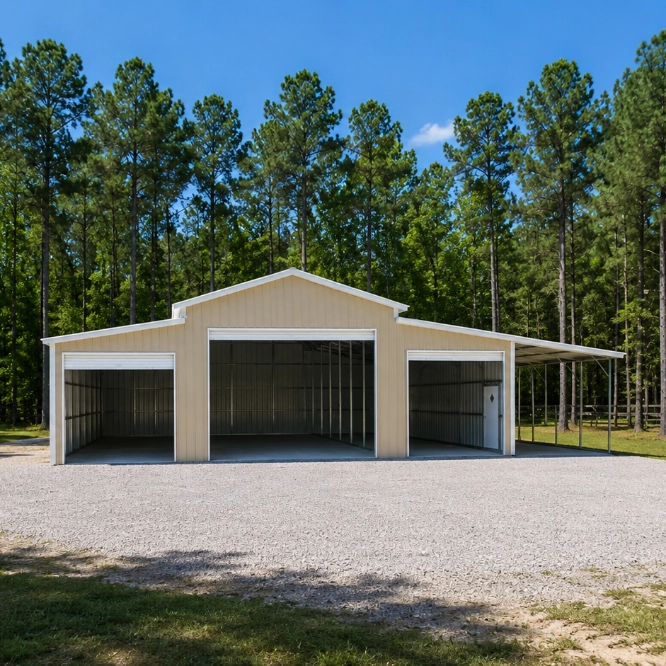
Metal Raised Center Barns
Raised Center Barns provide extra center clearance and versatile storage space, making them ideal for equipment, livestock, hay, and vehicles.
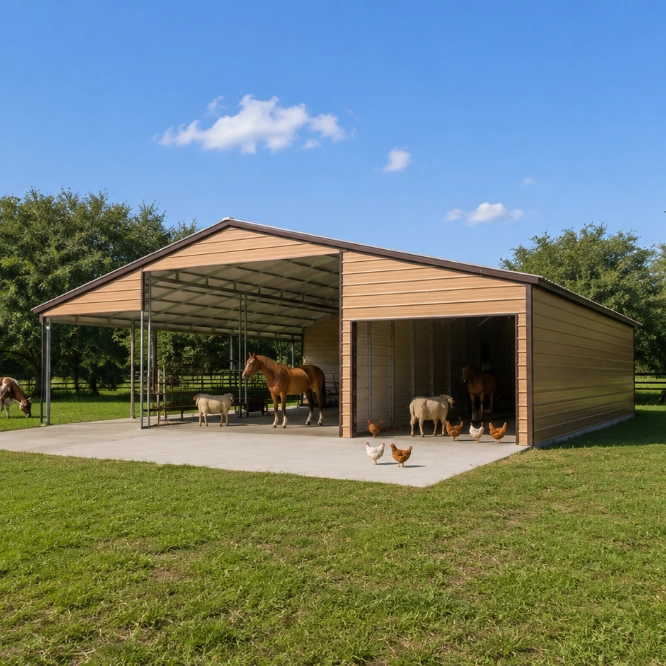
Metal Livestock Barns
Livestock Steel Barns offer durable shelter for cattle, goats, sheep, and other animals while promoting ventilation and weather protection.
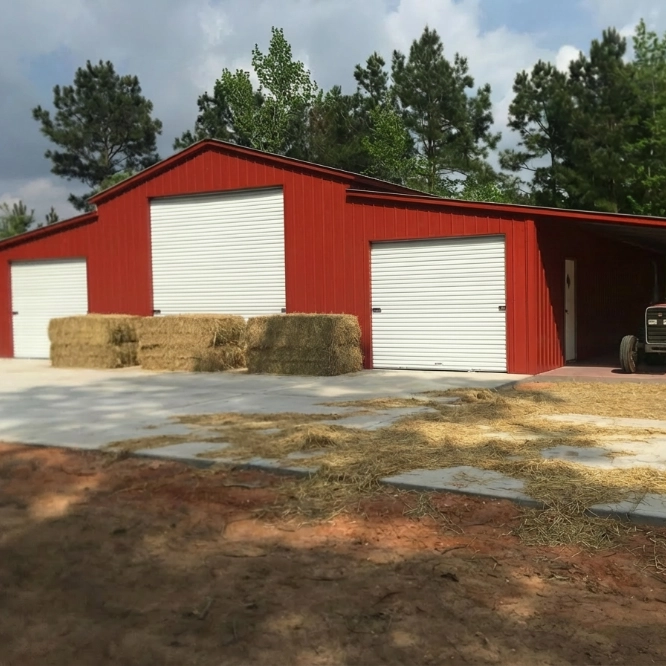
Metal Hay Barns
Metal Hay Barns help protect hay and feed from moisture, weather exposure, and spoilage while maximizing storage efficiency.
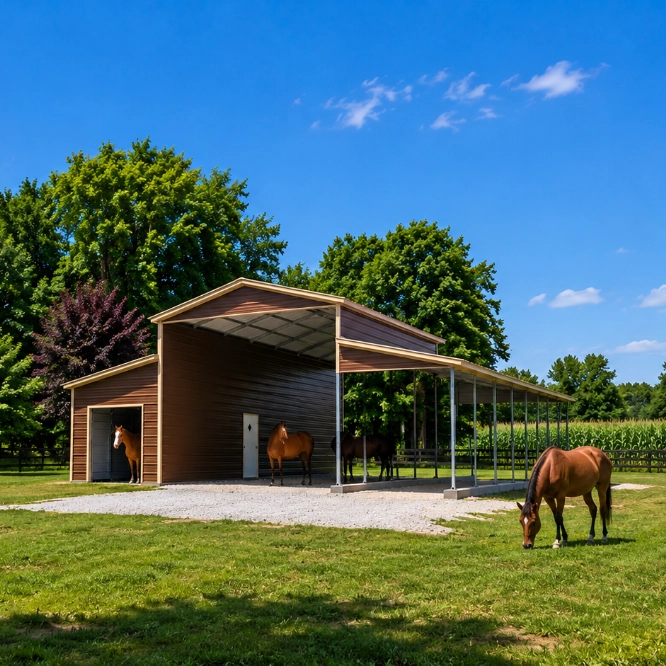
Metal Horse Barns
Metal Horse Barns provide secure, customizable spaces for horses, featuring stall options, storage areas, and excellent ventilation.
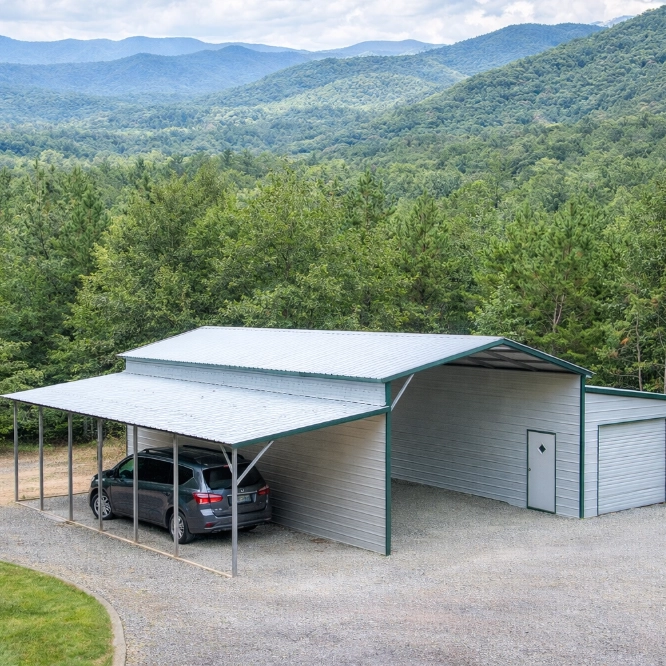
Metal Lean-To Barns
Lean-To Metal Barns add convenient covered space for equipment, livestock, vehicles, or storage while enhancing overall building functionality.
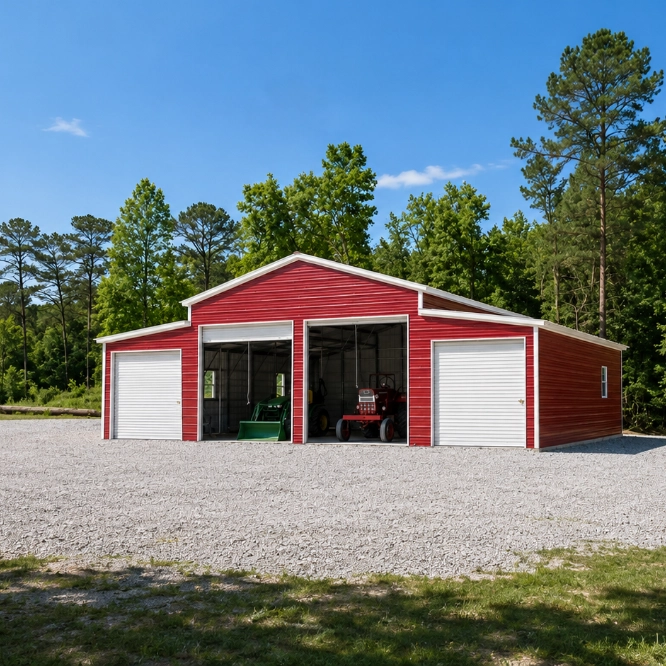
Metal Red Barns
Metal Red Barns deliver the classic farm-style appearance with the strength, durability, and low-maintenance benefits of steel construction.
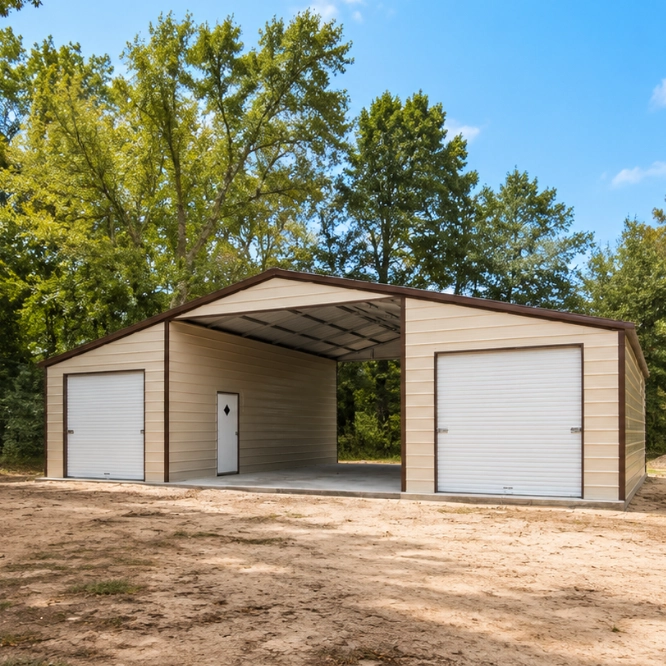
Metal Seneca Barns
Seneca Steel Barns feature a spacious center section with extended side sheds, providing versatile space for livestock, storage, equipment, and farm operations.
Ready to Build in South Carolina?
South Carolina’s climate is not forgiving to structures that were not built for it. The heat, humidity, wind exposure, and year-round biological pressure put real demands on any permanent building — and those demands compound over time.
A custom metal barn engineered for SC conditions, configured for your property and operation, and backed by warranties designed to match the building’s service life is a different long-term investment than a wood structure requiring continuous attention.
Call (704) 579-6966 to discuss your project, or request a free quote online. Share your county, intended use, and approximate size — we’ll provide an honest number with delivery and installation included.
Top Cities We Serve In South Carolina SC
The cities below represent some of our most popular service locations in South Carolina SC. However, our coverage extends far beyond these areas. Our team is ready to assist with your steel building project anywhere in South Carolina SC.
 FAQs
FAQsFrequently Asked Questions About Metal Barns in South Carolina
Buying a steel barn usually comes down to a few practical questions — pricing, permits, customization, weather performance, and long-term ownership. Here are answers to some of the questions South Carolina buyers ask most often.

Didn't Find Your Answer?
Explore our full FAQ page or reach out to our team — we're here to help with any additional questions.