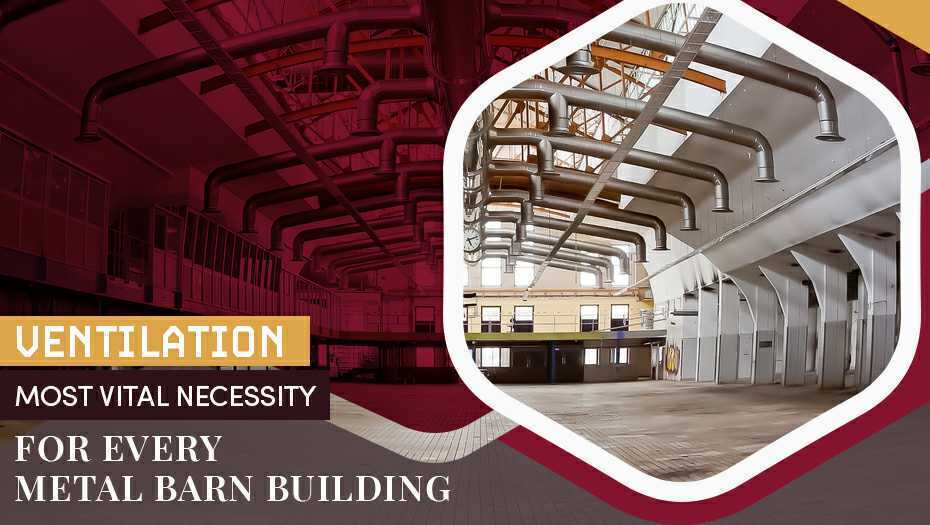
Ventilation (outdoor airflow into a building) is the essential part of metal building installation that you should never miss. Whether you have ordered a prefab metal barn or planning to buy one, it’s essential to consider the importance of ventilation in your barn and add it correctly.
Whenever you book your dream steel barn, doors, windows, etc., will always come to your mind. But most of you will miss adding ventilation to your barn structure. Ventilation is one of the crucial parts that help you in enhancing the barn’s lifespan.
Lacking proper ventilation in your barn structure can cause unexpected issues. Unregulated temperature of inner area is one of the major outcomes of wrong or no ventilation. Reading further, you will better understand the importance of ventilation and how you can ensure the right ventilation in your prefab steel barn.
Why is Ventilation Important for Metal Barn Building?
Before you learn about the right ventilation for the barn building, it’s important to know why metal barn experts recommend ventilation. Below are the prime reasons why you should never miss ventilation in your structure.
Tackle Condensation Issue: Condensation is a common issue in enclosed metal barns. You will witness fogged glasses, car windows, slippery surfaces, which are caused by condensation. These common problems have a direct impact on your barn structure.
That’s why you are highly recommended to install the right and appropriate ventilation system in your custom metal barn. Right ventilation will ensure proper airflow in the barn and keep the internal environment cool. Further, ventilation will help overcome humidity inside the barn.
Maintain Normal Temperature: Condensation gives birth to a common problem in your prefab metal barn, i.e., high temperature compared to the outside temperature. Change in temperature causes health issues to your cattle and animals. Hence, ventilation is important to ensure a comfortable temperature in your barn.
Installing the right ventilation helps you keep the cattle and animals safe from shivering winter and irritating summer waves. Proper airflow through ventilators keeps the temperature regulated year-round.
Keep Air Quality Clean: Without ventilation, the problem of congestion occurs. Moreover, inside air doesn’t find the way to move out, generating a foul smell in your steel barn building. Further, no ventilation will bind harmful air to restrict within the barn. Hence you need the right ventilation that can easily take contaminated air out of the barn and keep rotating the air within.
Now you have sound knowledge about why ventilation is crucial for every barn structure. Let’s talk about different ways you can add a ventilation system in a custom steel barn building.
Metal Building Ridge Vent: Vent is the common way to add to your steel barn. With the vent installation, hot air can quickly move out of the barn vents and maintain the inside temperature.
Metal Building Louver: If vents are installed on the walls of your metal barn, they are called a louver. Metal building louvers are recommended if you are not planning to add a ventilation system on the roof. The louvers are installed to ensure rain or dust don’t enter your barn and keep the temperature regulated.
Circular Vent: The only difference between louver and circular vents is shape. As the name suggests, circular vents have rounded shapes that omit the heck of bugs and birds from making nests on the ventilators. These structures ensure your barn is highly ventilated.
Metal Building Roof Jack: The roof jacks are different from the options mentioned above. An exhaust pipe installed on the roof is covered with a pre-formed flange placed over a vent pipe. It maintains proper airflow in the barn and keeps healthy weather inside.
Metal Building Exhaust Fan: An exhaust fan is the advanced ventilation system where power is consumed to remove inside air from the barn. It is installed with a louver and electric fan that regularly expels air from the barn building.
Doors and Windows: Doors and windows are the two essential metal barn components that any installation can’t miss. Interestingly, they also provide you adequate area for air passage. All you need to do is open the doors or windows whenever required.
So, you are educated enough to understand why you should never miss proper ventilation in your prefab metal barn. You should always keep this point and ensure the right barn is ordered for your land.
If you are looking for the right place to book your prefabricated metal barn and get it installed at your property, we can help! Viking Barns is the one-stop destination to choose from comprehensive barns. We provide you multiple buying options at affordable prices. Call our metal barn experts at (704)-579-6966, and we will help you buy the ideal barn structure that fits your budget and service your needs.