




Loading...
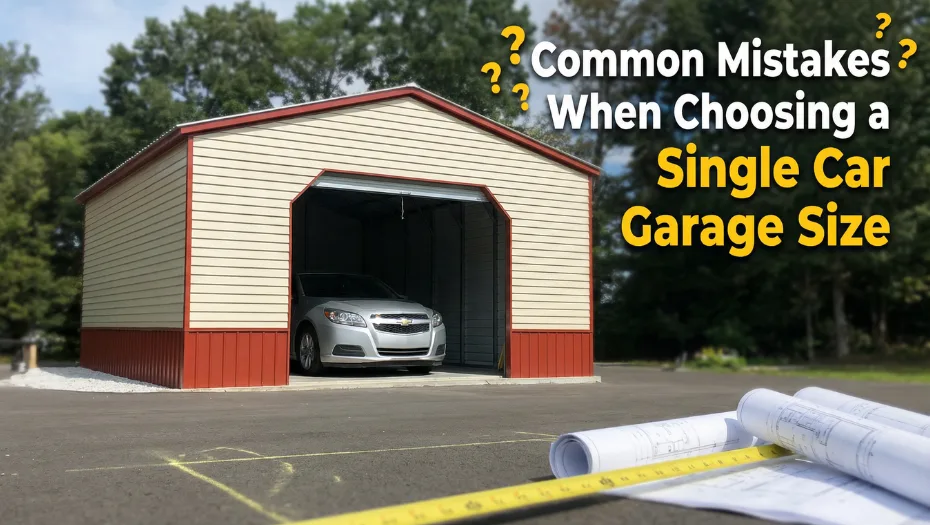
The most common mistake when choosing a one car garage size is going too small. Most homeowners assume a standard 12×20 ft space is enough, but once you factor in door clearance, storage, and the actual size of modern vehicles, that assumption can cost you thousands in modifications down the line. Getting the size right the first time is far cheaper than fixing it later.
According to the U.S. Department of Energy, the average American garage is 400 sq ft, yet surveys consistently show that nearly 25% of homeowners say their garage is too small for their primary vehicle. Whether you’re planning a parking space for one car, a workshop, or a one car metal garage on your property, avoiding these sizing mistakes is step one.
Let’s walk through every mistake in detail so you can make a confident, informed decision.
Mistake #1: Relying on Minimum Dimensions
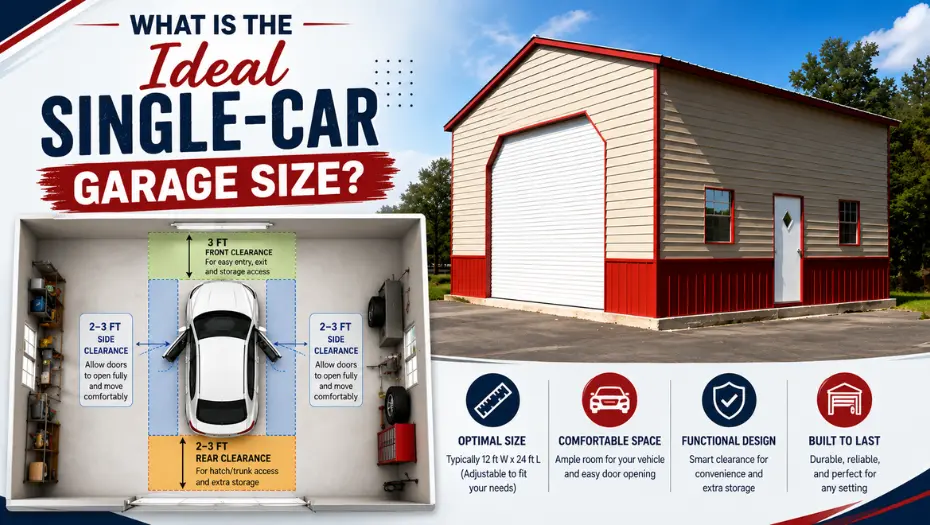
The minimum recommended interior size for a one car garage is 12 ft wide x 20 ft deep, but that is a tight squeeze, not a comfortable one. Many builders and DIYers pick this number because it technically fits a standard sedan, but it leaves almost no room for movement, storage, or future flexibility.
Consider this: the average new car in 2024 is about 196 inches (roughly 16.3 ft) long and 75 inches (6.25 ft) wide, according to data from the EPA. A 12×20 interior leaves less than 2 ft of walking space on either side and less than 4 ft at the rear, barely enough to open a car door without hitting the wall.
Recommended comfortable sizing for a single car garage: 14 ft wide x 22 ft deep. This gives you breathing room on all sides and space for a small workbench or shelving.
If you’re building a steel garage for parking, going slightly larger at the planning stage adds very little to your material cost but adds enormous day-to-day convenience.
Mistake #2: Not Accounting for Your Specific Vehicle
Not all cars are the same size, and this is where a lot of buyers go wrong. A compact sedan is very different from a full-size pickup truck or an SUV, and if you’re buying a garage to house your current vehicle plus any future ones, you need to plan accordingly.
Here’s a quick reference for how vehicle size should influence your one car garage dimensions:
|
Vehicle Type |
Avg Length | Avg Width | Recommended Garage Size |
|
Compact Sedan |
~175 in | ~69 in | 12 ft x 20 ft (minimum) |
|
Mid-Size Sedan / SUV |
~190 in | ~74 in | 14 ft x 22 ft |
| Full-Size SUV / Minivan | ~203 in | ~79 in |
14 ft x 24 ft |
| Full-Size Pickup Truck | ~229 in | ~80 in |
16 ft x 26 ft |
| Extended Cab Truck / Van | ~240 in+ | ~80 in+ |
18 ft x 28 ft |
If you own a full-size truck or are considering one in the future, a prefabricated garage for vehicles built to standard minimums simply won’t work. Always plan for your largest expected vehicle, not your current one.
Related Article: What Is the Ideal Single-Car Garage Size for Different Vehicle Types?
Mistake #3: Forgetting Storage and Workspace
A one car garage rarely ends up being used only for parking. Studies from the National Association of Home Builders (NAHB) show that 55% of homeowners use their garage for storage, and 30% use it as a workspace or hobby area. If you size purely for the vehicle, you’ll be fighting for space from day one.
A good rule of thumb: add at least 4–6 ft of depth beyond your vehicle length to allow for a rear workbench, shelving units, or a tool chest. If you want a dedicated workspace along one wall, consider going 16 ft wide instead of 14 ft.
Mistake #4: Ignoring Ceiling Height
Most people focus entirely on floor space and completely overlook ceiling height, a mistake that creates real problems with taller vehicles, garage door openers, and overhead storage. Standard residential garages are often built with 8 ft ceilings, but this is insufficient for many modern vehicles and overhead uses.
The minimum recommended ceiling height for a comfortable single car garage is 9 ft. If you own an SUV, van, or truck with a roof rack, or if you want overhead storage lofts, 10–12 ft ceilings are strongly recommended.
- 8 ft ceiling: suits standard sedans only, no overhead storage
- 9 ft ceiling: fits most SUVs and standard garage door openers comfortably
- 10–12 ft ceiling: ideal for trucks, vans, roof racks, and overhead loft storage
If you’re building with steel, clear span buildings offer excellent height flexibility without interior posts interrupting your floor plan — a major advantage for single car garages that double as workshops.
Mistake #5: Underestimating the Door Opening Size
A garage door that’s too narrow is one of the most frustrating and costly oversights you can make. The standard single garage door is 9 ft wide, but many modern vehicles, especially trucks and SUVs with mirrors extended, are pushing 7.5 to 8 ft wide. That leaves very little clearance.
The general recommendation from the Door & Access Systems Manufacturers Association (DASMA) is to size your garage door at least 2 ft wider than your vehicle. For a typical SUV or truck, that means a 10 ft wide door, not 9 ft. For added peace of mind on a steel garage for parking, a 10 ft x 9 ft door opening is the new practical standard.
Pro tip: Wider is almost always worth it. The cost difference between a 9 ft and 10 ft garage door is minimal at build time, but retrofitting a wider opening later can cost $1,500–$3,500 or more.
Mistake #6: Skipping Insulation Planning
Choosing your garage size without thinking about insulation is a mistake that catches up with you every winter and summer. Insulation affects not just temperature comfort, but also condensation control, noise reduction, and the long-term condition of your vehicle.
For one car metal garage builds, insulation is especially important because metal conducts heat and cold far more readily than wood. Adding wall and ceiling insulation slightly reduces interior usable space, typically 3-4 inches per insulated wall, which is another reason to start with slightly larger dimensions than you think you need.
For metal building projects, Woven R-17 insulation for metal buildings is a proven solution that delivers strong thermal performance without excessive thickness, a great fit for single car garages in both hot and cold climates.
Mistake #7: Not Thinking Long-Term
The biggest regret most garage owners express is not sizing up when they had the chance. A garage that feels adequate today may feel cramped in 3–5 years as your household needs change, a new vehicle, a new hobby, or simply more stuff that needs a home.
If you’re investing in a prefabricated garage for vehicles, the material cost difference between a 14×22 and a 16×24 structure is relatively small compared to the total project cost. The land is already being used; you might as well use it well.
Thinking about the right structure for your property long-term? Our guide on how to choose the best metal structure for your farm covers sizing strategies that apply equally well to residential garage planning.
Single Car Garage Size Quick Reference Chart
Here’s a summary of recommended sizes based on use case. Use this as your go-to planning reference:
|
Use Case |
Recommended Size | Door Width | Min Ceiling Height |
|
Basic parking (compact car) |
12 ft x 20 ft | 9 ft | 8 ft |
|
Comfortable parking (sedan/SUV) |
14 ft x 22 ft | 10 ft | 9 ft |
| Parking + storage | 14 ft x 24 ft | 10 ft |
9–10 ft |
| Parking + workshop | 16 ft x 24 ft | 10 ft |
10 ft |
| Truck / large vehicle | 16 ft x 26 ft | 12 ft |
10–12 ft |
Why One Car Metal Garages and Prefab Structures Are Worth Considering
Once you’ve settled on the right size, the next decision is how to build it. One car metal garage and prefabricated garage for vehicles options have surged in popularity — and for good reason.
- Faster to install than stick-built construction — most prefab kits go up in days, not weeks
- More cost-effective per square foot, especially for sizes over 14×22 ft
- Highly customizable — you choose width, depth, height, door placement, and insulation
- Durable against weather, pests, and fire compared to wood-framed structures
A steel garage for parking also holds its value well and can be permitted and insured in most jurisdictions, just like a traditional garage. If you’re leaning toward a prefabricated build, work with a supplier who offers engineering stamps and local code compliance guidance.
Also Read: Why Choose a Metal Red Barn?
Frequently Asked Questions
1. What is the ideal size for a one car garage?
The ideal size for a one car garage is 14 ft wide by 22 ft deep. This comfortably fits most modern sedans and SUVs with room for a car door to open fully and some rear storage. If you have a truck or want a workspace, go for 16 ft x 24 ft or larger.
2. Is a 12×20 garage big enough for one car?
A 12×20 garage is the minimum for a compact or mid-size car, but most owners find it uncomfortably tight. There is very little walking clearance on the sides and almost no usable storage space. For most people, 14×22 is a better starting point.
3. What ceiling height do I need for a single car garage?
A 9 ft ceiling is the practical minimum for modern vehicles and standard garage door openers. If you have a truck, van, or plan to add overhead storage, go with 10–12 ft ceilings. Eight-foot ceilings can work for compact cars, but they significantly limit your options.
4. How wide should a single car garage door be?
A 10 ft wide door is the recommended standard for new single car garages. The old 9 ft standard works for compact cars, but most trucks and larger SUVs need the extra foot of clearance to avoid mirror scrapes and tight entries.
5. Are prefabricated garages as durable as traditional builds?
Yes. Modern prefabricated garage for vehicles options, especially steel-framed kits, are engineered to meet or exceed local building codes and can last 40–60 years with proper maintenance. They are typically more resistant to moisture, pests, and fire than wood-framed alternatives.
6. Does insulation affect my garage’s usable size?
Yes, slightly. Wall insulation panels typically reduce interior width and depth by 3–4 inches per insulated wall. This is a small reduction, but it’s one more reason to size up from minimum dimensions when planning your one-car metal garage.
Final Thoughts: Size It Right the First Time
Choosing the wrong size for your one car garage is one of the most common and most avoidable homeowner mistakes. Whether you’re planning a basic parking space for one car or a fully-featured steel garage for parking with workspace and storage, the core lesson is the same: size generously, plan for your largest expected vehicle, and account for all the real-world uses your garage will serve.
Going slightly bigger at the planning stage costs relatively little. Fixing a garage that’s too small costs a lot, in money, time, and daily frustration.
Related articles