July 13, 2026



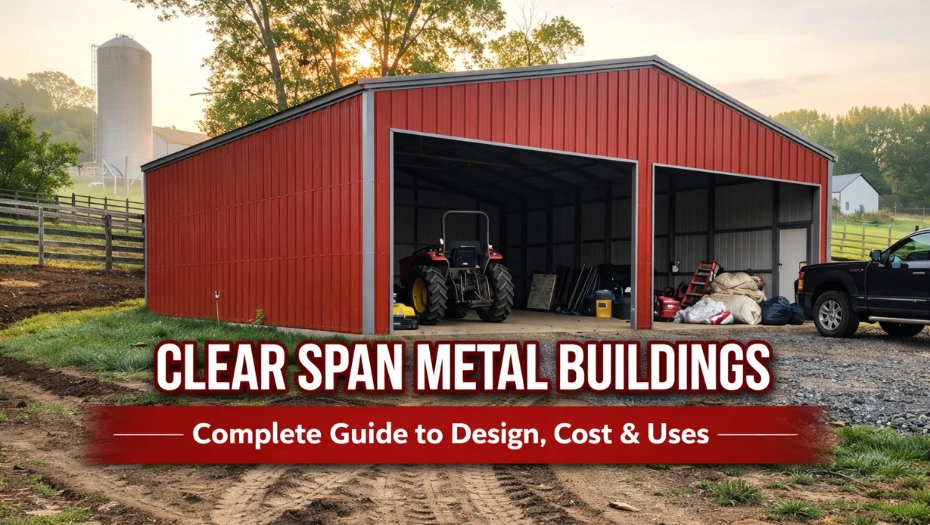
More than 30% of usable space in traditional buildings is lost to interior support columns. That’s a huge amount of wasted room, especially when you are paying per square foot. This is exactly why clear span buildings have become the preferred choice for farms, warehouses, and commercial facilities across the U.S.
They are not like conventional structures. Clear span steel buildings eliminate interior posts and transfer all structural loads to the exterior frame. The result is a completely open layout that gives you maximum flexibility, better workflow, and easier expansion in the future. In this guide, we will break down how clear-span systems work, what they cost, and how to decide whether they are the right investment for your needs.
Before comparing sizes and prices, it’s important to understand the concept. Many buyers ask, “What is clear span building mean?” The answer is simpler than it sounds.
A clear span building is a structure designed without interior columns or support posts. The roof load is carried entirely by the exterior sidewalls through rigid framing systems. In simple terms, clear span means the interior space is completely open from one sidewall to the other.
For example, if you build a 40-foot-wide structure, the entire 40 feet is usable floor space without any columns blocking movement.
Clear span systems rely on rigid steel frames. These frames consist of:
When wind, snow, or roof weight presses down, the load transfers from the rafters into the sidewall columns and then into the foundation. The frame bends slightly under load but is engineered to return to its original position without structural damage. This is why most modern clear span buildings are built using steel rather than wood.
In a multi-span structure, interior columns support the roof. While this reduces beam size and initial cost, it limits usable space.
Clear span:
Multi-span:
If you plan to move tractors, forklifts, or large machinery, a clear span is usually the better option. Let’s know more about why it’s a better option.
Once you understand the structure, the next question becomes: why do buyers prefer them? The answer goes beyond just open space.
With no columns inside, you can arrange equipment, storage racks, or vehicles freely. This is especially useful for warehouses with pallet racking, workshops with large fabrication equipment, and indoor sports facilities. You are not designing your workflow around columns; the space adapts to you.
Farmers often choose clear span barns because they need uninterrupted space for livestock, hay storage, and machinery. A vertical metal barn design improves water drainage and snow shedding. Combined with a clear span layout, it becomes the best metal structure for your farm if you want flexibility for future upgrades.
For example:
Clear span layouts are used for many big projects and commercial purposes. Because the entire width is usable, businesses can optimize floor plans and maximize storage density. Here are some of them:
Now let’s move deeper into how these buildings handle stress and why engineering quality matters. So, you don’t feel confused when you look at the structural strength of a building.
Every building must handle four main forces:
Rigid steel frames are designed to bend slightly under these loads. The design calculations ensure that deflection remains within safe limits.
For example:
A 40-foot span may allow controlled deflection of about 1-2 inches under heavy load. This is why wider spans require thicker beams and reinforced connections.
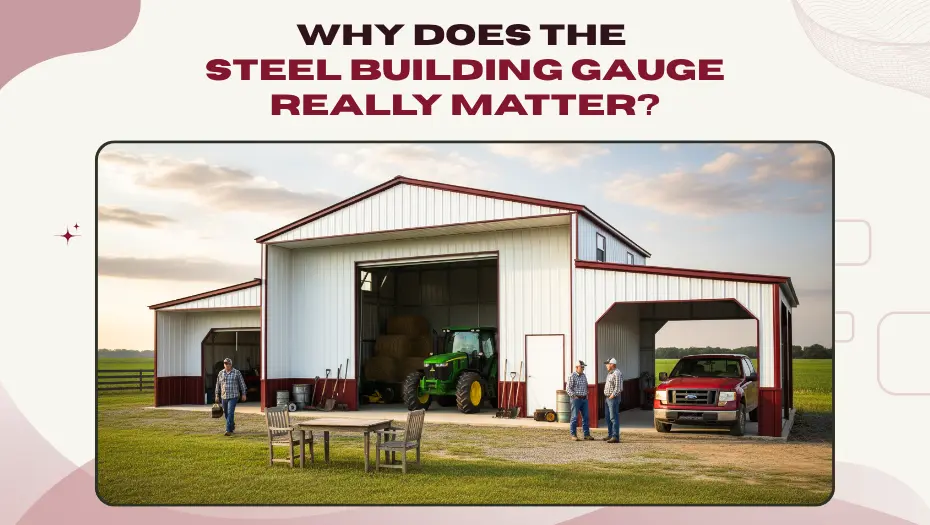
Many buyers overlook steel thickness. But this is critical. Steel gauge refers to thickness, and lower numbers mean thicker steel. When considering clear span buildings for sale, understanding gauge helps ensure long-term durability.
This is why steel building gauge matters when you’re investing in larger spans.
Most clear span systems today are built as pre-engineered steel buildings. These are factory-designed, precision-cut, and delivered in components. Many buyers choose these prefabricated metal structures because they reduce construction time by 30–50%.
Compared to traditional construction, they offer benefits like:
Cost is one of the most searched topics. Whether you want a small or large commercial structure, knowing the clearspan metal building cost matters at every decision you make to add a feature.
Let’s break it down clearly.
On average, clear span metal buildings range from $15 to $30 per square foot installed.
Example:
But remember, the final price depends on customization, height, certification requirements, and many other factors. So, consider all the key factors before you decide on your budget for a column-free space.
Several variables affect pricing:
A 60-foot-wide building requires significantly stronger rafters than a 30-foot-wide structure.
The prices of the largest clear span metal buildings can vary widely. Not only because they are large, but also because they have custom features, a particular steel gauge, and are installed in a particular region with building code.
For example:
Note: Large spans require reinforced rigid frames and deeper foundations.
When searching for clear span metal buildings near me, remember pricing varies by:
For example, northern states with 50+ PSF snow ratings require stronger frames, increasing cost.
Before finalizing a purchase, there are critical checkpoints. Missing them can confuse you later. So, if you are looking for clearspan buildings for sale, always consider checkpoints.
Clear span systems place heavy loads on sidewalls. A reinforced concrete slab or pier foundation is usually required. Foundation thickness may range from 4 to 8 inches, depending on span width.
Most counties require structural certification for spans above certain widths. Always confirm zoning regulations before purchasing.
You can customize:
Clear span barns often include ridge vents and large roll-up doors for airflow and accessibility.
Most clearspan metal buildings in residential settings are installed within 2–5 days once the foundation is ready. Larger industrial spans may take 1–2 weeks.
Clear span structures are evolving with technology and energy efficiency in mind. The main reason is that they are flexible. This feature makes them super easy to work with. Here is how.
As you read it already above that metal barn buildings are flexible, this feature allows the integration of technologies easy. Many modern barns now include:
If you want to integrate technology in a metal barn, it can be effortless and improve efficiency. Moreover, it will reduce the long-term operating costs.
Adding R-19 wall and R-30 roof insulation significantly reduces energy bills. And if you integrate spray foam insulation, it can also prevent condensation in larger spans.
Many clear span layouts are designed with expandable end walls. This allows you to extend the length later without redesigning the entire frame.
Clear span metal buildings are ideal if you need:
If your building width is under 20 feet and your budget is tight, a multi-span layout might work. But for farms, warehouses, and industrial use, clear span design delivers better long-term value. So, when comparing clear span metal building prices, always look beyond square footage. Focus on structural strength, gauge thickness, certification, and future expansion ability.
A well-designed, clear span structure is not just a building; it’s a flexible investment that adapts as your needs grow.