Loading...
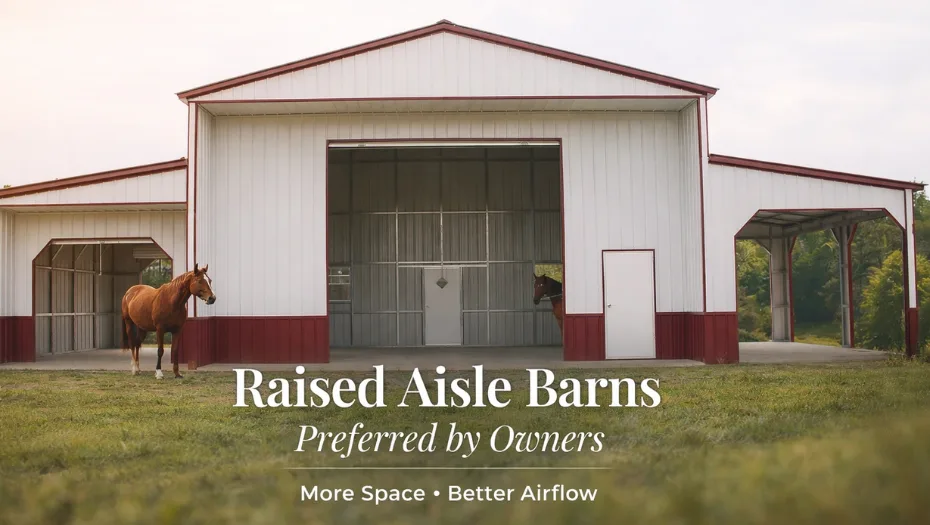
Building a horse barn is one of the biggest investments a horse owner will make. You want a structure that keeps your horses healthy, makes daily chores manageable, and provides lasting value. If you’ve been researching barn designs, you’ve probably heard about raised center aisle horse barns. But what makes this design so special? Why are more horse owners choosing this layout?
The answer isn’t just one thing; it’s actually five compelling reasons that work together to create a superior horse living environment. Let’s explore why raised center aisle horse barns have become the preferred choice for serious horse owners. Here starts all the reasons.
1. Superior Drainage
The Problem Horse Owners Face:
Wet stalls are every horse owner’s nightmare. When water pools in stalls, it creates a breeding ground for bacteria, fungi, and parasites. Your horses spend 20 or more hours a day in their stalls, so standing in damp conditions day after day leads to serious hoof problems like thrush and white line disease. Plus, wet bedding decomposes faster, creating that awful ammonia smell that damages your horses’ respiratory systems.
The Solution
A raised center aisle horse barn solves this by design. The center aisle sits 6 to 12 inches higher than the stalls on either side, creating a natural slope. When your horses urinate or water spills, gravity does all the work. Water flows down and out of the stalls toward the center aisle and then exits the barn. No standing water. No puddles. No wet bedding lasting for days. This simple design principle works whether you’re building with traditional materials or choosing a steel barn structure. Whether you’re constructing a custom metal barn or exploring prefab barn building options, the raised center aisle principle remains highly effective.
2. Better Air Quality
The Problem Horse Owners Face:
Barns are notorious for poor air quality. Ammonia from urine is a silent killer, damaging your horses’ lungs even when you don’t notice the smell anymore (your nose adapts). Horses developed in open pastures where air moves constantly. Confining them in stuffy stalls with stagnant air causes respiratory problems, chronic coughs, and reduced performance. Many horses in poorly ventilated barns develop heaves or recurrent airway obstruction.
The Solution
The raised center aisle design creates natural ventilation. As warm air rises from the stalls, it naturally flows toward and up through the center aisle area. This continuous circulation prevents ammonia and other airborne irritants from building up. Additionally, because the stalls stay dry, much less ammonia is produced in the first place. Wet bedding is ammonia central; dry bedding produces minimal harmful gases. Horse owners report that their horses cough less, have better respiratory health, and show improved performance when housed in a step down metal barn or raised center aisle design with proper airflow.
3. Save Hours Every Week
The Problem Horse Owners Face:
Traditional barn layouts often have the same floor level throughout, which means wet, muddy areas and stalls that are difficult to clean. Barn work becomes a slog. You’re pushing wheelbarrows through mud, struggling with manure removal, and spending way more time than necessary on daily chores. You can’t see all the horses at once from any single vantage point, making it harder to monitor their health and behavior.
The Solution
In a raised center aisle horse barn, all your work happens on that elevated, dry center aisle. Stall cleaning becomes dramatically faster because you can easily push your wheelbarrow without fighting mud or wet patches. Manure removal is efficient, and the wide center walkway gives you space to work. You can stand in the center aisle and observe every horse at a glance, making health checks quick and easy. Feeding, watering, and medical access all become faster. Whether you’re building a livestock metal barn or a steel barn structure with traditional methods, this design principle saves you 30 minutes to an hour on daily chores. Over a year, that’s 100+ hours of your time back.
4. Prevention Through Design
The Problem Horse Owners Face:
Poor barn conditions create health problems. Damp conditions lead to hoof disease, skin infections, and respiratory issues. These problems mean frequent vet visits, expensive treatments, and horses that don’t perform at their best. A horse with chronic respiratory issues or recurring hoof problems is a horse that costs you thousands in veterinary care annually.
The Solution
A raised center aisle horse barn prevents these problems before they start. The dry conditions, excellent air quality, and healthier environment mean fewer infections, fewer respiratory issues, and healthier hooves. Horse owners consistently report that their vet bills drop significantly after moving to a raised center-aisle design, whether it’s a prefab barn or a custom steel-framed barn.
5. Better Long-Term Value
The Problem Horse Owners Face:
Many barn owners choose the cheapest option upfront, only to spend thousands more later on repairs, replacements, and health-related issues. Poor drainage systems fail, wet barns rot the wood structure, and countless additional repairs pile up. Plus, ongoing expenses for excessive bedding, vet care, and labor to keep the barn functional become a financial burden.
The Solution
Raised center aisle horse barns deliver exceptional long-term value. Yes, the initial construction cost might be slightly higher than a basic barn design. But once you factor in the cost savings over 10, 20, or 30 years, it’s the clear winner.
- Bedding Savings: Dry bedding lasts longer, requiring 25-40% less bedding material annually
- Vet Bill Reduction: Healthier horses mean fewer veterinary expenses, often 30-50% less
- Labor Efficiency: 30-60 minutes saved daily on barn chores equals hundreds of hours annually
- Structural Durability: Dry conditions mean less rot, rust, and structural damage to the barn
- Resale Value: Well-maintained raised center aisle barns hold their value better
Whether you’re building a steel barn structure, choosing a livestock metal barn, or going with traditional materials, the raised center aisle design maximizes your investment. Many horse owners find that within 5-10 years, the savings cover the additional upfront cost.
Why Smart Horse Owners Choose This Design
Raised center aisle horse barns aren’t trendy because they’re new. They’re popular because they work. The combination of superior drainage, better air quality, easier management, healthier horses, and long-term value creates an overwhelming case. Whether you’re building a prefab barn building for your first horse or designing a custom metal barn for a large operation, this design principle delivers results.
If you’re exploring different barn options, comparing a raised center barn with a step down metal barn, or considering how this design compares to other livestock metal barn options, remember that the fundamentals are what matter. Good drainage, excellent ventilation, and practical design beat expensive features every time.
Your horses deserve the best care possible. A raised center aisle horse barn isn’t just a building; it’s an investment in your horses’ health, your own quality of life, and your long-term financial well-being.
Related articles