


Custom Metal Barns in Tulsa, OK
Property owners in Tulsa, Oklahoma, choose metal barns for dependable protection against wind, heat, rain, and seasonal storms. Ideal for equipment, livestock, hay, vehicles, and workshops, steel barns offer lasting durability and versatility.
Need help? Call us at +1 (704) 579-6966 for a free consultation.
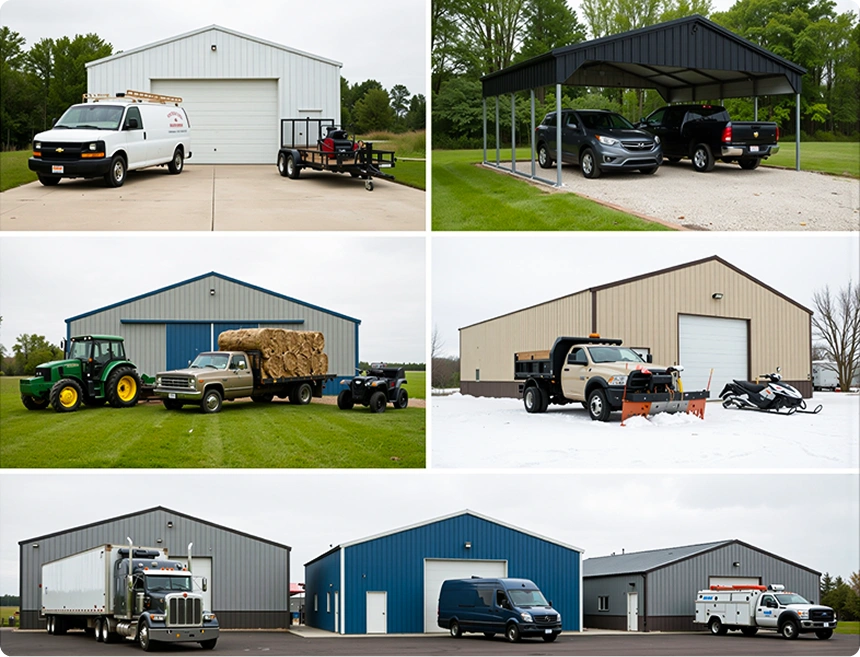
Why Choose Viking Barns for Tulsa Steel Barns?
Choosing the right building is important, but choosing the right barn supplier is just as critical. Whether you’re planning a horse barn, livestock shelter, equipment storage building, or multi-purpose agricultural structure, Viking Barns helps property owners throughout Oklahoma find solutions designed for long-term performance.
Superior Weather Resistance
Engineered with heavy-gauge steel and sealed joints to withstand heavy moisture, snow loads, and high winds, keeping your structure safe year after year.
Flexible Payment Options
Choose from rent-to-own (RTO) & customized financing programs with low down payments, making it easy to get started with any budget.
Custom Designs & Sizes
Fully configurable from compact personal storage sheds to sprawling multi-span agricultural barns, tailored to your exact dimensions, layout, and use case.
Fast Installation
Factory-fabricated panels and pre-drilled components arrive ready to assemble, significantly cutting on-site labor hours and getting your building up faster.
Low Maintenance
Galvanized steel construction resists rust, rot, and pests, so your barn stays structurally sound and looking great for decades with little to no ongoing upkeep.
Energy-Efficient Options
Upgrade with our available insulation options to regulate interior temperatures, reduce heating and cooling costs, and enable year-round use.
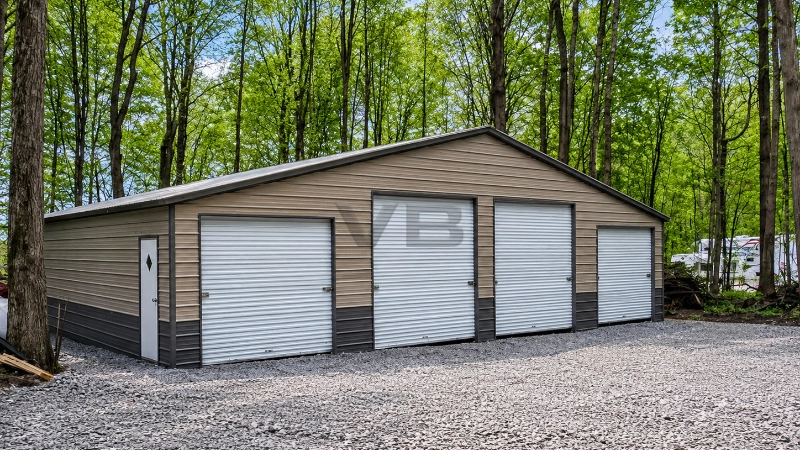
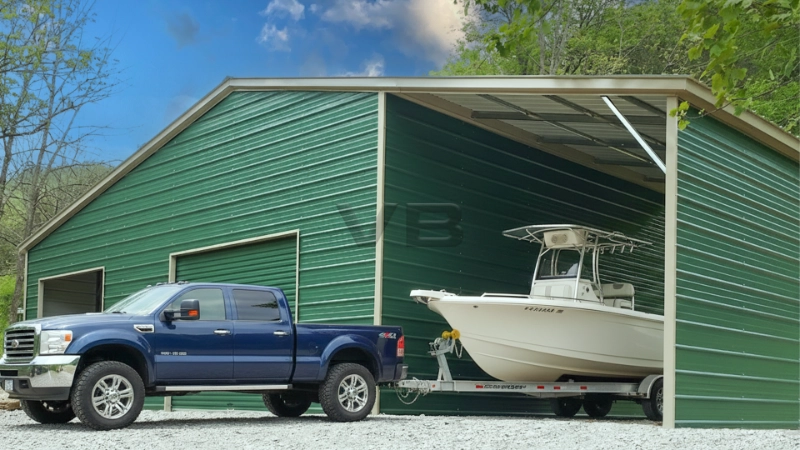
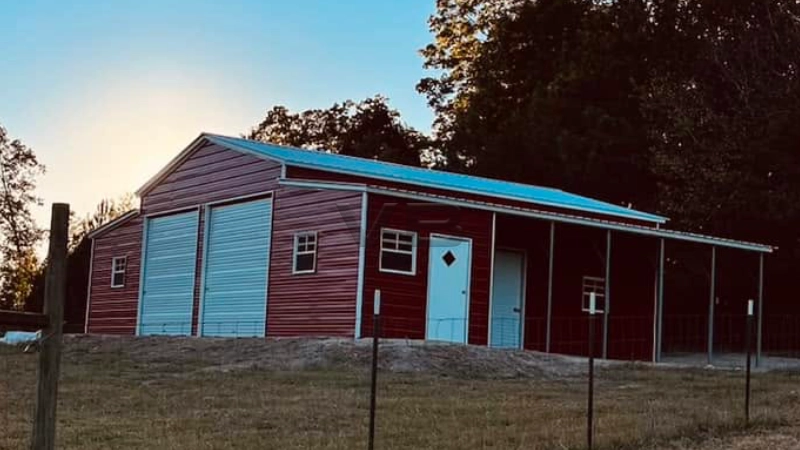
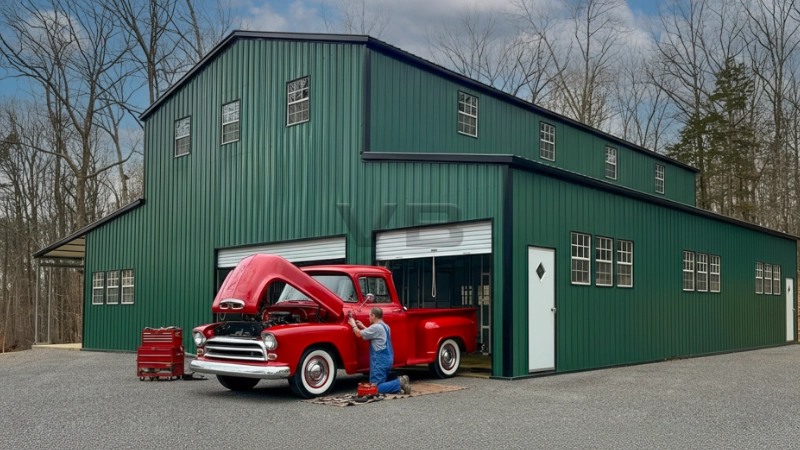
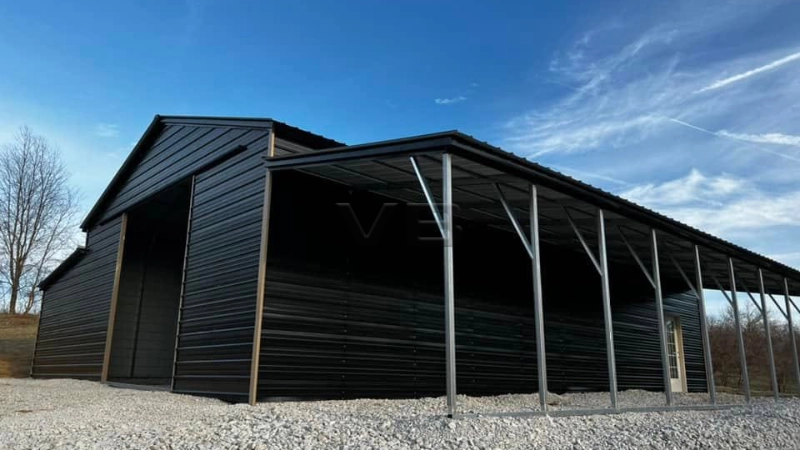
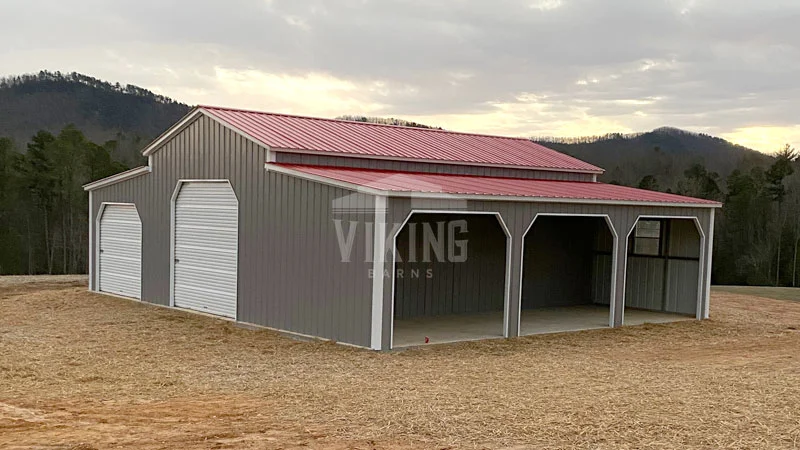



Oklahoma weather can be tough on buildings, from high winds and hailstorms to extreme summer heat and winter ice. That’s why many property owners in Tulsa are choosing metal barns over traditional wood structures. Whether you need space for livestock, equipment, hay storage, vehicles, or a workshop, a steel barn provides the strength, durability, and low-maintenance performance needed for Oklahoma properties. We help customers find practical barn solutions built to fit their land, needs, and budget.
Why Tulsa Properties Demand Better Buildings
Oklahoma’s agricultural heritage runs deep. The state ranks consistently among the top cattle producers in the nation, with over 21 million acres in pastureland according to USDA census data. Wheat farming, hay production, and livestock operations define the rural landscape in communities like Tulsa, and those operations depend on structures that can take punishment without breaking down.
Wood barns have been a fixture on Oklahoma farms for generations — and plenty of them are still standing. But talk to anyone who’s maintained one through twenty Oklahoma springs, and they’ll give you a clear-eyed picture: the rot that works in through a board you thought was sealed, the termites that found the post sill you didn’t check, the hail season that stripped paint and opened gaps in siding. Wood requires ongoing investment just to hold its ground.
Steel farm buildings sidestep most of those headaches from the start. Metal doesn’t rot. It doesn’t absorb moisture and swell. It doesn’t give termites anything to work with. And engineered steel framing — properly spec’d for Oklahoma’s wind load requirements — holds its structural integrity through the kind of storm systems that rearrange wood-frame structures.
For anyone building on Tulsa property for the long term, that’s not a minor detail. That’s the difference between a building that’s an asset in year twenty and one that’s a liability.
Here’s a more informative, merged version that flows naturally and avoids repeating similar points:
Why More Property Owners in Tulsa Are Choosing Steel Barns Over Wood
For many Oklahoma property owners, the decision between a traditional wood barn and a modern steel barn comes down to long-term durability, maintenance costs, and performance during severe weather. While both options can serve agricultural and storage needs, steel barns offer several advantages that make them particularly well-suited for Oklahoma’s climate.
Built for Oklahoma Weather Conditions
Properties in Tulsa experience a wide range of weather challenges throughout the year, including high winds, hailstorms, heavy rainfall, extreme summer heat, and occasional winter ice events. These conditions can accelerate wear on traditional wood structures.
A properly engineered steel barn offers:
- Superior wind resistance when designed to meet local building requirements
- Better protection against hail and storm damage
- Resistance to moisture-related deterioration
- Greater structural stability during temperature fluctuations
- Long-term durability with minimal upkeep
Unlike wood, steel does not absorb moisture, warp, crack, or rot after years of exposure to changing weather conditions.
Lower Maintenance and Ownership Costs
One of the biggest advantages of steel construction is the reduction in ongoing maintenance expenses. Traditional wood barns often require periodic painting, sealing, board replacement, termite treatments, and repairs caused by moisture damage.
Steel barns eliminate many of these concerns. Modern galvanized steel components resist rust, corrosion, insects, and decay, allowing property owners to spend less time and money on maintenance throughout the life of the building.
Ideal for Farms, Ranches, and Acreage Properties
Many properties in Tulsa serve multiple purposes. A barn may be used to store tractors and implements, protect hay and feed, shelter livestock, house horses, or provide workshop space for equipment maintenance.
Custom metal barns can be designed to accommodate these needs while remaining flexible enough for future expansion. Whether your operation grows or your storage requirements change, steel structures are often easier to modify than traditional wood buildings.
Strong Long-Term Value
Many property owners view a steel barn as a long-term investment rather than simply a storage building. By protecting valuable equipment, increasing usable space, supporting agricultural operations, and reducing maintenance costs, a well-designed steel barn can deliver excellent value for decades.
Wood Barn vs. Steel Barn
| Feature | Wood Barn | Steel Barn |
| Moisture Resistance | Susceptible to rot and water damage | Highly resistant |
| Insect Damage | Vulnerable to termites and pests | Not susceptible |
| Maintenance Requirements | Moderate to high | Low |
| Wind Resistance | Varies by construction | Excellent when engineered |
| Lifespan | Variable | Long-term durability |
| Expansion Options | Often more complex | Easier to modify |
| Long-Term Ownership Cost | Higher over time | Lower overall cost |
For most Oklahoma properties, steel barns provide the best combination of strength, weather resistance, flexibility, and long-term savings. While wood barns remain a traditional option, many landowners find that steel simply delivers greater durability with far less maintenance over the years.
Popular Metal Barn Styles for Properties in Tulsa
The best barn style depends on how you plan to use the building today and whether you anticipate needing additional storage, livestock space, or equipment capacity in the future. Fortunately, modern metal barns are available in several configurations designed to meet the needs of Oklahoma farms, ranches, horse properties, and residential acreages.
Carolina Barns
Carolina barns remain one of the most popular choices among Oklahoma property owners because they combine enclosed storage with open-sided lean-tos. This design provides excellent versatility for operations that require both protected and easily accessible space.
Common uses include:
- Tractor and equipment storage
- Hay and feed protection
- Livestock shelter
- Utility vehicle parking
- Farm and ranch operations
Many landowners appreciate the ability to keep valuable equipment covered while maintaining convenient access to open bays for daily use.
Raised Center Barns
Raised center barns are a favorite among horse owners, ranchers, and agricultural operators. The elevated center section creates additional vertical clearance while the side lean-tos provide sheltered space for animals, equipment, or storage.
Key benefits include:
- Increased interior height
- Better ventilation and airflow
- Easier access for trailers and large equipment
- Flexible storage and livestock layouts
- Improved functionality for horse properties
For multi-purpose agricultural operations, raised center barns offer one of the most efficient and practical floor plans available.
Step-Down Barns
Step-down barns provide excellent separation between different uses while maintaining a clean, attractive appearance. Their unique roof design creates distinct sections that can be dedicated to equipment storage, livestock housing, hay storage, or workshop space.
These barns are often chosen by acreage owners who want a functional building that blends naturally with residential or rural landscapes.
Fully Enclosed Metal Barns
For maximum protection from Oklahoma’s weather, many property owners choose a fully enclosed metal barn. These structures provide secure, weather-tight storage and can be customized with roll-up doors, walk-in doors, windows, insulation, and interior partitions.
Popular applications include:
- Farm equipment storage
- Vehicle and RV protection
- Feed and hay storage
- Workshops and hobby spaces
- Contractor and commercial operations
The fully enclosed design maximizes usable floor space while providing year-round protection from wind, rain, hail, and sun exposure.
Utility Barns
Utility barns are a practical option for smaller farms, rural homes, and acreage properties that need flexible storage without the footprint of a large agricultural building.
They are commonly used for:
- Lawn and landscaping equipment
- Small tractors and implements
- UTV and ATV storage
- Feed and supply storage
- Hobby farming activities
Their straightforward design makes them an affordable and highly functional solution for everyday property needs.
Commercial Agricultural Buildings
Larger farming and ranching operations often require buildings that extend beyond traditional residential barn sizes. Commercial agricultural buildings can be designed with wide clear-span interiors and customized layouts to accommodate large equipment fleets, livestock operations, hay storage facilities, and other agricultural applications.
These structures provide the flexibility and scalability needed for growing operations while maintaining the durability and low-maintenance benefits of steel construction.
No matter the size of your property or operation, choosing the right barn style can improve efficiency, protect valuable assets, and provide the flexibility needed for future growth. The key is selecting a configuration that matches both your current needs and your long-term plans.
How Property Owners in Tulsa Use Their Metal Barns
One of the biggest advantages of a metal barn is its versatility. While many property owners purchase a barn for a specific purpose, most eventually use the building for multiple functions as their needs evolve. What starts as equipment storage often becomes a combination of workshop, livestock shelter, feed storage, vehicle protection, and agricultural workspace.
That’s why planning for future growth is just as important as meeting today’s needs.
Farm Equipment Storage
For many Oklahoma landowners, protecting expensive equipment is the primary reason for investing in a metal barn. Tractors, balers, sprayers, trailers, rotary cutters, and other implements represent a significant financial investment and can suffer unnecessary wear when exposed to Oklahoma’s sun, rain, hail, and high winds.
A properly designed equipment barn helps:
- Extend equipment lifespan
- Reduce weather-related maintenance
- Protect resale value
- Improve organization and accessibility
When planning an equipment barn, it’s important to consider not only your current machinery but also future upgrades. Door sizes and wall heights should provide adequate clearance for larger equipment you may purchase later.
Horse Barns and Equestrian Facilities
Horse owners throughout Tulsa frequently choose metal barns because they can be customized to accommodate stalls, tack rooms, feed storage, grooming areas, trailer parking, and equipment storage under one roof.
Popular features include:
- Horse stalls
- Tack and feed rooms
- Wash bays
- Trailer storage
- Covered work areas
Raised center barn designs are especially popular because they provide additional headroom and improved airflow. Proper ventilation is critical in Oklahoma’s climate, helping maintain a healthier environment for horses while reducing moisture buildup inside the structure.
Livestock Shelters
Many farms and ranches require dependable shelter for cattle and other livestock throughout the year. Metal livestock barns offer protection from severe weather while providing the airflow necessary for animal comfort.
Common livestock barn uses include:
- Calving shelters
- Feeding areas
- Equipment storage
- Seasonal weather protection
- Covered livestock runs
Open-sided and partially enclosed designs are often preferred because they balance protection with ventilation, making them practical for Oklahoma’s changing weather conditions.
Hay and Feed Storage
Hay, feed, minerals, and livestock supplies represent a major investment for many agricultural operations. Proper storage helps preserve quality and minimize losses caused by moisture, mold, and weather exposure.
Metal barns are commonly used for:
- Round bale storage
- Square bale storage
- Feed and grain storage
- Mineral storage
- Agricultural supply storage
Many property owners incorporate dedicated enclosed sections into their barn design specifically to protect valuable feed products throughout the year.
Workshops and Hobby Spaces
Storage is only part of the equation for many acreage owners. Metal barns are increasingly being designed as workshops where owners can work on equipment, vehicles, hobbies, or small business operations.
Popular workshop applications include:
- Welding and fabrication
- Woodworking
- Equipment maintenance
- Automotive repair
- Small business operations
- Tool and material storage
The clear-span design of steel buildings eliminates interior support posts, creating open work areas that maximize usable space. Adding insulation and proper ventilation can also make workshops far more comfortable during Oklahoma’s hot summer months.
RV, Trailer, and Recreational Vehicle Storage
Many Oklahoma property owners own travel trailers, horse trailers, fifth wheels, boats, utility trailers, or off-road vehicles that require protection from weather exposure.
Metal barns provide secure storage for:
- RVs and motorhomes
- Fifth-wheel campers
- Horse trailers
- Utility trailers
- Boats
- ATVs and UTVs
When planning a storage barn, it’s important to account for the tallest vehicle you own and allow extra clearance for future upgrades. Proper sizing from the start can prevent costly modifications later.
Built for Multiple Uses
The most successful barn projects are designed with flexibility in mind. A single structure can often combine equipment storage, livestock shelter, hay storage, workshop space, and vehicle protection under one roof. By planning for both current and future needs, property owners in Tulsa can maximize the value of their investment while creating a building that continues to serve their operation for years to come.
Custom Features That Can Improve Your Metal Barn
The difference between a basic barn and a highly functional one often comes down to the customization options selected during the planning stage. Thoughtfully chosen features can improve efficiency, increase storage capacity, enhance comfort, and help the building adapt to future needs. For many property owners in Tulsa, these upgrades deliver long-term value that far outweighs their initial cost.
Lean-Tos for Additional Covered Space
Lean-tos are one of the most popular and cost-effective additions to a metal barn. They expand usable covered space without significantly increasing the overall project budget.
Common uses include:
- Equipment and implement storage
- Livestock shelter
- Hay and feed storage
- Trailer parking
- Covered work areas
Many barn owners find that their lean-to quickly becomes one of the most frequently used sections of the building because of its convenience and versatility.
Proper Door Placement and Sizing
Door design plays a major role in how efficiently a barn functions. One of the most common mistakes property owners make is installing doors that are too small or relying on a single access point.
Consider features such as:
- Multiple roll-up doors
- Drive-through layouts
- Front and rear access
- Equipment-specific entrances
- Separate workshop access
Doors should be sized not only for current equipment but also for future upgrades, helping avoid costly modifications later.
Tack Rooms and Dedicated Storage Areas
For horse owners, a dedicated tack room can dramatically improve daily barn operations. These enclosed spaces provide secure, organized storage while helping protect valuable equipment and supplies.
Benefits include:
- Tack and saddle storage
- Feed protection
- Equipment organization
- Reduced clutter
- Improved security
Integrating storage areas into the initial design often creates a more efficient and user-friendly barn layout.
Horse Stall Integration
Custom horse barns can incorporate steel stall systems directly into the structure, creating durable and easy-to-maintain housing for horses. Planning stall sizes, aisle widths, and traffic flow from the beginning helps ensure the barn functions smoothly for years to come.
Proper ventilation, comfortable aisle space, and convenient access to tack and feed storage are all important considerations for equestrian facilities.
Windows and Skylights
Natural lighting can significantly improve the usability of a barn while reducing reliance on artificial lighting during daylight hours.
Windows and skylights are especially beneficial in:
- Workshops
- Horse barns
- Feed storage areas
- Equipment buildings
- Agricultural workspaces
They create a brighter, more comfortable environment while improving visibility throughout the building.
Ventilation Systems
Ventilation is one of the most important features for Oklahoma barns. During the summer months, interior temperatures can rise quickly, creating uncomfortable conditions for livestock, equipment, and building occupants.
Effective ventilation helps:
- Reduce heat buildup
- Improve airflow
- Minimize condensation
- Protect stored equipment
- Increase livestock comfort
Popular ventilation options include ridge vents, gable vents, eave openings, and other passive airflow systems designed to keep air moving throughout the structure.
Exterior Colors and Finishing Options
Modern metal barns are available in a variety of panel and trim colors, allowing property owners to match their barn to existing buildings or create a distinctive appearance.
Some owners prioritize practical colors that help hide dust, dirt, and weather staining, while others choose color combinations that complement their home, farm, or ranch buildings.
Plan for Future Expansion
One of the smartest investments you can make is designing your barn with future growth in mind. Many property owners eventually need more storage, additional livestock space, larger equipment access, or expanded workshop areas.
Before finalizing a design, consider:
- Will equipment become larger?
- Could livestock numbers increase?
- Will storage requirements grow?
- Might a workshop or business operation expand?
Building slightly larger or incorporating expansion-friendly features today is often far more affordable than constructing a second building later. A well-planned metal barn should not only meet your current needs but also provide the flexibility to support your property for years to come.
Why a Vertical Roof Is the Best Choice for Most Barns in Tulsa
When designing a metal barn in Oklahoma, one upgrade consistently delivers long-term value: a vertical roof. While horizontal roof systems may have a lower upfront cost, a vertical roof typically provides better performance, lower maintenance requirements, and a longer service life—making it the preferred choice for most permanent agricultural and storage buildings.
Superior Water Drainage
Oklahoma’s spring storms and seasonal rainfall can put any building’s roofing system to the test. Vertical roof panels run from the ridge to the eave, allowing water to flow directly off the roof with minimal resistance.
This design helps:
- Improve rainwater drainage
- Reduce standing moisture
- Minimize debris buildup
- Lower the risk of long-term moisture-related issues
By comparison, horizontal roof panels contain seams that can collect water, leaves, and debris over time, requiring more maintenance.
Better Performance During Hail and Severe Weather
Hailstorms are a regular part of life in Oklahoma. Vertical roof systems are designed to shed rain, hail, and wind-driven debris more efficiently than horizontal panel roofs.
Benefits include:
- Reduced debris accumulation
- Less stress on roof panels
- Improved weather resistance
- Better long-term roof performance
For property owners investing in a barn expected to last for decades, these advantages can make a significant difference over the life of the structure.
Improved Snow and Ice Shedding
Although Oklahoma winters are generally mild, snow and ice events still occur. Vertical panels allow snow and ice to slide off more easily, helping reduce roof loads and preventing buildup that can contribute to moisture issues.
This makes vertical roofing a practical year-round solution rather than simply a storm-season upgrade.
Lower Maintenance Requirements
Because debris and moisture are less likely to collect on a vertical roof, maintenance needs are typically lower over time. Property owners often spend less time cleaning roof surfaces and dealing with buildup that can affect performance.
For farms, ranches, and acreage properties where time is valuable, reduced maintenance can become a major long-term benefit.
Enhanced Appearance and Property Value
Beyond performance, many property owners prefer the clean, professional appearance of a vertical roof. The design creates a more polished look that complements agricultural, commercial, and residential acreage properties alike.
The finished structure often looks more substantial and can enhance the overall appearance of the property.
Vertical Roof vs. Horizontal Roof
| Feature | Horizontal Roof | Vertical Roof |
| Water Drainage | Good | Excellent |
| Debris Buildup | Higher | Minimal |
| Snow & Ice Shedding | Moderate | Excellent |
| Maintenance Requirements | Moderate | Low |
| Long-Term Performance | Good | Superior |
| Weather Resistance | Good | Excellent |
| Overall Value | Good | Best Long-Term Investment |
For most metal barns in Tulsa, a vertical roof is one of the smartest upgrades available. The additional investment is often modest compared to the improvements in durability, weather protection, maintenance savings, and overall building performance. If you plan to own your barn for many years, a vertical roof is typically the best choice for Oklahoma’s climate.
Choosing the Right Insulation for Oklahoma’s Climate
Oklahoma’s climate presents unique challenges for metal building owners. Hot summer temperatures, cold winter mornings, humidity fluctuations, and sudden weather changes can all affect the comfort and performance of a barn. Without proper insulation, interior temperatures can become extreme, while condensation may lead to moisture-related issues that impact equipment, feed, and stored belongings.
Adding insulation helps regulate temperatures, improve energy efficiency, and reduce condensation, making your barn more comfortable and functional throughout the year.
Benefits of Insulating Your Metal Barn
Proper insulation can:
- Reduce heat buildup during Oklahoma summers
- Minimize condensation and moisture issues
- Improve comfort for livestock and occupants
- Protect equipment, tools, and stored materials
- Increase energy efficiency in enclosed spaces
- Create a more comfortable workshop environment
The best insulation choice depends on how the building will be used and how often it will be occupied.
Popular Insulation Options
| Insulation Type | Best For | Key Benefits | Oklahoma Performance |
| Single Bubble | Basic storage buildings | Affordable condensation control and lightweight installation | Good |
| Double Bubble | Enclosed storage, tack rooms, light-use workshops | Improved thermal barrier and moisture protection | Better |
| Woven R-17 | Workshops, horse barns, commercial buildings, year-round use | Superior temperature control, energy efficiency, and condensation resistance | Excellent |
Single Bubble Insulation
Single-bubble insulation is an economical option designed primarily to reduce condensation inside the building. It provides a modest thermal barrier and works well for basic storage applications where temperature control is not a major concern.
This option is often suitable for:
- Equipment storage barns
- Seasonal storage buildings
- Agricultural shelters
- Budget-conscious projects
Double Bubble Insulation
Double Bubble insulation offers improved thermal performance while maintaining strong condensation control. It is a popular middle-ground solution for property owners who want greater comfort without investing in premium insulation systems.
It works well for:
- Enclosed storage buildings
- Tack rooms
- Utility barns
- Light-use workshops
For many standard storage applications, Double Bubble insulation provides a practical balance between cost and performance.
Woven R-17 Insulation
For buildings that will be occupied regularly or house livestock, Woven R-17 insulation is often the best long-term investment. Its higher thermal resistance helps maintain more comfortable interior temperatures during Oklahoma’s intense summer heat while reducing condensation during colder months.
Woven R-17 is highly recommended for:
- Horse barns
- Workshops
- Agricultural workspaces
- Climate-sensitive storage
- Commercial operations
- Year-round building use
The improved comfort and energy efficiency can make a significant difference for both people and animals spending time inside the structure.
Which Insulation Is Right for Your Barn?
If your primary goal is basic condensation control in a storage building, Double Bubble insulation often provides sufficient performance for Oklahoma conditions. However, for workshops, horse facilities, livestock buildings, or any structure that will see regular use throughout the year, Woven R-17 typically delivers the best combination of comfort, moisture control, and long-term value.
When planning a metal barn in Tulsa, insulation should be viewed as more than just a comfort upgrade. It’s an investment that helps protect your building, improve usability, and ensure better performance through Oklahoma’s changing seasons.
Roof Panel Gauge Options for Metal Barns
Choosing the right roof panel gauge can improve your barn’s durability and performance in Oklahoma’s challenging weather conditions.
| Gauge | Best For | Advantages |
| 29 Gauge | Residential and light agricultural use | Affordable, durable, and suitable for most storage applications |
| 26 Gauge | Workshops, horse barns, and severe-weather areas | Greater strength, improved hail resistance, and longer service life |
For most property owners, 29-gauge roofing provides excellent value and dependable protection. However, if your area experiences frequent hailstorms or your barn will serve as a long-term agricultural or workshop building, upgrading to 26-gauge panels can provide added durability and peace of mind for years to come.
Frame Gauge Options for Metal Barns
The frame is the structural backbone of your metal barn, making frame gauge an important factor in overall strength and durability.
| Gauge | Best Application | Advantages |
| 14 Gauge | Standard agricultural, residential, and storage barns | Strong, durable, and cost-effective for most applications |
| 12 Gauge | Large equipment barns, commercial buildings, and high-wind areas | Greater structural strength and enhanced weather resistance |
For most custom metal barns in Tulsa, a 14-gauge frame provides excellent performance and long-term reliability. However, property owners storing valuable equipment, constructing larger buildings, or seeking additional protection against Oklahoma’s severe weather often upgrade to a 12-gauge frame for added strength and peace of mind.
Foundation and Anchor Options for Metal Barns
A metal barn is only as strong as the foundation beneath it. Choosing the right anchor system and preparing the site properly helps ensure long-term stability, especially in Oklahoma’s challenging weather conditions.
| Anchor Type | Best Surface | Advantages | Recommended Use |
| Concrete Anchors | Concrete Slabs | Maximum holding strength and durability | Workshops, garages, fully enclosed barns |
| Mobile Home Anchors | Soil or Gravel | Strong ground anchoring without concrete | Agricultural barns, livestock shelters |
| Asphalt Anchors | Asphalt Surfaces | Allows installation on existing pavement | Vehicle storage and utility buildings |
| Expansion Anchors | Existing Concrete | Strong retrofit solution | Building additions and upgrades |
| Rebar Anchors | Fresh Concrete | Superior holding power for wind-rated structures | Permanent barns and engineered buildings |
Site Preparation Is Critical
No matter which anchor system you choose, proper site preparation is essential. A well-graded building pad helps:
- Improve drainage
- Reduce standing water
- Protect the foundation
- Improve access around the building
- Extend the lifespan of the structure
Because Oklahoma can experience heavy rainfall and severe storms, ensuring water drains away from the building is one of the most important steps in the construction process.
For most agricultural barns, mobile home anchors provide reliable performance on properly prepared soil. However, for permanent workshops, garages, and high-wind-rated structures, concrete or rebar anchor systems typically offer the highest level of strength and long-term stability.
Financing and Rent-To-Own Options for Your Metal Barn
Investing in a metal barn is a major decision, and many property owners prefer flexible payment options rather than paying the full project cost upfront. Whether you’re building a horse barn, equipment shelter, workshop, or agricultural storage facility, Viking Barns offers financing and Rent-To-Own solutions to help make your project more affordable.
Rent-To-Own (RTO)
Rent-To-Own is a popular choice for customers who want a simple approval process, lower upfront costs, and fast installation.
RTO may be a good fit if you:
- Want predictable monthly payments
- Need a building quickly
- Prefer minimal upfront investment
- Want to avoid traditional financing requirements
Many first-time acreage owners and farmers choose Rent-To-Own to add storage or shelter without delaying important projects.
Financing
For larger or highly customized buildings, financing may provide greater flexibility and longer repayment terms.
Financing can be beneficial if you:
- Are building a larger structure
- Need additional custom features
- Want extended payment terms
- Require immediate use of the building
This option is often preferred for commercial agricultural buildings, large horse barns, and multi-purpose workshop projects.
If you’re unsure which payment option best fits your budget and goals, the our team can help compare available solutions and guide you toward the most practical choice for your project.
Site Preparation: What to Do Before Your Barn Arrives
One of the areas where buyers lose time and money is inadequate site prep. The building itself can be delivered and installed efficiently — but if the site isn’t ready, installation delays follow.
A few things to handle before delivery:
Level the site. Steel barns need a reasonably level footprint. Significant grade changes across the building footprint create installation complications and structural concerns. If your site has substantial slope, grading work should happen before the barn arrives.
Drainage planning. Oklahoma’s rainfall — especially during spring storm season — can put significant water across a site quickly. Understand where water moves across your property and position the barn so that drainage runs away from the building’s footprint, not toward it.
Access for delivery. Steel barn components arrive on a truck. Make sure the delivery path from the road to the site can accommodate a standard delivery vehicle, especially if the site is set back from the road or requires a turn through a gate.
Anchor decisions. Know before delivery whether you want a concrete slab, compacted gravel pad, or native soil installation. If you’re pouring concrete, that work needs to cure before installation begins.
Metal Barn Options for Every Need
Choose from premium steel barn styles engineered for performance, protection, and everyday functionality.
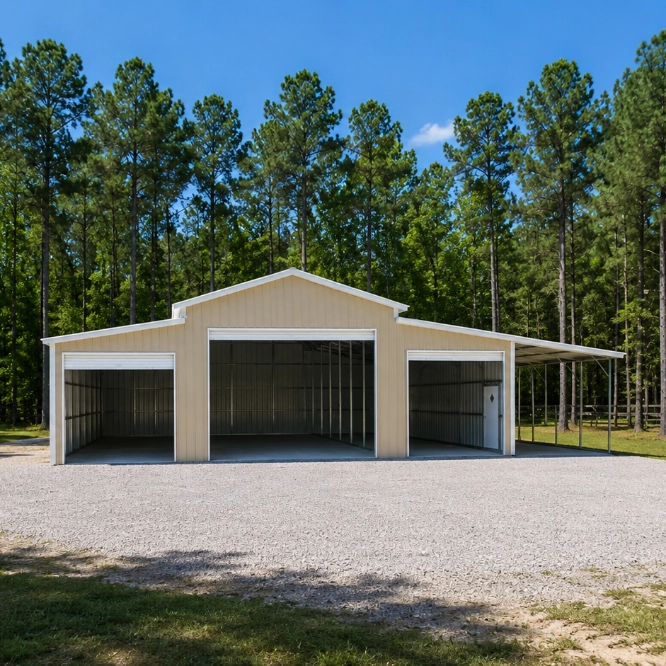
Metal Raised Center Barns
Raised Center Barns provide extra center clearance and versatile storage space, making them ideal for equipment, livestock, hay, and vehicles.
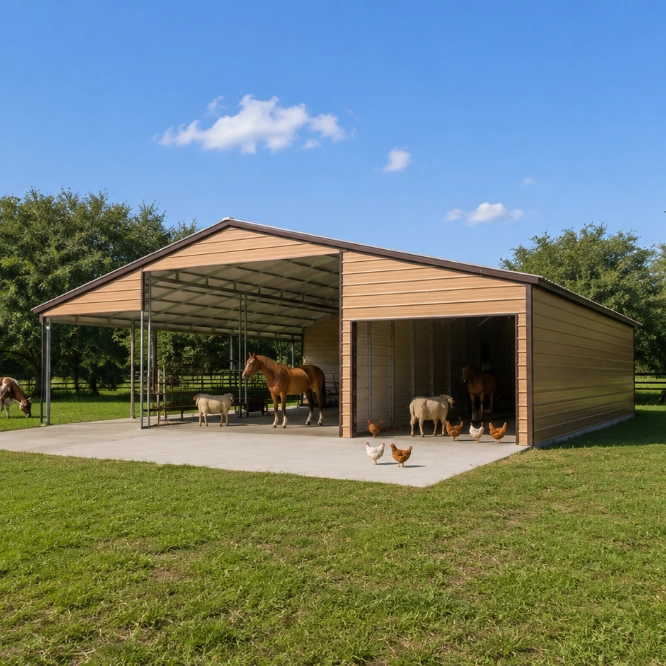
Metal Livestock Barns
Livestock Steel Barns offer durable shelter for cattle, goats, sheep, and other animals while promoting ventilation and weather protection.
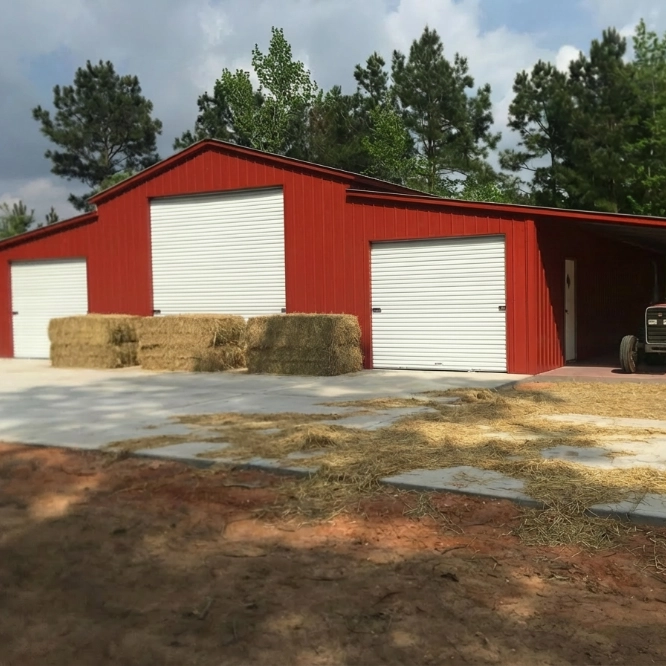
Metal Hay Barns
Metal Hay Barns help protect hay and feed from moisture, weather exposure, and spoilage while maximizing storage efficiency.
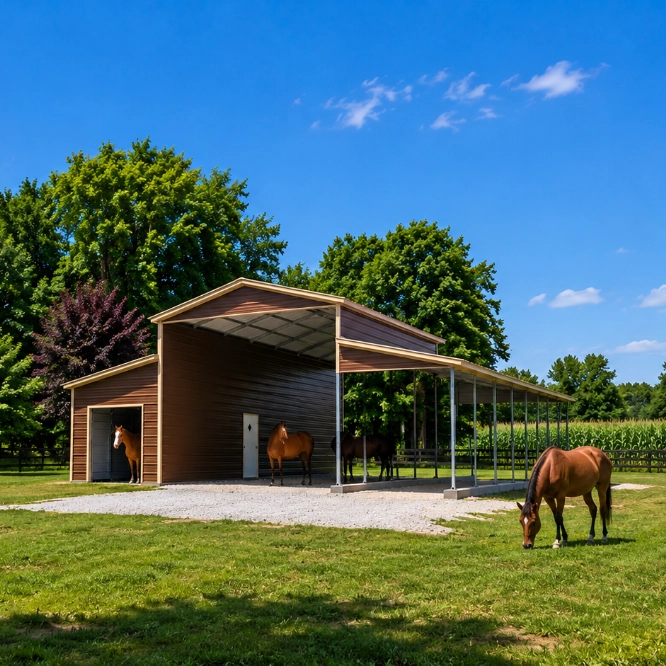
Metal Horse Barns
Metal Horse Barns provide secure, customizable spaces for horses, featuring stall options, storage areas, and excellent ventilation.
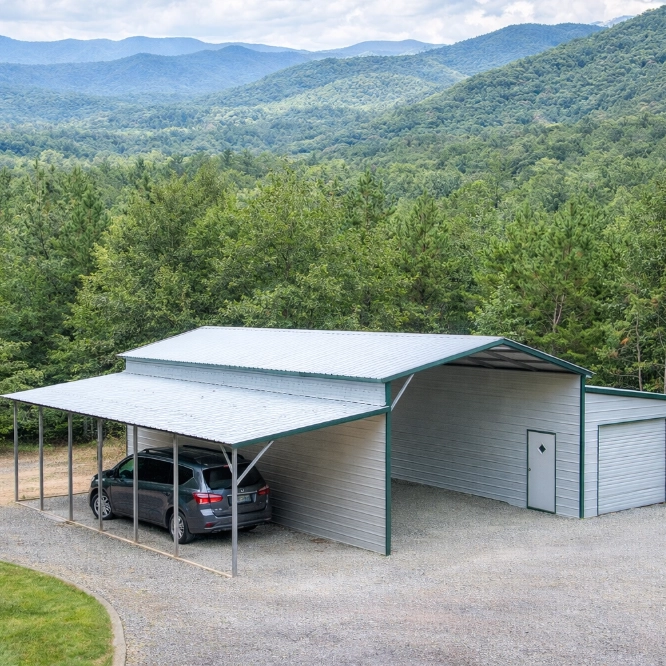
Metal Lean-To Barns
Lean-To Metal Barns add convenient covered space for equipment, livestock, vehicles, or storage while enhancing overall building functionality.
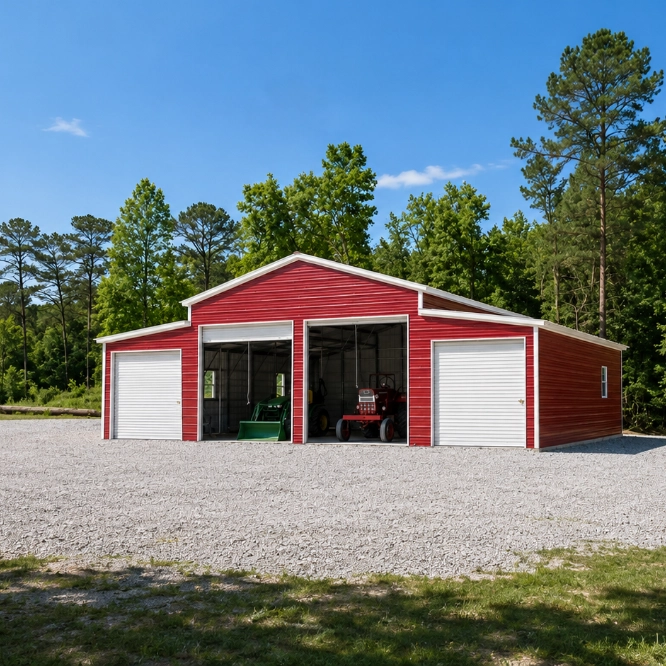
Metal Red Barns
Metal Red Barns deliver the classic farm-style appearance with the strength, durability, and low-maintenance benefits of steel construction.
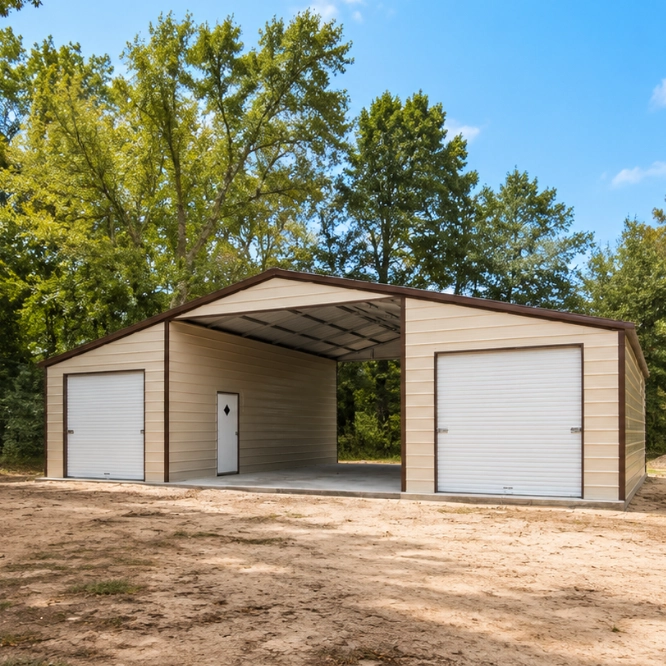
Metal Seneca Barns
Seneca Steel Barns feature a spacious center section with extended side sheds, providing versatile space for livestock, storage, equipment, and farm operations.
Get a Quote for Your Tulsa Property
If you’re dealing with Oklahoma weather every season, your buildings need to be built for it — not just adequate for mild conditions. Whether you’re protecting cattle in the pasture behind your Tulsa property, sheltering horses through a July heat dome, storing a combine that represents years of investment, or building a workshop that can handle daily use year-round, Viking Barns builds steel barn buildings that are sized for Oklahoma operations and engineered to handle what this state throws at them.
Call us at (704) 579-6966 for a free quote, or fill out the form on this page. We’ll work through your site, your use case, and your budget to find the right building for your Tulsa property.
View all Oklahoma steel barn options or explore our Rent-To-Own program to see what monthly payment options look like for your build.
Top Cities We Serve In Oklahoma OK
The cities below represent some of our most popular service locations in Oklahoma OK. However, our coverage extends far beyond these areas. Our team is ready to assist with your steel building project anywhere in Oklahoma OK.
 FAQs
FAQsFrequently Asked Questions About Metal Barns in Tulsa
Over the years, we've helped countless Oklahoma property owners choose the right barn for their needs. The following answers address some of the most common questions about metal barn construction, customization, financing, and ownership in Tulsa.

Didn't Find Your Answer?
Explore our full FAQ page or reach out to our team — we're here to help with any additional questions.