October 24, 2026



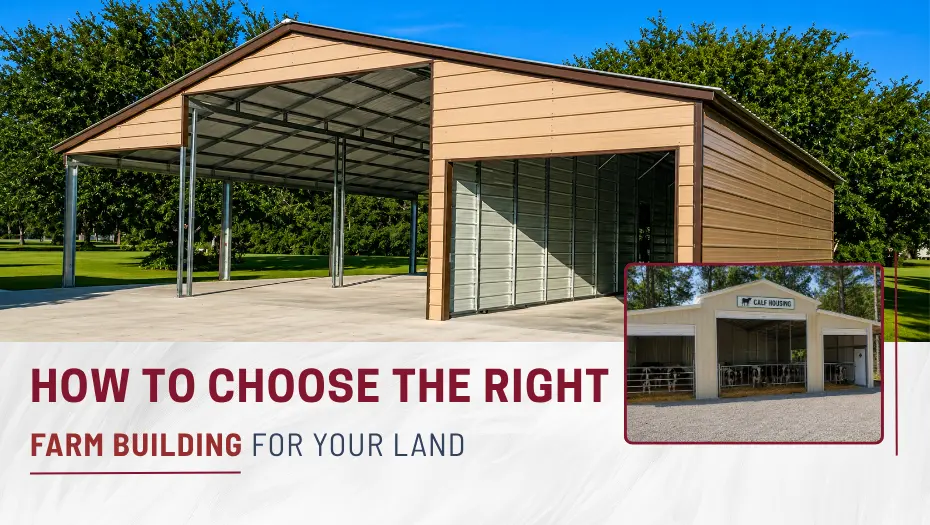
More farmers across the country are turning to metal farm buildings in 2026, and for good reason. Construction costs for traditional structures have climbed steadily, lumber prices remain unpredictable, and the demands on modern agricultural operations have grown more complex. A single building now needs to handle equipment storage, livestock shelter, feed storage, and, in many cases, a working shop, all under one roof.
But choosing the wrong structure is one of the most common and costly mistakes a farm owner can make. Too small, and you will be building again in five years. Wrong layout and the building fights your workflow every single day. Wrong materials, and you spend the next two decades managing maintenance that should not exist.
Metal agricultural buildings and prefab farm buildings have become the go-to choice for working farms because they offer the right combination of durability, flexibility, and long-term value. But even within steel, there are meaningful decisions to make about size, type, layout, and location.
Here is how to choose the right farm building for your land, step by step.
Choosing the right farm building depends on your land size, intended use, climate conditions, budget, and future expansion plans. Metal farm buildings are preferred for their durability, low maintenance, and flexibility, making them ideal for modern agricultural operations across every region of the US.
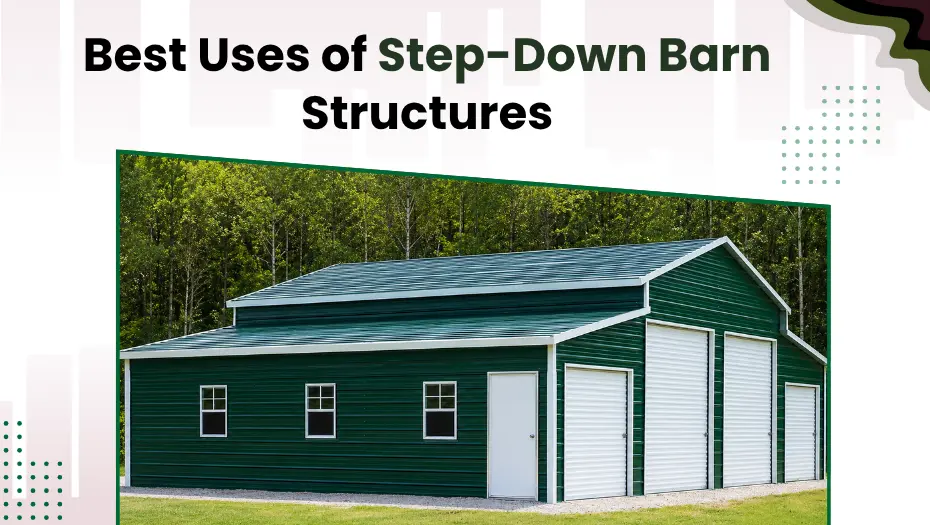
You Might Like: Best Use Cases for Step-Down Barn Structures
Before you look at a single floor plan or price sheet, get clear on how the building will actually be used. This one decision shapes every other choice you make, from size and span to door placement and ventilation.
If your primary need is storing tractors, combines, plows, and implements, your building needs wide clear-span openings, high eave heights to accommodate tall equipment, and a floor plan that lets you pull large machines in and out without maneuvering around columns. Metal ag buildings with 14-foot or 16-foot eave heights and oversized roll-up doors are the standard choice for equipment-focused farms.
Livestock buildings have different requirements entirely. Ventilation becomes a priority, not just for temperature control but for animal health and air quality. You also need to think about interior layout, drainage, and ease of cleaning. A well-designed steel farm building for livestock keeps animals comfortable in both summer heat and winter cold with the right insulation and ventilation combination.
Hay storage demands a dry, well-ventilated space that keeps moisture away from the feed. A prefab farm building with a vertical roof and proper ridge venting handles this well. The key is keeping the interior humidity controlled so hay does not mold or heat, which can become a fire risk over time.
A farm workshop needs good lighting, adequate ceiling height for lifts and equipment, and durable flooring. Agriculture metal buildings work well here because the clear-span interior gives you an open, flexible workspace without the interruption of interior columns.
Many farm operations use a single metal ag building for several of these purposes at once. Proper planning at the design stage, including interior partition walls, separate entrance points, and zone-specific ventilation, makes multi-purpose buildings both practical and cost-effective.
Once you know what the building needs to do, the next question is whether your land is ready for it.
The condition and layout of your land affects every aspect of your building project, from what foundation is possible to what size structure makes sense. Walk your site with these factors in mind before you finalize anything.
With your site assessed, the next step is understanding what type of metal farm building fits your operation.
Not all metal farm buildings are the same. The right type depends on how you plan to use the space, your budget, and the layout of your property.
Clear span steel farm buildings are the most popular choice for equipment and general storage. They use wide, rigid frame construction that eliminates interior support columns, giving you full use of the floor space. A clear span barn design is particularly well-suited to farms with large machinery that needs unobstructed access and full interior flexibility.
Prefab farm buildings are engineered and fabricated off-site, then shipped to your property ready to assemble. This approach dramatically reduces installation time, often to one to three days for a standard size structure, and keeps labor costs significantly lower than traditional on-site construction.
Open-sided barns provide maximum airflow and are well suited to hay storage, covered equipment parking, and livestock shelter in mild climates. Enclosed steel farm buildings offer full weather protection and are the right choice for equipment that requires secure storage, workshops, and any use that demands climate control or pest exclusion.
Multi-use agriculture metal buildings are designed from the outset to serve more than one purpose. A carolina barn configuration, for example, combines an enclosed central structure with open lean-to sides, giving you covered outdoor storage alongside a secure enclosed space in a single footprint.
Once you know the type that fits your needs, it is worth taking a direct look at how metal compares to the traditional alternative.
Also Read: Customization Options Available in Seneca Style Barns
For most modern agricultural operations, yes. The practical advantages of steel farm buildings over wood are significant across every major category that matters to a working farm.
| Feature | Metal Farm Building | Wood Farm Building | Why It Matters |
| Lifespan | 30-50 yrs | 15-25 yrs | Nearly double the service life |
| Maintenance Cost | Low ($300-$500/yr) | High ($2,000-$4,000/yr) | Major long-term savings |
| Pest Resistance | Yes | No | No termite or rodent damage |
| Fire Resistance | Yes (Class A) | No | Lower insurance premiums |
| Installation Time | 1-3 days | Weeks | Faster ROI, less labor cost |
| Customization | High | Moderate | Flexible for any farm use |
The combination of lower long-term costs, faster installation, pest and fire resistance, and a lifespan that nearly doubles that of wood makes metal the practical choice for the overwhelming majority of farm building projects today.
Choosing the right size is one of the most important decisions in the entire process, and the most common mistake is undersizing. Build for where your operation will be in 10 years, not where it is today.
Always spec a building with expansion in mind. Steel farm buildings can be extended in length with relative ease as long as the original structure was designed with that possibility built in. Talk to your supplier about future expansion at the quoting stage so the foundation and framing can accommodate it later.
Measure your tallest and widest pieces of equipment before settling on eave height and door sizing. A building that fits your current tractor but not the one you buy in three years creates a real operational problem.
Where your farm sits has a direct effect on what specifications your building needs. Getting this right at the design stage protects both your investment and everything inside it.
The right foundation depends on how the building will be used, the local soil conditions, and your budget. Prefab farm buildings are designed to work with several foundation options, which gives you flexibility that traditional construction does not.
A full concrete slab is the standard choice for enclosed steel farm buildings used for equipment storage, workshops, or any application where a clean, hard floor surface matters. It provides the most stable base and the cleanest interior environment.
A compacted gravel base is a practical option for open-sided structures, hay storage buildings, and livestock shelters where a concrete floor is not required. It provides good drainage and a stable surface at a lower upfront cost than poured concrete.
Some prefab farm buildings can be installed on engineered ground anchors rather than a poured foundation. This option works best for temporary or semi-permanent structures and in regions where ground conditions support it. Always confirm with your building supplier and local codes before choosing this approach.
The installation advantage of prefab farm buildings is worth noting here. Because every component is pre-engineered, foundation prep is straightforward, and the build itself moves quickly, regardless of which foundation type you choose.
Price depends on size, steel gauge, customization level, insulation, and your location. Here are realistic ranges for 2026 based on standard metal agricultural buildings:
| Building Type / Size | Estimated Price Range |
| Small prefab farm building (24×30) | $8,000 – $18,000 |
| Mid-size steel farm building (30×40) | $15,000 – $28,000 |
| Standard agriculture metal building (40×60) | $28,000 – $55,000 |
| Large metal ag building (60×100+) | $55,000 – $120,000+ |
| Insulation add-on | +$1,500 – $6,000 depending on size |
| Lean-to extension | +$3,000 – $10,000 |
These figures cover the building package. Site preparation, foundation work, and permits are additional costs that vary by location and site conditions. The more complex the customization, including multiple large doors, lean-to extensions, and full insulation packages, the higher the final number. Getting a detailed quote that itemizes each element is the most reliable way to understand your true total cost.
Yes, and getting the customization right is what turns a standard building into one that actually fits your operation. Here are the key options worth discussing with your supplier:
In most cases, yes. Permit requirements for metal agricultural buildings vary significantly by state, county, and municipality, and they are based on factors including the size of the structure, its intended use, and whether it is permanent or temporary.
Check with your local planning and zoning office before you order. The permitting timeline can affect your construction schedule, and starting that process early avoids delays.
Before you sign anything, work through this checklist for a metal farm building to make sure you have covered the decisions that matter most:
Choosing a farm building is not just a construction decision. It is a long-term operational decision that affects how your farm runs every single day. Metal farm buildings have become the standard choice across American agriculture because they combine durability, flexibility, and long-term value in a way no other material can match.
Start with your use case, assess your land honestly, match the building type and size to where your operation is going, and get the climate specifications right. Work through the buying checklist before you commit, and you will end up with a structure that serves your farm for 40 years or more.
The best farm building is not the largest one or the most complex one. It is the one that fits your land, suits your work, and keeps delivering value long after it is paid for.
Expand each item below to explore a few helpful answers before moving to the next blog post.