
August 14, 2026



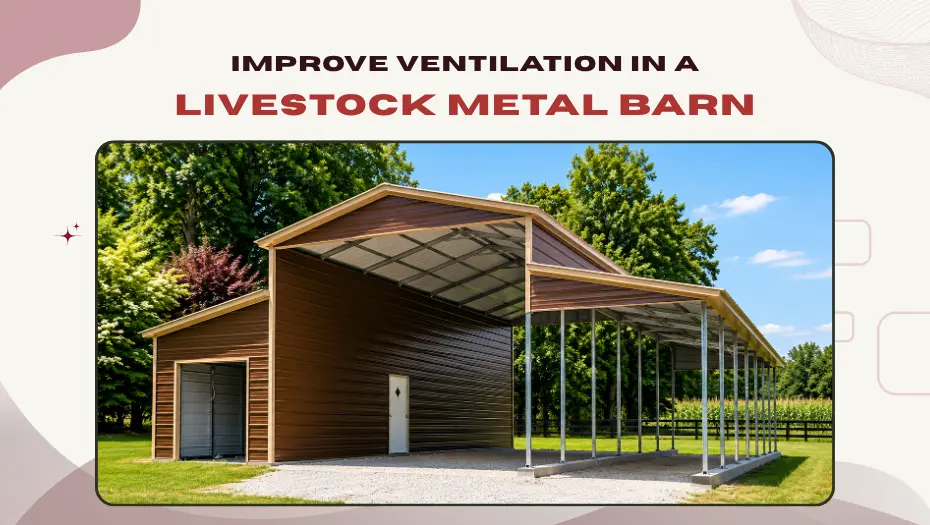
Good ventilation is one of the most critical factors in any livestock barn, and one of the most overlooked. Metal livestock barns conduct heat faster than wood structures, getting dangerously hot in summer and trapping moisture in winter. Without proper airflow, heat and humidity build up quickly. Animals develop heat stress, ammonia from waste reaches harmful levels, and respiratory illness spreads through herds and flocks. Whether you manage steel livestock buildings for cattle, poultry, or mixed barns for livestock, poor ventilation directly hurts your animals and your bottom line. This guide covers the most effective upgrades for 2026 and a practical checklist to audit your current setup.
How Do You Improve Ventilation in Livestock Metal Buildings?
Improving ventilation in metal livestock barns involves installing ridge vents, sidewall openings, exhaust fans, and proper insulation. These features work together to remove heat, moisture, and harmful gases while maintaining steady airflow and creating a healthier environment for cattle and all other livestock.
Fast action tips:
Understanding how barns support animal health makes it clear that ventilation sits at the center of almost every health outcome inside a livestock building.
Cattle experience heat stress above 80 degrees Fahrenheit. It reduces feed intake, lowers milk production by up to 20 percent in dairy cows, and weakens immune function. Adequate airflow is the most direct solution.
Ammonia from urine and manure accumulates fast in poorly ventilated livestock barn buildings. At levels above 25 parts per million, it increases the risk of pneumonia, especially in poultry and young cattle.
Moisture from breath and wet bedding promotes mold and hoof rot. Animals in well-ventilated steel livestock barns show up to 15 percent better daily weight gain based on agricultural research data.
Metal barns are built tough, but their design creates specific airflow challenges. Knowing what to look for helps you fix problems before they affect your animals.
Fully enclosed steel livestock buildings with no openings trap heat and humidity with nowhere to go. Animals suffer quickly in these conditions, especially through summer.
Cold steel panels in winter cause warm interior air to condense on contact. The moisture drips onto bedding and creates the damp conditions that mold and bacteria need to grow.
Heat collects near south-facing walls and at the center of wide barns where standard vents cannot push airflow. Animals in these zones experience higher heat stress than the rest of the herd.
Large livestock barn buildings that rely on a single vent type rarely achieve adequate air exchange. A combination of ridge vents, sidewall openings, and fans is almost always needed.
Reviewing the design features of modern livestock metal barns helps you understand which structural options support airflow from the start.
A continuous ridge vent along the full roofline lets hot air escape at the peak while cooler air enters from the sides. It runs 24 hours a day with no energy cost and is the most effective single passive upgrade for any large metal livestock barn.
Adjustable sidewall panels and roll-up curtains bring fresh air in at animal level. Cross ventilation from two open sides moves stale air out and reduces heat and ammonia buildup.
Exhaust fans pull stale air out of enclosed steel livestock buildings and draw fresh air in through inlets. Most livestock barns need 4 to 8 air changes per hour in summer.
Circulation fans create a wind chill effect across animals without exhausting air from the building. Install them at 30 to 40 foot intervals along the ceiling to eliminate hot spots in areas ridge vents and exhaust fans cannot reach.
Orient the long axis of a new metal livestock shelter perpendicular to prevailing winds to maximize natural cross ventilation with minimal mechanical support.
Reflective insulation under roof panels cuts interior summer temperatures by up to 15 degrees and reduces condensation on cold steel panels in winter.
A cattle shelter needs at least 100 cubic feet per minute per animal in summer. Open ridges, wide sidewall openings, and circulation fans are the most effective combination.
Poultry are highly sensitive to ammonia. Even levels above 10 parts per million reduce growth rates. Small barns for livestock housing poultry should use mechanical ventilation with precise control over air exchange rates.
Horses need draft-free airflow without cold zones in winter. Adjustable sidewall openings paired with ridge vents work well for most horse and mixed barns for livestock.
Natural vs Mechanical Ventilation in Livestock Barn Buildings
Choose your system based on barn type, climate, and the animals you manage:
| Type | Benefits | Best Use Case |
| Natural | No energy cost, eco-friendly | Open or semi-open barns |
| Mechanical | Precise control, all-weather | Enclosed steel livestock buildings |
| Hybrid | Seasonal flexibility | Large livestock barn buildings |
A hybrid system suits most steel livestock barns in variable climates, using natural ventilation as the primary approach and fans during extreme heat or cold.
The same qualities that make metal farm buildings so durable can trap heat and moisture without active management. Here is how to stay ahead of both.
Pairing good ventilation with the right essential equipment for a livestock barn creates a complete environment that supports animal health beyond just airflow.
Ventilation upgrade costs vary depending on the type of barn structure you are working with. Each design has different airflow challenges, which directly affect what upgrades are needed and what they cost. Here is a breakdown across the four most common steel barn types:
| Barn Type | Recommended Ventilation Upgrades | Estimated Cost Range |
| Clear Span Barn | Ridge vents, exhaust fans, roof insulation | $4,500 to $12,000 |
| Carolina Barn | Sidewall roll-up curtains, circulation fans, ridge vents | $3,000 to $8,500 |
| Side Entry Steel Building | Exhaust fans, adjustable sidewall panels, insulation | $3,500 to $9,000 |
| Vertical Roof Steel Structure | Ridge vents, circulation fans, reflective insulation | $2,500 to $7,000 |
Vertical roof steel structures tend to be the most ventilation-friendly by design since the panel orientation naturally sheds moisture and supports passive airflow, keeping upgrade costs on the lower end. Clear span barns, due to their wider interior spans, typically require more fans and longer ridge vent runs to achieve adequate air exchange, which pushes costs higher. For most small barns for livestock, a basic upgrade covering a ridge vent, two to four fans, and adjustable sidewall openings runs between $2,000 and $6,000 regardless of barn type.
Ventilation is not optional in a metal livestock barn. It is the foundation of animal health and daily productivity. The right airflow system, whether in a large steel livestock building or a small mixed-animal shelter, makes everything else easier to manage.
Start with the checklist above, find where problems are building up, and address the root cause first. Small targeted upgrades to vent placement or fan coverage produce clear improvements in animal health quickly.
Expand each item below to explore a few helpful answers before moving to the next blog post.