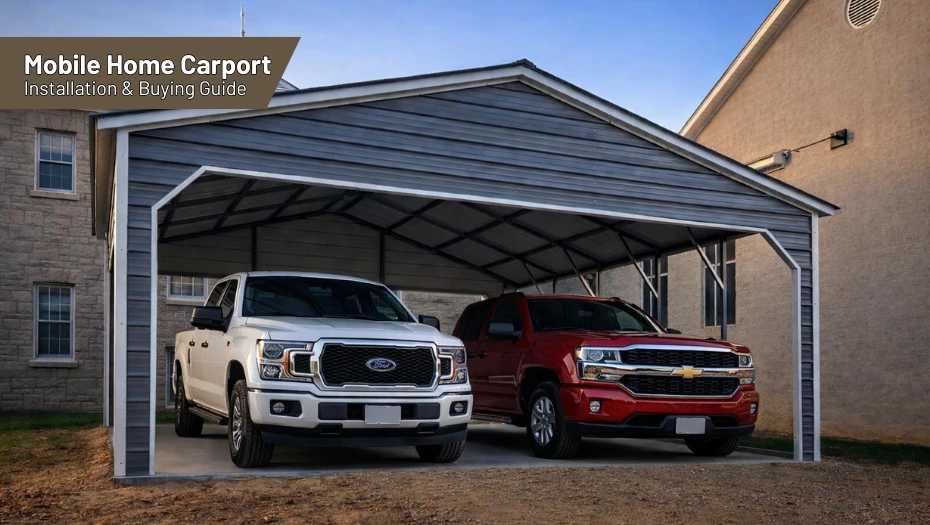
A mobile home carport is one of the smartest upgrades you can make to protect your vehicle and increase property value. Whether you own a single-wide or double-wide manufactured home, a well-installed carport shields your car from sun, rain, snow, and debris. But when it comes to buying a carport, many questions arise, like “How much does a carport cost?” or “Do I need permits?”
In this guide, you will learn how to choose the right design, understand pricing, prepare for installation, and avoid common mistakes.
What Is a Mobile Home Carport?
A mobile home carport is a covered structure installed next to or attached to a manufactured home to protect vehicles. It is different from a garage for parking a car because it’s an open space, whereas a garage is an enclosed space. It usually has open sides and is more cost-effective.
It is especially useful for homeowners who want protection without spending on a fully enclosed building. They mostly explore mobile home carport ideas before choosing the right layout and roof style.
Who Needs a Mobile Home Carport?
A carport makes sense if:
- You own 1–2 vehicles and park outdoors
- You live in hot, snowy, or storm-prone regions
- You want a budget-friendly alternative to a garage
Moreover, if you plan to resell your home later and have a question, “Will a carport increase my home’s value?” In most cases, yes.
Benefits of Installing a Mobile Home Carport
Adding a carport is not just about parking. It improves protection, comfort, and long-term savings. Have a look at its key benefits that many farmers and other business owners enjoy.
1. Protection from Weather
Sun exposure can fade paint and damage interiors, and heavy rain can lead to rust. Moreover, snow adds weight stress on the structure.
High-quality Mobile home carport roof panels are designed to handle UV rays, rain runoff, and even moderate snow loads. In hotter states like Texas, shade alone can make a huge difference in vehicle lifespan. Well, these structures are also popular with the name lean-to carports.
2. Increased Property Value
A well-installed carport improves curb appeal. Buyers often search for properties that already include covered parking. If you choose a strong and clean metal carport design for home, it gives a modern and structured look to your property.
3. Cost-Effective Alternative to a Garage
Building a metal garage can start from $3000, but building a metal carport can start from $1,295
A carport usually costs a fraction of that because it’s a simple structure. If you are researching metal carport prices, you will notice basic units start much lower than traditional garages.
4. Multi-Purpose Usage
A carport is not just for parking a car, RV, or boat. You can use it host a party after minor modifications and add-ons because they are flexible spaces.
You can use them for:
- Outdoor gatherings
- Small workshop space
- Boat storage
- Extra shaded sitting area
Some homeowners even add mobile home carport awnings for additional shade and weather control. You can also do it to meet the current needs.
Types of Mobile Home Carports
There are various types of mobile home carports; which one is the best for your needs? Choosing the right type depends on your climate, budget, and long-term plans.
Based on Material:
Metal Carports: Metal is the most popular option today. Steel frames are durable, low-maintenance, and long-lasting. When you look for metal carports for sale, you will see galvanized steel options that resist rust and corrosion. A good structure can last 20–30 years with minimal maintenance.
Wood Carports: Wood looks traditional but requires frequent maintenance. It may not be ideal in humid or termite-prone areas.
Based on Roof Style
Regular Roof Style: A regular carport is the basic roof style, with rounded edges. It doesn’t have complex designs that can be time-consuming when installed. Its is a budget-friendly option that you can choose for mild climates
A-Frame Roof Style: As the name suggests, its design resembles the English letter A from afar. It has a cleaner look, better water drainage due to the pitched roof, and thus it is suitable for moderate rainfall.
Vertical Roof Style: Vertical carports are the strongest among all. It’s because of their roof design, which is A-frame, and panels run vertically thats why it is called vertical structure. It is best for heavy snow or rain so, if you are exploring Metal carport design ideas, roof style plays a major role in both strength and appearance.
Attached vs. Detached Carports
Attached carports connect directly to your mobile home. They are convenient and space-saving. Detached carports are separate structures. They allow more flexibility in placement and future expansion. Homeowners in states like Texas markets often prefer attached versions for heat protection, while coastal areas like California may prioritize wind-rated detached units. But if you are planning for two car metal carports, you need to think beyond convenience. A two-car setup usually requires at least 20×20 ft or 24×25 ft space. In that case, a detached carport often gives better flexibility for vehicle movement, especially if you have larger SUVs or trucks.
Key Features to Consider Before Buying
Although a carport is a simple space, buying one is not that simple because you have to plan various things. So, before you purchase, understand what really matters structurally and financially.
Size and Dimensions:
Common sizes:
- 12×20 ft – Single car
- 18×20 ft – Larger vehicle or small truck
- 20×20 ft – Two small vehicles
- 24×25 ft – Two full-size vehicles
Many buyers ask, “How much does it cost to install a 20×20 carport?” The answer depends on the material and location, but we will break down pricing soon. Moreover, height matters too. Standard height is 8 ft, but RV owners may need 12–14 ft clearance.
Anchoring System:
When buying a carport, also consider its durability. For this, ask steel building suppliers, “How do you anchor a metal carport? Because anchoring is critical in high-wind areas. So, never skip this step.
Carports can be anchored using:
- Ground anchors (for soil or gravel)
- Concrete wedge anchors (for slabs)
- Rebar anchors
Many buyers ask, “How much does it cost to install a 20×20 carport?” The answer depends on the material and location, but we will break down pricing soon. Moreover, height matters too. Standard height is 8 ft, but RV owners may need 12–14 ft clearance.
Anchoring System:
When buying a carport, also consider its durability. For this, ask steel building suppliers, “How do you anchor a metal carport? Because anchoring is critical in high-wind areas. So, never skip this step.
Carports can be anchored using:
- Ground anchors (for soil or gravel)
- Concrete wedge anchors (for slabs)
- Rebar anchors
Foundation Requirements:
Many homeowners ask, Do I need a foundation for a carport? Technically, no full foundation is required. But you do need a stable base, such as:
- Concrete slab (best option)
- Compacted gravel
- Asphalt
Frame Gauge and Panel Thickness:
A steel gauge determines strength, so they should be selected based on the location’s needs. 14-gauge steel is best for standard residential use. If you want thicker steel, 12-gauge is an effective option because it’s heavy-duty and best for high-wind zones.
Permits and Certifications
Local codes vary by state and county; this is why you must always check before installation. If you search online for metal carport near me, choose a supplier familiar with your local permit rules.
Step-by-Step Mobile Home Carport Installation
Understanding installation helps you plan the budget and timeline and choose the best metal structure for your farm.
Have a quick look at all the steps below.
Step 1 – Site Preparation
- Clear debris
- Level the ground
- Install a concrete or gravel base
Step 2 – Permit Approval
Check zoning laws because some areas require engineered drawings for wind or snow load compliance.
Step 3 – Frame Assembly
The installer:
- Sets vertical posts
- Connects horizontal beams
- Secures support braces
If you’re considering DIY, review proper metal carport installation instructions carefully before starting.
Step 4 – Roof Panel Installation
Panels are attached using screws with rubber washers to prevent leakage. It is crucial if you live in a region prone to heavy rain, as runoff becomes necessary.
Step 5 – Anchoring and Final Inspection
Secure anchors properly and inspect structural balance. If unsure, consider hiring professionals by searching metal carport installation near me for experienced installers.
How Much Does a Mobile Home Carport Cost?
Cost is one of the biggest deciding factors. So, if you want to know how much does it cost to install a metal carport, here’s a realistic breakdown.
Average Price Range
- 12×20 ft basic metal carport: $1,200 – $2,500
- 18×20 ft: $1,800 – $3,500
- 20×20 ft: $2,000 – $4,000
- Custom vertical roof models: $3,500 – $6,000+
But these prices are not always the same; if you want a custom metal home carport, the prices can be higher. It is because several factors affect pricing, like size, steel gauge, roof style, location, permit fees, and add-ons (side panels, insulation). So, whenever you have a question in your mind, how much does a carport cost? Remember that customization increases price.
DIY vs. Professional Installation
Choosing between DIY and hiring professionals depends on skill level and structure size. Have a look at the image below. It clearly shows when you can install it yourself and when you will need professionals for installation.
Common Mistakes to Avoid for Mobile Home Carport Installation
Buying a mobile home carport may look simple, but small mistakes can lead to structural issues, legal trouble, or unexpected expenses later. Many homeowners focus only on price and forget important technical details. Avoiding the following mistakes can save you money and stress in the long run.
1. Ignoring Local Permits
One of the biggest mistakes is skipping permit checks. Many areas require approval for structures above a certain size (often 200 sq. ft.). If you install a carport without proper permits, you could face fines or even be asked to remove it. Always check local zoning rules before purchase.
2. Choosing the Wrong Roof Style for Your Climate
Not all roof styles perform the same in every region.
- Regular roofs are fine for mild climates.
- A-frame roofs handle moderate rain better.
- Vertical roofs are ideal for heavy snow or strong winds.
3. Skipping Proper Anchoring
Anchoring is critical for stability. Without secure anchors, strong winds can shift or damage the structure. Whether installed on soil or concrete, the carport must be anchored properly. This is especially important in hurricane-prone or high-wind areas.
4. Buying Based Only on the Lowest Price
Low price does not always mean good value. Thinner steel, weak frames, and poor coatings may reduce durability. Instead of focusing only on cost, check steel gauge, roof style, warranty, and installation quality.
Final Thought
A mobile home carport is a smart, affordable investment. It protects your vehicle, increases property value, and improves convenience. Whether you choose a simple 12×20 structure or a custom 20×20 vertical roof model, focus on durability, correct anchoring, and proper installation. If you plan carefully and buy from a reliable supplier, your carport can serve you well for decades.