Loading...
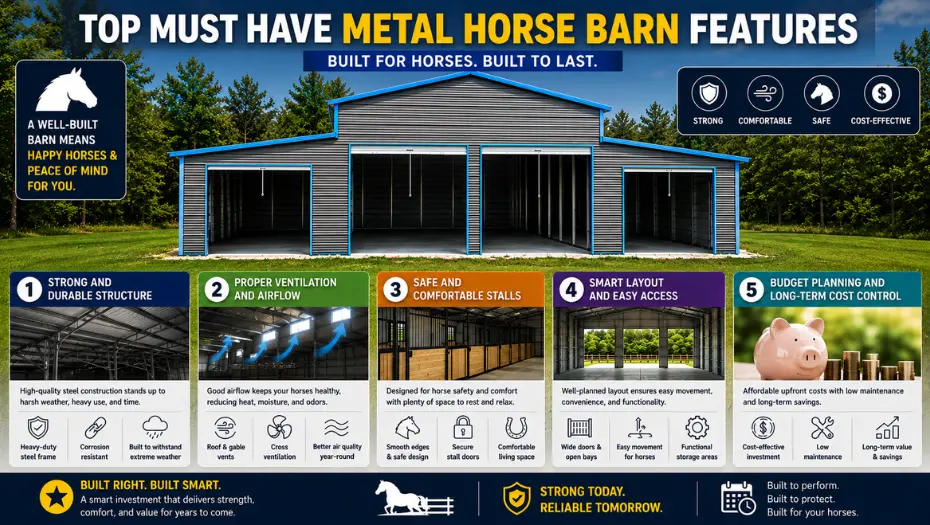
Owning horses is not just a hobby; it’s a lifestyle. From backyard riders in Texas to professional trainers in Kentucky and ranch owners in Montana, horse barns are an essential part of daily life. A barn is not just a shelter. It is where horses rest, eat, train, heal, and stay safe from harsh weather. But here’s the truth: not every barn is built the same.
A basic livestock barn may work for cows or goats, but horses need much more than four walls and a roof. They need space, airflow, safety, comfort, and smart design. A great horse barn protects your animals, saves you time, and reduces long-term costs. If you are planning to build or upgrade a metal horse barn, these are the top 5 features you should never ignore.
What Makes a Great Horse Barn?
A great horse barn combines a durable engineered structure, proper ventilation, safe stalls, efficient layout, quality insulation, and long-term cost planning. These features help protect horses, simplify daily care, improve comfort, and reduce maintenance expenses over the building’s lifespan.
Horse Barn at a Glance
| Feature | Why It Matters | Best Recommendation |
|---|---|---|
| Structure | Long-term durability | 12 or 14 Gauge Steel Frame |
| Roof | Water & snow runoff | Vertical Roof |
| Ventilation | Horse respiratory health | Ridge + Side Vents |
| Flooring | Comfort | Rubber Mats |
| Stall Size | Safety | 12×12 Minimum |
| Insulation | Temperature control | Woven R17 |
| Doors | Accessibility | Sliding Doors |
| Storage | Organization | Separate Feed & Tack Rooms |
Why the Right Horse Barn Design Matters More Than You Think
A great horse barn is not just about looks. It directly affects your horse’s health, your daily workload, and even your veterinary bills. Poor barn design can lead to breathing issues, injuries, stress, and higher maintenance costs. In the U.S., custom horse barns are used in many different ways. Some Americans keep two or three horses at home for riding and competitions. Others run full boarding facilities with 20 or more horses. Many operate training barns, breeding barns, or therapy riding centers. Each of these needs a barn that is designed for horses, not just a general livestock barn.
A well-designed horse barn improves airflow, reduces cleaning time, keeps feed dry, protects equipment, and creates a calm environment for horses. That’s why modern American horse owners are shifting toward purpose-built barns instead of old wooden sheds. Now let’s look at the five features that separate an average barn from a great one.
Feature #1 – Strong and Durable Structure
A strong and durable structure is the backbone of a great horse barn. Horses are powerful animals, and barns must handle daily impact, constant movement, and changing weather conditions. A well-built structure protects horses from injury, keeps them safe during storms, and ensures the barn lasts for decades without major repairs.
1. Built to Withstand Weather and Daily Wear
Custom horse barns in the U.S. must handle a wide range of weather conditions, from heavy snow in northern states to extreme heat and storms in southern regions. Durable Steel horse barns with strong framing and reinforced walls keep the building stable and secure in all seasons. It also handles daily stress caused by horses leaning, kicking, or moving inside their stalls. This prevents structural damage and reduces safety risks over time.
2. Durable Materials That Last Longer
The materials used in barn construction directly affect its lifespan and maintenance needs. Modern horse owners increasingly prefer steel horse barns because steel resists rot, insects, moisture, and warping. Unlike wood, it maintains its strength for decades and requires fewer repairs. This makes the barn more reliable and cost-efficient in the long run, especially for owners managing multiple horses or commercial facilities.
3. Separate Foaling and Quarantine Stalls for Safety
A strong barn structure should also support specialized spaces like foaling and quarantine stalls. Foaling stalls provide a secure and comfortable area for mares to give birth safely, while quarantine stalls help isolate sick or newly arrived horses. These dedicated spaces protect the health of all horses in the barn and allow owners to manage their animals more responsibly and safely.
Feature #2 – Proper Ventilation and Airflow
Ventilation is one of the most overlooked features in barn design, yet it plays one of the biggest roles in horse health. Horses spend many hours inside their stalls, especially during extreme heat, cold, or storms. Without proper airflow, barns trap moisture, ammonia from urine, and dust from bedding. Over time, this creates an unhealthy environment that affects breathing, comfort, and overall well-being. This is why steel horse barns always prioritize fresh air circulation.
1. Role of Ventilation in Metal Barns
The role of ventilation in steel barns is critical for horse health. Horses spend many hours inside their stalls, especially during hot summers, cold winters, or stormy weather. In humid states like Florida and Louisiana, poor airflow can quickly turn a barn into a mold trap. In cold states like Minnesota and Michigan, closed barns trap moisture and ammonia, harming horse lungs. This is why, without airflow, barns become damp, hot, and unhealthy.
Good ventilation:
- Removes ammonia from urine
- Reduces moisture and mold
- Controls heat buildup
- Brings in fresh air
2. How Poor Ventilation Affects Horses
Poor ventilation can lead to:
- Breathing problems
- Coughing and nasal discharge
- Eye irritation
- Mold exposure
- Heat stress
3. Key Ventilation Features Every Horse Barn Should Have
| Ventilation Feature | Purpose | Key Benefits |
|---|---|---|
| Ridge Vent | Releases warm, moist air through the roof peak. | Improves natural airflow, reduces condensation, and helps maintain a comfortable indoor environment year-round. |
| Side Wall Vents | Allow fresh outdoor air to enter the barn. | Creates cross ventilation, removes stale air, and minimizes humidity and odors. |
| Dutch Doors | Increase airflow while allowing horses to safely look outside. | Improves ventilation, provides natural light, and reduces stress for stalled horses. |
| Windows | Enhance natural ventilation and daylight. | Lowers moisture buildup, improves visibility, and reduces reliance on artificial lighting. |
| Open Center Aisle | Promotes continuous air circulation throughout the barn. | Keeps the barn cooler during summer and improves overall air quality. |
| Ceiling or Exhaust Fans | Improve airflow when natural ventilation is limited. | Helps regulate temperatures during hot weather and supports consistent air movement. |
| Overhangs & Eave Openings | Protect ventilation openings while allowing air movement. | Reduces rain intrusion and improves year-round passive ventilation. |
| Insulation with Proper Ventilation | Helps regulate indoor temperatures without trapping moisture. | Reduces condensation, improves energy efficiency, and enhances horse comfort in all seasons. |
3. How Barns Are Designed for Year-Round Ventilation
Modern custom horse barns used in the USA are smart. They are equipped with proper airflow systems. Here are some of the systems:
- Ridge vents along the roof peak
- Wall vents for cross ventilation
- Open aisle designs
- Dutch doors on stalls
These features allow fresh air to move naturally through the barn while keeping horses protected from wind and rain. A well-ventilated barn smells clean, feels cooler in summer, and stays drier in winter.
Feature #3 – Safe and Comfortable Stalls
A stall is more than just a place where a horse sleeps; it is their personal living space. Horses eat, rest, and recover inside their stalls, which means comfort and safety must come first. Poorly designed stalls can cause stress, injuries, and long-term joint problems. In American barns, stall design is carefully planned to match horse size, activity level, and daily care routines. A great barn always puts stall quality at the center of its design.
1. Ideal Stall Size for American Horse Breeds
In the U.S., most barns follow these standards:
- 12′ x 12′ stalls – Standard for Quarter Horses and Thoroughbreds
- 12′ x 14′ stalls – For large warmbloods
- 14′ x 14′ stalls – For draft horses
But remember, small stalls restrict movement and increase stress. Larger stalls give horses room to turn, lie down, and move comfortably. Keep this in mind when installing a building for horses.
2. Flooring Options Used in U.S. Horse Barns
American barn owners use different flooring systems. They mostly use rubber mats over compacted stone, a clay base with bedding. And many use concrete with drainage and thick bedding. Rubber mats are very popular because they reduce joint stress and make cleaning easier.
3. How Stall Design Improves Daily Care
Sliding doors, rounded corners, and smooth steel panels prevent cuts and scrapes. This is especially important for active or nervous livestock you house in steel horse barns. Well-designed stalls offer many advantages.
- Reduce injury risk
- Make cleaning faster
- Improve horse comfort
- Keep bedding dry
Feature #4 – Smart Layout and Easy Access
A horse barn should make daily work easier, not harder. From feeding and cleaning to grooming and training, barn layout affects how much time and effort owners spend every day. In the U.S., many barn owners manage multiple horses, which means efficiency matters. A smart layout improves workflow, reduces walking distance, and creates a safer environment for both horses and handlers. The right design saves time and energy every single day.
1. Center Aisle vs Side Aisle Barn Designs
Many barns in America usually follow two designs:
Center aisle barns:
- Stalls on both sides
- Wide aisle for grooming and tacking
- Ideal for boarding and training barns
Side aisle barns:
- Stalls on one side
- Open side for airflow
- Great for backyard barns
Center aisle barns are common in colder states because they protect workers from wind and snow. Side aisle barns are popular in warm states like Texas and Arizona.
2. Storage Areas for Feed, Tack, and Equipment
A great barn always includes some crucial features. These features keep everything organized and protected from the weather.
- Feed room with rodent-proof storage
- Tack room with saddle racks
- Wash bay with drainage
- Utility room for tools
3. How U.S. Barn Owners Plan for Daily Workflow
Smart layouts reduce walking distance and save time. Feed rooms are placed near stalls. Wash bays are close to aisles. Tack rooms are near grooming areas. This saves hours every week for large operations. There are many things you need to be careful about so you can get the most out of the structure.
Feature #5 – Budget Planning and Long-Term Cost Control
A great horse barn is not just about beautiful design; it’s also about smart financial planning. Many barn owners focus solely on construction costs and overlook long-term maintenance, repairs, and upgrades. Over time, poor planning can double the actual cost of ownership. A clear cost breakdown helps you build a barn that fits your budget today and remains affordable for years to come. Smart planning ensures your barn is an investment, not a burden. Go for a detailed cost breakdown so you will not face surprises and will not need to stretch your budget. Moreover, remember, prices vary by size and location, but metal barns usually cost less to maintain than wood barns.
1. Why Metal Barns Offer Better Long-Term Value
The reasons prefabricated barns work for several years are as follows:
- Need fewer repairs
- Resist rot and insects
- Last 30+ years
- Lower insurance risk
2. Choosing the Right Barn Based on Budget and Usage
Here is how you should choose a prefab barn based on budget. Here are the different owners and their needs.
- Backyard owners: 2-4 stall metal barns
- Boarding barns: 10-20 stall layouts
- Training centers: Riding aisles and wash bays
Horse Barn Buying Checklist
Before investing in a horse barn, evaluate your property’s needs, local climate, and future plans. Use this checklist to ensure your barn is safe, functional, and built to serve both you and your horses for years to come.
The right design prevents costly upgrades later. But design is not the only concern you need to be worried about. There are many other factors that help you determine the best structure for your property. A great barn matches your horses, land, and future plans. This is why you need to consider the following factors.
| Checklist Item | Why It Matters |
|---|---|
| Number of Horses | Choose a barn size that comfortably accommodates your current horses while leaving room for future additions. |
| Barn Purpose | Determine whether the barn will be used for boarding, breeding, training, riding, equipment storage, or a combination of these activities. |
| Stall Size | Select stall dimensions based on your horse breeds. Most horses require at least a 12′ × 12′ stall for comfort and safety. |
| Barn Layout | Decide between a center aisle, side aisle, or raised center aisle layout based on your workflow, available space, and climate. |
| Roof Style | A vertical roof is recommended for better water drainage, snow shedding, and reduced maintenance over the building’s lifespan. |
| Steel Gauge | Choose a 12 or 14 gauge steel frame and 26 or 29 gauge panels based on your budget, climate, and structural requirements. |
| Wind & Snow Load Ratings | Ensure the barn is engineered to meet your area’s wind speeds and snow load requirements for long-term durability and code compliance. |
| Ventilation System | Include ridge vents, wall vents, windows, or Dutch doors to improve airflow, reduce moisture, and maintain healthier air quality. |
| Insulation | Consider Double Bubble, Woven R-17, fiberglass, or spray foam insulation to regulate temperatures and minimize condensation. |
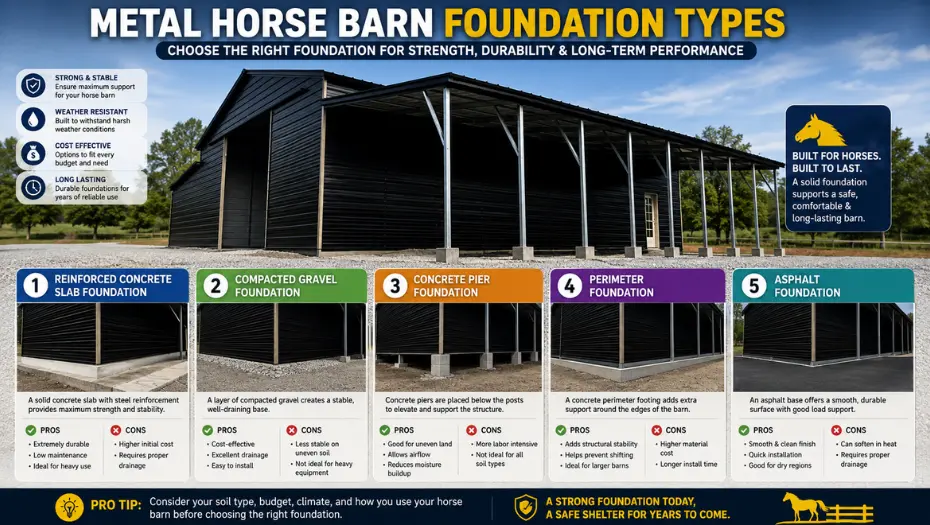
| Foundation Type | Choose a concrete slab, gravel, or another suitable foundation based on your soil conditions, drainage needs, and intended use. |
| Drainage | Proper site grading and drainage help prevent standing water, mud, and moisture-related damage around the barn. |
| Feed & Tack Storage | Plan separate feed rooms and tack rooms to keep supplies organized, secure, and protected from pests and weather. |
| Wash Bay | A dedicated wash bay with proper drainage makes bathing horses easier and helps maintain cleanliness throughout the facility. |
| Doors & Access | Install wide sliding doors and aisleways to allow safe movement of horses, equipment, and trailers. |
| Lighting & Utilities | Include adequate natural lighting, electrical outlets, and water access to improve safety and simplify daily barn operations. |
| Future Expansion | Design your horse barn with expansion in mind so additional stalls or storage areas can be added without major structural changes. |
| Local Building Codes & Permits | Verify local zoning regulations, permit requirements, and HOA restrictions before beginning construction to avoid costly delays. |
| Maintenance Requirements | Choose durable materials that resist rust, rot, pests, and weather to reduce maintenance costs over the building’s lifespan. |
| Budget Planning | Account for construction, customization, foundation work, permits, insulation, and long-term maintenance when setting your budget. |
| Manufacturer & Warranty | Select a trusted metal building manufacturer that offers certified engineering, reliable warranties, and responsive customer support for added peace of mind. |
Build a Barn Your Horses Deserve
A great horse barn is more than a building. It is a safe home for your horses, a workspace for your passion, and a long-term investment for your property. Strong structure, smart ventilation, comfortable stalls, an efficient layout, and a clear cost breakdown are the five features that truly matter, and custom horse barns offer them.
Whether you run a backyard stable or a full livestock barn operation, choosing a steel horse barn with a modern design will give your horses comfort and give you peace of mind.
In my opinion, a well-designed barn doesn’t just protect horses; it elevates the entire horse-owning experience.
Frequently Asked Questions
Expand each item below to explore a few helpful answers before moving to the next blog post.
Related articles