September 25, 2026



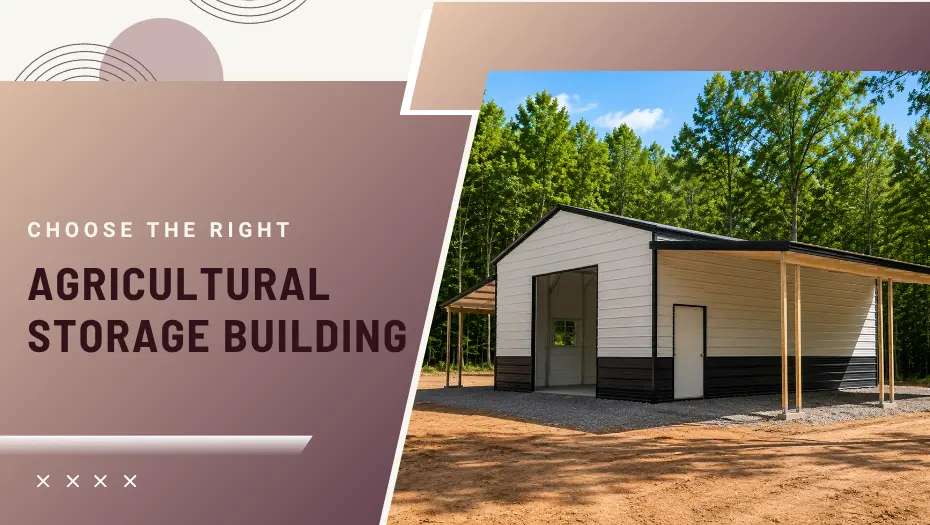
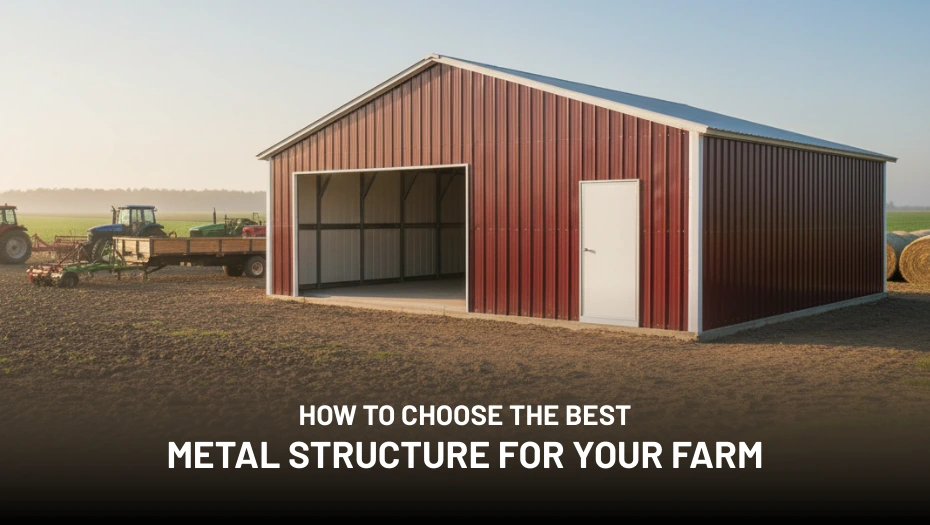
Choosing the right agricultural storage building starts with what you need to store, how much space you need, how you will access it, and what protection your local climate requires. The best building should protect hay, farm equipment, feed, tools, and supplies while providing enough clearance for daily operations and future growth.
Farm owners should also consider building material, ventilation, roof design, doors, site preparation, drainage, permits, local wind or snow requirements, and total project cost. For many agricultural applications, a properly designed metal barn can provide a durable and customizable storage solution, but the right configuration depends on the farm’s specific needs.
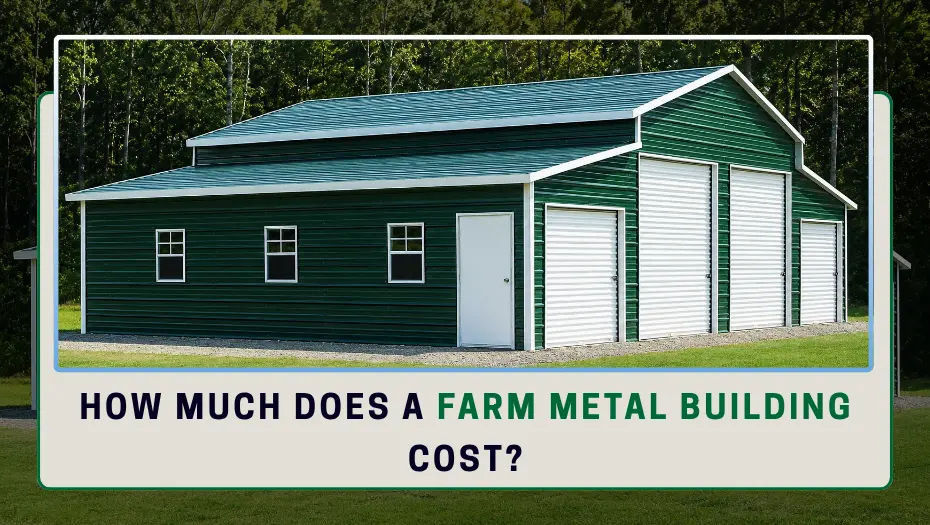
You Might Like: How Much Does a Farm Metal Building Cost?
An agricultural storage building is a structure designed to protect farm-related equipment, materials, supplies, and other assets from weather and environmental exposure.
Depending on the farm, agricultural storage can be used for:
The ideal structure depends on the materials being stored and how frequently they need to be accessed.
For example, hay may require ventilation and moisture management, while tractors may require larger doors and additional clearance. A mixed-use farm may need a building designed around several storage requirements.
Start by making an inventory of everything the building will house. Consider both your current equipment and items you expect to add in the future.
Different materials require different storage conditions.
| Storage Type | Important Considerations |
|---|---|
| Hay and straw | Moisture protection, airflow, stacking space |
| Tractors | Door height, width, turning clearance |
| Implements | Building depth, equipment dimensions |
| Feed and supplies | Dry conditions, organization, accessibility |
| Mixed storage | Separate areas, flexible access |
This simple inventory helps prevent choosing a building that looks large enough on paper but becomes difficult to use once equipment and materials are inside.
The correct agricultural building size should accommodate your equipment, storage materials, access paths, and reasonable future needs.
Before selecting dimensions, measure your largest equipment, including:
Don’t calculate storage based only on floor area. Vertical clearance and access space are equally important.
For example, a tractor may physically fit inside a building but still be difficult to park if the door opening is too narrow or the interior provides insufficient maneuvering space.
Example Agricultural Storage Sizes
| Example Size | Potential Application |
|---|---|
| 20′ × 30′ | Smaller equipment and general storage |
| 30′ × 40′ | Equipment and mixed farm storage |
| 40′ × 60′ | Larger equipment and agricultural storage |
| 50′ × 80′ | Multiple machines and larger storage needs |
| 60′ × 100′ | Large-scale equipment and storage |
These examples are not universal recommendations. Actual requirements depend on equipment dimensions, storage methods, building layout, and local conditions.
The amount of protection and airflow you need should influence the building configuration.
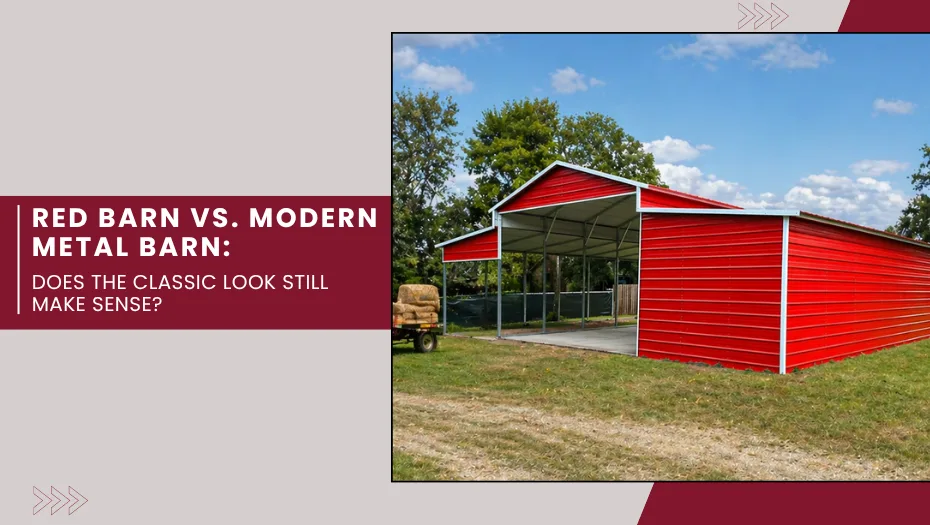
Open-Sided Storage: Open-sided structures can provide convenient access and natural airflow. They may be suitable for equipment, hay, or materials that primarily need protection from direct weather exposure.
Partially Enclosed Storage: A partially enclosed structure can provide a balance between accessibility, weather protection, and ventilation.
Fully Enclosed Storage: Fully enclosed buildings provide greater protection from rain, snow, wind, and other environmental exposure. They can be useful for tractors, machinery, tools, feed, supplies, and weather-sensitive materials.
There is no single configuration that works for every farm. Your decision should depend on what you store, how often you access it, and the environmental conditions at your property.
Agricultural buildings should be selected with the property’s local climate and applicable structural requirements in mind.
Rain and Humidity: Frequent rain and high humidity increase the importance of proper roof drainage, ventilation, site drainage, and moisture management.
Snow: In areas that receive significant snowfall, the building should be designed for applicable local snow-load requirements.
High Winds: Properties exposed to strong winds require appropriate structural design, anchoring, and installation based on local requirements.
Extreme Heat: Hot climates may benefit from thoughtful ventilation and airflow planning, especially when storing livestock-related materials or heat-sensitive supplies.
For U.S. farms, requirements can vary by state, county, municipality, property location, and building specifications. Always confirm applicable requirements with your local building department and qualified professionals.
Ventilation is an important consideration for agricultural storage because trapped moisture can contribute to condensation, corrosion, odors, and deterioration of stored materials.
This is particularly important when storing hay, straw, feed, or equipment.
A well-planned agricultural storage building should consider:
For hay storage, the building itself is only part of the solution. Properly cured hay, appropriate stacking, protection from ground moisture, and adequate airflow also contribute to maintaining storage quality.
Agricultural buildings can be constructed using different materials, including steel, wood, and fabric-based systems. Each has different characteristics, maintenance requirements, and potential applications.
| Material | Potential Advantages | Considerations |
|---|---|---|
| Steel | Durable, customizable, low routine maintenance | Requires proper design and corrosion protection |
| Wood | Traditional appearance and construction flexibility | Can require more maintenance |
| Fabric | Lightweight and adaptable | Protection and longevity vary by system |
Are Metal Buildings Good for Agricultural Storage?
Yes, a properly designed metal building can be a practical option for agricultural storage because steel structures can be configured for equipment, hay, supplies, and other farm applications.
Metal barns are one type of steel agricultural building and can be designed in different sizes and configurations depending on the intended use.
A common mistake is choosing the building dimensions first and thinking about doors afterward.
Your largest tractor, trailer, or piece of equipment should influence the door configuration.
Consider:
If a building is primarily used for equipment storage, convenient access can be just as important as the total square footage.
A storage building should solve today’s problems without unnecessarily limiting tomorrow’s operations.
Think about whether you may eventually add:
Building only for today’s inventory may result in another storage problem later.
However, planning for future growth doesn’t necessarily mean choosing the largest building available. Instead, identify realistic future requirements and balance them against your property, budget, site, and intended use.
A custom prefab barn can be considered when a farm needs a durable structure for equipment, hay, supplies, or other agricultural storage.
Depending on the design, steel barns can be configured with:
For example, metal hay barns can be configured around hay storage requirements, while livestock barns and metal horse barns can be designed around animal shelter and related farm needs.
The appropriate configuration should always be based on the building’s intended use, local conditions, and applicable requirements.
The building site can significantly affect the success of an agricultural storage project.
Before construction, consider:
Water should be directed away from the building and storage areas where appropriate. Poor drainage can create unnecessary moisture problems regardless of the building material.
Foundation requirements vary according to the building design, soil conditions, local codes, and engineering requirements. Confirm the appropriate foundation and site preparation requirements before construction.
Permit requirements vary by location, building size, intended use, zoning, and local regulations. Agricultural properties may have different requirements depending on the jurisdiction, but an agricultural use does not automatically mean a building is exempt from permitting.
Before ordering or constructing a building, check with the appropriate local authority regarding:
For U.S. properties, requirements can differ between states and even between counties or municipalities, so local verification is essential.
Before selecting your building, work through this checklist:
The right agricultural storage building should be selected around your farm—not simply a standard building size or configuration. Start with what you need to store, measure your equipment, evaluate access and ventilation, consider your local weather, and plan for future requirements.
For farms that need durable steel storage for hay, equipment, supplies, or other agricultural applications, metal barns offer a flexible option that can be configured around different storage needs.
Explore Viking Barns’ range of metal barns, hay barns, livestock barns, metal horse barns, Carolina barns, and other agricultural building options to find a configuration that fits your farm’s requirements.
Expand each item below to explore a few helpful answers before moving to the next blog post.