Loading...
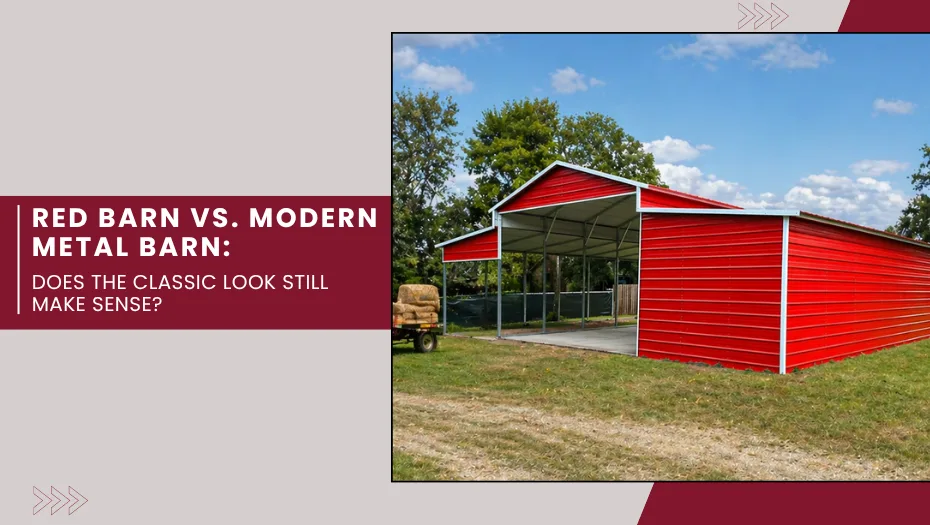
A red barn is one of the most recognizable sights on the American countryside. But if you want that familiar look today, do you really need to build a traditional wood barn?
Modern metal barns can now combine the classic red exterior with steel construction, customized dimensions, and practical features for storage, farming, livestock, and equipment. So, how different are the two options, and does the traditional red barn style still make sense? Let’s compare their history, appearance, sizes, prices, and practical uses.
What Is a Red Barn and Why Is It Red?
A red barn is a traditional agricultural structure commonly associated with farming and rural America. It may be used for livestock, hay, farm equipment, tools, vehicles, or general agricultural storage.
The classic design often includes a red exterior, contrasting white trim, a large entrance door, and a gable-style roof. However, a red barn is not defined by one exact construction method. The term mainly describes the recognizable combination of barn architecture and red exterior color.
What Makes a Barn a “Red Barn”?
The traditional appearance usually includes:
- Red exterior walls
- Large barn-style doors
- Gable roof
- White or contrasting trim
- Simple rectangular proportions
- Windows or vents
- Large interior space for agricultural use
The style became so familiar that the red color eventually became almost synonymous with the American barn.
Why Did Barns Become Red?
The history is more practical than decorative.
In the late 18th century, farmers in New England used protective mixtures containing ingredients such as linseed oil, lime, and iron oxide on wooden barn surfaces. According to historical accounts, exposure to sunlight helped produce the familiar reddish color. As commercially produced red paint became more available, the color continued to be used, eventually becoming strongly associated with barns.
Iron oxide was especially important because it is the compound responsible for the red color found in many natural materials. It was plentiful and could be used as a pigment, helping make red a practical choice for agricultural structures.
Was Every Historic Barn Red?
No.
This is an important detail that often gets missed. Historic barns came in different colors depending on region, available materials, local traditions, and the preferences of the owners.
The red barn became an iconic image over time, but it was never a universal rule for American agricultural buildings.
Why Is the Red Barn Look Still Popular?
The red barn has survived because its appeal goes beyond paint.
For many property owners, the color immediately communicates agriculture, open land, farming, and traditional rural architecture. It also works particularly well with familiar barn features such as white trim, large doors, gable roofs, and contrasting roofing.
The style can also be adapted to modern uses.
Today, the same visual concept can be used for:
- Agricultural storage
- Equipment buildings
- Workshops
- Livestock structures
- Hay storage
- Vehicle storage
- Multi-purpose farm buildings
That is why the red barn appearance continues to influence modern building designs even when the construction material has changed.
What Is a Modern Red Metal Barn?
A modern red metal barn uses steel framing and metal exterior panels while maintaining the visual character of a traditional barn. The biggest difference is underneath the familiar red exterior.
Instead of relying primarily on wood framing and wooden siding, a modern metal barn can use steel components designed for agricultural, storage, equipment, or workshop applications.
For example, structures such as metal farm buildings can be designed in different widths, lengths, heights, door configurations, and exterior colors depending on their intended use.
How Metal Construction Creates the Traditional Barn Look:
A metal barn does not have to look like an industrial warehouse.
The exterior color plays a major role. Red metal panels can create the familiar appearance of a traditional agricultural building, while white trim, large doors, traditional roof proportions, and other architectural details can strengthen the effect.
The result can look distinctly like a red barn from the outside while using a modern steel structure underneath.
Red Does Not Mean Actual Rust:
This distinction is important.
A modern red metal barn should not depend on actual rust to create its color. Rust is corrosion, while the red appearance comes from a manufactured paint or protective coating applied to the metal panels.
Modern steel panels can be produced in agricultural red, dark red, burgundy-red, and other shades. These finishes are designed to provide color while protecting the underlying metal from outdoor exposure.
So when someone asks for a “rustic red” metal barn, they are generally asking for a rust-inspired color, not an intentionally rusted building.
How to Make a Metal Barn Look More Traditional:
The color is only one part of the design. You can combine red siding with:
- White trim
- White or contrasting barn doors
- Dark roofing
- Gable-style roof designs
- Traditional-looking windows
- Cupolas and vents
- Decorative door hardware
- Classic barn proportions
The more of these elements you combine, the closer the overall appearance can come to the familiar traditional red barn.
Red Metal Barn Sizes and What They Can Hold
One of the biggest advantages of modern metal construction is the range of available dimensions.
A small red steel barn may be suitable for basic storage, while a much larger structure can accommodate several vehicles, tractors, agricultural equipment, hay, workshops, or livestock areas.
Here are some useful reference sizes:
|
Barn Size |
Approx. Floor Area | Potential Uses |
| 18 × 20 ft | 360 sq. ft. |
Small equipment and storage |
|
20 × 30 ft |
600 sq. ft. | Vehicles, tools, and general storage |
| 30 × 40 ft | 1,200 sq. ft. |
Equipment, vehicles, workshop |
|
40 × 60 ft |
2,400 sq. ft. | Large equipment and agricultural storage |
| 48 × 80 ft | 3,840 sq. ft |
Large farm equipment and multi-purpose use |
These are examples rather than fixed size standards. The right dimensions depend on what you intend to store and how much clearance is required around it.
For instance, someone storing hay may need a different layout from someone storing tractors. A person planning a vehicle-focused building may also need to consider vehicle height and door openings.
If you need a smaller structure for vehicle storage rather than a full agricultural barn, understanding the ideal single car garage size can help when comparing building dimensions.
Choosing the Right Red Metal Barn Size
Start by listing everything the structure needs to hold.
Think about:
- Vehicles
- Tractors
- Hay
- Livestock
- Tools
- Farm equipment
- Shelving
- Workbenches
- Feed
- Future equipment
Then consider how much clearance each item needs. It is better to plan the interior around actual equipment dimensions than to choose a building simply because a particular size sounds large enough.
For hay storage, for example, vertical clearance, ventilation, access doors, and interior layout can be just as important as floor area. Dedicated metal-hay-barns can be configured around these requirements.
How Much Does a Red Metal Barn Cost?
The price of a red metal barn can vary considerably because size is only one part of the project. Current published estimates for red metal barns provide the following general starting ranges:
|
Barn Size |
Approximate Installed Price |
| 20 × 30 ft |
$8,000–$14,000 |
|
30 × 40 ft |
$14,000–$22,000 |
| 40 × 60 ft |
$22,000–$38,000 |
|
48 × 80 ft |
$38,000–$60,000 |
| 60 × 100 ft |
$60,000–$100,000+ |
These are planning estimates rather than guaranteed quotes. Actual pricing can vary by location, engineering requirements, configuration, site conditions, and selected features.
Another current cost reference places complete installed metal barns at roughly $20 to $45 per square foot, with a 30 × 40 structure commonly falling around $24,000–$38,000 depending on specifications.
What Affects the Price?
Several factors can change the final price of a red metal barn.
- Building size: Larger structures require more steel, panels, framing, and installation work.
- Roof style: Roof design affects materials, engineering, drainage, and structural requirements.
- Doors: Large equipment may require taller and wider doors, which can increase the project cost.
- Windows: Additional windows add materials and installation work.
- Foundation: Site preparation and concrete work can represent a significant portion of the overall project.
- Insulation: If the structure will be used as a workshop or enclosed working space, insulation may become important. The right choice depends on the climate and intended use, and guides covering best insulation for commercial metal barns can help explain the available options.
Location: Delivery, local regulations, permits, wind or snow requirements, and installation conditions can all affect pricing. Contact experts at (Phone Number) to know what affects price in your region.
Why Two Red Barns Can Have Very Different Prices
Consider two 30 × 40 metal barns. One could be an open-sided agricultural structure with basic doors. Another could have full enclosure, multiple large doors, windows, insulation, electrical work, and a concrete foundation.
Both have the same footprint, but their final project costs can be very different.
This is why it is better to compare the complete building specifications rather than judging a project only by its size or advertised starting price.
Red Barn vs. Modern Metal Barn: Which Makes More Sense?
|
Feature |
Traditional Red Barn | Modern Red Metal Barn |
| Classic appearance | Yes |
Can be recreated |
|
Main material |
Wood | Steel |
| Maintenance | Usually more ongoing upkeep |
Generally simpler exterior upkeep |
|
Size customization |
Varies | Wide range of options |
| Equipment storage | Yes |
Yes |
|
Workshop use |
Yes | Yes |
| Color options | Paint or stain |
Multiple exterior finishes |
|
Traditional details |
Naturally suited |
Can be added |
Durability and Weather Exposure:
Traditional wood barns can develop issues related to moisture, insects, rot, and long-term weather exposure when maintenance is neglected.
Metal structures have their own maintenance requirements, but properly coated steel panels can provide protection against outdoor exposure. The actual performance depends on the steel, coating, installation quality, climate, and maintenance.
Climate is particularly important for agricultural buildings. In regions with intense heat, strong storms, or heavy agricultural use, building design needs to account for local conditions. This is one reason articles explaining why metal barns are the best choice in Texas focus heavily on regional weather and building requirements.
Maintenance Requirements:
A traditional wood barn may require periodic painting, sealing, board replacement, and repairs as the structure ages.
A metal barn still needs inspection and maintenance, especially around fasteners, doors, trim, drainage areas, and any damaged panels. However, the maintenance approach is different because the exterior does not depend on painted wood siding.
Storage and Equipment Use:
Both construction types can serve agricultural purposes, but the building should be designed around what will actually be stored inside.
A tractor requires different door dimensions from a pickup truck. Hay requires different ventilation considerations from a workshop. Livestock requires appropriate interior planning, drainage, airflow, and access. For larger agricultural operations, a building may need to serve several purposes at once.
That is where larger steel structures can become useful because the dimensions and interior layout can be planned around equipment, storage, vehicles, and workspace.
Customization and Building Size:
Modern metal barns can be configured in many dimensions and layouts.
You can consider:
- Width
- Length
- Eave height
- Roof style
- Door size
- Number of doors
- Window placement
- Open or enclosed sides
- Interior partitions
- Insulation
- Electrical requirements
This flexibility makes it possible to create a structure that keeps the classic red barn appearance while matching modern storage needs.
When Does a Traditional Wood Red Barn Make Sense?
A traditional wood barn can be the right choice when authenticity is the main priority. It may be especially suitable for:
- Historic properties
- Barn restoration projects
- Owners who prefer traditional construction
- Properties where architectural character is important
- Projects designed to preserve an existing rural style
For these situations, the material itself may be as important as the appearance.
When Does a Modern Red Metal Barn Make Sense?
A modern red metal barn may make more sense when practical function is equally important as traditional appearance. It can be useful for:
- Agricultural equipment
- Hay storage
- Vehicles
- Workshops
- Farm tools
- Livestock-related uses
- General storage
- Multi-purpose agricultural buildings
For example, a carolina-metal-barns design can combine a recognizable agricultural appearance with modern steel construction and customized building specifications.
The biggest advantage is that you do not necessarily have to choose between a traditional appearance and modern construction.
How to Choose Between a Traditional and Modern Red Barn
Choose a Traditional Wood Barn If…
A wood structure may be appropriate if you:
- Want authentic traditional construction
- Are restoring a historic property
- Prefer natural wood character
- Want the building material itself to reflect traditional architecture
Choose a Modern Red Metal Barn If…
A steel structure may be a better fit if you:
- Want the classic red barn appearance
- Need flexible dimensions
- Plan to store large equipment
- Want a workshop or multi-purpose structure
- Need large vehicle or equipment doors
- Prefer modern construction methods
The decision ultimately comes down to what matters most for your project: historical character, appearance, size, maintenance, customization, or practical use.
So, Does the Classic Red Barn Still Make Sense?
Yes. The red barn became an American icon because it combined practicality with a distinctive appearance. Generations later, that visual identity is still popular.
The difference is that you no longer need traditional wood construction to recreate it.
A modern red metal barn can use steel framing, protective exterior finishes, traditional colors, classic roof proportions, and barn-style doors to create a familiar rural appearance while providing dimensions and layouts suited to modern equipment, storage, and agricultural needs.
In other words, the classic red barn look has changed with the times, but it has not disappeared. The right design can preserve the character people recognize while making the building work for how the property is actually used.
Related articles