
Loading...
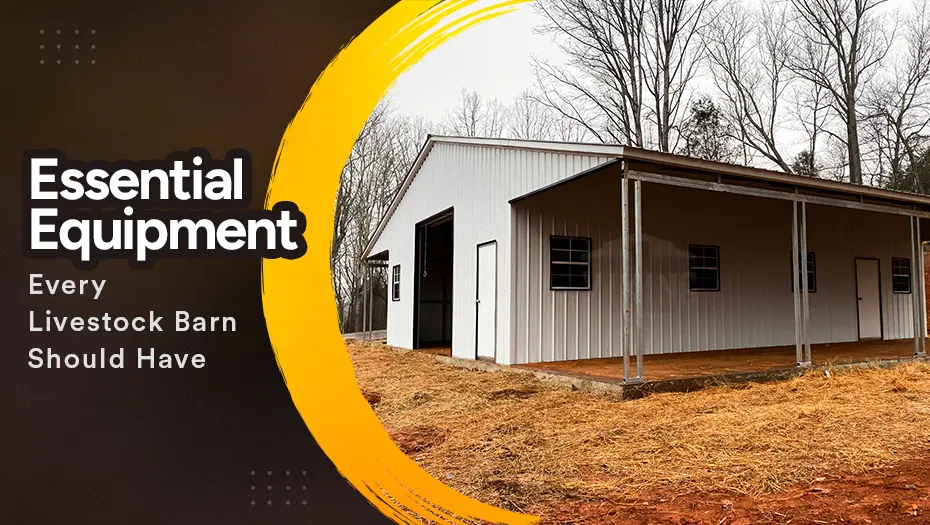
For running a successful livestock barn, having the right tools & equipment is the key. Some essential items that livestock barns must have are easy access to food, water, and fresh air. Not just it will keep animals healthy, but it also prolong the life of metal livestock barns. Adequate ventilation will keep air circulating and animals comfortable, while secure fencing & gates will keep them safe.
But, what livestock to keep in a barn? The most popular barn animals in America are:
- Cattle
- Horses
- Pigs
- Sheep
- Goats
Others include chickens, bees, and rabbits. Steel livestock buildings are sturdy, robust, and long lasting structures that retain their structural integrity with time. That being said, let’s see some essential tools that your barn must-have.
The Only Essential Equipment For Livestock Barn You Will Ever Need
1. Feed Storage Bins/ Silos
One reason to store feed in a closed bin or silo is to protect it from weather conditions like rain, snow, and humidity, which can degrade the quality of the feed. Less spoilage means ranchers can buy in bulk, save money, provide more nutritional value for animals, and enhance livestock productivity.
It also saves feed from rodents & insects to avoid contamination. With the help of silos and bins, you can keep metal livestock barns organized and easily accessible.
2. Water Troughs | Automatic Waterers
Whether it is cows or horses, every livestock needs hydration to ensure animals have access to clean & fresh water. Clean water also reduces the chances of waterborne diseases and infections. What makes metal barns best for livestock farming is that they resist moisture development, can handle everyday wear & tear, are quick to install, and require minimal upkeep.
Having an automatic waterer reduces labor, minimizes water waste, and improves efficiency.
3. Proper Ventilation System
The ventilation system helps remove dust, airborne pathogens, and harmful gases like ammonia, which can affect cows’ or horses’ health. There are two types of ventilation systems for metal horse barns like natural or passive vents and mechanical or active vents. Properly installed vents ensure a continuous supply of air, control moisture, prevent mold & mildew growth, and make dairy operations smoother.
4. Grooming Supplies For Animal Care
Depending on the animal, ranchers must invest in appropriate grooming supplies to trim hair, clean hoofs, and maintain overall animal care.
| Type Of Animal | Animal Care Tools & Supplies |
| Horses | hoof pick, fly spray, blanket, hay net, stall toys, horse stall deodorizer, mirror, fly mask, and curtains [for privacy & shade]. If metal livestock barns are installed in hot climatic conditions, misting system can provide some relief when it gets hot. |
| Cattle | massage brushes to stimulate circulation, slicker brushes to remove loose hair & dirt, shedding combs for trimming & maintaining hoof health, electric trimmer & scissors for trimming hair & cutting, washing supplies [wash mitts, sponges, scrubbers, hoses, sprayers], fly repellent. |
| Chickens | Slicker brushes, shedding combs, nail clippers, electric clippers & scissors, wash mitts, hoses & sprayers, fly spray, poultry shampoo & protector, and glycerin [for lustrous feathers] |
5. Bedding & Mat
It is crucial to have soft, cushioned bedding for animals to lie on and rest. It reduces the risk of injuries, gives insulation from the floor, absorbs moisture, and prevents sores due to hard surfaces. It also helps in maintaining space efficiently.
For horse barns, ranchers can install rubber mats that reduce strain on joints and prevent slipping. One advantage of steel livestock buildings for dairy farming is that they can be customized to meet animal needs. One can divide internal spaces for individual stalls, sitting spaces, and bedding.
Some examples of bedding materials for livestock are straws [most used], wood shaving, sand, sawdust, rubber mats, recycled paper products, peat moss, and hay.
6. Sturdy Fencing & Gates
Every rancher wants their livestock to be safe and within a specific boundary. Having secured fencing and gates helps prevent escapes, protect animals from predators, help in controlling the movement of livestock, give controlled access, and help segregate different groups of animals.
7. Monitoring Temperature
Wondering what temperature should you keep livestock in the barn? Different animals require different temperatures for their comfort. The best way to control the temperature in livestock barns is to install an insulator, maintain proper ventilation, and do a routine inspection to ensure they are functioning properly.
Here are some general guidelines:
| Livestock | Ideal Temperature | Humidity Level |
| Dairy cows | 64 – 72 ℉ | 50 – 80% |
| Beef cattle | 64 – 72 ℉ | 50 – 80% |
| Horses | 45 – 75 ℉ | 50 – 70% |
| Pigs | 64 – 75 ℉ | 50 – 70% |
| Poultry | 64 – 75 ℉ | 50 – 70% |
| Sheep & Goats | 50 – 68 ℉ | 50 – 70% |
8. Manure Management Tools
Remove manure helps maintain cleanliness and remove odors. To remove manure, ranchers can use the following:
- Chain scrapers
- Rope scrapers
- Manure piles
- Composting systems
- Manure spreaders [machines that collect & spread manure over fields]
- Manual tools [skid steers, loaders, pitchforks, wheelbarrows, shovels, and forks]
9. Adequate Lighting For Safety & Visibility
Ranchers can install LED lights, high bay lights, fluorescent lights, etc., to keep indoors illuminated, as well as specialty lights for specific tasks like grooming or milking areas. You can give perfect shelter to animals with custom steel barn buildings by installing a roofing solution that enhances natural lights, such as a Carolina-style barn or raised center aisle barn with wide aisle space.
Lighting not only enhances safety inside steel livestock buildings but also provides better monitoring, increases productivity, and meets industry standards & regulations.
10. Emergency Medical Kit
Keep a well-stocked first aid kit and other crucial veterinary supplies for any emergencies. To prevent contamination and protect yourself, keep disposable gloves. Other necessary items include:
|
|
|
You can also keep electrolyte solutions for treating dehydration and scours, wound spray for treating cuts & abrasions, fly repellent [to keep flies away from wounds & reduce irritation], and activated charcoal for treating certain poisoning.
Tip: Keep an instruction manual for common treatments and first aid procedures.
11. Secure Storage For Equipment & Tools
Farmers and ranchers can install tool racks and shelves to keep tools organized and off the ground. One can opt for cabinets with locks for valuable tools & equipment. It is best to have a dedicated area like a tack room/ milking station to store expensive items.
It is best practice to install pegboards and magnetic strips to hang items, store small items in toolboxes, invest in a rolling cart to move items easily, and have a maintenance schedule to ensure all tools remain in working condition.
12. Security System
Metal barns are versatile buildings that can be used for multi-functional purposes. They are highly durable, robust, and resistant to rust, pest, and all weather conditions. That’s why farmers and ranchers in the US prefer metal barns. Moreover, steel buildings can be as wide as 300 ft. without internal supporting columns, making it an excellent choice for setting up dairy processing units, farm factories, or even riding arenas.
Your One-Stop Shop For Steel Livestock Barns
Having these installed in your livestock Carolina barn will make it easy to operate and manage animals. Don’t forget about the basic medical supplies like bandages, antiseptic sprays, and thermometers for emergencies.By investing in these essential tools and supplies, you will be setting yourself up for success in managing a thriving livestock operation. And if you are looking to set up a new barn for your livestock, call (704) 579-6966 for a free quote! We provide multiple styles & sizes of barns with insulation, custom doors & windows.
Related articles