August 14, 2026



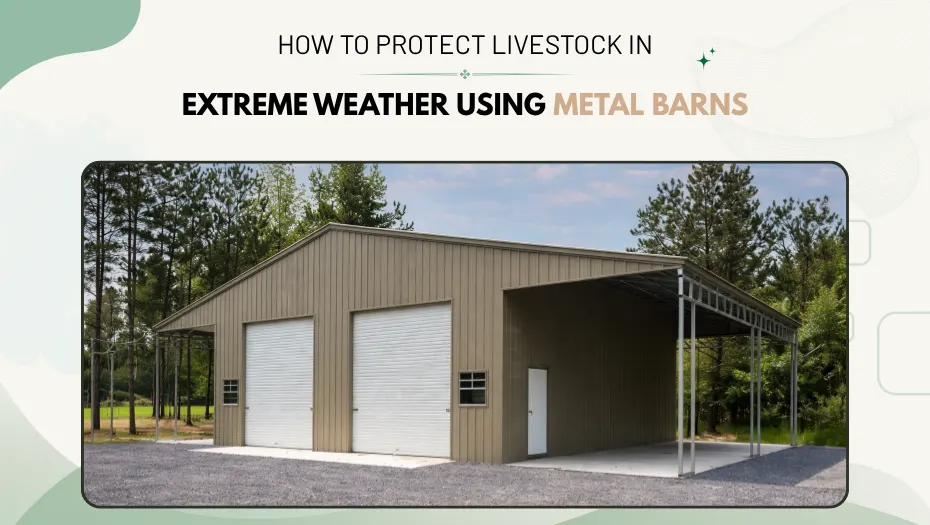
Extreme weather is one of the biggest threats to livestock. Scorching summer heat, heavy snowfall, flooding rains, and powerful storms can stress or kill animals without proper shelter. That is why more farmers and ranchers are turning to metal livestock barns and shelters as their go-to solution. A steel livestock building is built to handle harsh conditions while keeping animals safe, dry, and comfortable. Whether you raise cattle, horses, goats, or hogs, the right barn protects your investment when the weather turns dangerous.
This guide covers how metal livestock barns perform in every type of extreme weather, what features matter most, and what mistakes to avoid when building.
Metal livestock barns use structural strength, smart ventilation, and insulation to shield animals from harsh conditions. A well-built steel livestock building resists high winds, heavy snow, and extreme heat. With the right design, these livestock shelters keep animals healthy and safe in every season.
Steel frames hold up against wind, snow, and rain for decades. Unlike wood, steel does not burn, which makes livestock barn buildings far safer. Metal panels resist termites and rodents, and a steel livestock building needs far less upkeep than a timber-frame structure. Customizable sizing means you can match the building exactly to your herd and climate. Learning about metal farm building options helps you understand the full range of what steel construction offers for agricultural use.
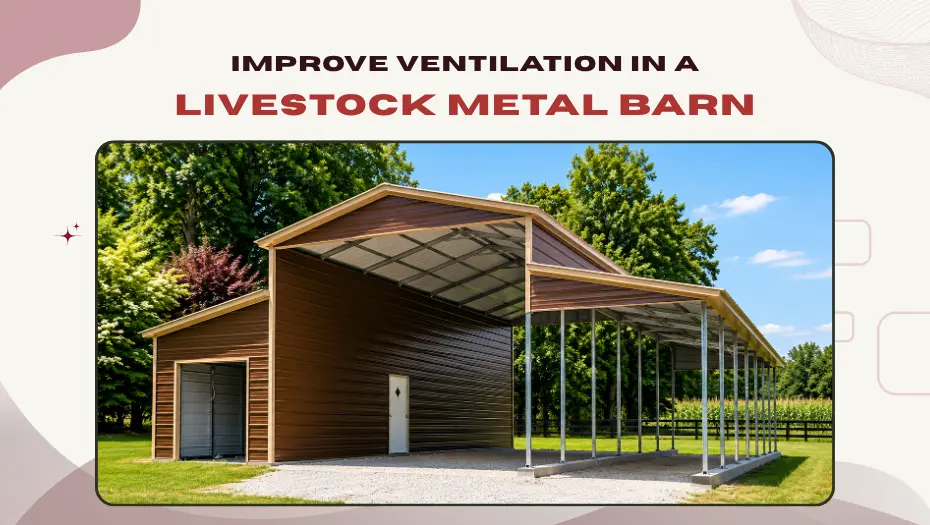
Ridge vents, side vents, and cupolas push hot air out while cooler air flows in from the sides. Metal roofs with a Galvalume finish reflect solar radiation and keep interiors noticeably cooler than dark roofing materials.
Adding insulation to roof panels slows heat transfer in summer and holds warmth in winter. For pasture settings, a three-sided or open-sided cattle shelter gives animals shade without restricting airflow. These barns for animals are especially effective in warm southern climates.
Steel barns can be engineered with snow load ratings of 20 to 40 pounds per square foot or higher. A vertical roof metal barn sheds snow cleanly rather than letting it pile at seams, which reduces both structural stress and interior cold. Insulated panels trap body heat from animals inside, lowering heating costs considerably. Wind-blocking walls cut wind chill, and dry bedding on an elevated floor prevents moisture-related illness through the coldest months.
Yes. Most steel livestock buildings are engineered to resist wind speeds of 90 to 170 miles per hour. Anchor bolts drilled into a concrete foundation lock the structure in place during high-wind events. Enclosed barns outperform open-sided designs in severe storms, though both can meet strong wind ratings. If your area sees tornadoes or hurricanes, discuss wind uplift ratings and frame bracing with your builder before placing an order.
Beef cattle need 20 to 30 square feet of covered space per animal. Dairy cattle need 50 to 80 square feet each with feeding room. Horses require a minimum 12×12-foot stall. Goats and sheep each need 15 to 20 square feet. Barns for cattle with large herds often include feed and equipment storage under the same roof. Just as single car garage size mistakes teach homeowners to always plan for more room than expected, livestock barn sizing should include at least a 20 percent buffer for growth and daily handling.
Costs depend on size, roof style, insulation, and local labor rates. Here is a general guide:
|
Barn Size |
Est. Cost (2026) |
Best For |
|
20×30 ft |
$4,500 – $8,000 |
Small farms, 3-5 cattle |
|
30×50 ft |
$9,000 – $16,000 |
Mid-size herds, mixed animals |
| 40×80 ft | $18,000 – $32,000 |
Large operations, storage combo |
Vertical roof styles and insulation increase base price but improve long-term performance. For farms that prefer to spread payments, rent-to-own metal barn is a practical option with no high upfront cost.
Getting these decisions wrong at the planning stage costs you far more to fix later. Here are the most common mistakes builders make and what each one leads to:
|
Mistake |
Repercussion |
|
Poor ventilation |
Trapped heat, humidity, and ammonia build up inside the barn, causing respiratory illness and heat stress in animals |
|
Wrong barn size |
Overcrowding stresses animals, lowers productivity, and accelerates the spread of disease through the herd |
|
Ignoring local weather |
A barn built for mild climates buckles under heavy snow loads or hurricane-force winds, risking structural collapse |
|
Skipping insulation |
Steel panels transfer extreme temperatures directly inside, making the barn dangerously hot in summer and freezing in winter |
|
No drainage plan |
Pooling water and mud lead to hoof rot, mold growth, and respiratory illness that can affect the entire herd quickly |
A steel livestock building is built to last, but a little routine care goes a long way. A few simple checks each year will keep your barn strong, clean, and fully protective across every season.
Blocked gutters cause rainwater to pool around the barn base instead of draining away. Clean them in spring and fall to prevent water from working under panels and damaging the foundation over time.
High winds put real stress on fasteners and panel seams. Walk the full perimeter after any serious storm and check for shifted panels or loose bolts. A small fix caught early costs far less than storm damage left unaddressed.
Bare metal exposed to moisture can begin rusting within days in humid conditions. Keep touch-up paint on hand and address chips or scratches as soon as you spot them to avoid costly panel replacements later.
Animal waste and feed residue create conditions where bacteria and odor build up fast. An annual pressure wash keeps the interior hygienic, reduces health risks for your livestock, and extends the life of your flooring.
Your livestock depend on you to make the right call before the weather turns. A well-built metal livestock barn gives you the control to size it for your herd, design it for your climate, and expand it as your operation grows.
Start with the right roof style, plan your ventilation from day one, and never skip the drainage details. Those three decisions alone determine how your metal barn performs decades from now.
Metal livestock barns and shelters hold up through what nature throws at them, require minimal upkeep, and outlast almost every alternative. Build smart once and your animals will thank you for it.
Yes. Metal livestock barns and shelters are fire-resistant, pest-resistant, and structurally tough. With proper ventilation, insulation, and drainage, they provide a healthy and secure environment for all types of animals throughout the year. They consistently outperform wood structures in safety, durability, and ease of maintenance.
They can without proper planning. A steel livestock building with ridge vents, side openings, reflective roofing, and insulated panels stays much cooler inside. Open-sided designs work especially well in warm climates. The key is building ventilation and roof style into the design from day one, not retrofitting later.
A fully enclosed steel livestock building with a vertical roof, insulated panels, ridge vents, and concrete flooring is the top choice for cattle. It handles heat, cold, wind, and rain effectively. For smaller herds in dry climates, a three-sided open cattle shelter is also a strong, low-cost option.
Absolutely. With the right insulation, ventilation, and design features, livestock barn buildings stay comfortable in every season. Animals benefit from a stable interior environment, especially during extreme heat, heavy snowfall, and severe storms when outdoor exposure is genuinely dangerous to their health and productivity.
A well-built steel livestock building typically lasts 40 to 60 years or more with basic maintenance. Steel resists rot, termites, and fire, which are the three leading causes of early barn failure. Galvalume or galvanized coatings protect panels from rust even in humid and coastal environments.
A vertical roof metal barn is the best choice for heavy snow areas. The panel orientation lets snow slide off cleanly rather than building up at seams. Combined with a high snow load rating, this roof style protects both the structure and the animals sheltered inside all winter long.
Condensation happens when warm humid air meets cold steel panels. Insulated roof and wall panels reduce the temperature gap. Pairing ridge vents with low side vents creates natural airflow that removes moisture-laden air continuously and keeps humidity levels manageable throughout the year.
In most areas, yes. Requirements vary by state, county, and building size. Check with your local planning department before ordering materials. Most metal barn suppliers assist with the standard documentation needed for permits, which can speed up the approval process considerably.
Expand each item below to explore a few helpful answers before moving to the next blog post.