Loading...
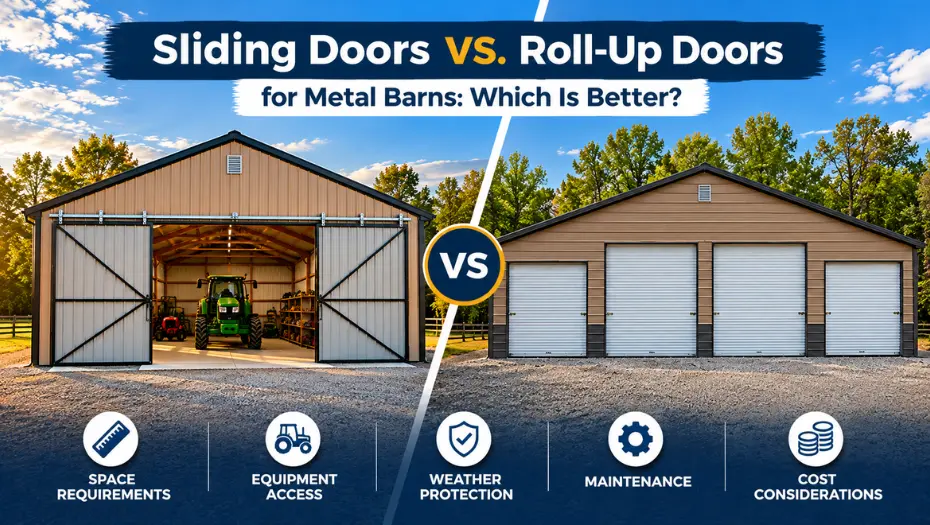
Sliding Doors vs. Roll-Up Doors for Metal Barns: Which Is Better?
Choosing between sliding doors and roll-up doors for metal barns depends on your equipment, available space, budget, and daily access requirements. Sliding doors move horizontally along a track and need space beside the opening, while roll-up doors move vertically and require adequate overhead clearance. Both can work well for steel barns, but the right choice depends on how you plan to use your building.
Whether you’re planning a farm storage building, steel hay barn, metal horse barn, or workshop, understanding these differences can help you select a practical door configuration before construction begins.
Also Read: Steel Barn Foundation Options: Concrete vs. Gravel vs. Dirt
What Is the Difference Between Sliding Doors and Roll-Up Doors?
Sliding barn doors move sideways along a track, while roll-up doors travel vertically and coil above the opening. Their operating mechanisms determine how much wall and overhead space each option needs.
| Feature | Sliding Doors | Roll-Up Doors |
|---|---|---|
| Operation | Moves horizontally | Moves vertically |
| Space required | Clear wall space beside the opening | Overhead clearance |
| Common applications | Agricultural storage, equipment barns | Workshops, garages, equipment storage |
| Maintenance | Tracks, rollers and guides | Springs, guides and operating hardware |
| Operation options | Manual or powered, depending on design | Manual or powered, depending on design |
| Weather protection | Depends on overlap, seals and installation | Depends on door seals, ratings and installation |
1. Sliding Doors for Metal Barns: Benefits and Limitations
Sliding doors are a practical option for many metal barns because they open sideways rather than occupying the overhead area. They are commonly considered for agricultural buildings where wide access is important.
Advantages of sliding doors
- No overhead door coil: The opening does not require the same overhead operating mechanism as a roll-up door.
- Wide opening potential: Suitable designs can provide access for tractors, trailers, and farm equipment.
- Flexible applications: They can work well for selected farm storage buildings, hay barns, and agricultural structures.
- Straightforward operation: Manual systems can be convenient when doors are appropriately sized and maintained.
Limitations to consider
Sliding doors need enough unobstructed wall space to move fully open. Windows, corners, other doors, and building sections can restrict their movement. Tracks and rollers also require inspection and maintenance to prevent dirt or debris from affecting operation.
Best suited for: Buildings with adequate side-wall clearance and users who want horizontal door operation.
2. Roll-Up Doors for Metal Barns: Benefits and Limitations
Roll-up doors move upward and coil above the opening. They can be useful when you want to preserve wall space beside the doorway or need convenient access to an equipment bay.
Advantages of roll-up doors
- Space-saving operation: The door moves vertically instead of sliding along the wall.
- Convenient access: Appropriate sizes can accommodate tractors, mowers, trailers, and other equipment.
- Flexible configurations: Manual and powered options may be available, depending on the door system.
- Useful for frequent entry: The right operating system can suit buildings where equipment moves in and out regularly.
Limitations to consider
Roll-up doors require sufficient overhead clearance for the door and its operating hardware. Springs, guides, and other moving components need appropriate maintenance. Installation costs depend on the door’s dimensions, construction, operating mechanism, and project requirements.
Best suited for: Metal barn buildings where adjacent wall space is limited and overhead clearance is available.
3. Which Door Is Better for Your Metal Barn?
Neither option is universally better. Your building layout and intended use should guide the decision.
| Your Requirement | Option to Consider |
|---|---|
| Limited wall space beside the opening | Roll-up door |
| Limited overhead clearance | Sliding door, if wall space permits |
| Frequent tractor access | Either, based on equipment dimensions |
| Hay and agricultural storage | Either, depending on access and layout |
| Multiple doors along one wall | Roll-up doors may simplify placement |
| Workshop or equipment bay | Compare both options and operating frequency |
Before choosing, measure your tallest and widest equipment, including attachments. Allow room for turning, approaching the doorway, and moving equipment safely.
4. What Door Size Do You Need for a Metal Barn?
The right door size depends on the equipment entering the building—not simply the barn’s overall dimensions.
Consider these factors:
- Width: Measure the widest tractor, implement, trailer, or vehicle.
- Height: Account for roof-mounted equipment and raised components.
- Clearance: Allow practical room for maneuvering without damaging the building.
- Future needs: Consider equipment you may purchase later.
- Door operation: Check side-wall clearance for sliding doors and overhead clearance for roll-up doors.
For a prefab barn or preengineered barn, confirm the required opening and door system with the building supplier before manufacturing. Changing an opening later may require structural modifications.
5. How Do Weather, Security and Maintenance Affect Your Choice?
Door performance depends on more than its opening mechanism. Wind exposure, rain, dust, locking hardware, seals, and installation quality all influence how well a door performs.
For properties exposed to strong winds, confirm that the selected door and building design meet applicable local requirements. Neither sliding nor roll-up doors should automatically be assumed to provide superior wind resistance or weather sealing.
Inspect sliding-door tracks and rollers regularly. For roll-up doors, follow the manufacturer’s maintenance instructions for springs, guides, and operating hardware. Leave spring repairs to qualified professionals because these components can be dangerous.
6. Which Viking Barn Building Should You Consider?
The right door layout depends on the building’s intended use, dimensions, and available clearance. These Viking Barns products offer different configurations to consider when planning access.
| Building | Size | Planning Consideration |
|---|---|---|
| 36x30x12 Metal Barn Building | 36 × 30 × 12 ft | Plan access for general storage and equipment. |
| 38x40x14 Ridgeline Step Down Barn | 38 × 40 × 14 ft | Consider clearance and access to different sections. |
| 44x40x12 Steel Barn Building | 44 × 40 × 12 ft | Evaluate equipment access and interior layout. |
| 53x40x14 Custom Carolina Barn | 53 × 40 × 14 ft | Plan door placement around the raised-center configuration. |
| 42x26x12 Horse Barn | 42 × 26 × 12 ft | Prioritize safe access for horses and handlers. |
| 58x24x16 Raised Center Equipment Storage Barn | 58 × 24 × 16 ft | Check equipment height and entry clearance. |
These are building examples, not confirmation that every model includes both door options. Verify available configurations and specifications with Viking Barns before ordering.
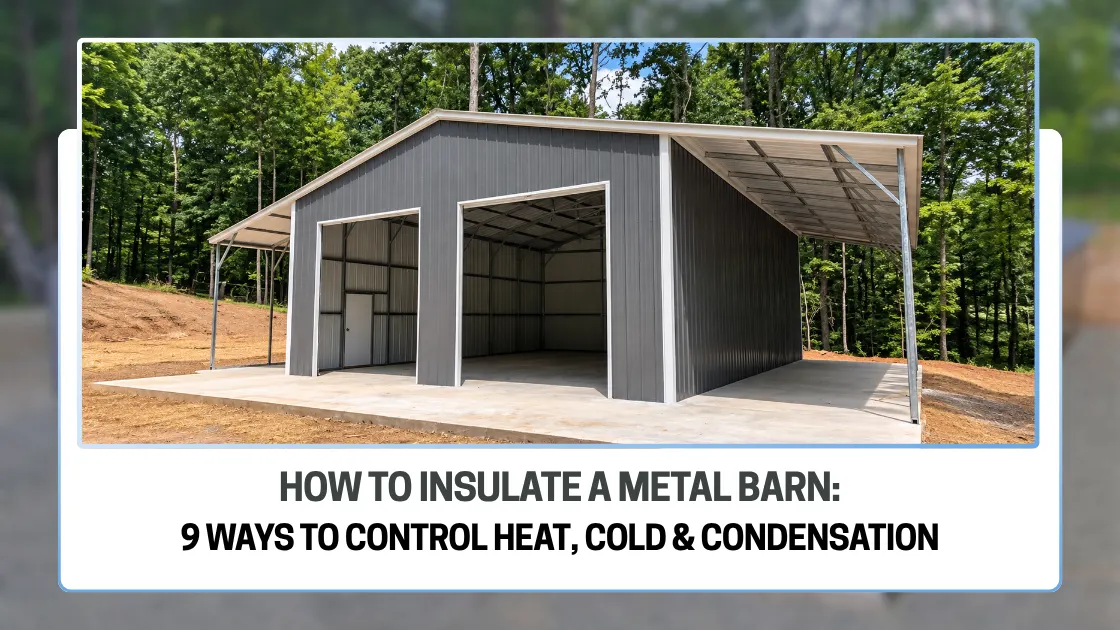
You Might Like: How to Insulate a Metal Barn: 9 Ways to Control Heat, Cold & Condensation
Frequently Asked Questions
Are sliding doors or roll-up doors better for metal barns?
Sliding doors can suit buildings with sufficient side-wall space, while roll-up doors can work well when overhead clearance is available and adjacent wall space needs to remain clear. Equipment dimensions and building layout should determine the choice.
Which door takes up less space inside a metal barn?
Both designs can preserve much of the central floor area, but in different ways. Sliding doors require wall space for travel, while roll-up doors require overhead clearance and operating hardware.
Are roll-up doors more expensive than sliding doors?
Costs vary with dimensions, materials, hardware, operating systems, installation, and customization. Compare complete quotes for both options rather than assuming one type always costs less.
Can I install a different door after my metal barn is built?
Sometimes, but changing door types or opening dimensions may require modifications to the framing, supports, or surrounding structure. Confirm feasibility with the building supplier or a qualified professional before making changes.
Also Read: Metal Barn Building Codes: What Permits and Requirements Do You Need?
Final Verdict: Which Door Should You Choose?
Choose sliding doors when you have sufficient wall space and prefer horizontal operation. Consider roll-up doors when preserving adjacent wall space is more important and overhead clearance is available.
For metal barns, steel hay barns, metal Carolina barns, and metal horse barns, the best solution depends on equipment access, building design, weather exposure, and everyday use.
Before ordering your prefab or preengineered barn, confirm the opening dimensions, structural requirements, operating hardware, and total installed cost. Planning these details early can help you avoid expensive modifications later.
Related articles