Loading...
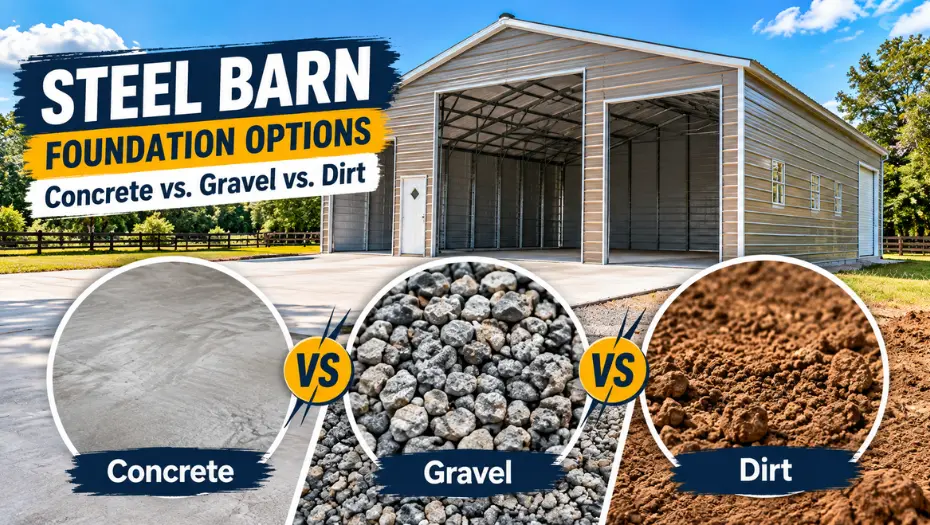
Choosing the right base is one of the most important decisions when planning a steel barn. The building needs stable support, proper anchoring, and protection from water and soil movement. But that does not mean every barn needs the same floor or foundation system. Concrete, gravel, and dirt can all work in the right situation.
The best steel barn foundation options depend on how you will use the building, the soil on your property, drainage, climate, building size, and local requirements. A horse barn may need a different setup from an equipment barn or workshop. The key is to separate the structural support system from the floor surface and plan both together.
Also Read: Best Foundation for a Metal Horse Barn: Complete 2026 Guide
What Does a Steel Barn Foundation Actually Need to Do?
A foundation has a bigger job than simply creating a flat place for a barn. It transfers structural loads to the ground, helps resist movement and uplift, and provides a stable connection between the building and the site.
It also needs to work with local soil and weather conditions. Poor drainage, weak soil, frost movement, or inadequate anchoring can create problems even when the barn itself is properly designed. If you have many questions, go through
The Floor and the Foundation Are Not Always the Same Thing
This distinction is important. A barn can have a dirt or gravel floor while the steel columns are supported by concrete piers or perimeter footings. Likewise, a concrete slab can serve as both a finished floor and part of the structural foundation system.
So when comparing steel barn foundation options, do not ask only, “What should the floor be?” Ask, “How will the structure be supported, and what surface best suits the way I will use the space?” If you have more questions, check out Metal Barns FAQs and clear your doubts.
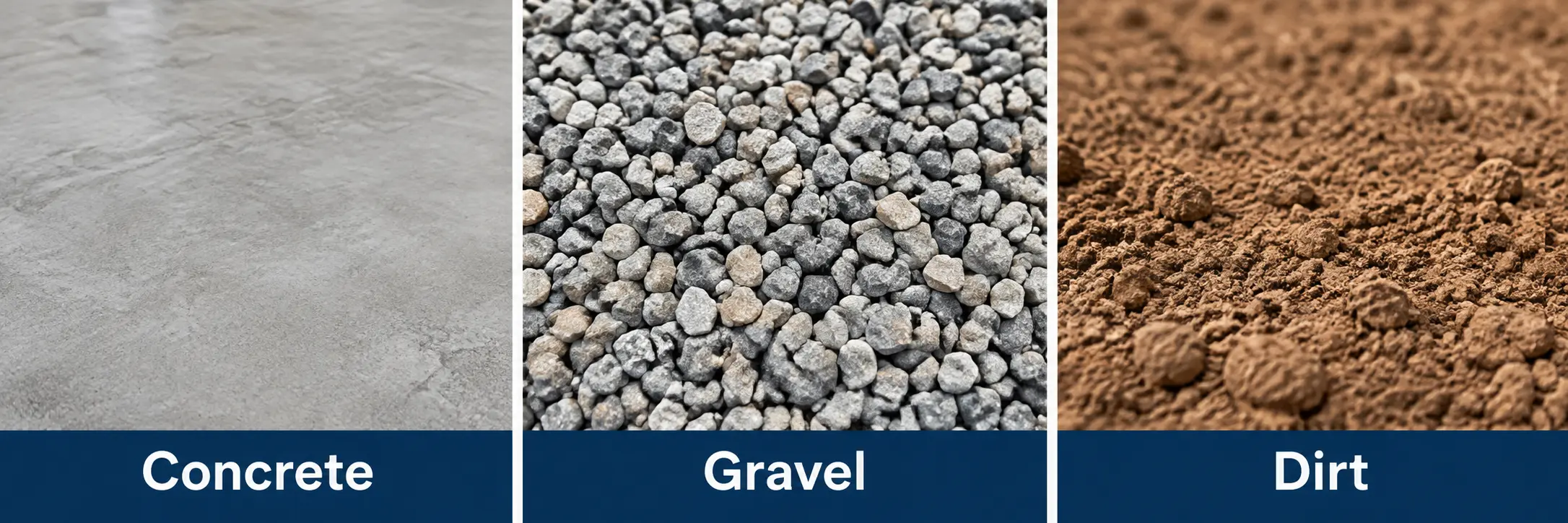
What Are the Main Steel Barn Foundation Options?
|
Option |
Common Use | Main Benefit | Main Concern |
| Concrete | Workshops, vehicles, equipment | Stable finished surface |
Requires careful site and drainage preparation |
|
Gravel |
Livestock, storage, agricultural use | Good drainage and flexibility | Can shift or rut without proper preparation |
| Dirt | Horse and livestock areas | Natural surface |
Mud, dust, erosion, and unevenness |
A gravel or dirt floor does not automatically mean the steel building is sitting on loose, untreated ground. The site may still require grading, compaction, drainage work, and a designed anchoring system. This is why you must know how to install a metal barn building successfully, and the foundation is one of the crucial things.
Concrete Foundation for a Steel Barn
Concrete is often considered when a barn needs a firm, finished surface for vehicles, machinery, storage, or regular work.
When Is Concrete the Better Choice?
Concrete makes sense when tractors, trailers, vehicles, or heavy equipment will regularly enter the building. It can also be useful for workshops, tack rooms, aisles, feed areas, and spaces where cleaning is easier with a hard, level surface.
A concrete slab can also simplify movement of wheeled equipment and provide a consistent surface for storage and work areas.
Advantages of a Concrete Foundation
A properly designed concrete foundation provides a stable surface and can be integrated with the building’s anchoring system. It is also easier to sweep, wash, and maintain than loose flooring in many applications.
However, concrete should not be selected simply because it feels stronger. The slab, reinforcement, footings, anchors, drainage, and underlying soil all need to work together. Local conditions may determine the required foundation design.
What Problems Can Concrete Have?
Concrete can crack, settle, or develop moisture problems when the site is poorly prepared. Inadequate drainage can also leave water against the building or beneath the slab.
Before pouring, the site should be properly graded and prepared. Foundation dimensions, reinforcement, anchor placement, and other structural details should follow the building design, engineering requirements, and local code.
You Might Like: Types of Metal Building Anchors and When to Use Them
Gravel Foundation for a Steel Barn
Gravel can be practical for agricultural buildings where drainage and a flexible working surface matter more than a finished concrete floor.
When Does Gravel Make Sense?
Gravel is commonly considered for livestock shelters, equipment storage, agricultural storage, and barns that do not need a full hard floor throughout the building. A well-prepared gravel pad can provide a firm surface while allowing water to move through the base more readily than an impervious floor.
Why Proper Gravel Preparation Matters
Gravel should not simply be dumped over existing grass or soft soil. Organic material, vegetation, and unsuitable topsoil may need to be removed first. The site should then be graded, the base prepared, and the aggregate compacted.
Drainage matters just as much. Water should move away from the barn rather than collect around the perimeter. The exact aggregate type, depth, compaction method, and drainage design should reflect the soil and project requirements.
Is Gravel Alone Enough to Support a Steel Barn?
This is where many people confuse flooring with foundation support. A gravel floor may be suitable for the interior, but the steel frame still needs an appropriate anchoring and support system.
Depending on the building and site, that may involve concrete piers, perimeter footings, ground anchors, or another engineered solution. Do not assume that a gravel surface by itself is an adequate structural foundation.
Dirt Foundation for a Steel Barn
A dirt floor can be useful for a metal horse barn and livestock areas where a natural surface is preferred. It can also be used in agricultural spaces where a finished floor is not necessary.
When Is a Dirt Floor Practical?
Dirt can work well in stalls, livestock areas, and some agricultural storage spaces. For horses, the floor can be finished with suitable footing or mats depending on the use of the area.
The important point is that “dirt floor” should not mean untouched ground. The site still needs to be evaluated, graded, and prepared so the building remains stable and water does not collect inside.
Benefits of a Dirt Floor
A dirt floor provides a natural surface and can be adapted over time. It may also be appropriate for areas where livestock spend much of their time.
What Are the Challenges?
Untreated or poorly drained soil can become muddy after rain, dusty during dry weather, or uneven under repeated traffic. Erosion and standing water can also create maintenance problems.
For livestock areas, think about drainage, footing, cleaning, and animal comfort before deciding that dirt is automatically the simplest solution.
Concrete vs. Gravel vs. Dirt: Which One Fits Your Barn?
There is no single answer for every property.
|
Consideration |
Concrete | Gravel | Dirt |
| Vehicles and heavy equipment | Strong fit | Possible |
Limited |
|
Livestock areas |
Useful in selected zones | Strong fit | Strong fit |
| Drainage | Requires planning | Generally good when prepared correctly |
Depends heavily on soil and grading |
|
Finished work surface |
Yes | No | No |
| Maintenance | Generally straightforward | Periodic leveling may be needed |
More frequent surface management |
|
Flexibility |
Lower once installed | High | High |
| Workshop use | Strong fit | Limited |
Poor fit |
The right steel barn foundation options depend on the building’s actual job. A multi-purpose barn may use concrete in the work area and gravel or dirt elsewhere.
Also Read: 26-Gauge or 29-Gauge: Choosing the Right Gauge for Your Metal Barn Roof
How Soil Conditions Change Your Foundation Choice
Soil is one of the biggest factors that should be considered before selecting a foundation.
- Clay Soil: Clay can expand and shrink as moisture levels change. That movement can affect foundations if the site is not properly evaluated and prepared.
- Sandy or Loose Soil: Sandy soil may drain well, but drainage does not automatically mean adequate bearing capacity. Loose material may require proper compaction or additional preparation.
- Poorly Draining or Wet Sites: If water naturally collects on the property, solve the drainage problem before focusing on the floor finish. Grading, drainage channels, a raised pad, or other site-specific measures may be needed.
- Sloped Land: A slope can affect grading, access, drainage, and foundation design. Significant changes in elevation across the building footprint may require more extensive site preparation or an engineered foundation approach.
Don’t Choose a Barn Foundation Before Checking Drainage
Water management should be part of foundation planning from the beginning. Grade the site so surface water moves away from the building. Consider where roof runoff will go, whether the surrounding land drains toward the barn, and whether low spots could collect water.
A strong foundation on a poorly drained site can still face moisture and settlement problems. Proper site preparation, grading, and drainage should be completed before installation.
How Barn Use Should Influence the Foundation
Your intended use should guide the entire floor plan.
Horse Barn
Horse barns may benefit from concrete aisles and tack rooms combined with compacted gravel, suitable footing, or mats in stall areas. Planning each zone separately can improve drainage, cleaning, and animal comfort. A guide to planning a horse steel barn also recommends considering site preparation, flooring, steel horse stalls, and daily use before construction.
Equipment Barn
Tractors, trailers, and machinery need adequate turning and loading space. Consider the weight of equipment and how frequently it will move across the floor.
Workshop Barn
A workshop usually benefits from a firm, level surface. Concrete can make it easier to install workbenches, equipment, electrical systems, and other permanent features.
Can You Combine Concrete, Gravel, and Dirt?
Yes. A hybrid approach can be practical when one barn serves several purposes. For example, a horse barn might have a concrete center aisle, gravel transition areas, and dirt or prepared footing inside stalls. An equipment barn could use concrete beneath the machinery area and gravel in general storage zones.
This approach lets the floor surface match the activity instead of forcing the entire building to use one material.
Common Steel Barn Foundation Mistakes to Avoid
Avoid building directly over organic soil without proper preparation. Do not ignore water movement, assume a level surface is properly graded, or treat a gravel floor as the same thing as structural support.
It is also a mistake to choose a foundation before considering the barn’s future use. Adding equipment, stalls, wash areas, or workshop space later can change what the floor needs to handle.
Finally, do not rely on generic foundation dimensions when local codes, soil conditions, wind, snow, or frost requirements may call for a different design.
Steel Barn Foundation Options: A Simple Decision Guide
Choose concrete when you need a durable, finished surface for vehicles, equipment, or workshop activities. Consider gravel when drainage, agricultural use, and a flexible surface are more important than a finished floor.
Consider dirt when the barn is primarily intended for horses or livestock and a natural floor suits the application. Consider a combination when different areas of the barn have different purposes. These steel barn foundation options should be evaluated with the structural support and anchoring requirements, not as a flooring decision alone.
Build the Foundation Around the Barn, Not the Other Way Around
A barn foundation should support more than the steel frame. It should work with the soil, manage water, suit the building’s purpose, and provide the right surface for the activities happening inside.
Concrete, gravel, and dirt each have a place in barn construction. The right approach is not to choose a material first and force the building around it. Start with how the barn will be used, understand the site, plan drainage, and then select the foundation and floor system that fits those needs.
When those decisions are made together, the foundation becomes part of the barn’s overall design rather than an afterthought.
Related articles