
July 17, 2024

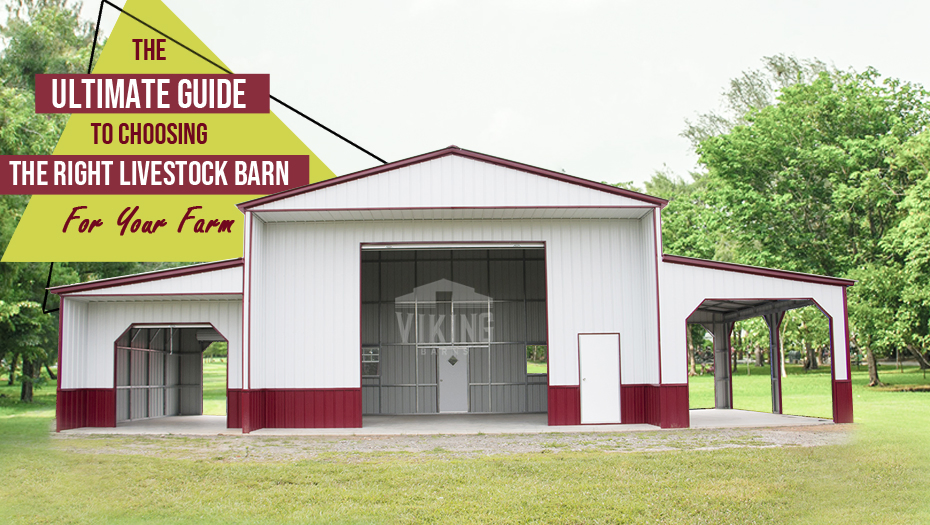
The Ultimate Guide to Choosing the Right Livestock Barn for Your Farm

The Ultimate Guide to Choosing the Right Livestock Barn for Your Farm

Selecting the right barns for livestock is crucial to generating successful revenue and for the well-being of the animals. Many factors go into consideration, such as size, ventilation, insulation, layout, etc. The size must be selected keeping in mind the needs of the current herd’s size as well as those in the near future.

Choosing The Perfect Livestock Barn For Your Farm: A Comprehensive Guide

1# Size & Layout

When selecting a size, a lot depends on which animal species you want to shelter. For instance, lactating cows:

  • The stall width must be at least 45 to 48 inches.
  • The stall length for forward lunging should be 8 to 8.5 feet.
  • Neck rail height should be around 44 to 46 inches.
  • The bunk space should be about 24 to 30 inches per cow.
  • For 200 cattle, the total area needed is about 10,000 sq. ft.

You can choose from roughly three layouts of cattle buildings – hoop barn, vented gable roof barn, and mono slope barn. The Monoslope barn has maximum sun exposure for heat during winters and shade in summers. It also has excellent ventilation.

The vented gable roof barn provides balanced ventilation from its upward-sloping sides, which meet at the covered vent at the center. Lastly, the most affordable hoop barn has a canvas roof shape with open sides for air.

The layout of the cattle buildings must be efficient for feeding, cleaning, and managing animals. You can research and consult experts to ensure that the livestock shelter meets the specific needs of the farm and livestock species.

2# Things To Consider When Setting Budget & Goals For Livestock

  • No. of animals
  • Type of animal
  • Minimal space required for each
  • Easy of daily chores for farm workers
  • Adequate space
  • Proper vents
  • Local weather throughout the year
  • The right kind of metal livestock barns
    • Cost-effective and weather-resistant barn: Hoop Barns
    • Well-insulated for winter protection: Gable Barns

If you are on a tight budget, look for animal barns for sale online. Select a metal dealer offering the best deal without compromising material and quality. Request a quote and compare it to find the value for the money deal. Our final quote includes delivery and installation, so you don’t have to go through all the hassle.

3# Material Options

Are you thinking about a traditional farm-style barn? Don’t worry! Metal livestock barns are robust, durable, and long-lasting and come with low maintenance. They do not rot, decay, twist, bend, or crack with time, retaining their structural integrity.

Not only that, metal is resistant to pests, fire, external weather conditions, and molding. They do not emit harmful and toxic VOCs with time. So your cattle or horses are healthier and safer. You can opt for a traditional-looking red barn or a modern & sleek design barn.

4# Vents & Insulation

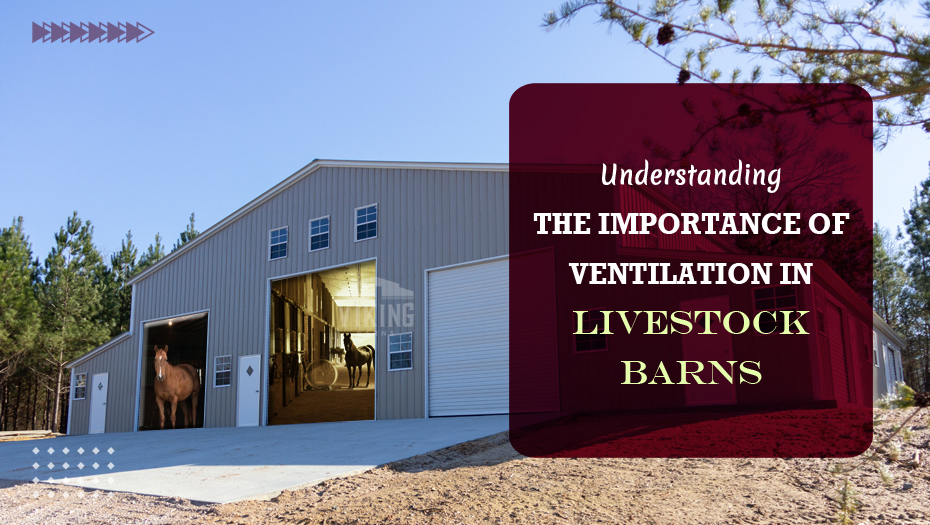
Proper ventilation is essential to reduce humidity and moisture. It also helps prevent respiratory issues among cattle and horses. If your barn is located in an open space, you can opt for natural or passive ventilation.

Here, the outside wind force is circulated inside the building via an opening. It does not require electricity to work. It is common in the northern US region with milder summers. You can use mechanical or active ventilation to control the air. It is suitable for tight temperature control.

Insulation, however, helps regulate temperature and keep livestock and farm workers comfortable all year round. It prevents precipitation and reduces the chances of molds or mildew growth. The cost-effective insulation is straw & hay, which have air pockets that act as thermal breaks that reduce heat transfer inside barns for livestock.

5# Easy Accessibility & Wide Aisle Space

The barn’s layout must be easily accessible to workers and easy for animals to maneuver without getting hurt. Opt for a large and wider central aisle barn with animal pens on both sides. You can also opt for a taller barn and use vertical space as a loft or false floor for storing hay, feed, and other items.

If you want to shelter a large number of animals, consider a clear span design. It has no internal support columns or walls. It can span up to 300 feet in width and can be as high as 80 feet or even more.

6# Customization Options

  • Color: Opt for a lighter reflective coating on the roof to redirect sunlight. This will prevent heating inside.
  • Roof Style: Choose a corrugated vertical metal roofing panel. This panel is the most durable and easy to clean, as the ridges run toward the ground, sliding off dust, debris, and water.
  • Add Gutter: Install a gutter with a downspout for areas with frequent downpours. It will carry water from the roof towards a deposition tank that can be later used for irrigation or non-portable use.
  • Foundation Type: Choose a floor comfortable for cows or horses and waste management. Some examples are traditional bedding on concrete or dirt, slatted floors with waste drainage, etc.
  • Individual Stall: Make sure the stall is spacious enough for the animal to stand, sit, and rest. There must also be proper ventilation and lighting.

7# Consider Certification

If you live in an area with frequent thunderstorms, high-speed winds, hail storms, or heavy snowfall, opt for engineer-certified metal livestock barns. They are made to meet and exceed local building codes and guidelines.

8# Fencing & Door Style

You won’t want your neighbors complaining about animals gazing on their land or destroying their property. The best way to prevent it is to add fencing around the barn. This will restrict animals from wandering around.

Opt for larger and wider steel doors. They will have enough space for cattle to enter and exit easily. You can also install Wi-Fi-enabled security cameras with motion sensors to keep an eye on animals and ensure their safety.

9# Landscaping & Signage

Lastly, add greenspace outside your barn and cool signage to create a warm and welcoming outdoor space. Choose livestock-friendly plants that can thrive in your climate. You can opt for drought-resistant plants that can withstand any weather conditions. Don’t forget to include signage, as it is an art that creates a mark for cattle buildings.

Your Livestock Barn Solution Starts Here

Investing in a high-quality steel monitor barn will pay off in the long run, as your animals will be healthy, and your productivity and overall efficiency will increase. For expert guidance for your livestock barn tailored to your specific needs, call (704) 579-6966 today!
Related Blogs

Winter Sale Alert: Lock In Up to 35% OFF on Metal Buildings
December 12, 2025

Winter Sale Alert: Lock In Up to 35% OFF on Metal Buildings

Winter savings are here with up to 35% off premium metal buildings. Upgrade your property with durable, customizable structures designed for long-lasting performance and exceptional value.
How to Choose the Right Livestock Barn for Your Farming Needs
December 9, 2025

How to Choose the Right Livestock Barn for Your Farming Needs

Choosing the right livestock barn ensures animal comfort, efficient workflow, and long-term durability. Understand key factors like design, materials, space, and ventilation to support healthy farm operations.
Top 10 Benefits of a Clear Span Barn for Farm & Commercial Use
December 1, 2025

Top 10 Benefits of a Clear Span Barn for Farm & Commercial Use

A clear span barn offers open, column-free space ideal for farming and commercial needs, delivering durability, flexibility, and cost-effective construction for long-term, reliable performance.
Cost Breakdown: What To Expect When Buying & Installing a Metal Barn
November 25, 2025

Cost Breakdown: What To Expect When Buying & Installing a Metal Barn

A metal barn involves costs for materials, installation, site prep, and customization. Understanding each expense helps buyers plan effectively and choose the best structure for their needs.
What to Ask Before Getting a Quote on a Metal Barn
November 18, 2025

What to Ask Before Getting a Quote on a Metal Barn

A metal barn quote depends on size, materials, design, and site needs. Understanding key details helps you compare options confidently and choose the best structure.
Why Does The Steel Building Gauge Really Matter?
November 11, 2025

Why Does The Steel Building Gauge Really Matter?

Steel building gauge determines the strength and durability of your structure. Choosing the correct gauge ensures better resistance, longevity, and overall structural performance.
Types of Metal Building Anchors and When to Use Them
November 4, 2025

Types of Metal Building Anchors and When to Use Them

Choosing the right metal building anchor is important for safety and strength. This guide explains different types, their uses, and how to pick the best one.
Why Adding Lean-tos to Your Steel Barn is Beneficial?
October 28, 2025

Why Adding Lean-tos to Your Steel Barn is Beneficial?

Adding lean-tos to your steel barn enhances space, protection, and functionality. It’s a cost-effective way to expand storage and improve your barn’s overall efficiency.
Benefits of Having Vertical Roof Over a Horizontal Roof for Your Custom Metal Barn
October 23, 2025

Benefits of Having Vertical Roof Over a Horizontal Roof for Your Custom Metal Barn

A vertical roof design enhances durability, prevents water pooling, and reduces maintenance costs. It offers better weather resistance, ensuring your custom metal barn stays strong for years.
Check-out Key Considerations Before You Extend Your Step-Down Metal Barn
October 14, 2025

Check-out Key Considerations Before You Extend Your Step-Down Metal Barn

Before extending your step-down metal barn, understand key factors like structural design, material compatibility, foundation strength, and cost efficiency to ensure a safe, durable expansion.