

August 14, 2026


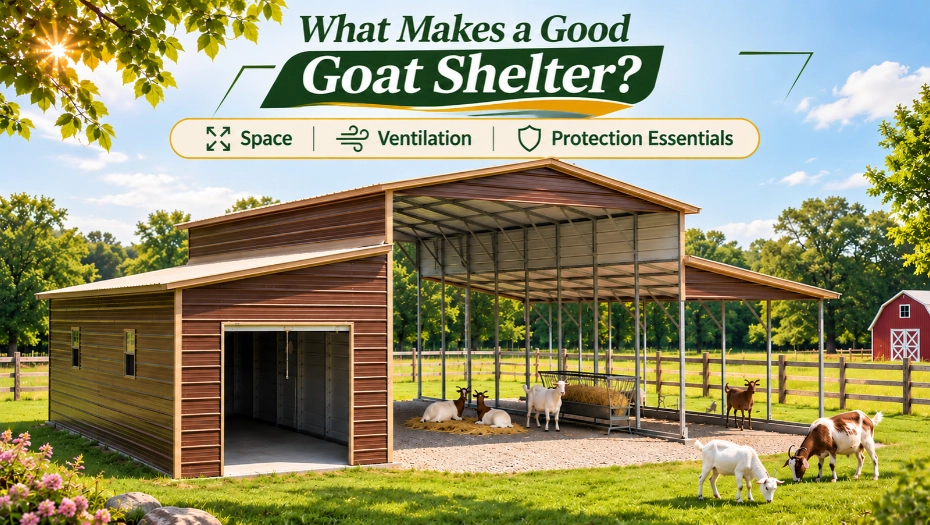
A good goat shelter should provide enough room for every animal to rest comfortably, proper airflow, dry bedding, protection from harsh weather, and secure access to an outdoor area. It does not need to be an elaborate structure, but it must be designed around the herd’s size, age, behavior, and local climate. A well-planned shelter can be a simple three-sided shed or a larger livestock barn with separate pens and feeding areas.
For goat owners considering a steel barn building, the important question is not simply which material to choose. The building must be designed to prevent overheating, moisture buildup, drafts, and unsafe conditions. Here are the essential features to consider before building or upgrading a goat shelter.
You Might Like: How Much Does a Metal Barn Cost in South Carolina? A 2027 Price Guide
Space is one of the first things to calculate when planning a goat shelter. Overcrowding can make it difficult for animals to rest, move around, reach feed, and avoid aggressive herd members. It can also make bedding harder to keep clean and dry.
A practical starting point for loose housing is approximately 15–20 square feet of indoor space per adult goat. Some housing systems require more room, particularly when feeding, handling, kidding, or other activities take place inside the building. Recommendations vary by breed, animal size, housing system, and management practices.
For example, a shelter for five adult goats may need around 75–100 square feet of basic indoor resting space. This is a starting estimate, not a complete building-size recommendation. Additional room may be needed for feeders, water containers, storage, separate pens, and movement.
| Goat group or activity | Planning consideration |
|---|---|
| Adult goats | Allow enough room for all animals to lie down without crowding |
| Bucks | Consider separate, sturdy housing and additional space for handling |
| Does with kids | Provide clean, quiet kidding areas with room for the mother and newborns |
| Growing kids | Plan flexible space as young goats increase in size |
| Feeding area | Provide enough feeder access to reduce competition |
| Sick or isolated goats | Consider a separate pen for observation and care |
Avoid designing a shelter based only on the number of goats you currently own. If you expect your herd to grow, allow room for additional animals or plan a layout that can be divided into separate pens later.
Good ventilation is essential for a healthy goat shelter. Goats produce moisture through breathing, while manure, urine, wet bedding, and spilled water can contribute to humidity and unpleasant gases. If stale air remains trapped inside the building, condensation, ammonia odors, dust, and mold can become concerns.
The objective is to maintain fresh air without exposing resting animals to strong drafts.
Useful ventilation features include:
Watch for warning signs such as condensation on the roof or walls, persistent ammonia odors, damp bedding, and poor air movement. These may indicate that the ventilation arrangement or daily cleaning routine needs attention.
A metal barn can be designed with ridge vents, suitable openings, and other ventilation features. However, simply adding vents does not guarantee good airflow. Their size, position, building orientation, and local wind conditions all matter.
Goats need a dry place to rest. A shelter that allows rainwater to enter, collects runoff, or retains moisture in the bedding can become uncomfortable and difficult to maintain.
Before choosing a building location, check the natural slope of the property and identify areas where water collects after heavy rainfall. Avoid low-lying locations that are prone to flooding or standing water.
Consider these practical features:
Concrete can be convenient for cleaning and managing indoor areas, but it should be covered with appropriate bedding where goats rest. Other flooring arrangements may work depending on the building design and management system.
The floor should not become slippery, excessively wet, or difficult to clean. Drainage and flooring decisions should be planned together rather than treated as separate details.
A good goat shelter should offer protection throughout the year. The type of protection needed will depend on the local climate.
During summer, shade and airflow are especially important. Metal roofing can become hot when exposed to direct sunlight, so a metal animal shelter should be designed with appropriate roof ventilation, sufficient shade, and suitable insulation or other heat-management measures where needed.
During colder months, goats generally benefit from dry bedding and protection from wind and precipitation. Closing every opening to retain heat is not always the right solution because it can trap moisture and reduce air quality. Newborn kids, sick animals, and recently shorn goats may need additional protection.
For better year-round comfort, consider:
A three-sided shelter can work well in many settings, provided its open side is positioned with prevailing winds and local weather patterns in mind.
Goats are curious, active animals. They climb, investigate openings, push against gates, and may try to reach stored feed. The shelter layout should make daily care easier while reducing opportunities for injury or escape.
A practical goat shelter may include:
Main resting area: A clean, dry space where the herd can lie down together without crowding.
Feeding area: A designated place for hay and feed, with enough access to limit competition. Feeders should be positioned to reduce contamination from manure and bedding.
Water station: A convenient location for clean drinking water that is easy to inspect, refill, and clean.
Kidding pen: A separate, quiet area for does approaching delivery and for managing newborn kids.
Isolation pen: A separate space that can be used when an animal needs observation or temporary separation.
Storage area: A designated place for feed, bedding, tools, and supplies, kept separate from areas where goats can access potentially harmful materials.
A well-organized steel barn building can accommodate several of these functions. However, the layout should be designed around the daily movement of animals and caretakers rather than simply maximizing the enclosed floor area.
Also Read: Steel Horse Barn Aisle Width: What Should You Consider Before Building?
A shelter alone cannot keep goats safe if the surrounding enclosure is poorly planned. Goats are known for testing fences, squeezing through gaps, and climbing structures. Secure fencing is therefore an essential part of the overall housing setup.
Consider these points when planning the outdoor area:
The outdoor enclosure should provide enough room for movement and browsing while offering access to shade and shelter. Keep potentially poisonous plants, sharp objects, and other hazards away from areas where goats spend time.
A secure metal shed or livestock barn can form part of the protection system, but fencing and pasture management remain equally important.
A metal barn can be a practical option for goat housing when it is properly designed and managed. Its suitability depends on the building configuration, ventilation, interior layout, climate, and the way the structure will be used.
A prefabricated metal building can be configured with enclosed areas, open-sided sections, partitions, and separate storage space. These options may help owners organize animal housing and farm activities under one roof.
However, a metal structure should not be treated as automatically comfortable for livestock. Metal surfaces can absorb and transfer heat, and poorly ventilated buildings may experience condensation or uncomfortable indoor conditions.
Before choosing a metal animal shelter, consider:
A metal shed may work for a small number of goats if it provides adequate space, airflow, shade, and protection. For larger herds or mixed farm use, a purpose-planned livestock barn may offer more flexibility.
There is no single goat-shelter design that works equally well in every part of the United States. Local weather, terrain, rainfall, wind exposure, and seasonal temperatures should influence the building plan.
| Climate or site condition | Shelter planning priority |
|---|---|
| Hot and sunny areas | Shade, airflow, roof heat management, and reliable water access |
| Cold and windy areas | Dry bedding, wind protection, and draft control |
| Rainy regions | Good drainage, roof overhangs, and dry resting areas |
| Humid environments | Ventilation, moisture management, and regular bedding maintenance |
| Areas with severe storms | Site selection and a structure designed for applicable local wind and weather loads |
Before construction, check local zoning, building permits, setbacks, and applicable building codes. Structural requirements should be confirmed for the actual site and final building configuration.
Must Read: What Farm Buildings Do You Need on a Small Farm? A Practical Planning Guide
Before ordering a new shelter or converting an existing building, review the following:
A good goat shelter is more than a roof over the herd. It is a carefully planned space that supports comfortable resting, fresh air, clean bedding, safe feeding, and protection from changing weather conditions.
Whether you choose a simple three-sided shed or a larger metal barn, start with the herd’s space requirements and daily management needs. Then plan ventilation, drainage, fencing, and separate animal areas around those priorities. A practical shelter design can make routine care easier while providing goats with a safer and more comfortable environment.
Expand each item below to explore a few helpful answers before moving to the next blog post.