August 14, 2026



A livestock barn is not just a shelter. It is a working space where animals eat, drink, rest, grow, and stay healthy. But for these animals, you have to arrange various things and offer them better facilities. Without some equipment and tools, it becomes difficult to take care of livestock species.
The right equipment in the barn makes daily farm work easier and keeps animals comfortable year-round. Whether you run a small family farm or a large operation, your barn should be organized, safe, and well-equipped. It is because when your animals are well cared for, productivity improves, and losses are reduced.
Let’s understand why equipment matters and what every livestock barn building should include.
Livestock farming involves daily tasks like feeding, watering, cleaning, health checks, and monitoring. Without proper equipment, these tasks become slow, tiring, and less effective.
Good equipment helps you:
For example, animals that get clean water and balanced feed daily grow faster and stay healthier. Studies show that livestock with proper feeding and watering systems can gain 20-25% more weight than livestock on farms using manual methods.
In short, the right tools make your barn efficient and your farm profitable. Now, let’s look at the essential equipment every livestock barn should have.
A well-planned barn has different types of equipment, each serving a specific purpose. From feeding systems to safety tools, every item plays an important role in daily operations. Below are the most important equipment categories for every livestock barn.
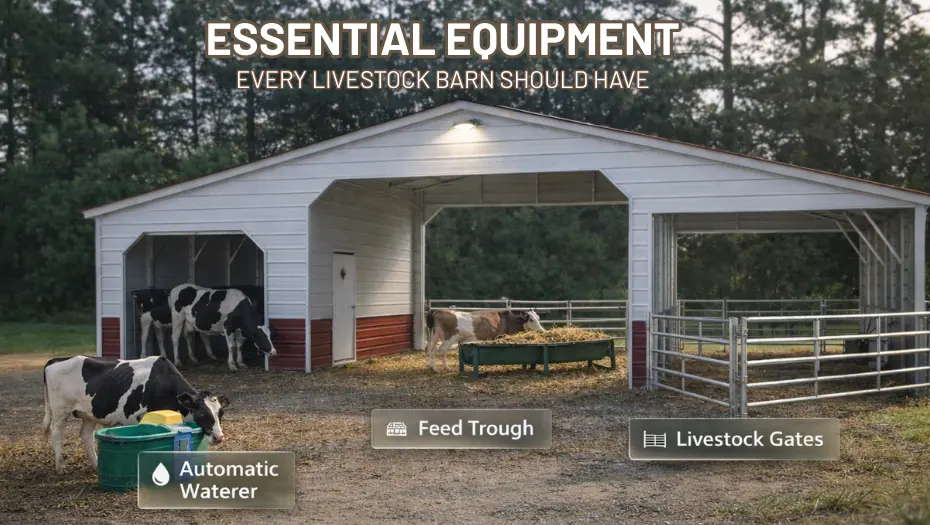
1. Feeding Equipment: Feeding is the foundation of animal health. Feed troughs, hay feeders, and grain bins keep food clean and prevent wastage. When feed is placed on the ground, animals step on it, mix it with dirt, and waste a lot of it. For example, cattle use long feed bunks, while goats and sheep use raised feeders to keep feed off the floor. Horses benefit from slow-feeding hay nets that improve digestion. Proper feeding systems ensure every animal gets equal access to food and reduce competition and stress.
2. Watering Systems: Water is just as important as food. A cow can drink 30 to 50 gallons of water per day, depending on weather and milk production. Automatic waterers provide clean water 24/7 and reduce daily labor. In cold regions, frost-free waterers prevent freezing. Storage tanks act as backup during power cuts or dry seasons. Moreover, a clean and constant water supply keeps animals hydrated, improves digestion, and supports milk and meat production.
3. Temperature Control Systems: Animals suffer in extreme heat and cold. Poor temperature control leads to stress, reduced appetite, and lower productivity. Fans improve airflow and reduce heat buildup. Curtains help block cold winds in winter and allow fresh air in summer. In hot climates, ventilation systems can reduce heat stress and improve animal comfort. For example, dairy cows in well-ventilated barns can produce 10-15% more milk than cows in poorly ventilated spaces.
4. Animal Comfort and Housing Equipment: Comfortable animals rest better and stay healthier. Stalls, pens, and gates keep animals organized and reduce injuries. Proper bedding like straw, sand, or rubber mats provides soft resting areas and prevents joint problems. For example, cows that lie down comfortably have better digestion and higher milk yield. Goats and sheep need dry, raised resting areas to avoid infections. Good housing equipment improves animal welfare and farm efficiency.
5. Cleaning and Waste Management Equipment: Clean barns prevent disease. Manure scrapers, shovels, and drainage systems help remove waste daily. Poor waste management leads to bacteria buildup, bad smells, and fly problems. Drainage systems prevent water from pooling on floors. Regular cleaning reduces respiratory and digestive diseases and keeps the barn healthy. A clean barn is a healthy barn.
6. Health and Handling Equipment: Animals need regular health checks, vaccinations, and weighing. Handling equipment like chutes for slopes, pens, and gates helps move animals safely without injury. Weighing scales track growth and help farmers adjust feeding plans. Sick animals can be separated easily using handling pens. For example, farmers who monitor weight regularly can detect health problems early and prevent losses.
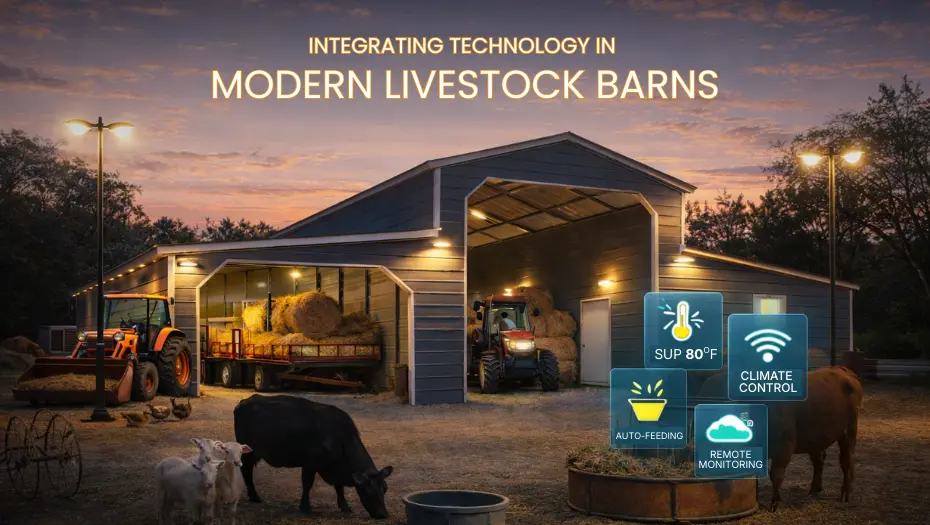
7. Safety and Monitoring Equipment: Modern farms use technology to improve safety and monitoring. Cameras allow farmers to watch animals remotely and detect early signs of illness or calving. Fire safety equipment is important because barns store hay, feed, and fuel. Alarm systems and emergency exits protect both animals and workers. Monitoring systems give peace of mind and improve farm management.
Livestock equipment is a big investment. Rain, snow, heat, and wind can damage tools stored in open sheds or wooden barns. Moisture causes rust. Heat damages plastic parts. Snow blocks access, and many other things happen.
That’s why many farmers prefer custom livestock barns to protect both animals and equipment all year round.
Steel barns are:
Farmers also choose custom livestock steel barns to design layouts that match their herd size and equipment needs. Feed areas, watering points, and handling zones can be planned efficiently. This is why many farms now use prefab livestock barns because they are quick to install and cost-effective.
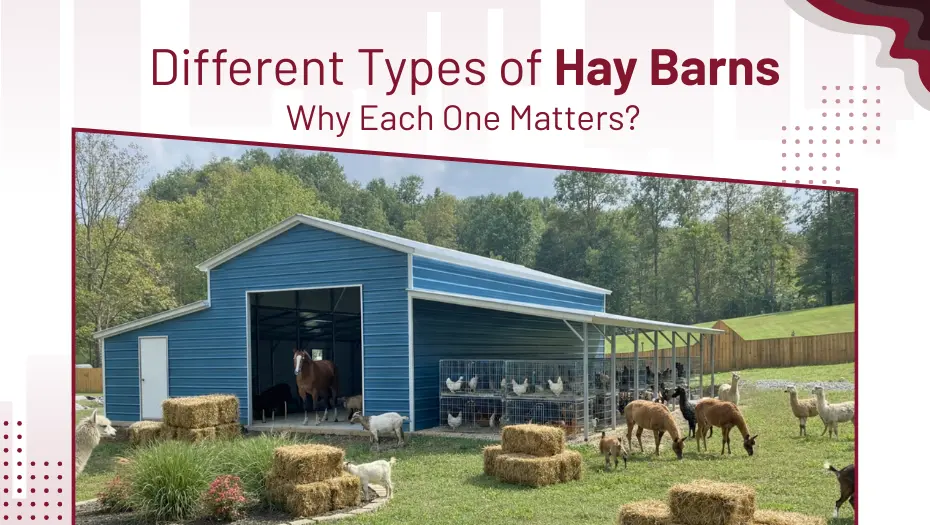
These barns are pre-engineered and ready to assemble, saving time and labor. Different barn styles serve different needs. For example, a seneca barn offers a simple and open design for easy movement. A step-down barn allows better space management for large herds. A Metal hay barn keeps feed dry and protected from rain and pests. Moreover, a clear span metal structure provides a wide open space with no interior columns, making it easy to move equipment and animals.
Long story short, steel barns protect your equipment from rust, sun damage, and weather wear. This means lower maintenance costs and longer equipment life.
A great livestock business begins with the right equipment, and for that, you need a strong barn. The way your barn is equipped decides how smoothly your days run, how healthy your animals stay, and how productive your farm becomes. From feeding systems and clean watering to temperature control and safety tools, every piece of equipment plays a role in building a better operation. When your barn is built smart and equipped properly, everything works better, and you can operate your business effectively.