September 25, 2026



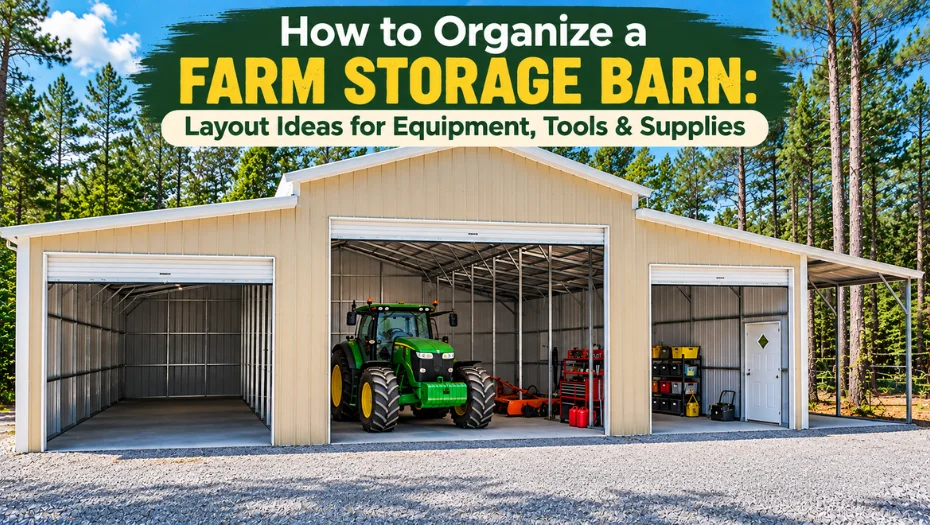
A well-organized farm storage barn separates equipment parking, tools, supplies, maintenance activities, and seasonal storage into clearly defined areas. The best layout depends on the equipment you own, how frequently you use it, the building’s dimensions, and the space required to move machinery safely.
Whether you already use a metal barn or are planning a new steel barn building, start by mapping your equipment, identifying your daily workflow, and assigning a dedicated zone to each activity. Keep frequently used machinery near a suitable entrance, store everyday tools within easy reach, and place seasonal items away from main traffic routes.
A practical farm storage barn layout should help you:
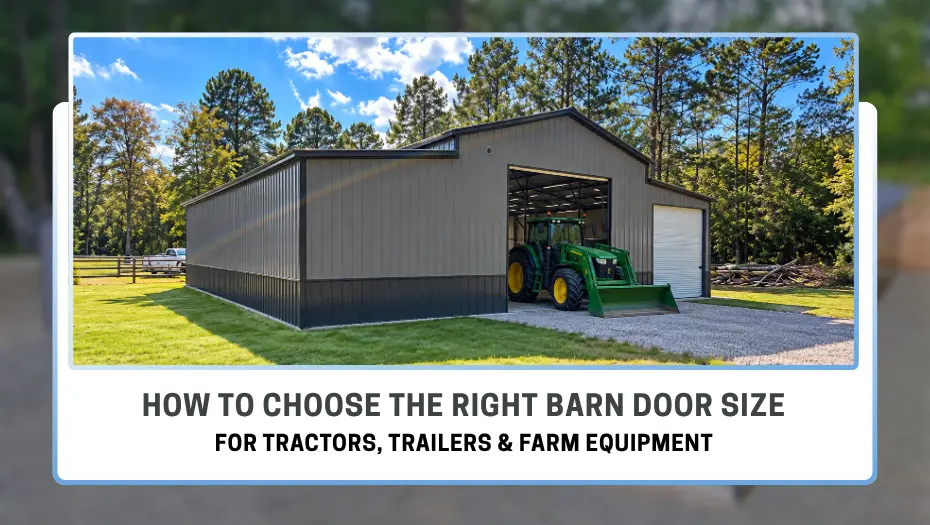
Also Read: How to Choose the Right Barn Door Size
The best layout divides the barn into functional zones based on how you use the space. Instead of storing everything wherever room is available, create dedicated areas for equipment, tools, supplies, maintenance, and seasonal items.
For many farms, a simple layout with a clear equipment route and storage along selected walls is a practical starting point. The final arrangement should reflect your building’s structure, access openings, equipment dimensions, and daily activities.
| Storage zone | What to store | Key layout consideration |
|---|---|---|
| Equipment parking | Tractors, mowers, trailers, and implements | Allow for entry, exit, and maneuvering |
| Tool storage | Hand tools, wrenches, repair tools, and small equipment | Keep frequently used items accessible |
| Supplies and parts | Replacement parts, hardware, and general farm supplies | Use labeled containers and suitable shelving |
| Maintenance area | Workbench, repair supplies, and maintenance tools | Maintain a clear working area and adequate lighting |
| Seasonal storage | Snow equipment, seasonal implements, and infrequently used items | Keep these items away from everyday access routes |
| Feed or hay-related storage | Appropriate feed supplies and hay-handling equipment | Consider moisture control, pest prevention, and safe separation from incompatible materials |
A straightforward arrangement could place the main equipment parking area toward the largest suitable entrance, with tool storage along one wall and shelving for smaller supplies in a separate area. A workbench can sit away from equipment traffic, while seasonal implements can be positioned where they do not block frequently used machinery.
Treat this as a planning concept rather than a construction drawing. Building dimensions, posts, door locations, fire-safety requirements, and equipment turning needs may require a different arrangement.
Before moving anything into your metal barn building, decide what belongs in each zone. This makes it easier to maintain order and prevents tools, supplies, and parked equipment from gradually occupying the same space.
Start with the largest machines. Measure their stored dimensions and identify where each one can park without blocking another machine or an exit.
Consider:
Park frequently used machines where they are easy to reach. Less frequently used equipment can go farther from the main entrance if it remains accessible.
Tools used for routine repairs should be easy to find and return. Wall-mounted racks, pegboards, labeled drawers, and sturdy cabinets can help prevent tools from spreading across work surfaces.
Group tools by task, such as equipment maintenance, general repairs, measuring, and hand tools. Keep heavier tools in appropriate storage and avoid placing items where they can fall into equipment paths.
Farm supplies can quickly become cluttered when spare parts, hardware, lubricants, and general materials are mixed together.
Use clearly labeled bins, shelves, and cabinets. Group items by equipment type or task, and keep an inventory of parts that are frequently replaced.
Follow manufacturer instructions for storing lubricants, chemicals, batteries, and other materials. Do not store incompatible substances together or place hazardous products where they could contaminate feed or other supplies.
If you regularly service equipment, dedicate a space for a workbench, tools, and routine maintenance supplies. Keep this area away from the main path used by tractors and trailers.
A useful maintenance area may include:
The size of this zone depends on the work you perform. Major repairs may require more space, specialized equipment, and additional safety measures than routine maintenance.

Arrange farm equipment according to its size, frequency of use, and movement requirements. The goal is to make it possible to access one machine without moving several others.
| Equipment | Suggested planning approach | What to check |
|---|---|---|
| Frequently used tractor | Position near a suitable entrance | Door clearance, turning room, and access to attachments |
| Riding mower or compact equipment | Use a designated parking area near related tools | Keep the space accessible without blocking walkways |
| Trailers | Assign a location that allows practical maneuvering | Trailer length, towing configuration, and turning space |
| Hay-handling implements | Keep near the equipment used to move or handle hay | Transport dimensions and safe access to stored hay |
| Seasonal machinery | Position outside the main daily traffic route | Ease of access when the season changes |
| Large or specialized equipment | Plan its parking position before arranging smaller items | Actual dimensions, building openings, and required clearance |
Remember that the building’s overall dimensions do not equal its usable floor space. Structural posts, walls, door hardware, stored supplies, and maneuvering requirements can all affect the final arrangement.
You Might Like: Barn Financing vs. Rent-to-Own: Comparing Monthly Payments and Total Costs
Good tool organization reduces time spent searching for equipment and helps prevent misplaced or damaged items. The most effective system is one that everyone who uses the barn can understand and maintain.
Wall-mounted toolboards, racks, and shelves can free up floor space. Before installing them, check the wall construction, mounting requirements, load capacity, and any restrictions associated with the building system.
Keep heavy objects on appropriately rated lower shelves and secure items that could fall. Do not mount storage where it interferes with doors, equipment, electrical systems, or required access routes.
Use labels that identify the contents or the task they support. For example, one cabinet may hold tractor maintenance supplies, while another contains mower parts and general hardware.
A simple inventory can record:
Not every farm supply belongs on an open shelf. Moisture-sensitive materials, animal feed, batteries, lubricants, pesticides, fuels, and other chemicals may have different storage requirements.
Follow product labels, manufacturer instructions, and applicable local requirements. Keep feed protected from moisture and pests, and separate it from chemicals and other materials that could contaminate it.
Place everyday tools and supplies in accessible locations. Store items used only occasionally in designated secondary areas, provided they can be retrieved safely.
Avoid stacking heavy items where they could fall or require unsafe lifting. Use appropriate lifting equipment or assistance for heavy or awkward loads.
The amount of space you need depends on the equipment, storage method, work activities, and access requirements. A barn that appears large enough by square footage may still be difficult to use if its layout leaves insufficient room for doors, turning, shelving, and maintenance.
Before finalizing a layout, account for the following:
| Item | What to include in your estimate |
|---|---|
| Tractors and machinery | Full stored footprint and attachments |
| Trailers and implements | Length, width, and positioning requirements |
| Shelving and cabinets | Depth, height, and space needed to access contents |
| Workbench | Work surface, standing room, and tool access |
| Walkways | Safe movement between zones and exits |
| Door and equipment routes | Entry, exit, turning, and maneuvering space |
| Future equipment | Additional space for likely purchases or changing needs |
Do not rely on a single square-footage estimate for every farm. Equipment sizes, building configurations, and daily activities vary too much for one universal layout to work well.
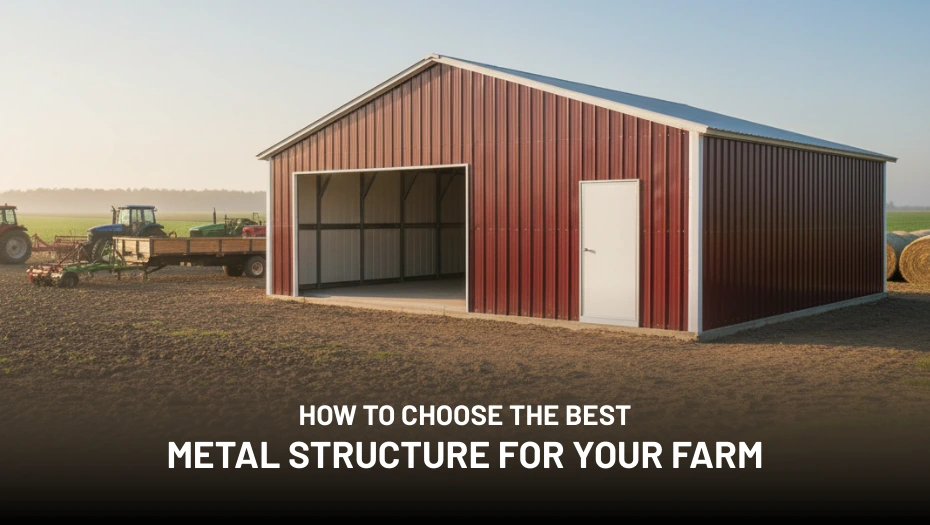
Check This Out: How to Choose the Best Metal Structure for Your Farm
Organization is not only about fitting more items into a building. A practical layout should also help protect people, equipment, and stored materials.
Use the following checklist as a starting point:
If the barn stores fuel, pesticides, fertilizers, or other hazardous materials, follow the specific storage and separation requirements for those products. Requirements may depend on the substance, quantity, building use, and local regulations.
The best organization system depends on the barn’s primary use. A building intended for general farm storage needs a different layout from one used for hay, horses, or a combination of agricultural activities.
| Barn Type | Main Organization Priorities | Layout Considerations |
|---|---|---|
| Metal farm building | Machinery, tools, parts, and general supplies | Separate parking from storage and work areas |
| Steel hay barn | Hay handling and associated equipment | Consider moisture control, ventilation, and access for handling equipment |
| Metal Carolina barn | Equipment and supplies across available sections | Assign functions to the center and lean-to areas according to the actual configuration |
| Metal horse barn | Horse-related supplies, tack, and equipment | Keep equipment movement separate from animal areas where possible |
For general farm storage, start with machinery and the largest items. Then place tool storage, replacement parts, and supplies around the remaining usable space without obstructing equipment routes.
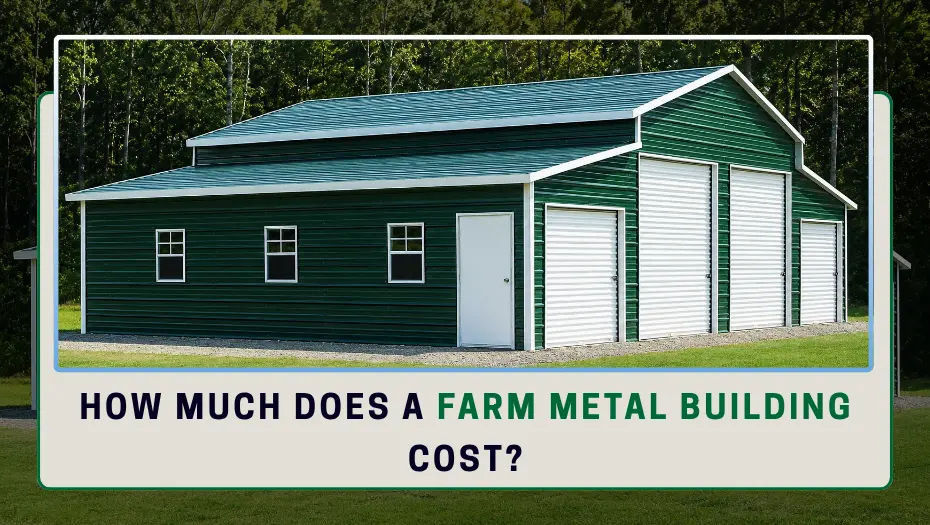
Explore metal farm building options when planning a dedicated area for equipment, tools, and other agricultural supplies.
Hay storage requires attention to moisture, airflow, and safe handling. Keep hay protected from water intrusion, inspect stored bales regularly, and maintain suitable access for the equipment used to move them.
A steel hay barn can be part of a farm’s storage plan, but the final layout should reflect the hay type, handling equipment, storage conditions, and applicable fire-safety practices.
A Carolina-style barn may offer multiple sections, depending on the selected design. Where the configuration permits, one area can be planned for equipment and another for supplies or work activities.
Review the actual floor plan and openings before assigning uses to individual sections. Do not assume every design has the same arrangement.
For horse facilities, organize tack, feed, grooming supplies, and equipment with animal safety in mind. Keep machinery and maintenance activities away from routine horse movement whenever possible, and store feed in suitable containers that protect it from moisture and pests.
See the available metal horse barn options when planning a facility that combines horse-related activities with storage needs.
If you are planning a new metal barn building, consider the building’s configuration alongside the organization system you want to use. The following Viking Barns products offer examples of different layouts to review with your supplier.
| Building Option | Why it May be Worth Reviewing | What to Confirm |
|---|---|---|
| 50x62x12 Metal Barn | A larger footprint to evaluate for separate farm activities | Usable floor area, section layout, and access openings |
| 48x40x14 Step Down Barn | A step-down configuration to consider when planning separate storage areas | Actual section dimensions and movement between areas |
| 44x40x16 Continuous Roof Metal Barn | A center section and lean-to configuration to review for equipment and supply storage | Door placement, usable space, and intended use of each section |
| 66x60x20 Step Down Metal Barn | A larger multi-section layout to evaluate for equipment and supplies | Current specifications, clear openings, and the proposed floor plan |
These products are examples for planning, not a guarantee that a particular building will fit a specific collection of equipment. Confirm current specifications, door configurations, structural details, and usable dimensions with Viking Barns before choosing a layout.
When comparing a prefab barn, prefabricated barn, or preengineered barn, review the complete proposed configuration rather than judging the building by its outside dimensions alone.
Also Read: Why Choose a Metal Red Barn? Benefits, Uses & Design Ideas
Even a large storage building can become difficult to use when the layout is not planned around daily activities. Avoid these common problems:
A periodic review can help keep the barn organized as equipment, seasons, and work requirements change.
Use this checklist when organizing an existing barn or planning a new steel barn building.
Layout and equipment
Tools and supplies
Safety and maintenance
Start by measuring equipment and grouping items by purpose. Create separate zones for machinery, tools, supplies, maintenance, and seasonal storage. Keep frequently used equipment accessible and leave sufficient room for safe movement.
A practical layout places large machinery near a suitable entrance, stores everyday tools along accessible walls, and keeps work areas away from equipment traffic. The best arrangement depends on the building dimensions and equipment requirements.
Position frequently used tractors and implements where they can enter and exit without moving other equipment. Measure their stored dimensions, account for attachments, and check the available turning and maneuvering space.
Use labeled cabinets, bins, wall racks, and appropriate shelving. Group tools by task, keep commonly used items accessible, and store supplies according to manufacturer instructions and applicable safety requirements.
There is no single clearance that suits every machine or barn. Allow room for the equipment’s dimensions, doors, maneuvering, safe walking routes, and maintenance. Confirm specific requirements for your equipment and building.
Place seasonal equipment in a designated area outside the main daily traffic route, provided it remains safely accessible. Prepare machinery according to manufacturer instructions before storage and inspect it when returning it to service.
Keep exits and access routes clear, secure shelving, provide suitable lighting, and inspect for moisture or pests. Store chemicals, fuels, feed, and other materials according to their specific storage requirements.
The interior can often be organized into functional zones, but the arrangement depends on the building’s design, structural features, and intended use. Confirm any proposed partitions or structural modifications with a qualified professional.
Plan hay storage around moisture management, suitable ventilation, handling equipment, and safe access. Keep hay protected from water intrusion and follow appropriate fire-safety practices for the type and quantity of material stored.
List your equipment and storage needs, measure the largest machines, and plan the required access openings and interior zones. Review usable dimensions, door configurations, site access, structural requirements, and applicable local regulations before approving the final design.
An organized farm storage barn makes it easier to locate tools, access machinery, protect supplies, and maintain a safer working environment. The key is to plan the layout around your actual equipment and routines rather than filling every available area with stored items.
Start with an equipment inventory, divide the barn into practical zones, and preserve clear routes for everyday movement. If you are planning a new prefab barn or metal barn building, discuss the intended storage layout and access requirements before finalizing the design.
Planning a new farm storage building? Explore Viking Barns‘ metal barn options or call +1 (704) 579-6966 to discuss your project and request a quote.