August 14, 2026



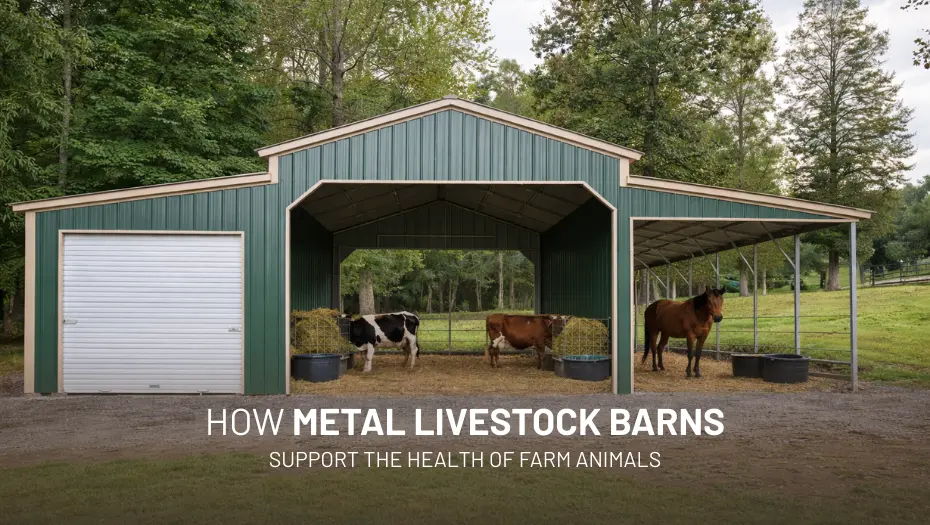
Healthy animals are essential for running your dairy, meat, or other businesses. Every farmer knows that livestock comfort directly impacts productivity, whether that means better milk yield, faster weight gain, or fewer vet visits. But here’s what many are now asking online – “Can my barn design really affect animal health?” or “Is it worth switching from wood to metal barns?”
The answer is yes. The structure and environment inside a barn play a major role in your animals’ physical comfort and well-being. That’s why modern metal livestock barns are becoming the top choice among farmers who want a safe, durable, and hygienic shelter for their herds.
Let’s explore how these barns make a difference, and how the right design can help your animals stay healthier and happier all year long.
Before talking about materials or design, it’s important to understand what actually makes a barn “healthy.”
A good barn keeps animals comfortable in every season. It must control temperature, ensure airflow, prevent buildup of moisture or waste, and offer clean surfaces that don’t breed bacteria.
Here’s what most farmers agree are must-haves in barns for animals:
Also Read: How to Choose the Right Livestock Barn for Your Farming Needs
Are steel barns safe for livestock? Many buyers ask this question before they invest in this structure. The answer is absolutely, when built right. But what makes them the top choice?
Metal barns have evolved far beyond simple storage spaces. They now include climate-controlled designs, insulated walls, and customizable layouts. These upgrades make them ideal for maintaining animal health.
Here’s why farmers across the U.S. prefer them:
Every barn should be more than just a shelter. The design itself plays a big part in keeping animals strong and calm. Below are the essential features in a livestock barn, and how each supports animal health.
|
Feature |
Purpose | Health Benefit |
|
Ventilation |
Fans, ridge vents, side openings |
Reduces heat stress and respiratory issues |
|
Insulation |
Single bubble, double bubble, woven R-17 |
Maintains comfort in extreme weather |
|
Flooring |
Non-slip concrete or rubber mats |
Prevents leg injuries and hoof infections |
|
Lighting |
Skylights or translucent panels |
Boosts animal behavior and activity |
|
Drainage |
Slight slope with trench drains |
Keeps bedding dry and prevents bacteria |
| Space Design | Separate stalls and feeding areas |
Reduces crowding and disease spread |
Farmers often ask: “Isn’t metal too cold in winter?” Not with modern insulation and ridge vents. In fact, temperature regulation is easier with steel because it doesn’t absorb moisture like wood. So, when you look for animal barns for sale, ensure the suitable features listed in the table above.
Farm problems often start with the building itself. A barn that traps moisture, blocks airflow, or hides pests will quietly harm animal health. Prefab barns give you control over those problems because their design and materials make targeted fixes simpler and more reliable. We have shared three common scenarios and shown, in detail, why metal works effectively and controls health issues in farm animals.
Scenario A – Dairy Barns in Cold Regions
The Problem: In cold climates, warm animal breath meets cold surfaces and creates condensation. That moisture soaks bedding, creates chilled spots, and helps bacteria thrive inside the space. Cow udders and lungs react quickly due to bacteria; as a result, mastitis rates climb, and respiratory illness becomes common in animals. Moreover, frozen manure and uneven drainage increase the risk to workers in barns for cattle.
Why the Building Matters: Wood soaks up moisture and can’t be sealed tightly without lots of upkeep. Metal barn structures, when properly insulated and detailed, can be made airtight and ventilated where needed, and this balance limits condensation.
Detailed Solutions with Metal Barns:
Tips: Monitor relative humidity; you can aim for under 70% inside during cold months and check bedding moisture daily. Dry bedding and good drainage cut mastitis risk.
Scenario B – Swine Barns in Hot, Humid Regions
The Problem: Pigs have poor sweat glands. When barns trap hot, humid air, pigs stop eating, grow more slowly, and farrowing survival drops. High humidity also helps bacterial and fungal growth and worsens ammonia buildup, which hurts the lungs.
Why Metal Barns Help: Steel structures allow large, open sidewalls and modular ventilation systems. They also accept evaporative cooling systems and misting rigs easily because they are structurally strong and corrosion-coated. Moreover, choosing a step down barn makes it easier to handle animals in humid regions. You can allocate separate spaces and organize everything.
Detailed solutions with metal barns:
Tips: Keep internal temperatures in the ideal range for the age group. Track temperature and ammonia levels; ventilate more if ammonia exceeds safe thresholds.
Scenario C – Poultry Barns with Biosecurity Needs
The Problem: Poultry are highly sensitive to airborne pathogens, mites, and mold. Wood and rough surfaces hide parasites and make deep cleaning difficult. And because of this, outbreaks, contamination can spread fast.
Why Metal Barns Help: Smooth metal panels and sealed construction reduce hiding spots for pests and allow thorough disinfecting. Steel buildings also support controlled airflow systems and easy partitioning for quarantine.
Detailed solutions with metal barns:
Tips: Schedule full clean-outs between flocks. Use dedicated boots and clothing for each zone. Test ventilation and filter performance regularly.
You Might Like: How to Choose the Best Metal Structure for Your Farm
Healthy barns create healthy animals, and metal barns make that easier to achieve.
Their design helps farmers maintain better air quality, temperature control, and hygiene, all key factors for livestock comfort and productivity. Whether you raise cattle, pigs, horses, or poultry, choosing a metal barn means fewer disease risks and less maintenance in the long run.
Steel livestock buildings also last for decades without rotting or warping, so your investment continues to pay off every season. If you are planning to expand or upgrade your setup, take time to explore modern steel barns for animals.
From small horse barns to large commercial setups, metal designs give you flexibility with clean spaces. Long story short, create a home for your animals where they can live without getting ill.