Loading...
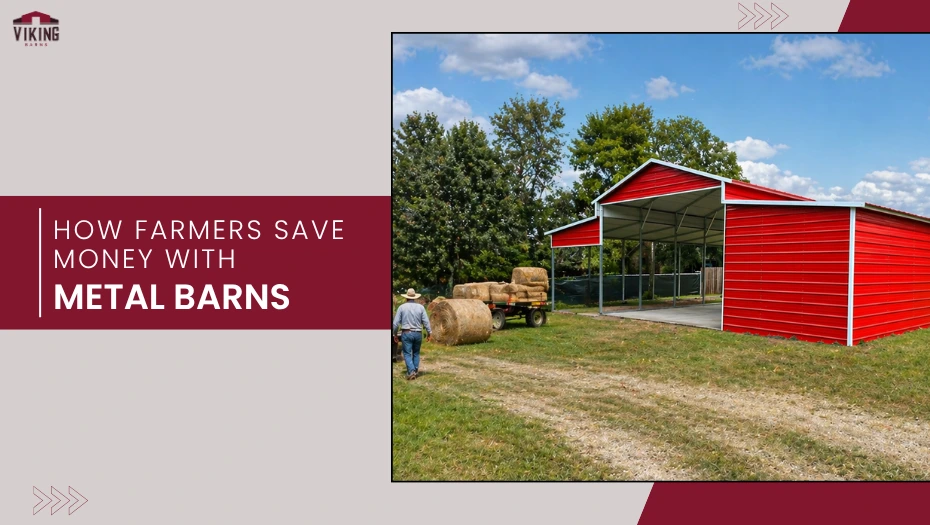
Farming costs have never been higher. Labor bills keep climbing, lumber prices swing unpredictably, and traditional wooden structures demand constant repairs that eat into your margins year after year. If you have been searching for a smarter way to house your equipment, livestock, or harvests, metal barns are the answer that more farmers across the country are turning to.
Modern steel barn buildings combine strength, speed, and long-term value in a way that wood simply cannot match. Whether you are looking at a single-purpose equipment shed or a large prefabricated barn that serves multiple functions on your property, the savings start from the very first day of construction and continue for decades. Lower upfront costs, minimal upkeep, and a lifespan that can stretch 30 to 50 years make metal barn buildings one of the most practical investments a working farm can make.
This guide breaks down exactly where those savings come from, so you can make a confident, informed decision for your operation.
How Do Metal Barns Save Farmers Money?
If you are looking for a fast summary, here it is:
- Construction costs are lower than traditional wood barns
- Maintenance expenses stay minimal over the entire lifespan
- A well-built structure lasts 30 to 50 years with little intervention
- Insulation options make the building energy-efficient
- Faster installation means less time paying crews on site
Each of these points adds up to a significant difference in total cost of ownership. Let’s dig into the details.
Why Metal Barns Cost Less to Build Than Traditional Barns
Factory-Built Means Less Waste
Prefab metal barns are engineered and cut at the factory before they ever reach your land. Every panel, beam, and fastener arrives ready to assemble. No on-site measuring, no cut offcuts piling up, and no wasted material driving up your bill.
No Complex Framing, Lower Labor Hours
Traditional wood barns need skilled framers working for weeks. A prefabricated barn skips that entirely. The simplified assembly process means fewer crew hours on site and a faster path from groundbreak to finished structure.
The Cost Difference Is Real
Side by side, a metal barn typically costs 20 to 40 percent less to build than a wood frame barn of the same size. That gap comes from smarter manufacturing, not corner-cutting.
Want a full breakdown of where every dollar goes? Read the complete cost breakdown to install a metal barn before you commit.
How Steel Barns Reduce Maintenance Costs
Once your steel barn buildings are standing, the savings keep coming through dramatically lower maintenance requirements. Wood barns are vulnerable to termites, carpenter ants, rodents, rot, mold, and warping. These are not occasional problems; they are near certainties over a structure’s lifetime, and fixing them is expensive.
Steel does not rot. It does not attract termites. It resists mold. A quality galvanized or Galvalume steel finish also resists rust far better than untreated metal, meaning repainting schedules are far less frequent. Structural repairs on a well-built metal barn are rare. You are not replacing boards, re-nailing joints, or shoring up sagging rooflines every few years.
Metal vs Wood Maintenance Cost at a Glance
- Metal barn: Occasional surface cleaning, inspection of fasteners, minimal touch-up
- Wood barn: Annual painting or sealing, pest treatments, board replacement, structural checks
That difference in ongoing upkeep can save thousands of dollars per decade. Curious how that compares overall? This deep dive on how to save more money than a wooden barn puts real numbers to the comparison.
Why Metal Barn Structures Last Longer
30-50 Year Lifespan
A properly engineered metal barn structure performs reliably for 30 to 50 years. Wood barns typically show serious structural fatigue between 15 and 25 years, often demanding costly repairs or full rebuilds well before their time. That near-doubling of useful life means fewer replacement costs and more decades of uninterrupted service.
Weather Resistance
Steel holds up against high winds, heavy snow loads, hail, and driving rain that would compromise a wood frame. Metal barn structures are purpose-built for the kind of extreme weather that is becoming more frequent across American farmland, giving you a building that keeps performing when conditions get tough.
Fire Resistance
Many metal livestock barns carry a Class A fire resistance rating. That single feature can lower your insurance premiums, protect your livestock, and safeguard your equipment, turning structural durability into direct, measurable financial savings year after year.
How Prefab Barns Reduce Construction Time
Install in 1-3 Days
Because every component of a prefab barn is pre-engineered and manufactured off-site, a standard installation crew can have a mid-size building fully standing in one to three days. Traditional wood construction routinely stretches across three to six weeks depending on complexity, weather, and crew availability.
Reduced Labor Dependency
Fewer days on site means a smaller labor bill. With prefab barns, the complex precision work happens in a controlled factory environment before anything reaches your property. What arrives is a system designed to go together quickly and correctly, without relying on large, highly specialized crews on your land.
Fewer Project Delays
On-site wood framing is vulnerable to weather stoppages, material delivery gaps, and scheduling conflicts. Prefab construction removes most of those variables. Once your building ships, the timeline is predictable, keeping your project on track and your operation running with minimal disruption.
How Metal Barn Buildings Help Lower Energy Bills
Insulation Options
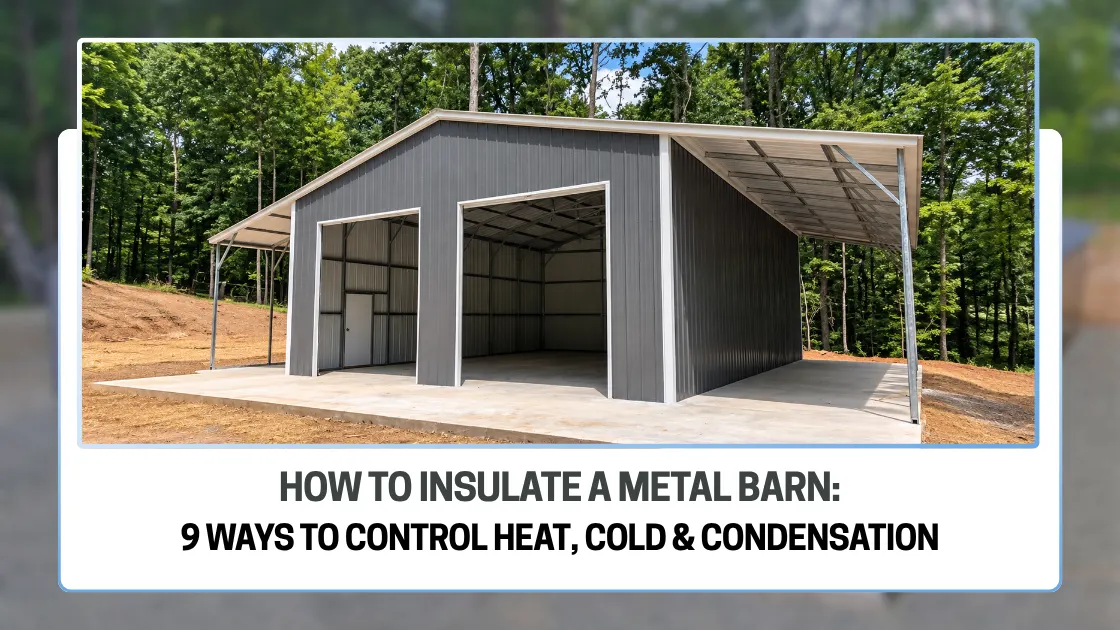
Metal barn buildings can be fitted with rigid foam board panels or spray foam insulation, dramatically reducing heat gain in summer and heat loss in winter. Metal building insulation in from the start is far more cost-effective than retrofitting it later, and it pays back through lower energy bills across every season.
Ventilation Benefits
Proper ventilation design works alongside insulation to regulate interior temperatures and air quality without depending entirely on mechanical systems. For livestock areas and working shops, this combination keeps conditions comfortable while reducing the load on fans and cooling equipment. Read the full guide on the critical role of ventilation in barn for a deeper look at how airflow directly affects both animal health and running costs.
Reflective Roofing
Reflective metal roof panels bounce solar radiation away from the building rather than absorbing it. Farmers in hot states like Texas and Arizona who combine insulated steel panels with ridge venting and reflective roofing report interior temperature reductions of 15 to 25 degrees Fahrenheit in summer. Over a full season, that translates to measurable savings on cooling equipment and electricity bills.
One Metal Barn, Multiple Uses
Another reason metal barns deliver strong returns is their adaptability. A single well-designed structure can serve your entire operation, which means you buy one building instead of three or four purpose-built ones.
- Equipment storage: Protect tractors, combines, and implements from weather damage
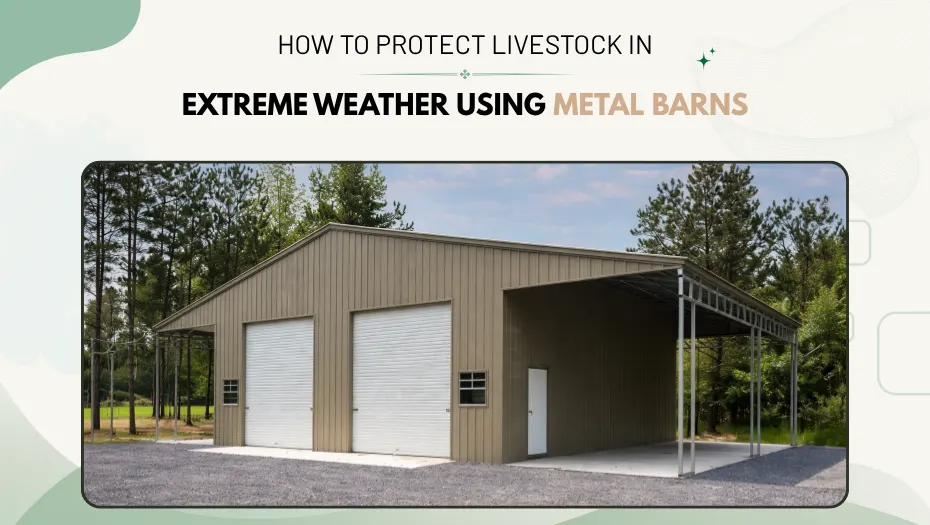
- Livestock shelter: A properly designed metal livestock barn keeps animals comfortable year-round
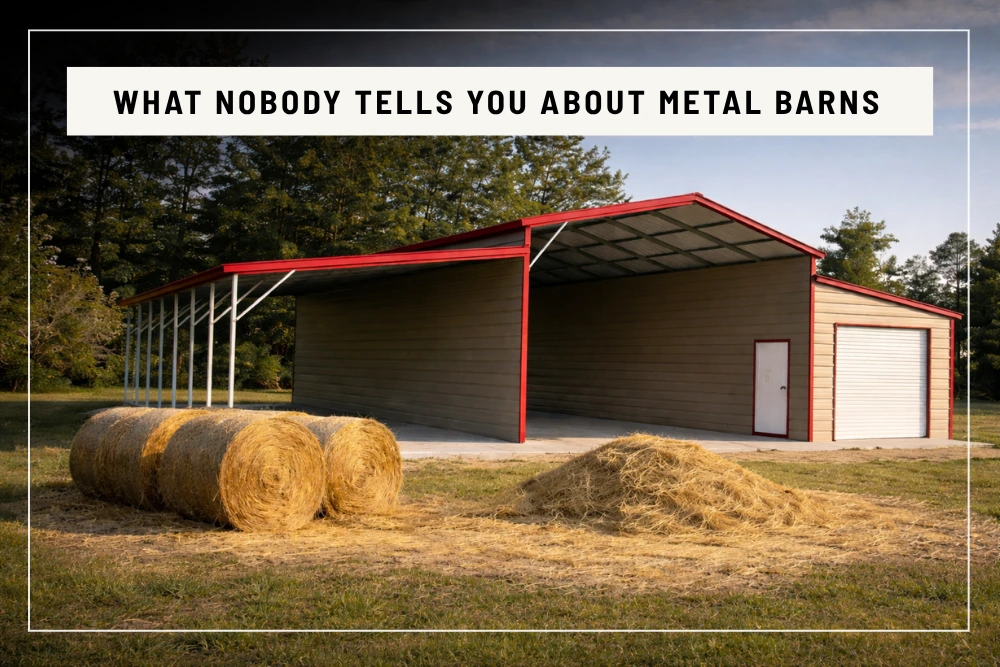
- Hay storage: A prefabricated hay barn keeps feed dry and accessible without the rot risk of wood
- Workshop: A steel workshop building gives you a clean, durable space to repair and maintain machinery
The ability to configure clear-span interiors without internal support columns makes metal barns particularly versatile. You can organize the space exactly the way your operation requires.
Metal Barn vs Wooden Barn Cost Comparison
Here is a quick at-a-glance summary of how metal and wood barns stack up across the most important factors. This is the snapshot that matters most when you are comparing your options:
|
Feature |
Metal Barn | Wood Barn |
|
Initial Cost |
Lower | Higher |
|
Maintenance |
Low |
High |
| Lifespan | 30–50 yrs |
15–25 yrs |
| Pest Resistance | Yes |
No |
The numbers behind that snapshot tell an even stronger story. Here is a full cost breakdown based on a standard 40×60 ft barn, one of the most common sizes for working farms across the US.
A 40×60 metal barn typically runs between $35,000 and $55,000 fully installed. The same footprint in wood framing generally costs $60,000 to $90,000 or more, depending on lumber prices and local labor rates. That is a gap of $25,000 to $35,000 before you factor in a single year of ownership.
|
Feature |
Metal Barn | Wood Barn | Difference |
Why It Matters |
|
Initial Cost (40×60 ft) |
$35,000–$55,000 | $60,000–$90,000 | Save $25,000–$35,000 |
More capital stays in your operation from day one |
|
Annual Maintenance |
$300–$500/yr | $2,000–$4,000/yr | ~$3,500 saved per year |
No rot, pests, or frequent repaints |
|
Total Maintenance (30 yrs) |
~$12,000 | ~$90,000 | ~$78,000 difference |
Compounding savings over the full lifespan |
|
Lifespan |
30–50 yrs | 15–25 yrs | Nearly double |
Less rebuilding, more operational continuity |
|
Pest Resistance |
Yes | No | $0 vs $500–$1,500/yr in treatments |
No termite or rodent damage |
|
Fire Resistance |
Yes (Class A) | No | Insurance 15–20% lower |
Protects livestock, equipment, and investment |
|
Installation Time |
1–3 days | 3–6 weeks | Weeks of labor saved |
Faster build, faster ROI |
When you add the upfront savings of roughly $30,000 to the maintenance gap of around $78,000 over 30 years, a metal barn can put over $100,000 more back into your operation compared to a wood barn over its full working life. That is not just a building decision. It is a long-term financial strategy.
Mistakes Farmers Make When Choosing Barns
Even with all the advantages steel offers, it is easy to make a decision you will regret if you rush the buying process. Here are the most common mistakes to avoid:
- Choosing the wrong gauge steel: Thinner gauge steel costs less upfront but may not meet the wind or snow load requirements for your region. Always match gauge to your local conditions.
- Ignoring insulation from the start: Retrofitting insulation is far more expensive than building it in. Plan your thermal strategy before construction begins.
- Not checking permit requirements: Most counties require permits for structures above a certain size. Skipping this step can result in fines or forced removal. Check with local authorities early.
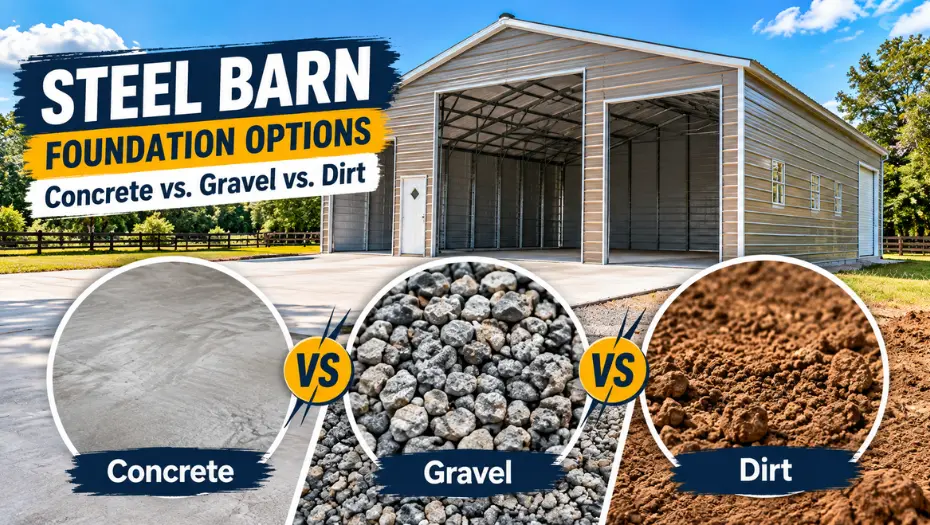
- Poor site preparation: A metal barn is only as solid as its foundation. Improper grading, drainage issues, or a weak concrete slab will undermine even the best steel structure.
Avoiding these mistakes will save you significant time and money down the line.
Are Metal Barns Cost-Effective in Your State?
The short answer is yes, but the right configuration depends on your local climate and building codes.
- Snow-heavy states (Minnesota, Wisconsin, Montana): Look for buildings with vertical roof panels and a certified snow load rating that meets or exceeds your county requirements. Vertical roofs shed snow rather than letting it accumulate.
- High-wind zones (Oklahoma, Kansas, coastal states): Specify a building certified to local wind speed requirements. Many manufacturers offer IBC or ASCE 7-compliant designs.
- Humid or coastal areas (Gulf Coast, Pacific Northwest): Choose buildings with a high-grade Galvalume or galvanized coating and sealed fasteners to prevent corrosion over time.
Knowing your regional requirements before you get a quote is essential. If you are not sure what questions to ask, this guide on what to ask before getting a steel barn quote will walk you through everything.
What to Check Before Buying a Metal Barn
Use this checklist before you sign anything:
- Size requirements: Map out your current and near-future storage and operational needs so you do not undersize
- Steel gauge: Confirm the gauge is appropriate for your climate and intended use
- Wind and snow rating: Match the certified ratings to your county’s building codes
- Foundation type: Concrete slab is standard, but some applications work with ground anchors
- Insulation package: Decide whether you need it now and get it priced into the build
- Custom features: Doors, windows, vents, skylights, and interior partitions all affect both cost and usability
- Manufacturer warranty: Look for both paint and structural warranties, and read what each covers
Frequently Asked Questions
Expand each item below to explore a few helpful answers before moving to the next blog post.
Related articles