
Loading...
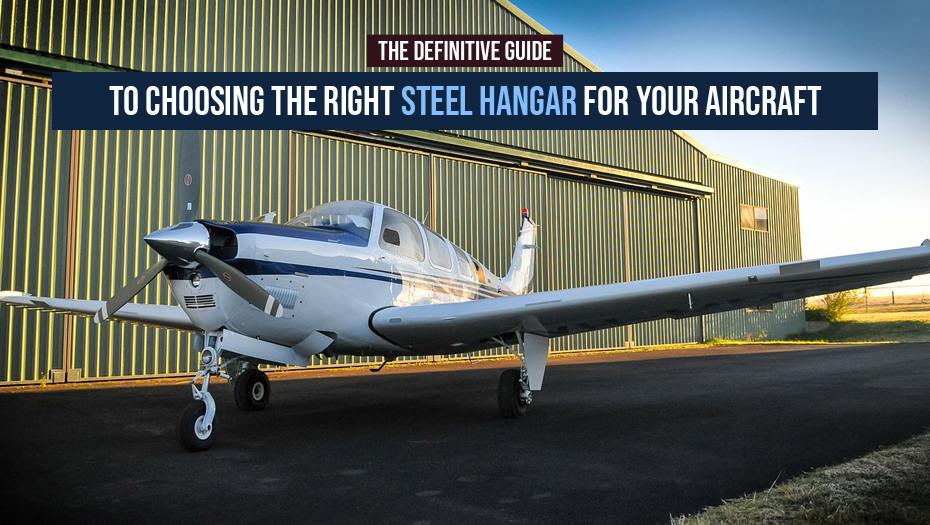
Airplane hangars are some of the largest metal garages one can own. And why not? After all, protecting your airplane is paramount since you have invested such a hefty sum in acquiring it. But how can you pick the right garage amongst all aircraft buildings? Let’s find out.
Here Are 8 Step To Pick The Right Steel Aircraft Buildings
1. Site Choice
Selecting the right location is crucial because of the following reasons:
- Proximity to runway
- Site clearance for smooth entry & exit
- Leveled, plain surface (it reduces the cost of foundation)
- Access to utility lines (the closer you are to the utility, the less you pay)
- Extra space for building setbacks
- Possibilities of future expansion
- Local zoning & building law requirements
2. Design Framework
There are three parameters that aircraft hangar structure must meet. They are – safety, longevity, and functional design. After all, you wouldn’t want a fancy design with great looks, but lacking essential features like security and parking comfort, which may be horrible.
Among all, steel offers long-lasting durability and structural strength. For instance, you can measure your aircraft size and opt for a hangar that is larger than the airplane. The extra space can then be used to keep aircraft accessories and cleaning items.
3. Dimensions
The clear-span metal structure is the best choice for aircraft buildings. It can be built up to 300 ft. in width without internal support columns and as high as 40 ft. This will give enough space for parking planes and storing relevant tools.
Note: The usual length of a personal craft is 24 ft. to 30 ft., implying your aircraft hangar must be at least 3 to 4 ft. more than that. The minimum conventional hangar size is 50 ft. x 40 ft. However, larger hangar size is encouraged.
A wooden building will get complicated, and the fabric structure won’t last long. You can get steel airplane hangars for sale from metal builders’ websites or social media handles. To save some cash, consider purchasing a metal hangar during holidays or off-seasons when prices are often lower.
4. Entrance & Clearance
The wingspan of personal aircraft is between 32 ft. and 38 ft., and height ranges from 8 ft. to 12 ft. Thus, the entrance door must have adequate clearance to let airplanes in and out without getting dents or scratches and leave some space for maneuvering, upkeep, and additional storage.
Tip: Keep length and width the same, as they are easy to resale. Go for a higher metal building to accommodate larger & taller planes in the future.
There are various door designs that you can choose from. Have a look at some of them. All of these can be easily integrated into metal aircraft buildings.
- Sliding doors (~$16 per sq. ft.)
- Overhead doors
- Bi-fold doors
- Accordion stack doors
- Hydraulic swinging doors
Airplane hangar doors must be made of non-combustible material. Its power source (circuit) should be independent of other utilities in case the main switch needs to be shut off. For colder regions, door tracks must have heating coils to reduce ice formation.
5. Lights & Vents
An operational hangar needs proper lighting and vents to comfort workers and individuals. Natural lighting can be easily included with steel aircraft hangars, such as skylights, solar tubes, roof daylighting, translucent panels, clerestory windows, etc.
This will reduce dependency on artificial sources of light and energy bills. However, you must install artificial lighting (LEDs) for visibility during nighttime. Apart from light, you can install ventilation to maintain air circulation.
Note: Generally, the ventilation rate of the aircraft hangar should be a minimum of 0.5 CFM/sf.
6. Utility Inclusion
Install electrical and water lines beneath the foundation before the concrete slab is poured. You don’t want to dig up base anyway. For power outlets and faucets, you can draw wiring before insulating. The airplane hangar must have an electrical or other utility supply 24×7 available. Depending on operational needs, you can install fuel disposal, compress air, faucets, pipes, etc.
7. Security
Steel gates are hard to break into. That’s a bonus. Your aircraft is an expensive possession. Therefore, proper security by integrating security cameras, motion sensor lighting, door alarms, fencing, etc., can be added for safety.
8. Fire Risk Mitigation
Steel airplane hangars need insulation to reduce the risk of fire. You can install fire alarms and sprinklers to tackle any fire issue if an occasion calls for it. Insurance companies will give rebates on premiums, knowing that you are keeping your aircraft in a fireproof steel hangar.
Read ‘NFPA 409, Standards on Aircraft Hangars’ to know more about fire safety details. It has detailed specifications and guidelines for airplane hangars’ construction and fire safety.
What’s Up With Steel Airplane Hangars
Easy To Customize
Customizing steel buildings is easy. For the main structure, you can pick a color, roofing style, door style, extra storage, an added lean-to, etc.
Clear Span
It is an option that is hard to find elsewhere. A structure with no internal support beams gives you maximum carpet area and freedom to design floor plans.
Large Doors Integration
There is no need to add an extra frame or support to build large doors. With steel aircraft hangars, large doors can be integrated trouble-free.
Fast Assembly
You don’t need to wait long for a metal airplane hangar to get ready for use. Most design elements are cut and drilled in the factory before shipping. At the construction site, assembling is done with the help of a few laborers.
Resistant To Elements
Steel frames and panels do not harbor termites and other pests that can damage the hangar structure or your craft. If needed, you can get certified steel buildings that withstand wind speeds ~ 170 mph and snow load ~ 40+ lbs. per sq. ft.
Strength & Longevity
Go for corrugated steel panels. Their ridges and valleys are designed to reduce the impact of falling objects, such as hails. Metal does not rot or decay with time, so its structural integrity remains intact. With little care, your metal hangar can outlast you.
Get The Best Steel Aircraft Hangar From Experts
Call (704) 579-6966 now! With Viking Barns, you get superior quality material and craftsmanship that speaks volumes. We offer 12+ color options to match the aesthetic of your existing building. Our custom features allow you to create a hangar that matches your needs and fits your precious airplane perfectly.
Get the best deals on steel airplane hangars for sale without compromising quality from Viking Barns. Don’t forget to ask about ongoing deals to save extra cash.
Related articles