Loading...
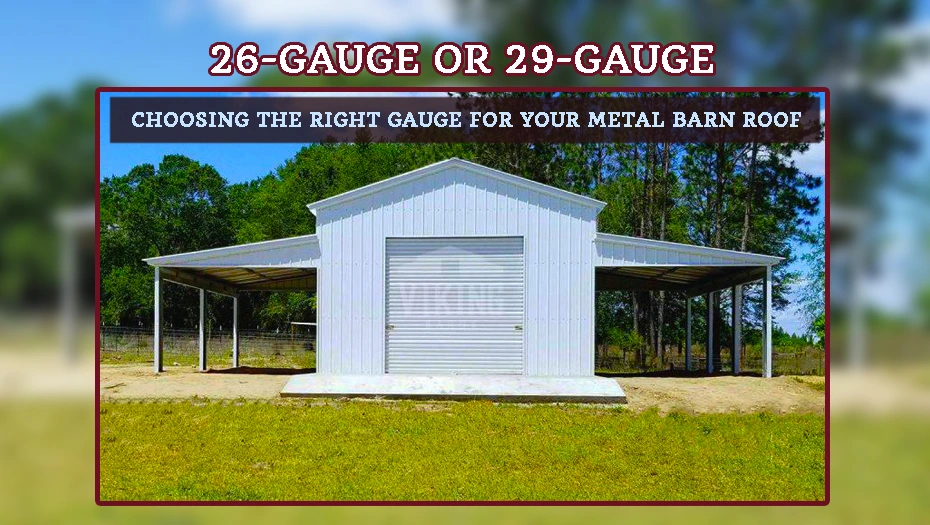
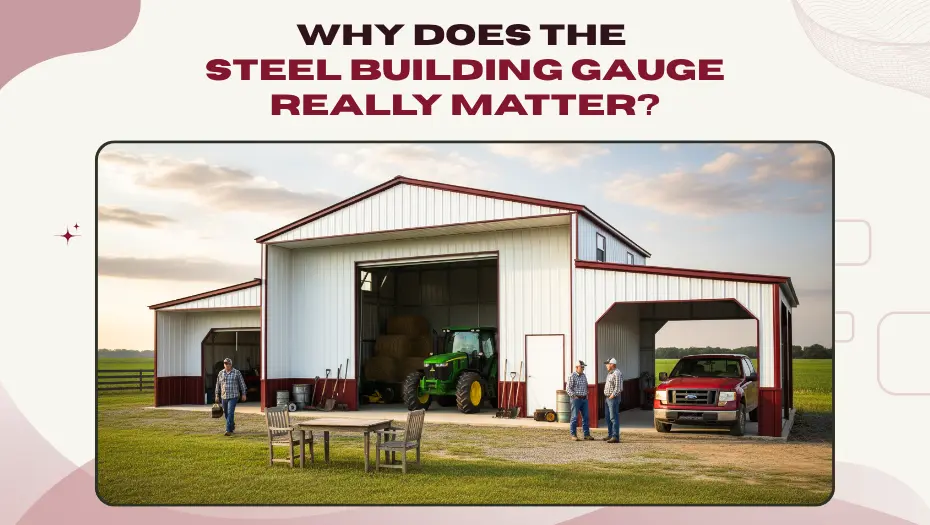
The one element in your steel barn that bears the onus of protecting your animals, tools, equipment, and vehicles from the world is — the metal barn roof. From facing the wrath of the environment to ensuring that the barn is free of dirt, debris, bird droppings, and tree saps, metal roofs do it all. This is why it becomes imperative to opt for the roof that is most beneficial to your needs and local weather conditions.
What Is a Steel Gauge?
The steel gauge essentially refers to the thickness of the metal roof panels, which are likely to impact the durability, sturdiness, longevity, and performance of your structure’s roof.
Metal roof and siding panels range between 22-gauge and 29-gauge. The gauge is measured in numerical terms, with the lower numbers indicating a thicker and stronger metal gauge and the higher numbers representing a thinner metal panel. Hence, 22-gauge panels are the thickest, and 29-gauge panels are the industry standard.
It matters because the gauge of your roof will indicate what level of durability will your barn’s roof deliver. Keeping high-quality and top-notch durability in mind, we offer 26-gauge and 29-gauge panels.
Does the Steel Gauge Indicate Strength?
Many people, including builders, believe that the gauge of steel is the only measurement of its strength. However, it is not entirely accurate. The gauge reflects the steel’s thickness rather than its inherent strength.
While steel gauge is a critical factor in determining strength, it is not the only one. Even in specific steel gauges, there can be a fluctuation between the minimum thickness and maximum thickness levels. In fact, it can be to the point where a coated 26-gauge steel roof and a 29-gauge steel roof have similar thicknesses.
The gauge of the steel is not the best indicator of strength. Other indicators are:
- Steel grade and composition
- Galvanization
- Protective coatings and treatments
- Structural design of your barn
- Proper installation of the metal roof on a barn
Comparing 26-Gauge and 29-Gauge Metal Roofs
While 29-gauge is the industry standard for metal roofs, 26-gauge is often considered for commercial installations.
Durability
Both types of roofs are immensely durable because of their high tensile strength, easy-to-clean surfaces, and resilience against rust, fire, corrosion, mold, and moderate climate conditions.
While the 26-gauge is thicker, it is more likely to remain sturdy in extreme rainfall, intense snow, high wind speeds, and earthquakes. In adverse conditions, 26-gauge metal barn roofing is likely to outperform 29-gauge metal barn roofing.
Thickness
The 26-gauge steel roof is approximately 0.0187 inches thick. In contrast, the 29-gauge roof is about 0.0142 inches thick. The lower the gauge, the thicker your metal barn roof is likely to be without additional coatings. A thicker roof will also resist wear and tear better.
Insulation
When it comes to offering insulation value, the 26-gauge panel is likely to offer more value than the 29-gauge panel with insulation because it would have more metal layers between the interior and the exterior surfaces of the walls.
Weight
26-gauge metal roofing for the barn is heavier in weight and will require a stronger weight. Even the metal roof barn installation for 26-gauge panels is more labor-intensive than 29-gauge roofing.
On the other hand, 29-gauge roofs are lightweight and easier to handle.
Cost
While 26-gauge roofs are more expensive than 29-gauge panels, they are likely to last longer and remain stable in harsh weather conditions. On the other hand, 29-gauge is the most economical roofing panel, functioning perfectly for small barns.
|
Feature |
26 Gauge Steel | 29 Gauge Steel |
| Thickness | Approx. 0.0187 in. |
Approx. 0.0142 in. |
|
Strength |
Higher | Standard |
| Dent Resistance | Excellent |
Good |
|
Wind Resistance |
Better for high-wind regions | Suitable for moderate winds |
| Snow Load Performance | Better |
Standard |
|
Lifespan |
Longer | Long with proper maintenance |
| Weight | Heavier |
Lighter |
|
Installation |
Requires more handling | Easier to install |
| Cost | Higher upfront investment |
More cost-effective |
|
Maintenance |
Lower over time | Slightly higher in harsh climates |
| Best For | Commercial barns, workshops, large buildings |
Residential barns, storage buildings, garages |
|
Climate |
Heavy snow, hail, hurricanes |
Mild to moderate climates |
When to Choose 26-Gauge Metal Panels for Your Barn?
If your metal barn is located in regions prone to extreme weather, then 26-gauge roof panels are a better choice. While the initial investment is higher, they are a more reliable choice for commercial operations and storage facilities. You can consider upgrading to 26-gauge roof panels, if these are what you are looking for:
- Structural strength safeguarding against damage from external forces.
- Longer lifespan and minimal maintenance costs.
- Better insulation and a more comfortable internal environment.
- Reduced chances of warping and denting under snow.
When to Opt for 29-Gauge Metal Panels?
For farmers and ranchers who are looking to opt for a cost-effective roofing solution without compromising on quality and protection, 29-gauge panels are great. They are ideal for:
- Durability in moderate climates with minimal exposure to severe weather.
- Smaller barns that do not bear heavy loads.
- Budget-friendly projects seeking strength at economical prices.
- DIY installations because of easy handling.
Climate-Based Recommendation
|
Climate Condition |
Recommended Gauge | Why? |
| Heavy Snow | 26 Gauge |
Better structural performance |
|
High Wind |
26 Gauge | Improved wind resistance |
| Coastal Areas | 26 Gauge |
Better long-term durability |
|
Moderate Rainfall |
29 Gauge | Cost-effective option |
| Warm Southern States | 29 Gauge |
Performs well in normal conditions |
|
Tornado/Hurricane Zones |
26 Gauge |
Extra strength provides added protection |
What Factors to Consider When Deciding on the Gauge?
A few factors are likely to drive your decision to choose the perfect gauge for a metal roof on a barn. These include:
Climate
Do you live in a region prone to hurricanes or heavy snow, like Texas? Then, it is ideal to opt for 26-gauge roofing panels for better resilience.
Intended use
How do you plan to use your barn? Are you planning to shelter livestock, store machinery, or park vehicles? For usages that require a high load-bearing capacity, you should opt for thicker gauges.
Budget
You should evaluate your upfront costs as well as the long-term maintenance costs. While 29-gauge panels are more affordable, you should consider if they are perfect for your barn in order to avoid constant repairs or frequent replacements.
Local Building Codes
It is essential to look into your local building codes and zoning laws, as in certain regions, there might be specific requirements pertaining to roofing gauge thickness.
Aesthetic
Thicker panels are likely to provide a more polished and seamless look. You can also choose to browse through our diverse range of metal barns or call us at (704) 579-6966 for more detailed aesthetic recommendations.
Types of Metal Barns Available in 26-Gauge and 29-Gauge
There are different types of roofs segregated by style and design.
Style
- Regular Roof Barns: These feature curved edges, horizontal panels, and no additional supporting elements. Although regular roof metal barns are the most cost-effective, they are only suitable for mild temperatures and small structures.
- Horizontal Roof Barns: Also known as boxed-eave or A-frame barns, these comprise horizontal panels running from front to back. They are perfect for moderate climates along with being easy to install.
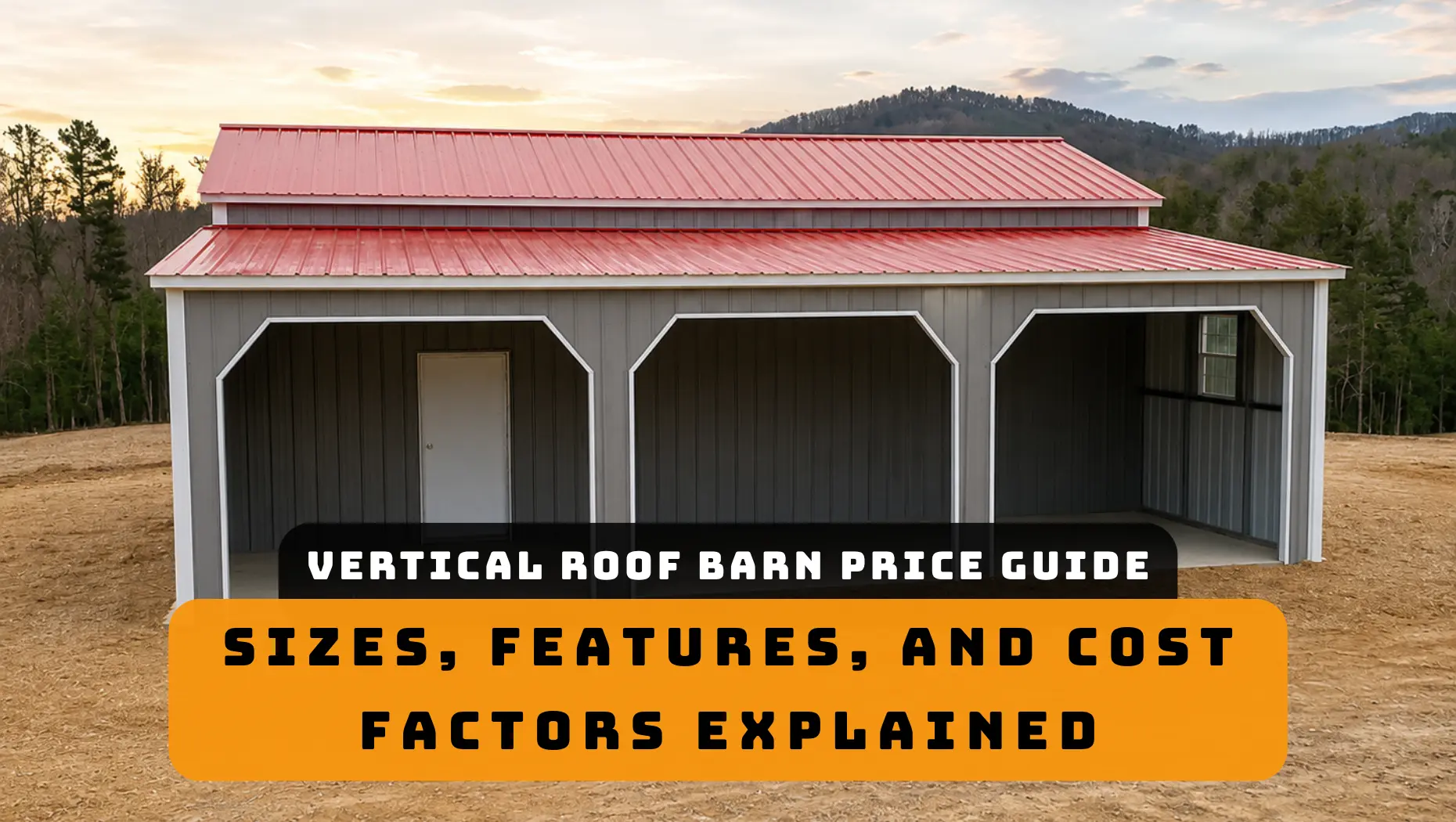
- Vertical Roof Barns: These are the most robust barns consisting of vertical panels running from the ridge to the eaves. Vertical roof barns are installed with additional supporting components like purlins or hat channels. Also, they are incorporated with ridge caps to seal the peak properly.
Design
- Carolina Barns: Also known as center aisle raised barns or step-down barns, these feature a raised central structure along with two lower lean-tos. Hence, the structure has two roof slopes.
- Seneca Barns: These are renowned as continuous roof barns, as they have a singular roof slope over the central unit and the lean-tos.
What Metal Framing Gauge is Viable For Steel Panels?
- 10-gauge frames: 0.1345 inches
- 12-gauge frames: 0.1046 inches
- 14-gauge frames: 0.0747 inches
- 16-gauge frames: 0.0598 inches
We offer 12-gauge and 14-gauge metal frames, keeping durability and industry standards in mind. Which of the 12-gauge and 14-gauge panels is good for you? While 12-gauge is thicker, 14-gauge is perfect for standard sizes. You can select from 12 or 14 gauge prefab buildings from us for common building designs. For business premises, all metal barn designs include 12-gauge steel frames.
Quick Decision Matrix
|
If You… |
Choose |
|
Want the strongest roof possible |
26 Gauge |
| Need the most affordable option |
29 Gauge |
|
Live in snowy states |
26 Gauge |
| Live in moderate climates |
29 Gauge |
|
Own a commercial barn |
26 Gauge |
| Own a residential storage barn |
29 Gauge |
|
Want fewer dents over time |
26 Gauge |
| Plan to stay long-term |
26 Gauge |
Investing in Your Barn’s Longevity
No matter the gauge you choose, opting for the right gauge will come with numerous benefits. The right gauge will ensure that your barn remains in optimal condition for decades to come. It will also save significant maintenance costs with reduced repairs. Moreover, it will also enhance the value of your property.
Whether you need a storage facility, a place to work, or a place to shelter it, the 12-gauge metal buildings provide unparalleled comfort and safety.
So, if you’re wondering “how to install metal roof on barn”, end your worries right here! We at Viking Barns have experts working on the installations and guiding you through the purchase process, making it hassle-free for you to build your dream barn!
Frequently Asked Questions
Expand each item below to explore a few helpful answers before moving to the next blog post.
Related articles