September 18, 2026



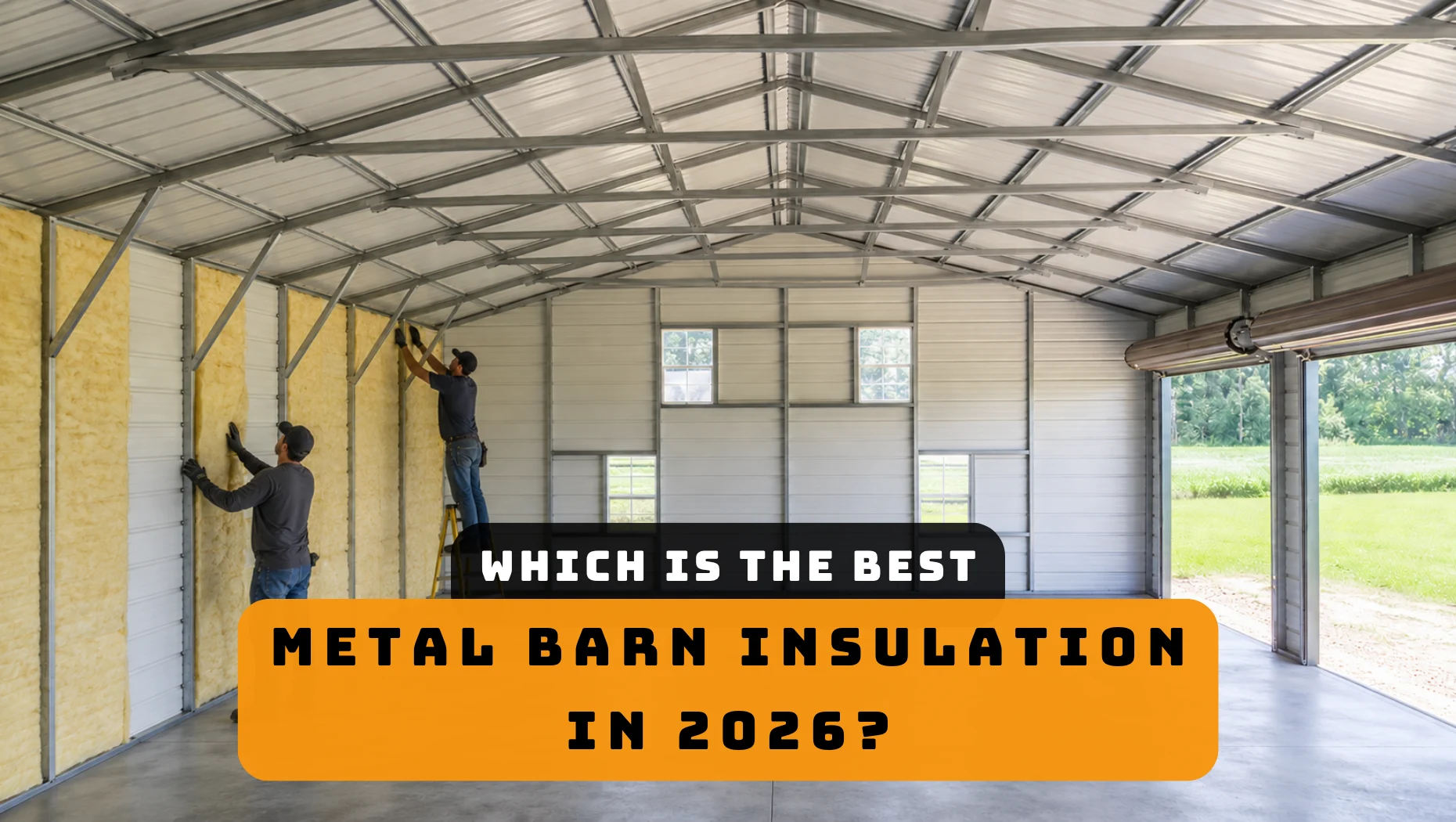
Metal barns continue to be one of the most popular building solutions for agricultural operations, livestock housing, equipment storage, workshops, and residential properties. However, choosing the right metal barn insulation remains one of the most important decisions for long-term comfort, energy efficiency, and moisture control.
Without proper insulation, steel barns can become extremely hot during summer, cold during winter, and vulnerable to condensation issues throughout the year. The right insulation system helps regulate indoor temperatures, reduce energy costs, protect stored items, and extend the lifespan of the building itself.
So, what is the best insulation for a metal barn in 2026?
The answer depends on your climate, building use, budget, and performance requirements. In this guide, we’ll explain the most common insulation options, compare their benefits, and help you determine the best way to insulate a metal barn.
Steel is an excellent conductor of heat. This means exterior temperatures can easily transfer through the building envelope if no insulation is installed.
Proper steel barn insulation helps:
For most property owners, insulation is not an optional upgrade—it’s an essential investment in the long-term performance of the building.
Before selecting an insulation system, consider the following factors:
| Factor | Why It Matters |
| Climate Zone | Hot, cold, or mixed climates require different insulation strategies. |
| Building Purpose | Storage barns need less insulation than workshops or livestock facilities. |
| Moisture Control | Condensation prevention is critical in metal buildings. |
| Energy Efficiency Goals | Higher thermal performance may justify a larger upfront investment. |
| Budget | Initial costs and long-term savings should both be considered. |
| Installation Method | Some insulation systems are easier and faster to install. |
Several insulation options are commonly used in metal barns today.
Single bubble insulation for metal buildings consists of a single layer of polyethylene air bubbles sandwiched between reflective foil surfaces.
Its primary function is to act as a radiant barrier by reflecting heat away from the building.
Single bubble insulation is often used in storage-only structures where temperature control is not a major concern.
Many property owners ask:
Double bubble insulation uses two layers of polyethylene bubbles between reflective foil surfaces.
The additional air layer improves thermal performance and moisture resistance compared to single-bubble products.
One of the most searched questions among barn owners is:
The answer depends on installation methods and testing conditions. Most double bubble products provide a core insulation value of approximately R-1 to R-3 when installed alone.
Manufacturers often advertise higher effective values when installed with enclosed air spaces because reflective insulation performance depends heavily on radiant heat reflection rather than traditional thermal resistance.
For this reason, building owners should carefully review manufacturer specifications and building requirements before making a purchase decision.
Fiberglass remains one of the most widely used insulation materials in residential and commercial construction.
While fiberglass can work in steel barns, moisture management becomes a major concern if condensation is present.
Spray foam offers some of the highest insulation values available.
Spray foam is commonly selected for climate-controlled workshops and residential metal buildings.
In 2026, one of the fastest-growing insulation solutions for metal buildings is woven insulation, particularly woven R17 insulation.
This modern insulation system combines durable woven polyethylene facing with thermal insulation layers designed specifically for steel structures.
Many property owners prefer woven insulation because it addresses both energy efficiency and condensation control in a single system.
The best way to insulate a metal barn depends on how the building will be used. Different barn types have unique insulation requirements based on temperature control, moisture management, livestock comfort, and energy efficiency. Below are the recommended insulation solutions for the most common types of steel barns.
Hay storage requires proper ventilation and moisture control to prevent mold growth, spoilage, and fire hazards caused by excessive heat buildup. Insulation can help regulate interior temperatures while reducing condensation on metal surfaces.
Recommended Insulation Options:
Benefits:
Livestock barns require a comfortable and healthy environment for animals throughout the year. Proper insulation helps maintain consistent temperatures, reduce drafts, and minimize moisture buildup that can negatively affect animal health.
Recommended Insulation Options:
Benefits:
Farm steel buildings are commonly used for equipment storage, workshops, feed storage, and multi-purpose agricultural operations. The insulation system should provide durability, energy savings, and protection against temperature fluctuations.
Recommended Insulation Options:
Benefits:
Horse barns require effective temperature control and moisture management to create a safe and comfortable environment for horses. Proper insulation can help maintain stable conditions while reducing condensation that may affect stalls and feed storage areas.
Recommended Insulation Options:
Benefits:
Commercial barns used for manufacturing, storage, agricultural processing, or business operations often require higher levels of thermal performance and energy efficiency. Investing in premium insulation can significantly improve long-term operating costs and indoor comfort.
Recommended Insulation Options:
Benefits:
| Insulation Type | Moisture Resistance | Durability | Energy Efficiency | Installation |
| Single Bubble | Good | Moderate | Low | Easy |
| Double Bubble | Good | Moderate | Moderate | Easy |
| Fiberglass | Moderate | Moderate | Good | Moderate |
| Spray Foam | Excellent | Excellent | Excellent | Professional |
| Woven R17 Insulation | Excellent | Excellent | Excellent | Professional |
Among modern insulation systems, woven R17 insulation has become a preferred option for agricultural and commercial metal buildings.
Unlike traditional fiberglass systems that can trap moisture or lose effectiveness over time, woven insulation systems are designed specifically for steel building environments.
Key reasons for its growing popularity include:
Many metal building owners choose woven insulation when they want a long-term insulation solution that balances performance and durability.
One of the biggest threats to steel buildings is condensation.
When warm, moist air contacts cooler metal surfaces, water droplets form inside the building.
Potential problems include:
Insulation systems that include moisture-resistant barriers can significantly reduce condensation-related issues.
This is one reason why modern woven insulation systems continue gaining popularity among steel building owners.
According to the U.S. Department of Energy, heating and cooling can account for a significant portion of building energy consumption.
Proper insulation helps reduce heat transfer through walls and roofs, lowering HVAC workload and improving overall efficiency.
Benefits may include:
While premium insulation systems may have higher upfront costs, they often provide substantial long-term savings.
There is no single insulation solution that works for every building.
However, based on durability, moisture resistance, thermal performance, and long-term value, woven R17 insulation is increasingly becoming one of the top choices for metal barns in 2026.
For budget-conscious storage buildings, double bubble insulation remains a practical solution.
For climate-controlled spaces requiring maximum efficiency, spray foam remains a premium option.
For most agricultural, workshop, and mixed-use applications, woven insulation provides an excellent balance of performance, longevity, and moisture protection.
Choosing the right metal barn insulation can significantly impact comfort, energy efficiency, and building durability.
Whether you’re evaluating single bubble insulation for metal buildings, researching what is double bubble insulation, comparing thermal performance, or exploring advanced woven insulation systems, understanding the strengths and limitations of each option is essential.
In 2026, many property owners are turning toward woven R17 insulation because of its durability, moisture resistance, and energy-saving potential. However, the best choice ultimately depends on your building’s intended use, local climate, and long-term goals.
Before selecting an insulation package, carefully evaluate your performance requirements and compare available options to ensure your steel barn remains comfortable, efficient, and protected for years to come.
Expand each item below to explore a few helpful answers before moving to the next blog post.