Loading...
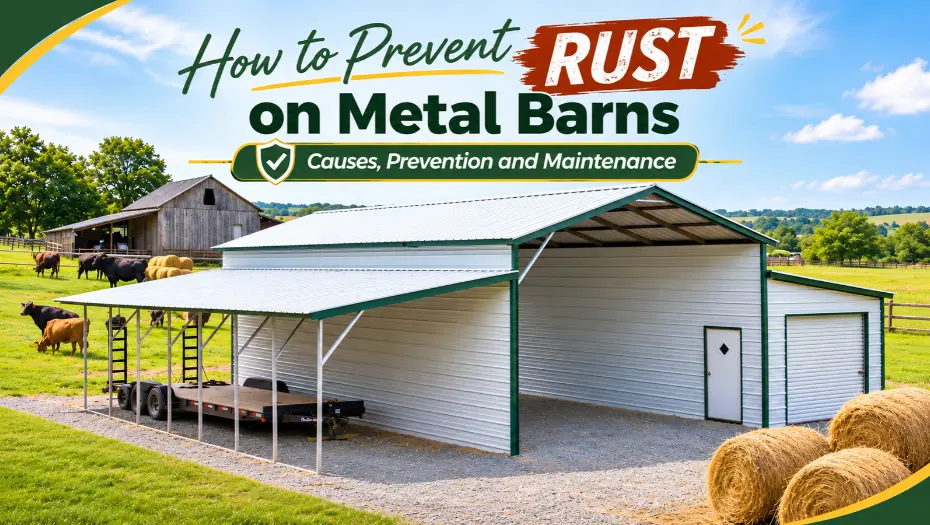
Metal barns are designed to handle demanding farm, ranch, and storage conditions, but they are not completely immune to rust. Moisture, damaged protective coatings, poor drainage, and accumulated dirt can gradually expose steel surfaces to corrosion. The most effective way to prevent rust on metal barns is to protect the steel’s surface, control moisture, clean problem areas, and inspect the building regularly.
Whether you own a large agricultural building or a small prefab barn, a consistent maintenance routine can help preserve its appearance and identify corrosion before it becomes a more serious repair issue. This guide explains why rust develops, which areas need attention, and how to maintain a steel barn structure over time.
Also Read: The Hidden Costs of Building a Metal Barn in Florida: Permits, Drainage & Installation
Why Do Metal Barns Rust?
Rust forms when iron in steel reacts with oxygen and moisture. This electrochemical process produces iron oxides, which appear as reddish-brown discoloration on exposed steel. The process can accelerate when water remains on a surface or when contaminants such as salts and agricultural chemicals are present.
Most modern metal barns use protective finishes or metallic coatings to reduce direct exposure between steel and the surrounding environment. However, these protective layers can become damaged through scratches, impact, installation work, or prolonged exposure to harsh conditions.
Common causes of rust include:
- Standing water: Water that collects around panel overlaps, roof edges, fasteners, or the building’s base can increase corrosion risk.
- Scratched or chipped coatings: Damage to paint or galvanized protection can expose the underlying steel.
- Poor drainage: Water that repeatedly pools around the foundation can keep lower panels and nearby metal components damp.
- Dirt and debris buildup: Leaves, mud, dust, and bird droppings can retain moisture against metal surfaces.
- Condensation: Moist air inside a barn can form water droplets on cooler roof and wall panels.
- Coastal or industrial exposure: Salt and certain airborne pollutants can make the surrounding environment more corrosive.
- Incompatible metal contact: Contact between dissimilar metals in the presence of moisture can contribute to galvanic corrosion.
Understanding these causes helps building owners focus on the areas most likely to develop rust.
How to Prevent Rust on a Metal Barn Building
Preventing corrosion does not require complicated maintenance. Most owners can manage routine visual checks and cleaning, while coating repairs, structural work, and difficult-to-access areas may require professional assistance.
1. Inspect Protective Coatings and Steel Panels
The paint or metallic coating on a steel panel acts as a protective barrier. When that barrier is scratched, chipped, or worn away, the exposed area becomes more vulnerable to corrosion.
Inspect the exterior walls, roof panels, trim, corners, and areas around doors and windows. Pay particular attention to places where equipment may accidentally strike the building or where branches and other debris can rub against the panels.
Look for:
- Scratches that expose bare metal
- Peeling, blistering, or flaking paint
- Small orange or brown spots
- Discoloration around panel edges
- Damaged areas near fasteners and trim
Address minor coating damage promptly using a repair product compatible with the original panel finish. Follow the manufacturer’s preparation and application instructions rather than applying ordinary paint directly over an untreated surface.
2. Keep Metal Surfaces Clean
Dirt does not automatically cause rust, but accumulated debris can hold moisture against steel and make corrosion harder to spot. This is especially relevant for agricultural buildings exposed to dust, animal waste, fertilizer residue, and organic material.
Clean metal panels when dirt or contaminants become noticeable. A practical approach is to:
- Remove loose leaves, dust, and debris with a soft brush.
- Wash affected surfaces using water and a mild, compatible cleaning solution.
- Use a soft cloth or non-abrasive brush for stubborn dirt.
- Rinse thoroughly so cleaning residue does not remain on the panels.
- Allow the surface to dry and inspect it for coating damage.
Avoid harsh chemicals, abrasive pads, and aggressive pressure-washing techniques that may damage the finish. Check the building manufacturer’s cleaning recommendations before using any specialized product.
3. Prevent Water From Collecting Around the Building
Good drainage is an important part of rust prevention. Even when the steel panels have protective coatings, repeated exposure to standing water can increase the risk of corrosion around the lower wall sections, base trim, fasteners, and nearby components.
Walk around your metal barn building after rainfall and look for areas where water collects. Check whether the ground slopes away from the structure and whether roof runoff is being directed away from the foundation.
Helpful maintenance steps include:
- Keep gutters and downspouts clear of leaves and sediment.
- Direct roof runoff away from the building.
- Correct low spots where water repeatedly collects.
- Remove vegetation and debris that trap moisture against the walls.
- Check the lower panels and base trim for signs of prolonged dampness.
Do not alter the foundation, grading, or drainage system without considering the building’s site conditions and applicable requirements. Persistent water problems may need assessment by a qualified site or drainage professional.
4. Control Condensation Inside Steel Barns
Rust can develop on interior surfaces as well as exterior panels. Condensation occurs when warm, moisture-filled air comes into contact with a cooler metal surface. The resulting water droplets can collect on roof panels, wall panels, framing, and stored equipment.
Agricultural activities can add substantial moisture to indoor air. Livestock, wet flooring, washing areas, damp hay, and poor ventilation may all contribute to the problem.
To manage interior moisture:
- Maintain suitable ventilation for the building’s intended use.
- Keep vents and airflow openings clear.
- Address roof or wall leaks promptly.
- Avoid storing wet materials directly against metal panels.
- Consider an appropriate insulation system where condensation is a recurring concern.
- Monitor enclosed areas for persistent dampness or water droplets.
Insulation and ventilation should be planned together. The right approach depends on the local climate, building design, and whether the structure is used for equipment storage, livestock, or a workshop.
Read our Related Article on How to Insulate a Metal Barn
5. Check Fasteners, Seams, and Metal Connections
Fasteners and panel connections deserve special attention because small openings or damaged finishes can allow water to enter or remain trapped.
During routine inspections, look for rust-colored streaks below screws, damaged washers, missing fasteners, loose trim, and visible gaps around panel joints.
| Inspection area | What to look for | Recommended action |
|---|---|---|
| Roof fasteners | Rust-colored marks, damaged washers, missing screws | Arrange compatible replacement or repair |
| Panel overlaps | Dirt, trapped moisture, visible corrosion | Clean and inspect the affected joint |
| Roof and wall trim | Gaps, damaged coating, water entry | Repair using approved components |
| Door frames | Rust spots, damaged paint, water exposure | Clean and address coating damage |
| Base trim | Standing water, mud, corrosion | Improve drainage and assess the affected area |
Do not randomly tighten or replace structural fasteners. The correct fastener type, washer, installation method, and tightening requirements depend on the building system. Follow manufacturer guidance, especially when a connection is part of the structural frame.
6. Use Compatible Protective Coatings and Touch-Up Products
Protective coatings help limit contact between steel and the environment. If a small area of a metal barn’s finish becomes damaged, a suitable repair coating may help restore protection.
The repair method depends on the original finish. Painted steel, galvanized steel, and other coated panels do not necessarily use the same preparation or touch-up products.
For a minor surface repair:
- Identify the panel material and original coating, if possible.
- Remove loose dirt and any loose corrosion without damaging the surrounding finish.
- Prepare the surface according to the repair product’s instructions.
- Apply a compatible primer or coating where specified.
- Allow the repair to cure as directed.
A rust converter is not automatically suitable for every metal surface. Similarly, ordinary exterior paint may not provide the protection required for exposed steel. Check product compatibility before applying a treatment.
If corrosion covers a large area, returns after treatment, or appears around structural connections, arrange an assessment by a qualified professional.
You Might Like: What Flooring Is Best for a Metal Barn Workshop?
Which Areas of a Steel Barn Structure Need the Most Attention?
Some parts of a barn experience more moisture, debris, or physical contact than others. Prioritizing these areas makes inspections more useful.
| Barn area | Why it needs attention | Inspection priority |
|---|---|---|
| Roof panels and edges | Rain exposure, debris, and possible coating damage | High |
| Lower wall panels | Splashback, mud, and standing water | High |
| Fasteners and joints | Potential moisture entry and coating disturbance | High |
| Gutters and downspouts | Blockages can cause water overflow | High |
| Door frames and tracks | Frequent use, dirt, and moisture | Medium |
| Interior framing | Condensation and hidden moisture | Medium |
| Areas near stored equipment | Scratches and accidental impact | Medium |
These priorities are general maintenance guidance, not a substitute for the inspection requirements of a particular building. A barn in a coastal area, a humid climate, or a location exposed to agricultural chemicals may need more frequent attention.
How Often Should You Inspect a Metal Barn for Rust?
A practical starting point is to conduct a thorough inspection at least twice a year, such as in spring and fall. Additional checks are useful after severe weather, accidental impact, or any event that may have damaged the building’s protective finish.
Use the following schedule as a simple guide:
| Inspection period | Maintenance tasks |
|---|---|
| Spring | Check for winter damage, rust spots, leaks, and drainage problems |
| Summer | Inspect exposed coatings, ventilation, and areas affected by heat or humidity |
| Fall | Remove leaves and debris, clean gutters, and check panel joints |
| After severe weather | Look for impact damage, loose components, scratches, and water entry |
| Throughout the year | Address visible corrosion, leaks, and damaged coatings promptly |
Keep a record of the inspection date, the areas checked, photographs of any damage, and repairs completed. Comparing photographs over time can help you determine whether a rust spot is stable or spreading.
What Should You Do If You Find Rust on a Metal Barn?
The correct response depends on the location, depth, and extent of the corrosion.
For a small surface rust spot: Keep the area dry, identify the coating system, and follow the recommended surface preparation and touch-up procedure. Monitor the repaired area during future inspections.
For rust around fasteners or panel joints: Check for possible water entry, damaged washers, or compromised finishes. Use the manufacturer’s repair guidance or arrange a qualified inspection.
For widespread or deep corrosion: Do not assume that painting over the affected area will solve the problem. A professional should assess whether the steel section has lost material or whether a panel or structural component needs repair or replacement.
For corrosion on structural framing or connections: Avoid attempting a structural repair without professional guidance. The condition may affect the building’s ability to perform as designed.
Early attention is useful, but the goal should be to identify and correct the cause of corrosion rather than simply cover its visible signs.
Common Rust-Prevention Mistakes to Avoid
Even a well-maintained steel barn can develop corrosion if basic precautions are overlooked. Avoid these common mistakes:
- Painting over rust without preparation: Loose corrosion and damaged coatings should be addressed using the correct repair procedure first.
- Ignoring small scratches: Minor coating damage can become a larger maintenance issue if moisture reaches exposed steel.
- Allowing water to pool: Repeated standing water near the building can increase exposure around lower metal components.
- Using unsuitable cleaners: Strong chemicals and abrasive tools may damage protective finishes.
- Blocking ventilation: Poor airflow can contribute to condensation inside enclosed buildings.
- Mixing incompatible metals: Unsuitable contact between different metals can contribute to galvanic corrosion.
- Ignoring recurring rust: Repeated corrosion in the same area may indicate an unresolved moisture or coating problem.
A consistent inspection and repair routine is generally more effective than waiting until rust becomes widespread.
Also Read: How to Plan Water Access and Wash Areas in an Agricultural Barn
Final Thoughts: Protect Your Metal Barn With Consistent Maintenance
Rust prevention starts with protecting the steel surface and keeping moisture under control. Regular cleaning, good drainage, proper ventilation, coating inspections, and timely repairs can help maintain metal barns in good condition.
Whether you own a small prefab barn, a prefabricated barn for farm storage, or a larger agricultural steel barn structure, the same basic principle applies: identify potential corrosion early and address the underlying cause. Always follow the manufacturer’s maintenance guidance, particularly when working with coated panels, fasteners, or structural components.
If you are planning a new metal barn building, consider the building’s environment, intended use, protective finishes, and maintenance requirements during the design process. Visit Viking Barns‘ metal barns to review available building options and plan a structure that fits your property and storage needs.
Frequently Asked Questions
1. Do metal barns rust?
Yes. Metal barns can rust if steel is exposed to moisture and oxygen, particularly where protective coatings are scratched, chipped, or worn. Regular inspections and timely repairs help reduce corrosion risk.
2. How can I prevent rust on steel barns?
Keep metal surfaces clean, repair damaged coatings, maintain proper drainage, control interior condensation, and inspect fasteners and panel joints. Follow the manufacturer’s maintenance recommendations for the building’s finish.
3. Does galvanized steel prevent rust?
Galvanized steel has a zinc coating that helps protect the underlying steel from corrosion. However, the protection is not unlimited. Damaged coatings, harsh environments, and prolonged moisture exposure can still create corrosion concerns.
4. Can I paint over rust on a metal barn?
Painting directly over loose or untreated rust is not a reliable repair method. The affected area should be prepared properly, and any primer or topcoat should be compatible with the existing metal finish.
5. How often should I inspect my metal barn for rust?
A thorough inspection at least twice a year is a useful starting point. Check more frequently after severe weather, accidental impact, or when the building is exposed to coastal air, industrial pollutants, or persistent moisture.
6. Can condensation cause rust inside a metal barn?
Yes. Condensation leaves water on interior steel surfaces and can contribute to corrosion over time. Suitable ventilation, moisture management, and an appropriate insulation system can help reduce the problem.
7. Are prefab barns resistant to corrosion?
A prefab barn may use galvanized steel or other protective finishes to reduce corrosion risk. Its actual resistance depends on the materials, coating system, installation, surrounding environment, and ongoing maintenance.
8. What is the best way to clean metal barn panels?
Use water, a mild compatible cleaning solution, and a soft brush or cloth. Avoid abrasive tools and harsh chemicals that may damage the protective finish. Follow the manufacturer’s cleaning instructions.
9. Does rust on a metal barn mean the structure is unsafe?
Not necessarily. A small surface rust spot does not automatically indicate structural damage. However, deep corrosion, widespread deterioration, or rust around structural connections should be assessed by a qualified professional.
10. Can coastal weather increase rust on metal barns?
Yes. Salt carried in coastal air can make the environment more corrosive, particularly when deposits remain on metal surfaces. More frequent cleaning and inspections may be appropriate in coastal locations.
Related articles