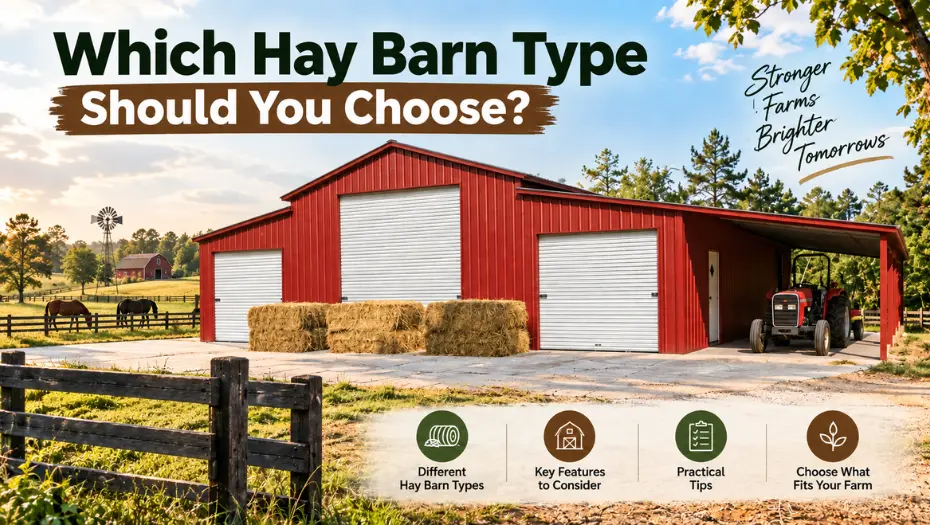
September 11, 2026



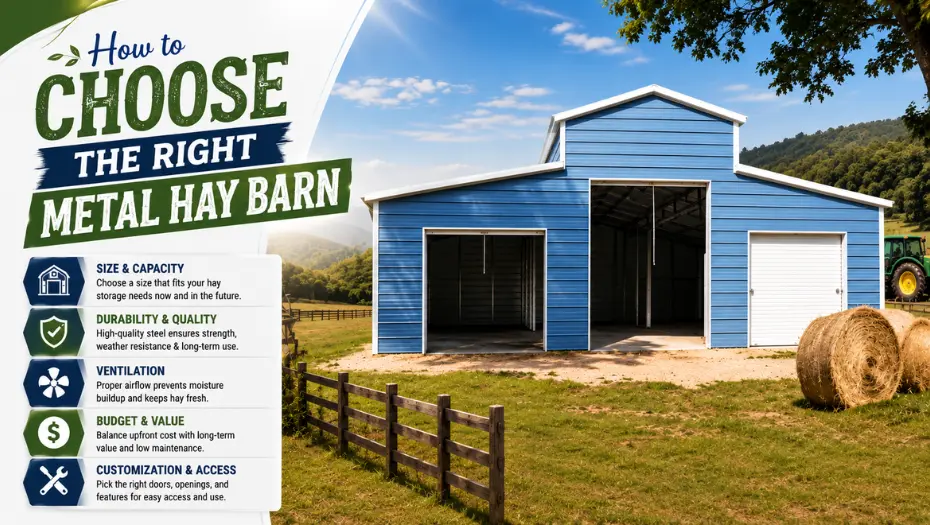
Choosing the right metal hay barn is about more than selecting a building size. The ideal hay storage building should provide enough capacity for your bales, allow easy equipment access, support proper airflow, withstand local weather conditions, and leave room for future farm needs.
Whether you store round bales, square bales, or a combination of hay types, consider your storage volume, bale dimensions, building layout, roof style, ventilation, climate, equipment, foundation, and budget before ordering a metal hay barn.
This guide explains the key factors to consider so you can make a practical, informed decision for your farm.
You Might Like: Different Types of Hay Barns
A metal hay barn is a steel-framed agricultural building designed to provide protected storage for hay, farm equipment, livestock supplies, and other agricultural materials. Depending on the farm’s needs, it can be designed as an open-sided structure, partially enclosed barn, or fully enclosed building.
Hay storage buildings can be customized with different:
The right configuration depends on how much hay you store, your equipment, local weather, and how you plan to use the building.
The right hay storage building protects your investment while making storage, loading, unloading, and equipment movement easier. An undersized or poorly planned building can create storage limitations and make daily farm operations more difficult.
Before purchasing, consider:
A properly designed building should work with your hay-handling practices rather than simply provide an enclosed space.
Start by estimating how much hay you need to keep under cover at one time. Consider your annual production, purchased hay, seasonal requirements, and the amount you want to keep as a reserve.
Don’t design your barn strictly around today’s inventory. If your herd, acreage, or hay production may increase, additional capacity can prevent another construction project later.
Tip: Estimate storage requirements before selecting building dimensions rather than choosing a size based solely on available land.
Your bale type directly affects the building’s storage layout.
Consider:
Consider:
There is no universal bale-capacity figure for a particular building size. Actual capacity depends on bale dimensions, stacking height, arrangement, equipment clearance, and required access space.
The building should accommodate both your hay and the equipment used to handle it.
| Building Size | Potential Application |
|---|---|
| 20′ × 30′ | Smaller hay-storage requirements |
| 30′ × 40′ | Small farms and moderate storage |
| 40′ × 60′ | Larger hay inventories and equipment access |
| 50′ × 80′ | Higher-volume hay and equipment storage |
| 60′ × 100′ | Large-scale agricultural storage |
These are general planning examples rather than guaranteed bale capacities. Actual storage depends on bale size, stacking configuration, aisle space, and equipment.
Also consider building height. A taller structure may provide greater flexibility for equipment clearance and vertical storage where appropriate.
Your climate, storage goals, and equipment workflow should determine whether you need an open-sided or enclosed structure.
| Feature | Open-Sided Hay Barn | Enclosed Hay Barn |
|---|---|---|
| Natural airflow | Excellent | Requires planned ventilation |
| Weather protection | Good roof protection | Greater overall protection |
| Equipment access | Easy | Depends on door configuration |
| Security | Lower | Higher |
| Ventilation planning | Important | Especially important |
Open-sided barns can provide excellent natural airflow and convenient access. Enclosed barns offer greater protection from weather and can provide more controlled storage.
Neither design is automatically best for every farm.
Roof design affects water and snow shedding, appearance, maintenance, and overall building configuration.
| Roof Style | Key Consideration |
|---|---|
| Regular | General use and budget considerations |
| Boxed-Eave | Traditional appearance and agricultural applications |
| Vertical | Efficient rain, snow, and debris shedding |
The appropriate roof should be selected according to your location, building design, weather exposure, and project requirements.
Ventilation is an important consideration when storing hay because moisture can affect feed quality and storage conditions.
A hay barn should be designed to support appropriate airflow while limiting exposure to rain and other sources of moisture.
Consider:
However, a well-ventilated barn cannot compensate for hay that was baled or stored at an inappropriate moisture level. Proper hay curing, handling, and storage practices remain essential to store your hay safely in metal barns.
Your location should influence the hay barn designs and engineering requirements of your custom metal hay barn.
Hot & Humid Areas
Prioritize airflow, ventilation, moisture management, and drainage.
Snow-Prone Areas
Consider local snow-load requirements, structural engineering, roof configuration, and winter equipment access.
High-Wind Areas
Pay attention to wind-load requirements, anchoring, certification, and proper installation.
High-Rainfall Areas
Plan for roof drainage, site grading, gutters where appropriate, and water runoff.
Local building codes and engineering requirements should always be verified before construction.
A hay barn should accommodate the machinery used to move and manage your hay.
Before finalizing the design, measure:
How big should a hay barn door be? There is no single ideal door size. The opening should provide adequate clearance for the largest equipment you expect to move through it, with reasonable operating space.
Door placement also matters. Strategically positioned openings can reduce unnecessary equipment movement inside the metal barn.
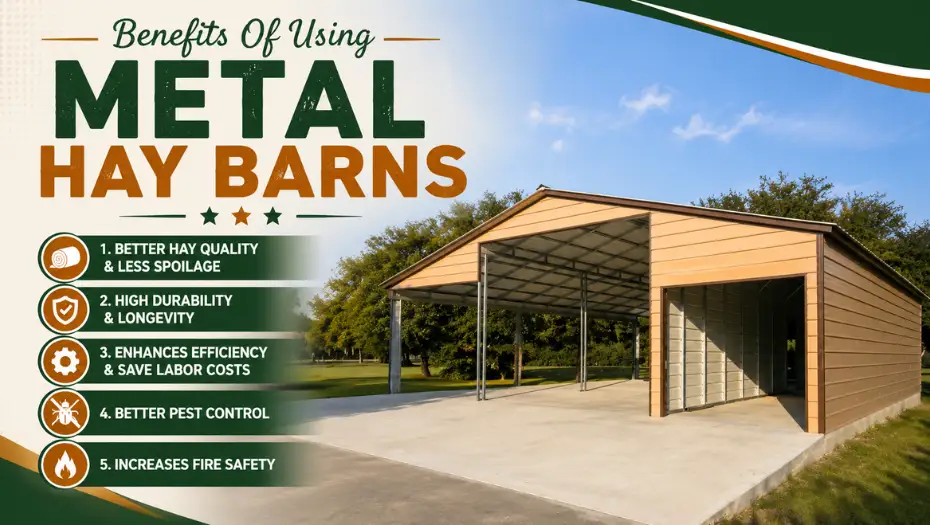
Also Read: Top 5 Benefits Of Using Metal Hay Barns
Depending on your farm’s needs, consider adding:
Choose features based on actual farm operations rather than adding unnecessary upgrades.
Both metal and pole barns can serve agricultural storage purposes. The better option depends on your budget, design requirements, maintenance expectations, local conditions, and intended use.
| Factor | Metal Hay Barn | Pole Barn |
|---|---|---|
| Main Structure | Steel | Post-frame construction |
| Customization | High | High |
| Equipment Access | Can be designed for large equipment | Can be designed for large equipment |
| Pest Resistance | Steel is resistant to termites | Wood components can be susceptible |
| Maintenance | Generally low | Depends on materials and construction |
| Appearance | Multiple steel styles | Traditional farm appearance |
Rather than choosing based on one feature, compare the complete building design and long-term requirements.
Use this process before placing your order:
Before finalizing your building, make sure you have considered:
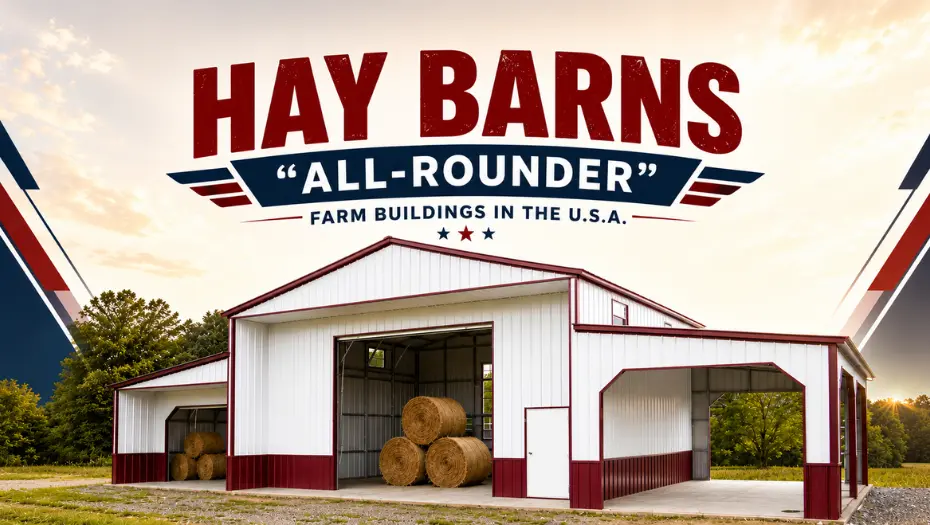
Check-out This: Why Are Hay Barns “All-Rounder” Farm Buildings in the U.S.A.?
The best metal hay barn is one that matches your farm’s actual storage requirements, equipment, climate, hay-handling practices, and future plans. Start with your hay volume and bale dimensions, then work through building size, layout, roof style, ventilation, access, foundation, and local requirements.
A thoughtful design can make hay storage more organized while providing useful space for equipment and future agricultural needs.
Ready to find a metal hay barn for your farm? Explore Viking Barns‘ available metal hay barn options and compare configurations designed for agricultural storage and farm applications.
Expand each item below to explore a few helpful answers before moving to the next blog post.