

March 18, 2026



Many homeowners assume that any single-car garage can fit any vehicle. In reality, the ideal garage size depends on what you drive. A garage that comfortably fits a compact sedan may feel too narrow for an SUV or too short for a full-size pickup truck.
Choosing the right size isn’t just about parking your vehicle. You also need enough room to open the doors, walk around comfortably, store everyday items, and accommodate future vehicle upgrades.
This guide will explain the ideal one car metal garage for different vehicle types, helping you choose dimensions that fit your current needs and remain practical for years to come.
There isn’t one universal size for every single-car garage. The right dimensions depend on the type of vehicle you own and how you plan to use the space.
Most homeowners choose garage sizes between 10×20 feet and 16×24 feet, with larger dimensions providing additional room for storage and easier movement. The table below gives a general idea of the most common options.
|
Garage Size |
Best Suited For |
| 10×20 |
Compact cars |
|
12×20 |
Small sedans |
| 12×24 |
Mid-size sedans |
|
14×24 |
SUVs and crossovers |
| 16×24 |
Full-size pickups, SUVs, and extra storage |
If you’re wondering what the size of a one car garage is, these dimensions are the most common starting points. However, your vehicle’s actual measurements should always guide your final decision.
Our Latest Blog: Why Are Metal Barns are the Best Choice for Farmers in Texas?
Many buyers only compare 1 car garage dimensions with the vehicle’s length. That often leads to a garage that technically fits the car but leaves very little usable space.
Think beyond parking.
You’ll also need room for:
For example, a 10×20 garage can comfortably accommodate many compact cars. The same garage may technically fit a full-size pickup, but opening the doors, accessing the cargo bed, or walking around the vehicle can quickly become difficult.
When planning the size of one car garage, consider how you’ll use the space every day rather than whether the vehicle can simply fit inside.
The best garage size depends on your vehicle’s dimensions and how much clearance you want around it.
Compact cars are the easiest vehicles to accommodate.
Examples include:
For these vehicles, a 10×20 or 12×20 garage is usually sufficient. If you only need protected parking and limited storage, these dimensions provide a practical solution without occupying unnecessary space on your property.
Mid-size sedans require a little more room for comfortable parking and movement. Examples include:
A 12×24 garage generally offers a better balance between vehicle space and everyday usability. These one car garage dimensions provide additional clearance for opening doors and storing a few household items without making the garage feel cramped.
SUVs are wider and taller than most passenger cars, making side clearance especially important. Examples include:
A 14×24 garage gives most SUVs enough room for comfortable parking, easier entry and exit, and storage along one wall.
If your SUV has a rear-mounted spare tire or frequently carries roof racks, allow additional clearance before finalizing the dimensions for single car garage.
Modern pickup trucks continue to grow in both length and width. Crew cab models with long beds can occupy much more space than many homeowners expect.
Examples include:
For these vehicles, a 16×24 garage is often the most practical option. The extra width allows easier door opening, while the additional length provides room for larger trucks without sacrificing usable storage space.
If you expect to purchase a larger truck in the future, building slightly bigger today is usually easier than expanding the garage later.
Sports cars generally require less overall space than pickup trucks, but they still benefit from adequate side clearance. Wide doors often need extra room to open comfortably, especially in enclosed garages.
A 12×20 or 12×24 garage is usually suitable for most sports cars while leaving space for detailing equipment or seasonal storage.
Electric vehicles don’t necessarily require larger garages, but charging equipment changes how you use the space. Wall-mounted charging units, charging cables, and convenient access around the vehicle should all be considered before selecting your garage size.
For many EV owners, a 18×26 steel garage provides a comfortable balance between parking space and accessibility. If you’re considering a modular garage, planning these requirements before construction makes it easier to incorporate charging equipment without sacrificing usable floor space.
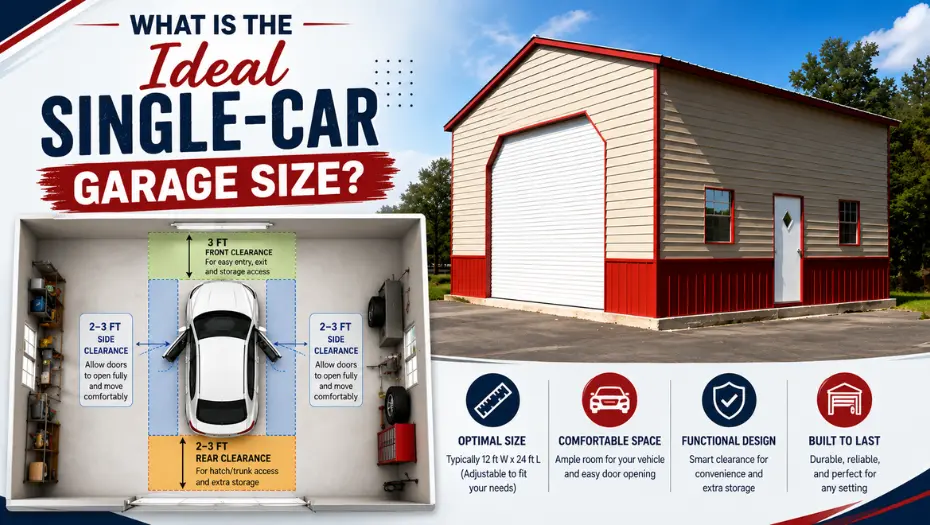
Your vehicle should never occupy almost every inch of the garage. Leaving additional clearance improves safety, convenience, and future flexibility.
As a general planning guideline, allow enough space to:
Even if you’re asking how big a one-car garage is, remember that the answer depends just as much on usable space as it does on the vehicle itself.

One of the biggest mistakes homeowners make is assuming the garage’s outside dimensions equal the available parking space. Inside the garage, usable space may be reduced by:
For example, a garage measuring 12×20 on paper may offer less usable parking width once permanent storage is installed.
Large open interiors, such as those found in clear-span-metal-buildings, reduce interior obstructions and provide greater flexibility when parking larger vehicles or organizing storage.
If you’re still deciding on the right single car garage dimensions, avoiding these planning errors early can save both money and frustration later. Reviewing these common single car garage size mistakes can help you avoid choosing a garage that quickly feels too small as your needs change.
Every homeowner has different needs, but some sizes offer greater flexibility than others.
If you’re wondering about the size of a one car garage, choosing slightly more space than your current vehicle requires often provides better long-term value.
If your budget allows, adding a few extra feet can make a noticeable difference. For example, the difference between a 12×20 and 12×24 garage may provide space for:
However, don’t oversize the garage simply because space is available. Build for realistic future needs rather than maximum possible dimensions.
Before selecting your garage size, measure more than the manufacturer’s published vehicle dimensions.
Check:
These measurements provide a much better estimate than relying on the model name alone.
The right garage depends on how you plan to use it. If you’re only parking one vehicle, a smaller garage may be sufficient. If you also need storage, a workbench, bicycles, motorcycles, or charging equipment, additional space becomes much more valuable.
Although building size is the main consideration, don’t overlook the building specifications. For metal garages, selecting the right gauge for a metal barn roof – 26-gauge-or-29-gauge helps ensure the roof matches your climate and long-term durability expectations.
Likewise, if you plan to use the garage as a workshop or want greater year-round comfort, woven R-17 insulation can improve thermal performance while helping reduce condensation inside the building.
You Might Like: Common Mistakes to Avoid When Constructing Your Prefab Steel Barn
The ideal single-car garage isn’t the smallest one your vehicle can squeeze into. It’s the one that provides enough room to park comfortably, move around safely, and adapt to your future needs.
Before choosing the final one car garage size, measure your vehicle carefully, consider how you’ll use the space, and leave enough clearance for storage and everyday convenience. A well-planned garage will remain practical long after your current vehicle has been replaced.
Expand each item below to explore a few helpful answers before moving to the next blog post.