September 11, 2026



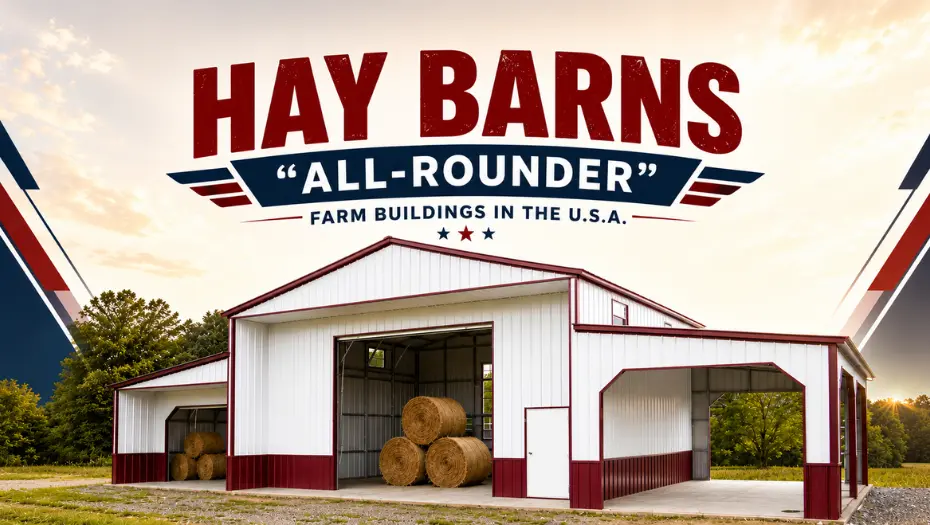
Walk onto almost any working farm in the United States, and you’ll notice one structure that never sits idle: the hay barn. While its primary purpose is to protect harvested hay, today’s hay barns have evolved into much more than simple storage spaces. Farmers now rely on them to safeguard livestock feed, store farm equipment, protect machinery, organize supplies, and even provide temporary shelter for animals when weather conditions suddenly change.
This versatility is one of the biggest reasons why hay barns continue to be one of the most practical farm buildings across the country. Instead of investing in separate structures for different needs, many property owners choose one well-designed building that can adapt as their farming operations grow.
If you’re wondering why so many American farmers prefer steel hay barns over traditional wooden barns, this guide explains what makes them one of the smartest long-term investments for modern agriculture.
A building earns the title of an all-rounder when it can perform multiple jobs without compromising durability or efficiency.
That perfectly describes modern hay metal barns. Although they are designed to protect hay from moisture and weather, their spacious interiors and customizable layouts make them useful for many other agricultural activities throughout the year.
Whether you own a small family farm or manage hundreds of acres, a properly designed farm metal building can support changing operational needs without requiring additional construction every few years.
Instead of viewing a hay barn as a single-purpose structure, many farmers now see it as a flexible asset that continues to deliver value long after the first hay season.
Also Read: Why Are Metal Barns are the Best Choice for Farmers in Texas?
Agriculture continues to evolve, and so do the buildings that support it.
Today’s farmers want structures that install quickly, require less maintenance, offer greater durability, and adapt to changing farming practices. Modern farm buildings are designed to meet those expectations by combining practical layouts with long-lasting materials.
Rather than serving a single purpose, today’s steel hay barns have become multi-functional agricultural assets that support productivity throughout every season.
| Traditional Barn | Modern Steel Hay Barn |
| Higher maintenance | Lower maintenance requirements |
| Vulnerable to rot and termites | Resistant to rot and termites |
| Limited design flexibility | Wide range of customization options |
| Often difficult to expand | Easier to customize and expand |
| Primarily single-purpose | Supports multiple farm activities |
Hay is one of the most valuable resources on many farms. Producing quality hay requires months of planning, favorable weather, harvesting equipment, labor, and fuel. Once harvested, protecting that investment becomes just as important as producing it.
When hay is exposed to rain, excessive humidity, or poor ventilation, its quality begins to decline. Wet hay can lose nutritional value, develop mold, and create conditions that make it unsuitable for livestock.
A well-designed hay storage building helps reduce these risks by keeping hay dry while promoting proper airflow throughout the structure.
Many new farm owners believe covering hay with tarps is enough. While tarps may provide temporary protection, they rarely offer the consistent ventilation needed for long-term storage.
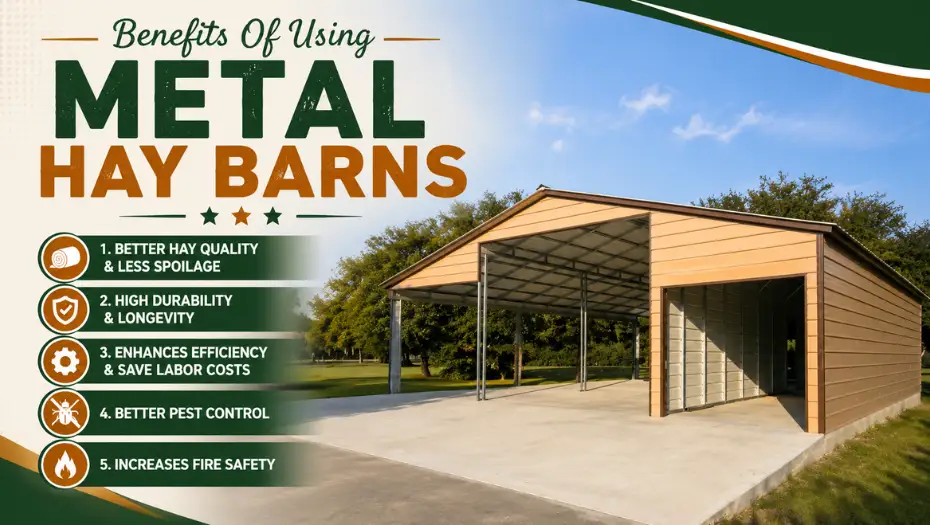
Modern steel hay barns are designed to improve airflow while protecting hay from direct exposure to rain, snow, and excessive sunlight. This combination helps preserve hay quality throughout the storage season.
One of the biggest advantages of investing in hay barns is their ability to support many different farming activities.
As farming operations change over time, building requirements often change as well. A structure that stores hay today may become equipment storage tomorrow or provide additional workspace during harvest season.
This flexibility helps farmers maximize the return on every dollar invested in their buildings.
Modern farming equipment represents a significant financial investment.
Leaving tractors, balers, trailers, or utility vehicles outdoors exposes them to harsh weather that can accelerate wear and increase maintenance costs.
Many farmers use sections of their metal barn to protect equipment when hay storage demands are lower during certain seasons.
Besides hay, farms often need secure space for feed bags, fencing materials, irrigation supplies, seed, fertilizer, and maintenance equipment.
Having everything stored under one roof makes daily operations more organized while reducing the time spent moving materials between multiple buildings.
Although hay remains the primary purpose, many farmers also use portions of their barns for animal-related activities. During unexpected storms, extreme heat, or temporary weather events, open sections of the building can provide shelter until conditions improve.
This is one reason many property owners also consider livestock metal barns when planning future farm expansions, especially if they expect their agricultural operations to diversify over time. The ability to combine feed storage with temporary livestock protection makes a hay barn even more valuable throughout the year.
Traditional wooden barns have served American farms for generations, but today’s agricultural demands are very different. Farmers are looking for buildings that require less maintenance, install faster, and perform reliably for decades.
That shift has made steel hay barns one of the fastest-growing choices for agricultural storage because they offer strength, durability, and long-term value without the ongoing maintenance associated with many conventional building materials.
Unlike many older structures, steel buildings resist common issues such as termite damage, rot, and warping. This means farmers can spend less time on structural repairs and more time focusing on their daily operations. For many agricultural businesses, reducing maintenance costs becomes just as valuable as increasing storage capacity.
You Might Like: Why Metal Farm Buildings Trends Rising In Kansas City
No two farms operate exactly the same way. Some farms produce thousands of hay bales each season, while others require space for tractors, livestock feed, utility trailers, and seasonal equipment.
Modern farm buildings can be designed to match these different operational requirements instead of forcing farmers to adapt to fixed layouts.
Open spans, varying roof heights, wider entrances, and multiple access points all help improve day-to-day efficiency.
As farming practices continue to evolve, customization that impacts the price has become an important consideration because every additional feature should support the farm’s long-term productivity rather than simply increase construction costs.
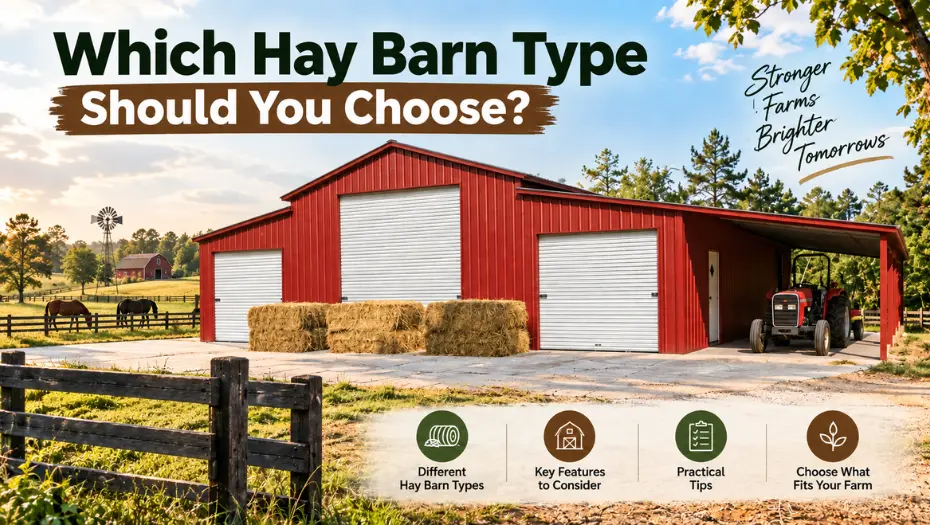
Different layouts are designed for different farming needs.
For example, a seneca metal barn offers an efficient design for agricultural storage while providing additional covered space that many farmers appreciate for equipment access and workflow.
Similarly, step-down metal barns are often selected when property owners need separate covered sections with varying roof heights for different farming activities.
Choosing the right configuration depends on how the building will be used throughout the year rather than during a single season.
Farmers cannot control the weather, but they can choose buildings designed to withstand it. Heavy rain, snowfall, strong winds, and changing temperatures all place stress on agricultural structures throughout the year.
A properly engineered metal barn helps protect valuable hay while reducing exposure to weather conditions that can damage stored materials and equipment.
This becomes especially important in regions where severe storms occur regularly.
Before purchasing any agricultural building, it is also worth reviewing metal barn wind ratings to ensure the structure is designed for the environmental conditions common in your location.
One of the biggest reasons farmers invest in hay barns is to create the right storage environment for harvested hay. While keeping rain out is important, proper ventilation is equally essential because trapped moisture can reduce hay quality over time.
A well-designed hay storage building allows fresh air to circulate naturally throughout the structure, helping excess moisture escape while maintaining a healthier storage environment. This improves the chances of preserving the nutritional value of hay and reduces the risk of mold developing during long storage periods.
The roof is much more than a protective cover. It also influences airflow, temperature control, and the overall performance of the building.
Many modern steel hay barns are designed with taller side walls and open layouts that encourage better ventilation while making it easier to store and move large hay bales.
Every farm owner wants a building that performs reliably for decades instead of requiring constant repairs.
That is one reason why a farm metal building continues to gain popularity across the United States. Steel structures are engineered to handle demanding agricultural environments while offering the flexibility to expand or modify the building as operational needs change.
Instead of replacing aging wooden structures every few years, many farmers choose a durable steel solution that supports their business for the long run.
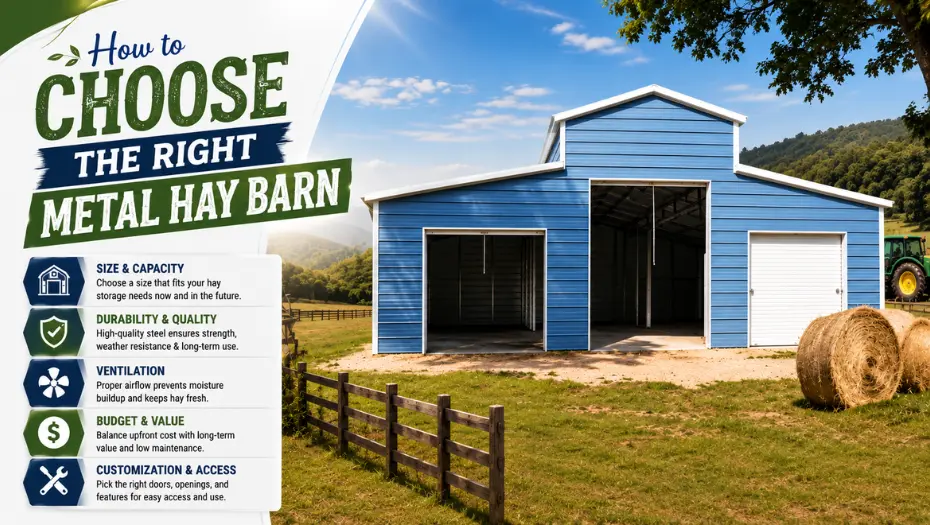
One specification buyers often compare is 26 gauge and 29 gauge steel. While both options are commonly used in agricultural buildings, the right choice depends on factors such as local weather conditions, the intended use of the building, and your overall budget. Understanding these specifications helps buyers make informed decisions rather than choosing materials based solely on price.
Whether you own a small family farm or operate a large agricultural business, hay metal barns can adapt to different storage requirements.
Smaller farms often use them to protect seasonal hay production and equipment, while larger operations may combine hay storage, machinery parking, maintenance areas, and feed storage within one structure.
This versatility allows farmers to maximize every square foot while reducing the need for multiple separate buildings.
A quality metal barn remains useful throughout the entire year. During harvest season, it protects freshly baled hay. During winter, it stores equipment and feed. Throughout the rest of the year, it can serve as a workspace, supply storage area, or equipment shelter depending on the farm’s current needs.
That year-round functionality is exactly why so many farmers consider hay barns to be true all-rounder farm buildings.
| Farm Need | How a Hay Barn Helps |
| Hay Storage | Protects hay from rain, moisture, and sunlight |
| Equipment Storage | Shields tractors, balers, and machinery |
| Feed Storage | Keeps feed organized and protected |
| Temporary Livestock Shelter | Provides protection during changing weather |
| Farm Supplies | Stores tools, fencing materials, and seasonal equipment |
Every farm is unique, which means there is no one-size-fits-all solution. Before purchasing a building, think beyond your current storage needs. Consider how your farm may grow over the next five to ten years and whether the building should accommodate additional equipment, larger hay production, or expanded agricultural activities.
Ask yourself these questions:
Answering these questions before buying helps ensure that your investment continues to meet your needs as your operation grows.
There is a reason hay barns remain one of the most valuable structures found on farms across the United States. They protect one of agriculture’s most important resources while also providing space for equipment, supplies, seasonal livestock shelter, and future expansion.
Whether you need a dependable hay storage building, a flexible farm metal building, or a durable metal barn that grows alongside your operation, choosing the right design today can deliver value for decades to come.
By investing in a well-planned steel structure, farmers gain more than additional storage; they gain a dependable building that supports productivity, protects valuable assets, and adapts to the changing demands of modern agriculture.
Expand each item below to explore a few helpful answers before moving to the next blog post.