
Loading...
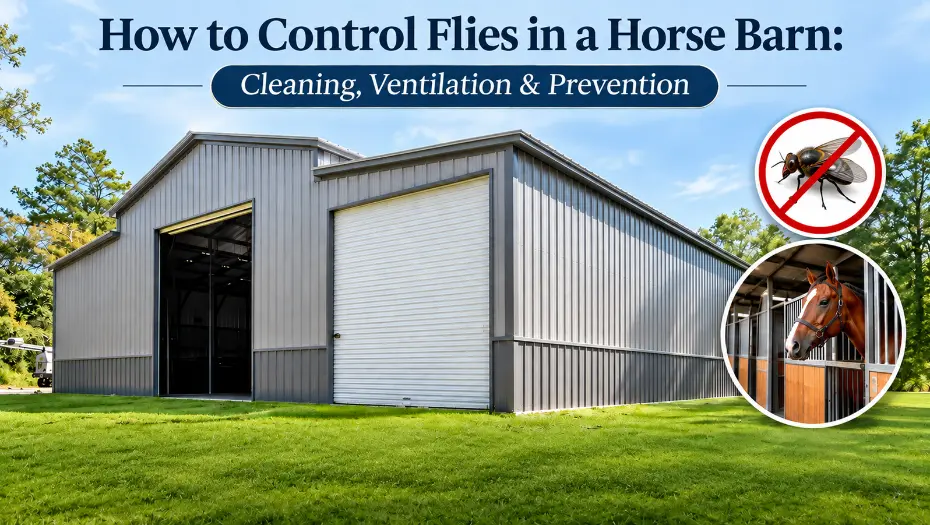
Controlling flies in a horse barn starts with removing the conditions that allow them to breed. Regular manure removal, dry bedding, clean feeding areas, proper drainage, and good airflow are the foundations of an effective fly-control routine. Screens, fans, traps, and horse-safe fly protection can provide additional support, but they work best when the barn is kept clean and dry.
Flies are more than an everyday nuisance. They can irritate horses, cause painful bites, contribute to skin problems, and make animals uncomfortable in their stalls and paddocks. Whether you manage a small private stable or a larger equestrian facility, a consistent prevention plan can help reduce fly activity throughout the warmer months.
Here are practical ways to manage flies while keeping your horse barn cleaner, drier, and more comfortable.
Must Read: What an $8 Billion Texas Data Center Project Reveals About the Future of Metal Building Construction
1. Remove Manure and Soiled Bedding Regularly
Manure management is one of the most important parts of controlling flies around horses. House flies and stable flies can develop in moist organic material, including manure mixed with wet bedding, spilled feed, and decaying hay.
A dirty horse stall can provide suitable breeding conditions even when the rest of the barn looks clean.
Follow a regular cleaning routine:
- Remove manure and wet bedding from stalls at least daily.
- Clean corners and areas beneath feeders where waste can collect.
- Remove manure from paddocks and high-traffic areas regularly.
- Keep aisles, wash areas, and grooming spaces free of organic debris.
- Clean manure forks, wheelbarrows, and waste containers as needed.
Pay particular attention to areas that remain damp. A small patch of wet bedding beneath a water bucket or along a stall wall can become a recurring problem if it is overlooked.
Manage manure after removing it
Moving manure out of the stall is only the first step. The storage area also needs attention.
Keep manure piles away from stable entrances and areas where horses spend most of their time. Cover or properly manage stored manure to limit moisture and reduce fly access. Managed composting or spreading manure appropriately can also help make it less suitable for fly development.
Follow local manure-management and environmental requirements, particularly where runoff could reach nearby waterways.
Penn State Extension identifies manure and moisture management as central parts of fly control on horse farms. Its guidance also explains why removing suitable breeding material is generally more effective than relying only on treatments for adult flies.
2. Keep Horse Stalls and Bedding Dry
Moisture encourages fly development. Even if manure is removed frequently, damp bedding, wet hay, leaking waterers, and muddy areas can continue attracting flies.
Inspect every horse stall for moisture sources, including:
- Leaking water buckets and automatic waterers
- Wet bedding beneath feeding stations
- Poorly drained stall floors
- Water entering through doors or wall openings
- Damp hay or feed left on the ground
- Moisture collecting around wash areas
Replace wet bedding promptly and allow cleaned areas to dry before adding fresh material.
Bedding selection can also influence fly management. Penn State Extension notes that sawdust may support fewer developing flies than some other bedding materials, although the best choice depends on availability, horse comfort, dust levels, and stable-management practices.
Do not assume that adding a drying product will solve a persistent moisture problem. Find and correct the source of the water first.
3. Improve Ventilation and Air Circulation
Good ventilation helps remove warm, humid, stale air from a horse barn. It can also help bedding and surfaces dry more quickly, reducing some of the damp conditions that encourage fly breeding.
A poorly ventilated stable may allow moisture, odors, and dust to accumulate. Improving air movement can make the environment more comfortable for horses while supporting a broader sanitation routine.
Consider these ventilation improvements:
Install suitable fans: Outdoor-rated fans can improve air circulation in stable areas. Position them to create useful airflow without directing uncomfortable drafts at horses.
Use high-level openings: Properly designed ridge vents and other high-level openings can help warm, moist air escape.
Maintain windows and openings: Clean and inspect windows, vents, and other openings to make sure airflow is not blocked.
Consider screened openings: Fly screens or mesh can reduce the number of insects entering enclosed areas, particularly feed rooms and tack rooms.
Keep ventilation paths clear: Stored equipment, hay, and supplies should not obstruct important air openings.
Fans may also make it harder for some flies to land. However, ventilation is not a substitute for removing manure and wet organic material.
A steel barn can be planned with suitable ventilation openings, fans, and other airflow features. The final design should consider the building’s dimensions, local climate, intended use, and the needs of the horses.
4. Keep Feed, Hay, and Water Areas Clean
Feed spills and decaying hay are often overlooked sources of fly activity. When grain, hay, or other organic material becomes wet, it can attract flies and create additional breeding areas.
Make feeding-area maintenance part of the daily barn routine.
- Clean spilled grain immediately.
- Store feed in sealed, pest-resistant containers.
- Keep hay dry and protected from rain.
- Remove old or moldy feed promptly.
- Clean feed buckets and troughs regularly.
- Avoid allowing wet hay and bedding to accumulate around feeding stations.
Water management is equally important. Repair leaking pipes, buckets, and automatic waterers. Keep the ground around water stations well drained so that mud and standing water do not become persistent problems.
Mosquitoes are different from manure-breeding flies. They develop in standing water, so emptying or managing containers that collect rainwater is important for reducing mosquito breeding around the property.
5. Use Screens, Traps, and Physical Fly Barriers
Physical controls can reduce the number of flies entering the barn or bothering horses. They are especially useful when combined with regular cleaning and moisture management.
Install screens and mesh
Screens on suitable windows and doors can help limit insect entry while allowing air to circulate. Choose materials and fittings that are appropriate for stable conditions and do not create hazards for horses.
Place fly traps strategically
Sticky traps and other suitable fly traps can help capture adult flies and monitor activity. Place them where horses cannot reach them, and follow the manufacturer’s instructions for safe use.
Traps should be positioned according to the type of fly being targeted. Not all traps attract or capture every species equally well.
Use horse fly sheets and masks
Fly sheets, masks, and leg protection can provide a physical barrier against biting flies. Check them regularly to make sure they fit correctly and do not rub, restrict movement, or cause skin irritation.
Physical protection is particularly useful when horses spend time outdoors, where barn cleaning alone cannot eliminate exposure.
Also Read: How Much Does a Metal Barn Cost in Arkansas? 2027 Price Guide
6. Identify the Type of Fly Before Choosing a Treatment
Different flies behave differently, so identifying the pest can help you choose the right control method.
| Fly type | Common behavior or concern | Useful prevention approach |
|---|---|---|
| House flies | Gather around feed, manure, and decaying organic material | Sanitation, feed management, and suitable traps |
| Stable flies | Bite horses, often around the legs and lower body | Remove moist organic debris and use physical protection |
| Face flies | Gather around the horse’s eyes and face | Appropriate fly masks and horse-safe repellents |
| Mosquitoes | Breed in standing water and bite horses | Remove standing water and use suitable barriers |
| Horse flies | Larger biting flies that can cause painful bites | Shade, turnout management, and physical protection |
If fly activity remains high despite good sanitation, identify where the insects are gathering and where they may be breeding. The location of the problem can help determine whether you need to improve manure management, remove standing water, adjust traps, or address another source.
For persistent problems, consult an equine veterinarian or qualified pest-management professional.
7. Use Insecticides and Biological Controls Carefully
Insecticides may help reduce adult fly populations, but they should be treated as one part of an integrated pest management plan rather than the primary solution.
Some products are intended for use on horses, while others are designed for application to building surfaces or specific pest areas. These products are not interchangeable.
Before using any treatment:
- Confirm that the product is approved for the intended use.
- Read and follow the complete product label.
- Keep horses away from treated areas for the period specified by the label.
- Follow any ventilation, drying, and re-entry instructions.
- Avoid spraying feed, water, or animal-contact surfaces unless the label specifically permits it.
- Consult your veterinarian if a horse has skin sensitivities or other health concerns.
Biological controls, such as commercially supplied parasitic wasps, may also help manage certain manure-breeding flies. These tiny beneficial insects attack developing fly pupae and do not sting horses or people. Their effectiveness depends on the fly species, manure conditions, and management practices.
Avoid applying insecticides indiscriminately because some treatments can also affect beneficial insects.
8. Design Your Horse Barn to Make Fly Prevention Easier
Barn design can influence how easily you maintain a clean, dry, and well-ventilated environment. A practical layout makes it easier to remove manure, manage feed, control moisture, and inspect areas where flies may breed.
When planning or upgrading a horse barn, consider:
Easy-to-clean stalls: Choose floor and wall arrangements that allow routine cleaning without leaving difficult-to-reach waste pockets.
Good drainage: Plan the site and floor layout to prevent water from collecting around stalls, entrances, and water stations.
Adequate ventilation: Include suitable openings and airflow systems based on the building’s size and intended use.
Organized feed storage: Keep hay, grain, and supplements in designated areas protected from moisture and pests.
Accessible manure storage: Plan a convenient waste-removal route that keeps manure handling separate from horse activity areas.
Safe openings and barriers: Use suitable screens, doors, and partitions without creating sharp edges or entrapment hazards.
Horse metal barns and horse steel barns can be configured for different stable layouts, but the material alone does not prevent fly problems. A well-designed steel barn still needs proper cleaning, ventilation, drainage, and daily maintenance.
For horse owners considering a new structure, explore metal horse barns and metal barn options to review building styles and configurations.
You Might Like: How to Improve Ventilation in a Metal Horse Barn
9. Create a Simple Horse Barn Fly-Control Routine
A consistent routine is easier to maintain than occasional deep cleaning after flies become a serious problem.
| Frequency | Fly-prevention task |
|---|---|
| Daily | Remove manure and wet bedding from stalls |
| Daily | Clean spilled feed and inspect water buckets |
| Daily | Check for standing water and leaking waterers |
| Weekly | Inspect manure storage, drains, and damp corners |
| Weekly | Clean or replace traps according to product instructions |
| Weekly | Inspect screens, doors, and ventilation openings |
| Seasonally | Review the fly-control plan before warm weather |
| As needed | Consult a veterinarian or pest-management professional about persistent fly activity |
The exact schedule may need to change with the number of horses, weather, bedding type, and stable-management system. During warm, wet periods, inspect potential breeding areas more frequently.
Final Thoughts
Controlling flies in a horse barn requires more than hanging a few traps or applying insect spray. The most effective approach starts with removing manure, keeping stalls dry, managing feed waste, improving airflow, and preventing standing water.
A thoughtfully designed horse barn can make these tasks easier by providing accessible stalls, good drainage, organized storage, and suitable ventilation. Whether you manage an existing stable or are planning new horse metal barns, consistent maintenance and a practical fly-control routine can help create a cleaner and more comfortable environment for your horses.
Frequently Asked Questions
Expand each item below to explore a few helpful answers before moving to the next blog post.
Related articles