Loading...
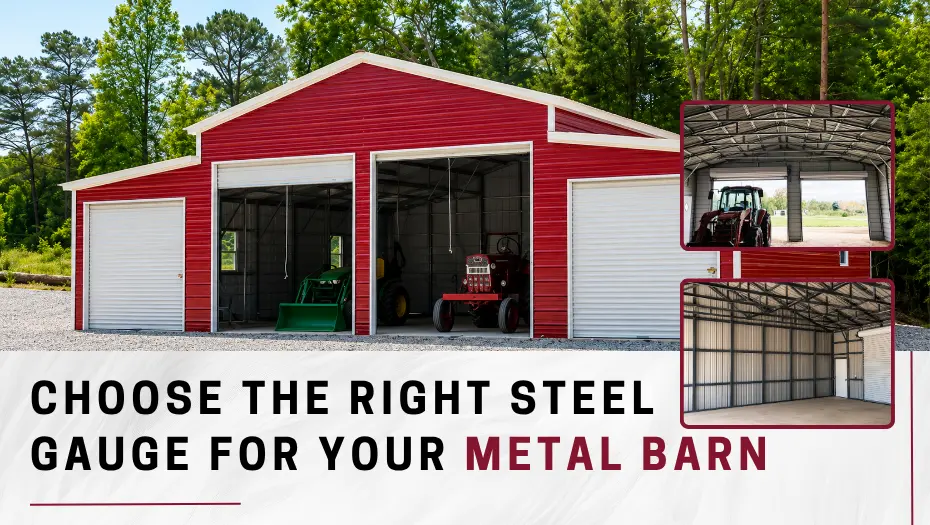
Building a metal barn is a significant investment, and one of the most important decisions you will make is choosing the right steel gauge. Get it right, and your barn will stand strong for decades. Get it wrong, and you could end up with costly repairs, or worse, a structure that fails under pressure.
So what exactly is a steel gauge? It refers to the thickness of the steel used in your barn’s frames and roof panels. The metal gauge directly affects how strong, durable, and weather-resistant your building will be, and it has a big impact on the overall cost.
For most metal barns, you will be choosing between four key gauges: 12 and 14 gauge for structural frames, and 26 and 29 gauge for roof panels. Whether you are putting up a custom barn building or a large commercial metal barn, understanding steel gauge thickness will help you make the right call from day one.
What Is the Best Steel Gauge for a Metal Barn?
12-gauge steel is the strongest option, ideal for commercial builds and high wind or heavy snow areas. 14-gauge is the go-to for standard residential barns. For roofing, 26-gauge offers better durability while 29-gauge keeps costs down for mild-climate builds. But, which would be the best steel gauge for your farm building depends on many factors because everyone has different needs and budgets, and the climate of their region also affects the decision.
What Is Steel Gauge?
Here is the part that trips up a lot of people: steel gauge works backwards from what you might expect. The lower the gauge number, the thicker and stronger the steel. So 12-gauge steel is significantly thicker than 14-gauge, and 26-gauge is thicker than 29-gauge.
This inverse relationship matters a lot when you are comparing options. A steel gauge chart makes it easy to see the difference at a glance, which is exactly what the table below is for.
Steel Gauge Thickness Chart:
|
Gauge |
Thickness (Approx) | Use Case |
Best For |
|
12 Gauge |
~0.1046 inches | Heavy-duty frames |
Commercial, high wind/snow |
|
14 Gauge |
~0.0747 inches | Standard frames |
Residential barns, mild climates |
|
26 Gauge |
~0.0179 inches | Roof panels (strong) |
All climates, preferred for durability |
|
29 Gauge |
~0.0142 inches | Roof panels (economy) |
Mild climates, budget builds |
This steel gauge chart covers the four gauges you will encounter most often when shopping for a metal barn. Keep it handy as a reference when comparing quotes from builders.
12 Gauge vs 14 Gauge Steel: Which Is Better?
Both 12 and 14 gauge steel are used for the main structural frames of metal barns, but they are built for different jobs. Choosing between them comes down to where you live, what you are using the barn for, and how much you want to spend upfront.
12 Gauge Steel:
With a 12 gauge steel thickness of approximately 0.1046 inches, this is the heavy hitter. It is thicker, stiffer, and built to handle serious loads. If you are in a region prone to high winds, heavy snowfall, or you need a barn that will see heavy daily use, 12 gauge is the right choice.
- Best for high wind and hurricane-prone areas
- Handles heavy snow loads without structural stress
- Recommended for commercial barns and large livestock facilities
- Longer lifespan with less maintenance over time
14 Gauge Steel:
At a 14 gauge steel thickness of approximately 0.0747 inches, this gauge is the standard choice for most residential barns. It offers solid strength for everyday use without the higher cost of 12 gauge.
- More cost-effective for standard residential builds
- Ideal for mild to moderate climates
- Works well for storage barns, hobby farms, and smaller setups
- Still durable and reliable when properly maintained
12 gauge vs 14 gauge steel comparison:
|
Factor |
12 Gauge Steel |
14 Gauge Steel |
|
Thickness |
~0.1046 inches (thicker) |
~0.0747 inches |
|
Strength |
Heavy-duty, maximum strength |
Standard, reliable |
|
Best Climate |
High wind, heavy snow |
Moderate, mild climates |
|
Best Use |
Commercial, farm/livestock |
Residential storage barns |
|
Cost |
Higher upfront investment |
More budget-friendly |
|
Longevity |
Exceptional |
Good |
If you are building a livestock barn or a facility that will house animals year-round, 12 gauge frames are worth the extra investment. For a simple storage build in a mild climate, 14 gauge does the job well.
Is 26 Gauge Thicker Than 29 Gauge?
Yes. 26 gauge steel is thicker and more durable than 29 gauge steel. It offers better resistance to weather, dents, and long-term wear, while 29 gauge is a more budget-friendly option suited to milder conditions. Let’s know them more in the space below.
26 Gauge Roof Panels:
At 0.0179 inches thick, 26 gauge panels give you noticeably better performance on the roof. They hold up better against hail, heavy rain, wind-driven debris, and the long-term wear that comes with harsh weather. If your metal roof gauge recommendations come from a builder in a high-rainfall or snow-heavy region, 26 gauge is almost always what they will suggest.
- Thicker and more impact-resistant
- Better long-term durability in tough climates
- Recommended for farm, livestock, and commercial builds
- Works well with both standard and vertical roof styles
29 Gauge Roof Panels
At 0.0142 inches, 29 gauge is the lighter and more affordable roofing option. It is perfectly adequate for mild climates where extreme weather is not a concern. If budget is your main priority and you are building in a moderate area, 29 gauge gets the job done without overspending.
- Lower material cost
- Fine for dry, mild climates with minimal weather stress
- Suitable for small residential storage barns
- Not recommended for heavy snow or high wind regions
26 gauge vs 29 gauge roof panel comparison:
|
Factor |
26 Gauge Steel |
29 Gauge Steel |
|
Thickness |
~0.0179 inches (thicker) |
~0.0142 inches |
|
Durability |
Higher, resists dents/weather |
Standard |
|
Best Climate |
Harsh weather, heavy rain/snow |
Mild and dry climates |
|
Cost |
Moderate |
Budget-friendly |
|
Recommended For |
Farm, livestock, commercial |
Residential storage |
Not sure which roof style works best with your chosen gauge? Vertical roof barns save more money in the long run, and they pair especially well with 26-gauge panels for maximum weather resistance.
How to Choose the Right Steel Gauge for Your Needs
Now that you know the options, here is how to match the right gauge to your specific situation. Here are some factors to consider to choose the right steel gauge for your needs.
1. Climate
- High wind zones: go with 12 gauge frames and 26 gauge roofing
- Heavy snow regions: thicker panels are non-negotiable
- Mild climates: 14 gauge frames and 29 gauge roofing can work well
2. Usage
- Livestock housing: stronger 12 gauge frames hold up to daily wear and animal movement
- General storage: 14 gauge frames are typically sufficient
- Commercial operations: always default to 12 gauge for structural integrity
3. Budget
Thicker gauges cost more upfront but save money over time through reduced maintenance and repairs. Think of it as paying now versus paying more later. Check out this detailed cost breakdown of a metal barn to understand where gauge choices fit into your overall budget.
4. Local Building Codes
Always check your local regulations before finalizing your gauge choice. Many areas in wind or snow zones have minimum steel gauge requirements for permitted structures. Ignoring this can mean failed inspections or having to rebuild entirely.
Recommended Steel Gauge Combinations for Metal Barns
Not sure where to start? These tried-and-tested combinations cover most situations.
Best steel gauge combinations by barn type:
|
Barn Type |
Frame Gauge | Roof Gauge |
Why |
|
Residential barn |
14 Gauge | 29 Gauge |
Budget-friendly, moderate conditions |
|
Farm / livestock barn |
12 Gauge | 26 Gauge |
Strong, weather-resistant, long-lasting |
|
Commercial metal barn |
12 Gauge | 26 Gauge |
Maximum strength, heavy-duty use |
|
Harsh climate / snow |
12 Gauge | 26 Gauge |
Built to handle extreme loads |
If you are planning a step down barn or a multi-purpose facility, a 12 gauge frame with 26 gauge roofing is almost always the right foundation to build on.
Common Mistakes to Avoid
Picking the wrong steel gauge is an easy mistake to make, especially when you are focused on upfront costs. Here are five missteps worth avoiding.
- Choosing on Price Alone: The cheapest gauge rarely delivers the best value over a 20-year lifespan. Factor in long-term durability, not just the initial quote.
- Ignoring Local Building Codes: Non-compliant structures cost significantly more to fix after the fact. Always check local regulations before finalizing your gauge selection.
- Using 29 Gauge in Heavy Snow Areas: Thinner panels struggle under sustained snow loads. This is one of the most common and costly mistakes in cold-climate builds.
- Not Thinking Long-Term: A slightly thicker gauge today means fewer repairs and replacements down the road. Small upfront difference, big long-term payoff.
- Skipping Professional Advice: A reputable barn builder will always recommend the right gauge for your climate and use case. That expertise is worth leaning on.
Why Steel Gauge Matters in Galvanized Steel Buildings
When you are investing in a galvanized steel building, the gauge of steel you choose works hand in hand with the zinc coating to determine how long your structure will last.
Galvanized steel is coated with a layer of zinc that acts as a barrier against rust, moisture, and corrosion. The thicker the steel, the more material there is to protect. A 12 gauge galvanized frame will outlast a thinner panel in the same environment simply because there is more base material working alongside that zinc coating.
For anyone building in humid, coastal, or high-rainfall environments, combining a thicker gauge with quality galvanized steel is the best long-term investment you can make. Want to explore barn options built with these principles in mind? Take a look at the features that make up a great horse barn or browse the range of custom barn buildings available.
Long Story Short:
Choosing the right steel gauge is not complicated once you understand the basics. Match the gauge to your climate, your use case, and your long-term goals. For most residential builds, 14 gauge frames and 29 gauge roofing get the job done. For anything commercial, livestock-facing, or weather-exposed, 12 gauge frames and 26 gauge roofing is the combination to trust. The right gauge today means a barn that works harder, lasts longer, and costs less to maintain over time.
Frequently Asked Questions
Expand each item below to explore a few helpful answers before moving to the next blog post.
Related articles