Loading...
Metal barns are everywhere right now. From farms to storage spaces to workshops, their popularity is growing fast. Many sellers highlight durability, fast installation, and cost savings. But there are a few things buyers usually discover only after the barn is installed.
If you are planning to invest in metal barns, this guide will give you the full picture. If you are exploring options, check out something like a 54x45x12 vertical roof metal barn to understand how these structures look and function in real scenarios. And then come back here for detailed information about prefabricated barns.
Quick Facts About Metal Barns Most Buyers Miss
Before going deep, let’s quickly look at some truths most people overlook:
- Not all steel barns are built with the same quality
- Gauge thickness directly affects durability
- Permits can slow down your entire project
- Insulation is often ignored until problems start
- Site preparation cost is usually not included in the base price
This is where most expectations and reality start to differ. Let’s break it down step by step.
The Real Cost of Metal Barns (Beyond the Advertised Price)
At first glance, prefab metal barns look like a great deal. But the listed price is only a starting point.
What does the base price include?
Usually, the base price covers the structure frame and panels. That’s it.
What increases the final cost
Here are the add-ons that push your total investment higher:
- Concrete slab or foundation
- Delivery and installation charges
- Certification for wind and snow loads
- Customizations like doors, windows, and insulation
If you are planning a prefabricated barn or steel barn building, always ask for a full cost breakdown. Many buyers feel misled here. Sellers should be clearer, but they often are not.
Steel Gauge Matters More Than You Think
Not all steel is equal. The thickness of steel plays a huge role in how your barn performs over time.
12 gauge vs 14 gauge (for side panels)
- 12 gauge steel is thicker and stronger
- 14 gauge steel is lighter and used for basic needs
You can explore more in detail in a guide like 12 gauge vs 14 gauge.
26 gauge vs 29 gauge (for roofing panels)
- 26 gauge steel is thicker and more durable than a 29-gauge steel frame.
- 29 gauge steel is lighter but more economical.
Explore more about 26 gauge vs 29 gauge and analyze which option suits your climate and budget.
Why it matters
- Better resistance to wind
- Higher load capacity for snow
- Longer lifespan
If you are in an area with harsh weather, choosing the right gauge is not optional.
How Metal Barns Perform in Extreme Weather
Weather resistance is a big reason people choose metal barn buildings, especially in areas with strong winds, snow, or heat. But performance depends on design and certification, not just the material.
Many buyers assume metal barns can handle everything, but they only perform well when built for your local weather conditions.
Wind Resistance
Metal barns are designed to handle specific wind speeds, but not all come with the same rating. Certified structures are built based on local wind zones, which improves safety.
Proper anchoring and the right steel gauge make a big difference. Without these, even a strong structure can struggle during storms.
Snow Load
Snow buildup can put heavy pressure on the roof over time. If the structure is not designed for it, this can lead to damage. A vertical roof metal barn works better in snowy areas because snow slides off easily instead of collecting on top.
Heat Inside the Barn
Metal heats up quickly, which can make the inside uncomfortable during hot weather. This is a common issue that many buyers realize later.
Adding insulation and ventilation helps control temperature. Honestly, this is something you should plan from the start, not fix later.
What Nobody Tells You About Condensation in Metal Barns
This is one of the most common problems in metal barns, yet many buyers only notice it after installation. It may look like a small issue at first, but over time, it can affect the structure, storage, and overall usability of your barn.
Why Condensation Happens
Condensation forms when warm air inside the barn comes in contact with the cooler metal surface of the roof or walls. This temperature difference creates moisture, which shows up as a “sweating” effect.
It is more common in areas with humidity, temperature changes, or when the barn is used for livestock or storage that releases moisture.
Problems Caused
If not managed, condensation can lead to several issues:
- Water dripping from the roof onto equipment or animals
- Rust and corrosion over time
- Damage to stored items like hay, tools, or machinery
- Unhealthy conditions for livestock due to excess moisture
Even a well-built metal barn structure can face these problems if moisture control is ignored.
How to Fix It
The good news is that condensation can be controlled with the right setup:
- Use proper insulation like single bubble, double bubble, and woven R-17 insulation
- Install vapor barriers to reduce moisture buildup
- Ensure good ventilation for airflow inside the barn
Hidden Costs of Site Preparation for Metal Barn Buildings
Before your metal barn building is installed, the site needs to be properly prepared. This step is often underestimated, but it plays a huge role in the stability and lifespan of the structure. Skipping or rushing site prep can lead to issues later.
1. What Site Prep Includes
- Land leveling to create a stable and even base
- Drainage setup to prevent water accumulation around the structure
- Choosing between concrete or gravel, depending on your use case
Concrete offers a strong and permanent foundation, while gravel is more flexible and works well for certain types of prefab metal barns.
2. Important Note
Most prefab barns or prefabricated barn packages do not include foundation or site preparation costs in the base price. This means you need to plan and budget for it separately.
This is where many budgets fail. In my view, site prep is not an extra cost; it is a core part of the project and should be planned from day one.
Permits Can Delay Your Metal Barn Project
Getting approval is not always quick or easy. Here are some ways you need to follow.
What you need to check
- Local building codes
- Certification requirements
- HOA restrictions
Requirements vary by state and county, so you need to verify before ordering your barn. Many buyers order first and check permits later. That is a mistake that can cost time and money.
Customizing Prefabricated Barns Isn’t Always Simple
Customization sounds exciting when buying prefabricated barns, but in reality, there are practical limits you need to understand. These structures are pre-engineered, which means not every design change is possible once the layout is set.
Many buyers assume they can tweak things later, but most decisions need to be finalized before manufacturing begins.
Common Limitations
- Fixed design structures that follow standard dimensions
- Limited door and window placement based on frame spacing
- Structural restrictions that prevent major layout changes
These limitations exist to maintain strength and stability in metal barn structures, but they can restrict creative designs.
If you want more flexibility, you can explore options like customization options for a step-down barn, which offer better design adaptability compared to standard prefab layouts.
Expansion Challenges
Expanding a prefab barn later is possible, but not always simple. It may require modifying the existing structure, adjusting panels, or even reworking the foundation.
Planning for future expansion during the initial design stage is always a smarter approach.
Are Metal Barns Suitable for Every Use?
Metal barns are used for many purposes, but one setup does not fit all. The way you design the structure depends on what you plan to use it for. Simply choosing metal barn structures or steel barn buildings is not enough. You need to adapt them based on specific needs.
Horses → Ventilation Required
A proper horse metal barn needs strong ventilation and a comfortable environment. Horses are sensitive to heat and poor air quality, so airflow becomes very important.
Metal barns can work well for horses, but only when you include vents, proper openings, and sometimes insulation to maintain a balanced temperature inside.
Hay Storage → Moisture Control
Hay storage requires strict moisture control. Even a small amount of condensation can damage hay and reduce its quality.
To avoid this, you need insulation, ventilation, and sometimes vapor barriers. Without these, even well-built steel barn buildings can struggle with moisture issues.
Livestock → Airflow + Flooring
A livestock metal barn building needs proper airflow, durable flooring, and a clean environment. Animals require fresh air and dry conditions to stay healthy.
Adding features like raised flooring, drainage, and ventilation systems makes metal barn structures more suitable for livestock use.
Metal Barns vs Wooden Barns: The Hidden Trade-Offs
Choosing between metal and wood is not just about cost. It includes many factors that you must consider.
Metal barns
- Strong and durable
- Lower maintenance
- Faster installation
Wooden barns
- Better natural insulation
- More traditional look
- Easier customization
Are Metal Barns Really Worth the Investment?
This is the big question most buyers ask before making a decision. Metal barns offer long-term value, but only when you plan the design, materials, and usage properly.
1. Lifespan
Metal barns can last for decades when built with good quality steel and proper installation. Factors like steel gauge, coating, and weather exposure play a big role in how long the structure holds up.
With the right setup, many steel barn buildings stay strong for 30 to 50 years or even longer.
2. Maintenance
Maintenance is lower compared to wood, but it is not zero. You may still need to check for rust, tighten fasteners, and maintain coatings over time.
Regular inspection helps prevent small issues from turning into bigger problems, especially in harsh weather conditions.
3. Resale Value
A well-designed and maintained barn can add value to your property. Buyers often see metal barn structures as durable and functional additions.
However, resale value also depends on how well the barn suits practical use, such as storage, livestock, or workspace.
What to Check Before Buying a Metal Barn
Buying a metal barn is a long-term decision, so a quick check before finalizing can save you from future issues. Many buyers focus only on design or price, but the real value comes from what is behind the structure.
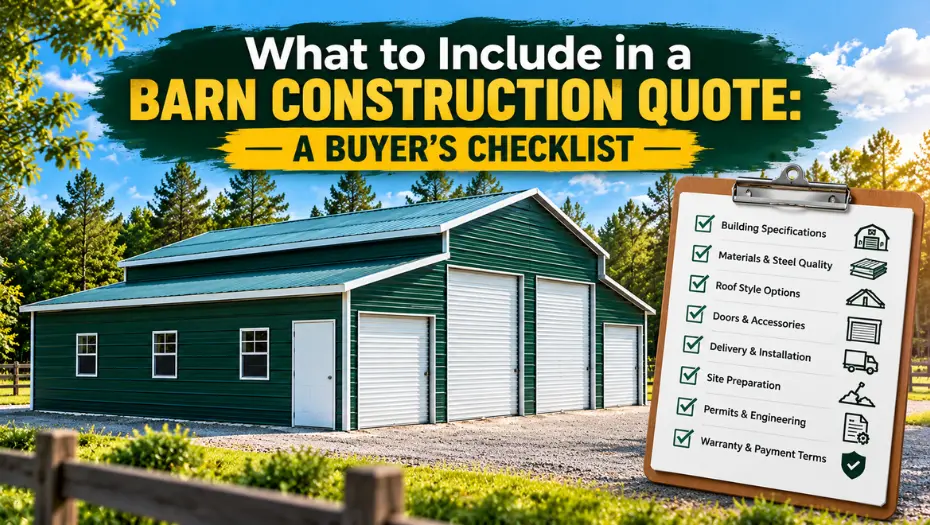
Use this simple checklist to make a smarter decision when investing in metal barn buildings or steel barn buildings.
Checklist-
- Gauge Thickness: Check whether the structure uses 12 gauge or 14 gauge steel. Thicker steel offers better strength, durability, and resistance to harsh weather conditions. For roofing panels, 26 gauge or 29 gauge steel frames are used.
- Wind Rating: Always verify the wind rating based on your location. A certified structure ensures your barn can handle local weather conditions safely.
- Warranty: Look for a clear and reliable warranty on both materials and workmanship. This gives you confidence in the quality of the build.
- Installer Credibility: Choose an experienced and trusted installer. Even the best metal barn structures can fail if not installed properly.
- Permit Requirements: Confirm local permits and building codes before purchase. This helps avoid delays and unexpected changes later.
Before You Invest, Read This Once
Metal barns look simple from the outside, but there is a lot to consider before making a decision. From hidden costs and condensation issues to customization limits and weather performance, every detail matters more than most buyers expect.
The good news is that metal barn buildings can be a smart, long-term investment when planned correctly. Focus on quality, understand your use case, and do not rush the process.
The difference between a great barn and a disappointing one comes down to planning. Get the basics right, and your barn will serve you well for years.
Frequently Asked Questions
Expand each item below to explore a few helpful answers before moving to the next blog post.
Related articles