October 21, 2026


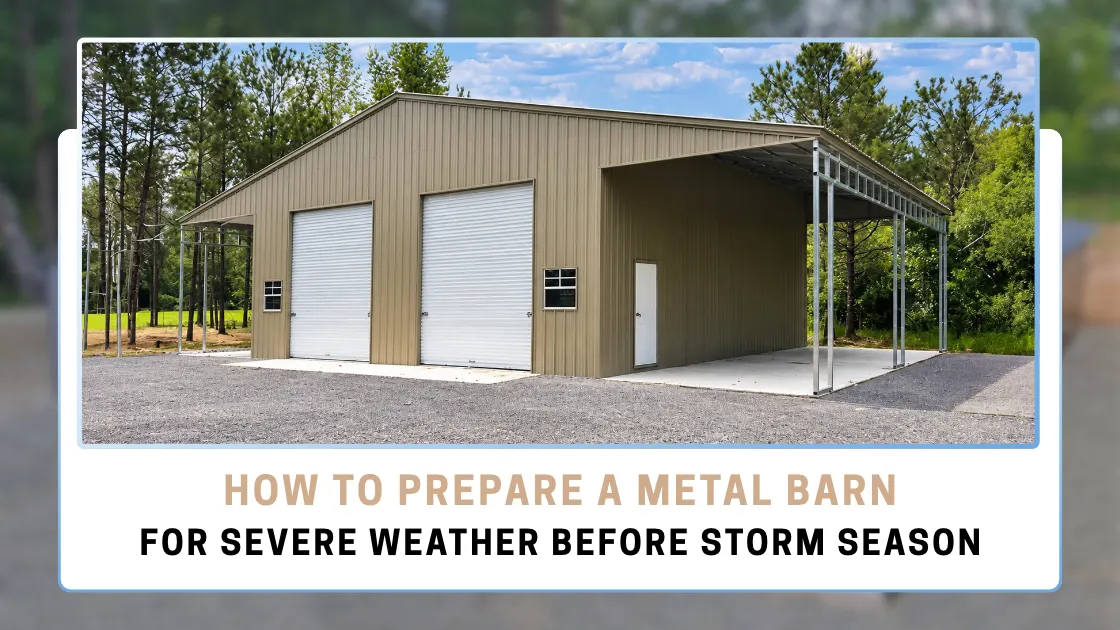
Preparing a metal barn building for severe weather starts with inspecting the roof, wall panels, fasteners, doors, anchoring system, and surrounding drainage before storms arrive. Remove loose objects from the property, correct visible maintenance issues, and confirm that the building was designed for the wind, snow, and other environmental loads applicable to your location.
For US property owners, preparation depends on regional risks. Coastal states may face hurricanes and storm surge, the Great Plains may experience tornadoes and damaging straight-line winds, and northern states can face heavy snow and ice. A properly designed and maintained steel barn building can provide useful protection for equipment, livestock supplies, hay, and farm tools, but no barn should be assumed to withstand every severe-weather event.
Use the following checklist to identify maintenance needs, reduce preventable damage, and prepare your barn before storm season begins.
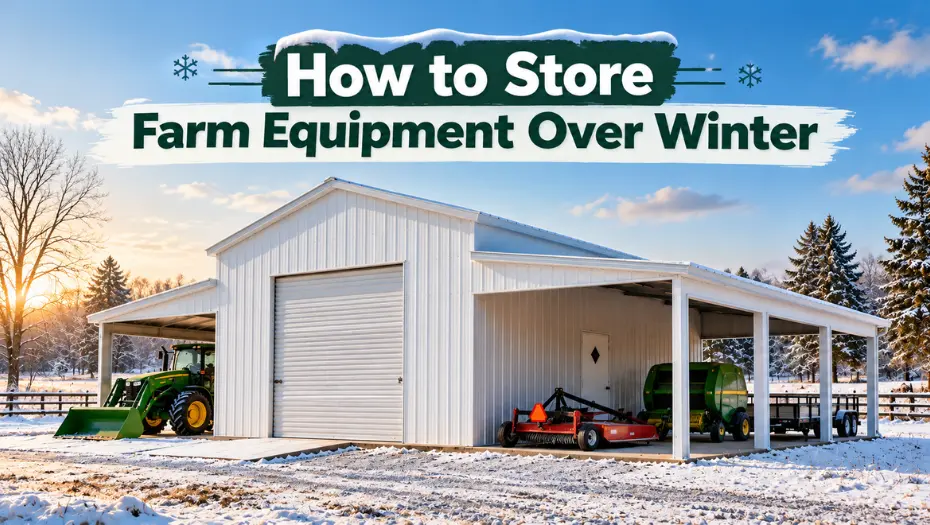
Read Our Latest Guide: How to Store Farm Equipment Over Winter
Severe weather can expose weaknesses that are easy to overlook during normal conditions. Loose panels, deteriorated seals, blocked drainage, unsecured equipment, and damaged connections may become more serious when strong winds, heavy rain, hail, or snow arrive.
A pre-storm inspection helps you identify these issues while there is time to arrange repairs.
Preparing your barn can help you:
Remember that routine maintenance cannot compensate for an inadequate structural design. If you are concerned about the building’s wind resistance, anchoring, or load capacity, consult a qualified building professional.
Start with a visual inspection from the ground and other safely accessible areas. Look for signs of damage, corrosion, loose components, or water entry.
Inspect the roof for visibly displaced panels, damaged edges, loose trim, and signs of leakage. Pay particular attention to areas around ridges, eaves, roof penetrations, and attached lean-tos.
Do not climb onto a metal roof to inspect it without the appropriate training, fall protection, and equipment. Wet metal panels can be extremely slippery, and roof damage may make the structure unsafe to access.
Check for bent panels, damaged corners, visible gaps, and loose or missing fasteners. Look for signs that water is entering around doors, windows, or other openings.
If you notice repeated fastener failures, panel movement, or changes in the building’s shape, have the condition evaluated rather than simply tightening or replacing individual components.
Surface corrosion, damaged coatings, and deteriorated components should be addressed using suitable repair methods. Corrosion near structural connections deserves particular attention because the condition of those connections can affect performance.
| Inspection area | What to look for | Recommended action |
|---|---|---|
| Roof panels | Displacement, visible damage, leaks | Arrange appropriate repairs |
| Wall panels | Bent sections, gaps, corrosion | Assess damage and repair as needed |
| Fasteners | Missing, loose, or damaged fasteners | Follow manufacturer-approved repair procedures |
| Roof edges and trim | Separation, loose trim, water entry | Have the affected area assessed |
| Doors and windows | Damaged seals, poor closure, visible gaps | Repair or replace suitable components |
A metal barn’s resistance to wind depends on more than the panels or roof profile. The building’s frame, bracing, connections, anchors, foundation, and site conditions all play a role.
Check accessible areas around the base of the barn for visible damage, movement, corrosion, or disturbed ground. Look for signs of water erosion near the foundation or anchor locations.
Do not assume that every building uses the same anchoring method. Anchors and foundations must be appropriate for the specific structure, soil conditions, installation, and applicable design requirements.
If you notice movement, loose connections, damaged bracing, or possible anchor failure, contact a qualified professional. Do not attempt improvised structural reinforcement before a storm.
Locate available engineering drawings, installation documentation, permits, and product specifications. If you are buying a new barn, ask what wind and snow loads the proposed configuration is designed to meet and whether documentation is available for local permitting.
This is particularly important in hurricane-prone areas, tornado-prone regions, and locations exposed to significant snow loads.
Heavy rain can cause problems even when the barn itself is in good condition. Water collecting near the building may enter through openings, affect stored materials, or erode soil around the foundation and anchors.
Before storm season:
Avoid directing runoff toward neighboring properties or areas where it could cause erosion. Significant grading or drainage changes should be planned carefully, especially where the building’s foundation or anchors could be affected.
| Weather-related concern | Preventive step |
|---|---|
| Heavy rain | Clear drainage paths and address known leaks |
| Flooding | Review local flood risk and identify a safer location for people and critical equipment |
| Soil erosion | Inspect the ground around the foundation and anchors |
| Water entering under doors | Check thresholds, grading, and drainage |
| Blocked gutters | Remove debris safely and inspect drainage components |
A well-maintained site can help reduce preventable water problems, but it cannot eliminate the risk of flooding from extreme rainfall or rising waterways.
Strong winds can turn loose objects into dangerous debris. Before a storm, inspect the area around your barn and secure items that could be lifted, rolled, or blown into the building.
Prioritize:
Move portable items indoors when it is safe and practical. Secure larger machinery according to the manufacturer’s recommendations, and do not park equipment where it could block emergency exits or access routes.
Avoid storing hazardous materials in a way that could create additional risks during flooding, fire, or building damage.
A metal barn may store hay, animal feed, seed, fertilizer, tools, or other agricultural supplies. Their preparation should reflect the risks from water, wind, and temperature changes.
For hay and feed storage:
If your property includes a metal hay barn, consider how wind-driven rain could reach open sides and how runoff might affect the storage area. Open-sided designs can provide convenient access and ventilation, but they do not offer the same weather barrier as a fully enclosed building.
Do not compromise required ventilation or safe storage practices simply to close off the building before a storm.
Roof design and panel orientation are important considerations when selecting or inspecting a barn, but roof style alone does not establish how well a building will perform during severe weather. Structural engineering, connections, installation, materials, foundation, and site-specific wind or snow loads matter.
| Roof style | What to consider before storm season |
|---|---|
| Vertical Roof Barn | Inspect visible roof panels, edges, fasteners, and connections. Confirm the building’s design specifications for local weather loads. |
| Horizontal Roof Barn | Check for damage, leaks, and loose components. Verify that the configuration is suitable for the site’s environmental requirements. |
| Regular Roof Barn | Review the roof and supporting structure, and confirm applicable wind and snow load requirements. |
Vertical, horizontal, and regular roof configurations should be compared using the complete building specifications—not assumptions that one style is automatically hurricane-proof or tornado-proof.
If you are planning a new custom metal barn, ask the supplier about available engineering documentation, applicable wind and snow load ratings, anchoring requirements, and local building-code compliance.
Doors and windows are practical access points, but damaged hardware and poorly maintained openings can allow water entry and create security or maintenance problems.
Before storm season:
Do not assume that opening barn doors or windows will equalize pressure during a storm. Follow the building manufacturer’s guidance and local emergency instructions. Avoid last-minute modifications that could weaken the structure or interfere with safe operation.
Not every region faces the same hazards. A barn in coastal Florida may need a different preparation plan from a farm in Oklahoma or a rural property in Minnesota.
| Weather hazard | Main preparation priorities |
|---|---|
| Hurricanes | Review local evacuation guidance, wind exposure, flood risk, and the building’s design documentation |
| Tornadoes | Secure loose objects and establish a separate, suitable shelter plan |
| Severe thunderstorms | Monitor alerts, inspect for loose materials, and prepare for damaging wind and hail |
| Heavy rain and flooding | Clear drainage paths and identify flood-prone areas |
| Snow and ice | Review the building’s design requirements and arrange safe inspection after significant accumulation |
| Hail | Inspect exposed panels, doors, windows, and vulnerable equipment after the storm passes |
For official US weather guidance, use the National Weather Service’s severe thunderstorm preparedness advice and tornado safety guidance. These resources emphasize getting to a safe location when dangerous weather approaches.
Important: A metal barn should not automatically be treated as a tornado shelter or safe room. During a tornado warning, follow local emergency instructions and seek a designated storm shelter or other recommended safe location. Do not remain in an ordinary barn or storage building simply because it is enclosed.
Use this checklist before the local storm season or whenever forecasts indicate an elevated risk of severe weather.
Keep dated photographs of the building’s condition and records of repairs. These records may help with maintenance planning and insurance documentation, although coverage depends on the terms of your policy.
Wait until authorities indicate that it is safe to inspect the property. Stay away from downed power lines, unstable structures, exposed wiring, and areas with standing floodwater.
Once conditions are safe:
Do not climb onto a damaged roof or enter a structure that may be unstable. If the frame, anchoring, or foundation appears compromised, obtain a professional assessment before using the building again.
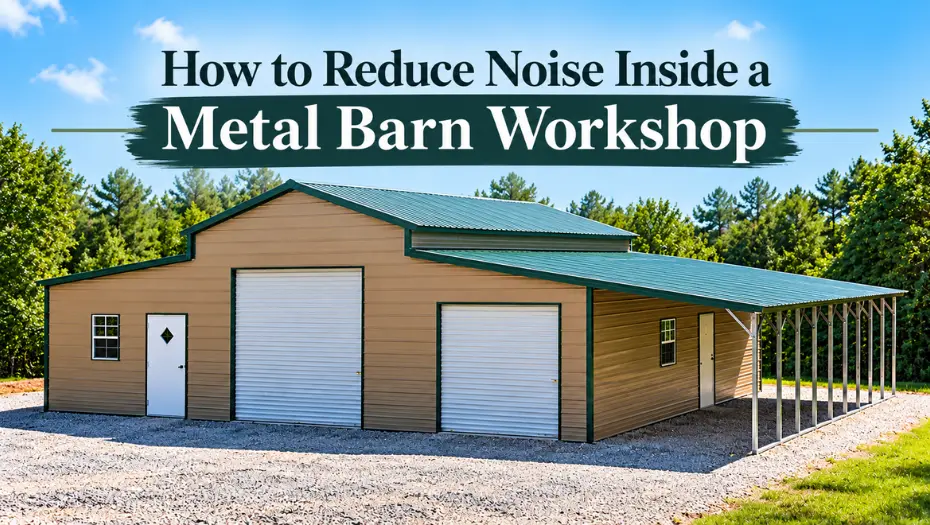
You Might Like: How to Reduce Noise Inside a Metal Barn Workshop
If you are planning a new barn or replacing an older structure, consider how the building will be used and which hazards affect your location. A suitable prefab barn building should be selected using verified specifications, not simply appearance or roof style.
Review:
For example, Viking Barns lists the 48×30×12 Metal Barn Building, which features an enclosed center section and two lean-tos. This layout may be worth reviewing for properties that need a mix of enclosed and covered space. Confirm the current specifications and suitability for your site before making a decision.
You can also explore metal barns from Viking Barns to compare configurations. Ask the supplier about site-specific engineering requirements, available documentation, and installation details.
Also Read: How to Create a Seasonal Maintenance Checklist for Metal Farm Buildings
Inspect visible roof and wall components, address known maintenance issues, clear drainage paths, and secure loose outdoor items before conditions deteriorate. Review local evacuation and flood guidance. Do not assume that a standard barn is designed to withstand hurricane-force winds or storm surge.
An ordinary metal barn or agricultural storage building should not be assumed to provide tornado protection. Follow National Weather Service guidance and seek a designated storm shelter or another recommended safe location when a tornado warning is issued.
No roof style is automatically best for every severe-weather hazard. Compare the building’s engineering, roof assembly, anchoring, foundation, and applicable wind and snow load specifications. Ask for documentation relevant to your property and local building requirements.
Inspect the building before the main storm season in your region, after significant weather events, and whenever you notice leaks, loose components, or other damage. The appropriate inspection frequency also depends on the building’s condition, use, and manufacturer guidance.
Performance depends on the building’s design, installation, anchoring, foundation, condition, and the wind loads it was engineered to meet. Ask for the applicable specifications and engineering documentation rather than relying on general claims about metal buildings.
You Might Like: Barn Financing vs. Rent-to-Own: Comparing Monthly Payments and Total Costs
Preparing a metal barn building for severe weather is a combination of maintenance, site management, equipment preparation, and emergency planning. Inspect visible components, address drainage problems, secure loose materials, and seek professional help when structural damage or anchoring concerns are present.
If you are planning a new barn, choose a configuration based on your property’s needs and local weather requirements. Review the available options from Viking Barns and ask about building specifications and engineering documentation before ordering. Taking these steps before severe weather arrives can help you identify preventable problems and make better-informed decisions about protecting your property.