Loading...
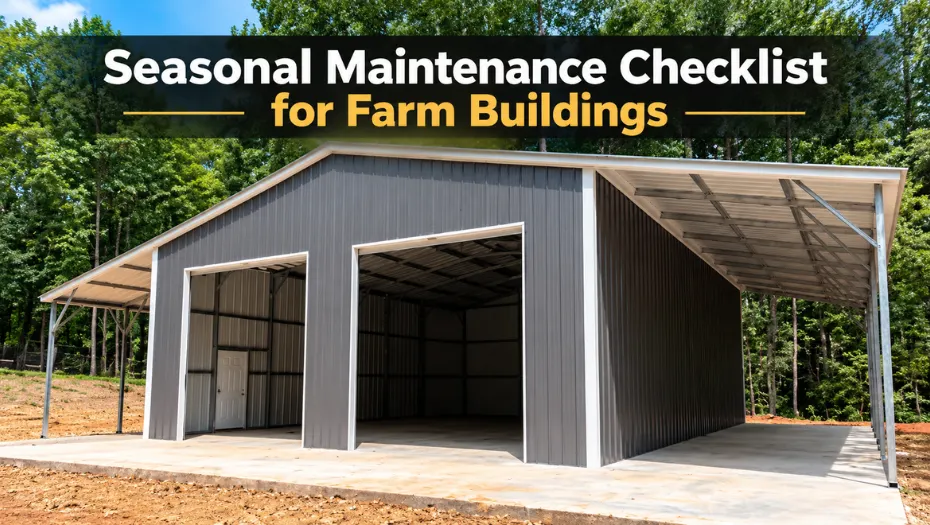
A seasonal maintenance checklist helps farm owners identify small problems with their buildings before they affect equipment, stored supplies, livestock areas, or daily operations. The best approach is to inspect the roof, exterior panels, fasteners, doors, drainage, foundation, and interior conditions at least twice a year, with additional checks after severe weather.
Across the United States, farm buildings face different challenges depending on their location. Heavy snow can stress roofs in northern states, summer heat can affect interior temperatures in the South, and wind-driven rain can expose weaknesses in buildings across many regions. Regular inspections help you prepare for these changing conditions.
Whether you operate a metal farm building, or other metal building, a planned maintenance routine makes it easier to track repairs and protect the building’s intended use.
This guide provides a practical, season-by-season checklist for maintaining farm buildings throughout the year.
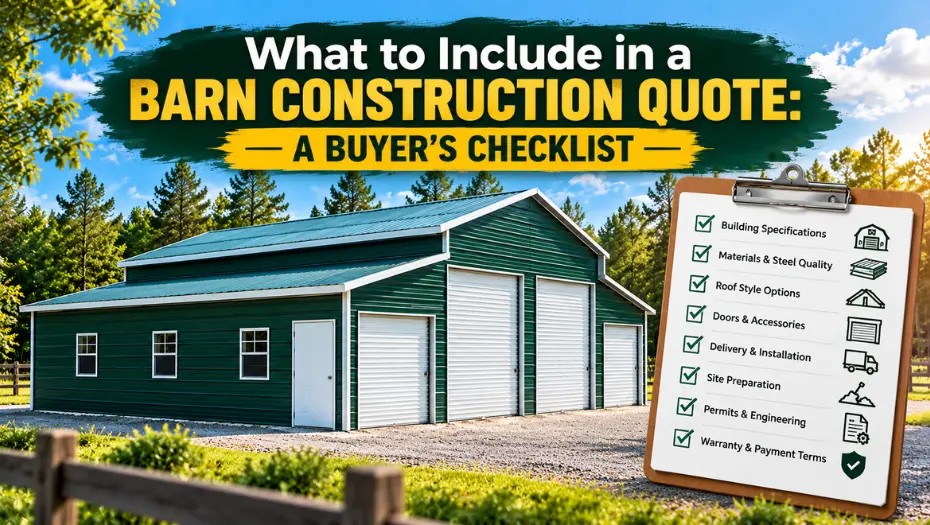
You Might Like: What to Include in a Steel Barn Construction Quote: A Buyer’s Checklist
What Should a Farm Building Maintenance Checklist Include?
A complete maintenance checklist should cover the building’s exterior, structural components, drainage, doors, and interior. Start with a visual inspection, record any concerns, and arrange professional evaluation when you notice possible structural damage.
| Building component | What to inspect | Why it matters |
|---|---|---|
| Roof and ridge caps | Loose panels, dents, debris, and visible gaps | Helps identify potential water entry |
| Wall panels | Scratches, corrosion, loose edges, and damage | Protects exterior surfaces |
| Fasteners and connections | Missing screws, rust streaks, and visibly loose connections | Helps identify areas needing attention |
| Doors and openings | Tracks, hinges, seals, and alignment | Supports safe, reliable access |
| Gutters and drainage | Blockages, leaks, erosion, and standing water | Directs water away from the building |
| Foundation and anchors | Cracks, shifting, exposed anchors, and soil movement | Helps identify potential stability concerns |
| Interior | Water stains, condensation, pests, and damaged insulation | Protects stored materials and working areas |
Keep a written or digital record of inspection dates, photographs, repairs, and follow-up work. This makes it easier to compare conditions over time and identify recurring issues.
Spring Maintenance Checklist for Farm Buildings
Spring is an ideal time to inspect your farm building after winter weather and prepare it for increased seasonal activity. Snow, freezing temperatures, ice, and winter storms can leave behind damage that may not be immediately noticeable.
1. Inspect the Roof and Exterior Panels
Walk around the building and inspect visible roof edges, ridge caps, wall panels, and trim. Look for displaced panels, dents, missing fasteners, scratches, or signs of water intrusion.
- Check the interior ceiling and walls for water stains.
- Look for rust spots or damaged protective coatings.
- Remove accessible debris without climbing onto the roof.
- Arrange a qualified inspection if you notice sagging, damaged framing, or suspected structural movement.
Never walk on a metal roof unless a qualified professional has confirmed the appropriate access and safety procedures.
2. Check Doors, Hinges, and Tracks
Farm buildings often experience frequent movement of tractors, trailers, livestock, and equipment. Inspect sliding doors, roll-up doors, hinges, latches, and tracks for damage or misalignment.
Lubricate components according to the manufacturer’s instructions and keep tracks free of dirt and debris. Do not adjust high-tension door springs yourself; these components can cause serious injuries.
3. Inspect Drainage Around the Building
Spring rain can reveal drainage problems that developed during winter. Check gutters, downspouts, and the soil around the building.
- Clear accessible leaves and debris from gutters.
- Confirm that downspouts direct water away from the foundation.
- Look for erosion, standing water, or soft ground near support points.
- Check whether runoff is moving toward neighboring property or access roads.
Correcting drainage problems early can help protect the foundation and reduce moisture exposure around the building.
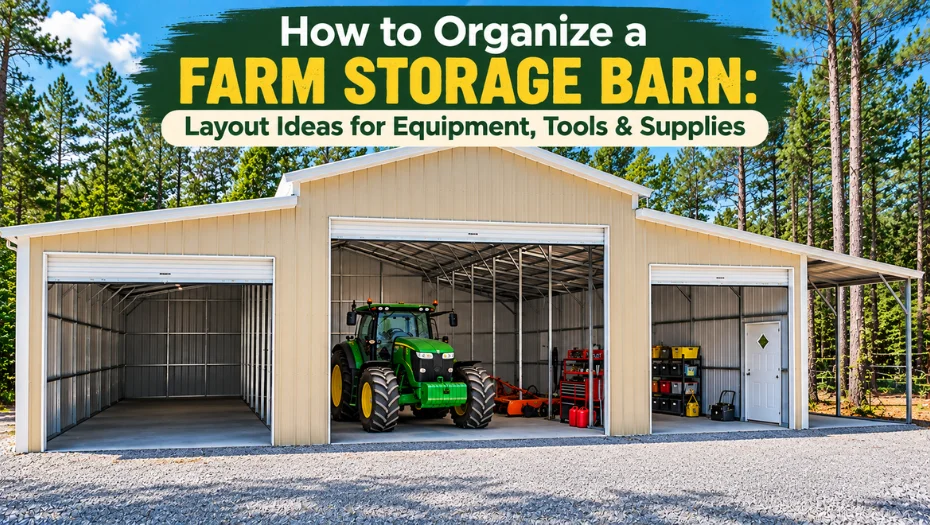
Also Read: How to Organize a Farm Storage Barn
Summer Maintenance Checklist for Steel Farm Buildings
Summer maintenance focuses on heat, ventilation, surface condition, and the building’s ability to support daily farm operations. High temperatures and intense sunlight can also make certain work more hazardous.
1. Clean Exterior Surfaces
Remove accumulated dust, mud, and other surface contaminants using methods approved for the building’s finish. Mild soap and water are often suitable for routine cleaning, but follow the manufacturer’s care instructions.
Avoid abrasive tools and aggressive chemicals that could damage protective coatings. If you find chipped paint or corrosion, document the affected area and use a compatible repair system.
2. Check Ventilation and Moisture
Warm weather does not eliminate condensation problems. Moisture can still collect inside a steel farm building when humid air meets cooler metal surfaces.
Inspect available vents, fans, and openings for obstructions. For buildings used to store hay, feed, or other moisture-sensitive materials, review ventilation practices and investigate persistent dampness.
3. Review Interior Safety and Organization
Summer can be a useful time to complete maintenance while reorganizing storage areas.
- Keep equipment routes and emergency exits clear.
- Check work lights and electrical equipment for visible damage.
- Inspect shelving and storage systems for stability.
- Remove unnecessary debris and investigate pest activity.
- Keep fuels, chemicals, and other hazardous materials stored according to their labels and applicable safety requirements.
Schedule work that involves hot surfaces, electrical systems, or elevated access for qualified personnel with appropriate safety equipment.
Fall Maintenance Checklist Before Winter
Fall is the time to prepare farm buildings for freezing temperatures, snow, ice, and winter storms. Completing inspections before severe weather arrives can make repairs easier to schedule.
1. Clear Gutters and Check Roof Drainage
Remove leaves and other debris from accessible gutters and downspouts. Check for loose connections, leaks, and signs that water has been overflowing near the building.
If your property receives heavy autumn rainfall, confirm that runoff does not collect around the foundation or access points.
2. Inspect Seals and Openings
Check door seals, trim, vents, and other openings for visible gaps or damage. Repair suitable weather seals according to the manufacturer’s guidance.
For enclosed farm buildings, reducing unwanted air and water entry can help protect stored equipment and supplies. However, do not seal ventilation openings required for livestock health, moisture control, or safe operation.
3. Prepare for Local Winter Conditions
Winter preparation depends on where your farm is located. A property in Minnesota may need to account for snow accumulation and freezing temperatures, while a farm in Georgia may focus more on heavy rain, wind, and occasional cold snaps.
Before winter, review:
- Local design requirements for snow, wind, and other applicable loads.
- Roof and drainage conditions.
- Door operation during cold weather.
- Stored equipment that needs winter protection.
- Access routes for snow removal or emergency maintenance.
Do not remove snow from a roof without a suitable plan and qualified personnel. Improper removal can create serious fall and structural hazards.
Winter Maintenance Checklist for Farm Buildings
Winter inspections should focus on visible changes, moisture, safe access, and conditions following severe weather. Avoid unnecessary work outdoors during icy conditions or extreme cold.
| Inspection area | Winter task | When to take action |
|---|---|---|
| Roof | Observe visible snow accumulation and signs of distress from a safe location | Follow the building’s snow-load plan and seek professional advice when needed |
| Doors | Check for sticking, damaged seals, or obstructed tracks | Address access problems before they become urgent |
| Interior | Look for condensation, drips, and water stains | Investigate recurring moisture promptly |
| Foundation | Observe unusual cracking, shifting, or water accumulation | Arrange professional evaluation for significant changes |
| Access areas | Keep safe routes clear of ice and snow | Maintain safe entry and emergency access |
| Stored materials | Check for moisture or damage | Improve storage conditions where appropriate |
If you hear unusual structural noises, observe visible deformation, or suspect that a building has been damaged by snow or wind, keep people away from the affected area and contact a qualified professional.
Check This Out: Sliding Doors vs. Roll-Up Doors for Metal Barns: Which Is Better?
How to Inspect Roofs, Panels, Fasteners, and Foundations
Seasonal checklists are most useful when you know what warning signs to look for. A visual inspection cannot confirm the condition of every structural component, but it can help identify problems that require further assessment.
| Component | Warning signs | Recommended response |
|---|---|---|
| Roof panels | Displaced edges, visible openings, or dents | Arrange an appropriate inspection and repair |
| Steel wall panels | Corrosion, chipped coatings, or loose trim | Document damage and use compatible repair materials |
| Fasteners | Missing screws, rust streaks, or visible movement | Have affected connections assessed and repaired correctly |
| Doors | Binding, damaged tracks, or uneven movement | Follow manufacturer maintenance instructions |
| Foundation | Significant cracking, movement, or exposed support areas | Consult a qualified building or foundation professional |
| Drainage | Erosion, pooling water, or overflowing gutters | Correct drainage issues and investigate recurring problems |
Important: Do not assume that every loose-looking fastener should simply be tightened. Some connections require specific installation methods and torque requirements. Structural bolts, anchors, and damaged framing should be evaluated by qualified personnel.
Maintenance Considerations for Different Farm Building Uses
The maintenance routine should reflect what the building stores or houses. A structure used for tractors has different priorities from one used for hay or horses.
Steel Hay Barns
A steel hay barn needs particular attention to roof leaks, moisture, airflow, and the condition of stored hay. Inspect for water entry and condensation, and follow appropriate hay-storage and fire-safety practices. Damp hay can deteriorate and may create serious heat and fire hazards.
Explore metal hay barns when planning storage for agricultural materials.
Metal Horse Barns
For a metal horse barn, include stall hardware, gates, flooring, ventilation, and water systems in the maintenance plan. Check for sharp edges, damaged latches, slippery areas, and anything that could injure an animal. Maintain adequate airflow and clean, dry bedding according to the needs of the horses.
See metal horse barns for building options intended for equine use.
Metal Carolina Barns
A metal Carolina barn may combine enclosed storage with additional covered space. Inspect both the enclosed section and the open or covered areas for roof damage, drainage problems, loose trim, and deterioration around frequently used openings.
Pay attention to runoff along the edges of covered areas, where water may collect or erode the surrounding soil.
Farm Equipment Storage Buildings
Equipment storage buildings should be checked for door clearance, water entry, ventilation, and safe access around parked machinery. Keep equipment away from damaged panels and avoid storing materials in a way that blocks exits or maintenance access.
For example, the 58x25x16 Tri-Color Steel Barn is one option to review when considering a multi-section barn layout. Confirm its current specifications, availability in your state, and suitability for your intended use before making a purchase.
Do Roof Styles Affect Farm Building Maintenance?
Roof design can influence drainage, debris accumulation, and how a building performs in local weather. However, maintenance needs also depend on the engineered design, installation, materials, and environmental conditions.
| Roof style | Maintenance focus |
|---|---|
| Vertical Roof Barn | Inspect vertical roof panels, ridge caps, fasteners, and drainage paths for damage or debris |
| Horizontal Roof Barn | Check panel condition, seams, drainage, and manufacturer-specified maintenance points |
| Regular Roof Barn | Inspect the roof panels, trim, fasteners, and areas where water could enter |
A vertical roof is commonly selected for its panel orientation and drainage characteristics, but no roof style eliminates the need for inspections. The correct design should account for local building requirements and applicable wind, snow, and rain conditions.
Explore vertical roof metal barns and regular roof metal barns to compare available configurations.
How Often Should You Maintain a Farm Building?
For most farms, a practical starting point is to conduct a thorough inspection in spring and fall, supported by brief checks throughout the year and after significant storms.
Use this schedule as a guide:
- Twice a year: Inspect the roof, panels, doors, fasteners, drainage, and foundation.
- After severe weather: Look for visible damage, water entry, displaced panels, and unusual structural changes.
- Monthly or as needed: Check frequently used doors, access routes, ventilation, and storage areas.
- Throughout the year: Address leaks, corrosion, pest activity, and other developing issues promptly.
The right frequency depends on the building’s age, use, local weather, manufacturer’s recommendations, and any maintenance requirements associated with its design or warranty.
Printable Seasonal Farm Building Maintenance Checklist
Use this condensed list during your next inspection.
Spring
- Check for winter damage and water leaks.
- Inspect exterior panels and visible fasteners.
- Test doors, hinges, and tracks.
- Clear gutters and check drainage.
Summer
- Clean exterior surfaces safely.
- Inspect ventilation and moisture conditions.
- Review lighting and electrical safety.
- Organize equipment and storage areas.
Fall
- Clear leaves and debris from drainage paths.
- Inspect seals, trim, and openings.
- Review local winter weather requirements.
- Schedule necessary repairs before severe weather.
Winter
- Observe the building for visible signs of distress.
- Check for condensation and water intrusion.
- Keep access routes safe.
- Arrange professional evaluation when damage is suspected.
Record the date, inspection findings, photographs, and repairs completed. This creates a simple maintenance history that can help you plan future work.
Frequently Asked Questions
1. How often should farm buildings be inspected?
Inspect farm buildings thoroughly at least twice a year, ideally in spring and fall. Conduct additional visual checks after severe weather and address leaks, corrosion, drainage problems, or suspected structural damage promptly.
2. Do metal farm buildings require regular maintenance?
Yes. Metal farm buildings still need inspections, surface cleaning, drainage maintenance, door checks, and monitoring for corrosion or damaged components. Regular care helps identify developing problems before they become more serious.
3. How do I prevent rust on a steel farm building?
Inspect steel surfaces for scratches, chipped coatings, and corrosion. Keep surfaces clean, address moisture problems, and repair damaged finishes with compatible products according to the manufacturer’s recommendations.
4. What should I check on a farm building roof before winter?
Check visible roof panels, ridge caps, trim, fasteners, and drainage for damage or debris. Have suspected structural problems evaluated professionally, and follow the building’s design requirements for snow and wind conditions.
5. How can I prevent water damage in a metal barn?
Maintain gutters and downspouts, direct runoff away from the building, inspect roof and wall panels for openings, and investigate condensation or interior water stains. Persistent moisture should be corrected before it damages stored materials.
6. Does a prefab farm building need a different maintenance schedule?
A prefabricated farm structure generally follows the same core seasonal inspection routine. However, maintenance should reflect its materials, structural design, intended use, installation requirements, and manufacturer guidance.
7. Can I inspect a metal farm building myself?
You can perform many visual checks from safe ground-level locations. Roof access, structural repairs, electrical work, and repairs involving elevated or high-tension components should be handled by appropriately qualified professionals.
Keep Your Farm Building Ready for Every Season
A consistent maintenance routine helps farm owners monitor their buildings through changing weather and demanding agricultural schedules. By checking roofs, steel panels, doors, fasteners, drainage, foundations, and interior conditions, you can identify issues early and plan repairs more effectively.
Whether you maintain an existing steel farm building or are planning a new one, build your checklist around the structure’s intended use and your local climate. For new construction, review Viking Barns‘ metal farm building options and compare the available configurations with your storage, access, and site requirements.
The best maintenance plan is one you can follow consistently: inspect, document, repair appropriately, and reassess before the next season begins.
Related articles