Loading...
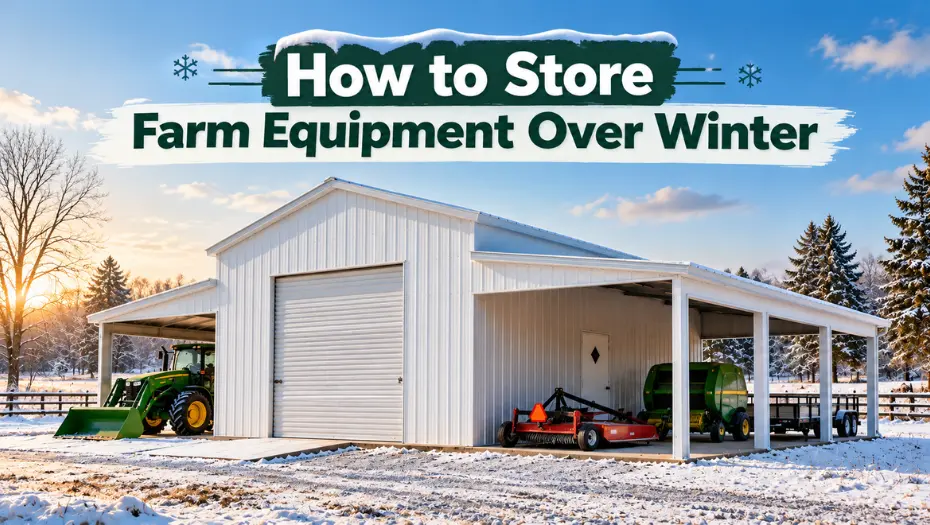
Storing farm equipment properly over winter starts with three priorities: preparing machinery for extended inactivity, keeping moisture under control, and arranging enough covered space for safe access. Cleaning equipment, following manufacturer-recommended maintenance procedures, protecting vulnerable components, and checking the storage building can help reduce weather exposure and make spring startup easier.
For US farmers and ranchers, winter storage needs vary by region. Equipment in the Upper Midwest may face prolonged freezing temperatures and snow, while farms in the Southeast may deal with damp conditions, rainfall, and humidity. A well-planned metal farm building can provide valuable covered storage, but the building alone cannot prevent corrosion or moisture-related problems. Equipment preparation, drainage, ventilation, and regular inspections remain essential.
You Might Like: How to Create a Seasonal Maintenance Checklist for Metal Farm Buildings
Why Is Proper Winter Storage Important for Farm Equipment?
Farm equipment often remains unused for weeks or months during the off-season. Without suitable preparation, dirt, trapped moisture, neglected maintenance, and unsuitable storage conditions can contribute to corrosion, battery problems, tire issues, and delayed spring operations.
Proper winter storage helps you:
- Reduce direct exposure to rain, snow, ice, and wind.
- Identify maintenance needs before equipment is required again.
- Protect components according to the manufacturer’s recommendations.
- Keep machinery organized and accessible.
- Reduce avoidable delays when planting, mowing, or other seasonal work resumes.
A steel farm building can provide a covered location for tractors, mowers, trailers, and implements. However, the most suitable storage arrangement depends on your equipment, local climate, available space, and the condition of the building.
How to Prepare Farm Equipment for Winter Storage
Before parking machinery for the season, follow the equipment manufacturer’s storage instructions. A tractor, combine, mower, and utility trailer may have different maintenance requirements, so avoid applying one procedure to every machine.
1. Clean Equipment Before Storing It
Remove accumulated mud, dust, crop residue, grass, and other debris. Material trapped around moving components can retain moisture, while crop residue around hot engine or exhaust components may create a fire hazard.
After cleaning:
- Inspect the equipment for visible damage or corrosion.
- Allow wet surfaces to dry appropriately.
- Check areas around guards, attachments, and accessible components for trapped debris.
- Follow the manufacturer’s recommendations for cleaning sensitive electrical or mechanical parts.
Cleaning also makes it easier to identify fluid leaks, worn hoses, damaged belts, and other maintenance needs before equipment is parked.
2. Complete Necessary Maintenance
Winter storage is a practical opportunity to address maintenance that might otherwise be postponed until spring. Check the owner’s manual for the recommended service schedule and storage procedures.
Review the following:
- Engine oil and other specified fluids.
- Hoses, belts, fittings, and visible connections.
- Tires, wheels, and signs of damage.
- Hydraulic systems and visible leaks.
- Lights, wiring, and electrical connections.
- Guards, attachments, and safety equipment.
Repair identified problems before storage when practical. Record any outstanding work so it can be completed before the equipment returns to service.
3. Prepare Fuel and Engine Systems Correctly
Fuel-storage procedures vary by engine type, fuel, and equipment design. Diesel machinery, gasoline-powered mowers, and other agricultural equipment may have different requirements.
Follow the manufacturer’s guidance on fuel level, fuel stabilizers where applicable, filters, and engine preparation. Do not assume that every machine should be stored with the same amount or type of fuel.
For equipment with liquid-cooled engines, check the cooling system and confirm that the coolant provides protection appropriate for the expected temperatures. Never open a hot cooling system.
4. Protect Batteries and Electrical Components
Cold temperatures can affect battery performance, especially when equipment remains unused for long periods. Check the battery condition and follow the manufacturer’s instructions for charging, disconnecting, removing, or maintaining it during storage.
If a battery charger or maintainer is recommended, use equipment approved for the battery type and install it according to the instructions. Keep batteries and charging equipment away from incompatible materials, excessive moisture, and ignition hazards.
5. Check Tires and Moving Components
Inspect tires for damage and maintain pressure according to the equipment manufacturer’s recommendations. Where equipment will remain parked for an extended period, follow guidance on positioning and reducing stress on tires and other components.
Lubricate specified points only as directed by the manufacturer. If equipment requires supports or lifting for storage, use approved procedures and properly rated equipment. Never rely on an improvised support arrangement.
6. Keep a Winter Maintenance Record
Create a simple record for each machine that includes:
- Equipment name, model, and identification details.
- Date of cleaning and inspection.
- Maintenance completed.
- Parts or repairs still needed.
- Battery and storage procedures followed.
- Date of the next planned inspection.
This record can help you organize maintenance across a larger fleet and identify what must be completed before spring fieldwork begins.
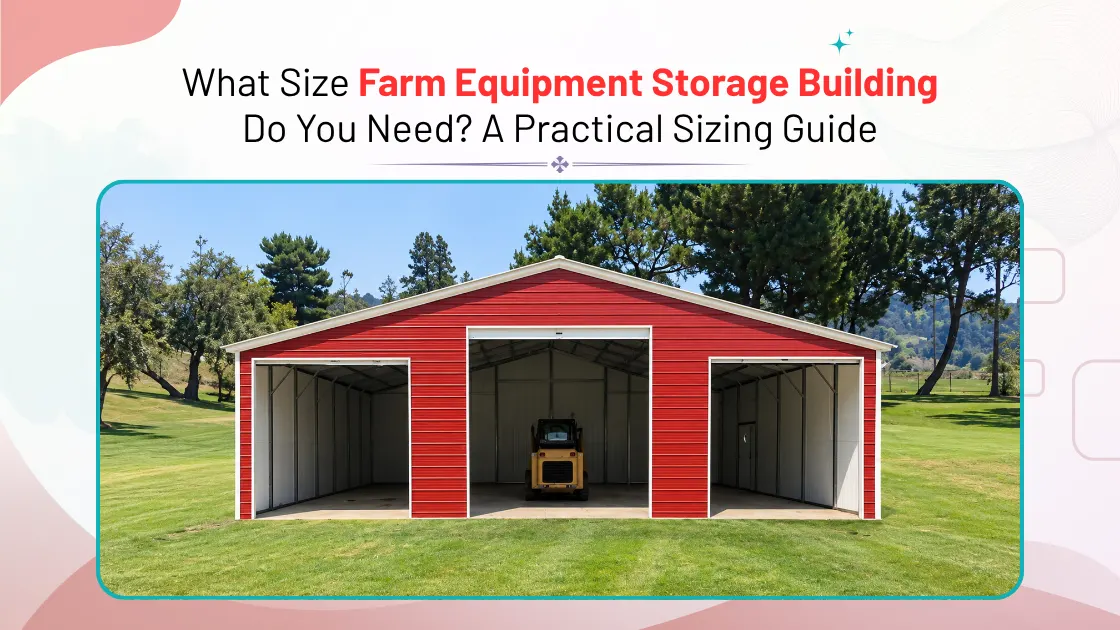
Read Our Guide: What Size Farm Equipment Storage Building Do You Need? A Practical Sizing Guide
How to Control Moisture in a Metal Farm Building
Moisture is an important consideration when storing farm machinery in an enclosed metal farm building. Condensation can form when humid air contacts cold metal surfaces, while leaks and poor drainage can introduce water directly into the storage area.
Inspect the Roof, Walls, and Doors
Before winter, check accessible roof and wall areas for signs of water entry. Look for water stains, dripping, damaged seals, and gaps around doors or other openings.
Address identified problems using suitable repair methods and the building manufacturer’s recommendations. If damage involves structural components or requires working at height, arrange qualified assistance rather than attempting an unsafe repair.
Manage Condensation and Ventilation
Ventilation can help manage moisture, but the appropriate approach depends on the building, climate, and equipment stored inside. Insulation may help regulate interior temperatures and reduce some condensation risks when installed as part of a suitable system.
Consider these steps:
- Identify sources of indoor moisture, including wet equipment.
- Keep drainage paths clear and address water entry.
- Evaluate whether the building needs suitable ventilation or insulation.
- Avoid storing wet covers or materials against equipment for long periods.
- Inspect metal surfaces and machinery periodically for signs of condensation or corrosion.
Do not assume that closing every opening will solve moisture problems. Equally, ventilation openings should not be modified without considering weather protection, fire safety, and the building’s intended use.
Keep Equipment Away From Standing Water
Inspect the floor and surrounding site for standing water, damp areas, or runoff entering through doorways. Good site drainage helps keep the storage area usable during winter rain, snowmelt, and freezing conditions.
| Moisture concern | What to check | Practical response |
|---|---|---|
| Roof or wall leaks | Water stains, drips, damaged seals | Identify and repair the source |
| Condensation | Water droplets on metal or machinery | Review moisture sources, ventilation, and insulation |
| Standing water | Puddles near doors or beneath equipment | Investigate drainage and water entry |
| Corrosion | Rust or damaged protective coatings | Clean and treat according to manufacturer guidance |
| Wet equipment | Moisture trapped around components | Clean and dry equipment appropriately before storage |
How Much Space Do You Need for Winter Farm Equipment Storage?
The right storage space depends on the actual dimensions of your equipment, not simply the number of machines. Before choosing a building or arranging an existing barn, measure each machine and its attachments.
Include overall length, width, height, mirrors, raised components, and any equipment that extends beyond the main frame. Check door dimensions and ceiling clearance, too.
Plan Storage Around Equipment Size
| Equipment category | Storage-planning priority |
|---|---|
| Tractors | Height, width, attachments, and door clearance |
| Combines and large machinery | Overall dimensions, turning space, and access |
| Mowers and seasonal implements | Safe positioning and access to service points |
| Trailers and utility vehicles | Maneuvering room and practical entry routes |
| Small implements and tools | Designated storage areas, racks, and secure placement |
Arrange equipment so that frequently used machines remain accessible without requiring several other pieces to be moved. Keep walkways, doors, electrical panels, and emergency exits clear.
Leave enough room to inspect machinery and carry out permitted maintenance safely. If you expect to add equipment in the future, consider that when evaluating a new farm steel building.
Should You Use an Enclosed Barn or a Covered Storage Area?
Both enclosed and open-sided storage can be useful, but they offer different levels of protection. The best choice depends on local weather, equipment value, available space, and how frequently machinery needs to be accessed.
| Storage option | Potential advantages | Important considerations |
|---|---|---|
| Enclosed metal farm building | Provides a roof and walls against direct weather exposure | Requires moisture management, suitable ventilation, and drainage |
| Covered lean-to or open-sided area | Offers overhead coverage and convenient access | Provides less protection from wind-driven rain, snow, and dust |
| Outdoor storage | Convenient for frequently used equipment | Exposes machinery to more weather and may require additional protective measures |
An enclosed building can be especially useful for equipment that needs more protection from precipitation and unauthorized access. However, an enclosed space can still develop condensation or admit water through leaks and poorly drained entrances.
Choosing a Metal Farm Building for Winter Storage
If existing storage space is insufficient, a metal farm building can be considered for tractors, implements, trailers, and other agricultural equipment. Select the building according to its intended use, actual equipment dimensions, local site conditions, and applicable structural requirements.
Choose a Suitable Layout
Consider door widths, interior clearance, maneuvering space, and whether the building needs separate areas for machinery, tools, and supplies. Enclosed space and covered lean-tos can serve different purposes, depending on the layout.
Compare Roof Styles and Local Weather Requirements
Vertical Roof Barn, Horizontal Roof Barn, and Regular Roof Barn configurations may be available for different building designs. Compare the complete specifications rather than assuming that roof style alone guarantees performance in snow, wind, or other severe weather.
Ask about the building’s design requirements for your location and verify applicable local codes, permits, and foundation requirements.
Plan for Moisture and Site Drainage
A storage building should be located and prepared with water management in mind. Consider site grading, runoff, foundation requirements, and access during wet or freezing weather. Discuss suitable ventilation and insulation options if condensation is a concern.
You can explore metal farm buildings from Viking Barns to review available building options.
Consider a Building With Multiple Storage Areas
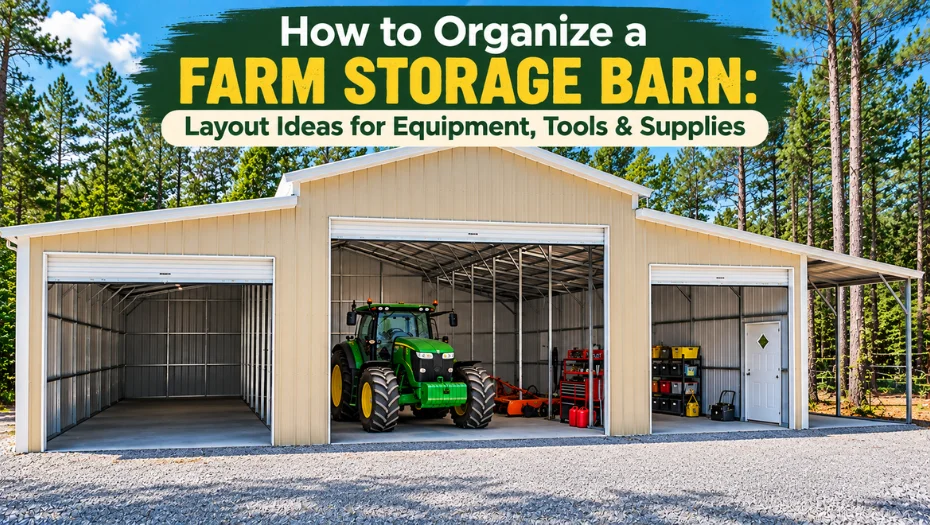
Some barn configurations combine enclosed space with covered side areas. Depending on the actual dimensions and layout, this arrangement may help separate equipment that needs enclosed storage from implements that require convenient covered parking.
For example, the 44×40×16 Continuous Roof Metal Barn is a candidate to review for its enclosed center and lean-to configuration. Confirm the current product specifications, availability, and suitability for your equipment before making a decision.
Common Winter Farm Equipment Storage Mistakes to Avoid
Avoid these common mistakes when preparing machinery for winter:
- Parking equipment before cleaning off mud, crop residue, and trapped moisture.
- Ignoring visible leaks, corrosion, or condensation in the storage building.
- Following generic fuel or battery advice that conflicts with the owner’s manual.
- Blocking access routes with implements or stored materials.
- Leaving equipment where water collects around tires or components.
- Forgetting maintenance records and repairs needed before spring.
- Assuming an enclosed metal barn eliminates the need for ventilation or moisture management.
- Choosing a building without checking door openings and equipment clearance.
A short inspection before storage can help identify problems while there is still time to address them.
Winter Farm Equipment Storage Checklist
Use this checklist before the first hard freeze or the start of your region’s winter storage period.
- Clean equipment and allow it to dry appropriately.
- Complete required maintenance according to the owner’s manual.
- Prepare fuel, engine, cooling, and battery systems as specified.
- Inspect tires, hoses, belts, and visible components.
- Check the storage building for leaks, condensation, and drainage problems.
- Confirm equipment dimensions and door clearance.
- Keep exits, access routes, and service areas clear.
- Record repairs and maintenance tasks required before spring.
- Schedule periodic checks during extended storage.
Frequently Asked Questions
What is the best way to store farm equipment over winter?
Clean equipment, follow manufacturer-recommended storage procedures, address needed maintenance, protect vulnerable components, and park machinery in a suitable covered area. Also inspect the building for leaks, manage moisture, and leave enough space for safe access.
Should farm equipment be stored in a metal barn during winter?
A metal barn can provide useful protection from direct precipitation and wind. Its effectiveness depends on building condition, drainage, moisture management, and equipment preparation. Covered storage does not eliminate the need for routine inspections.
How do you prevent condensation in a metal farm building?
Start by identifying moisture sources and water entry. Review drainage, ventilation, and whether a suitable insulation system is needed. Inspect the building and equipment regularly because condensation risks vary with humidity, temperature, and building design.
Should you remove a tractor battery during winter storage?
Follow the tractor manufacturer’s instructions. Depending on the battery and equipment, the recommended procedure may involve disconnecting it, removing it, or using an appropriate battery maintainer. Use safe charging practices and equipment compatible with the battery type.
How do you protect farm equipment from rust during winter?
Clean and dry equipment appropriately, address damaged protective coatings, follow recommended lubrication and storage procedures, and keep machinery away from leaks and standing water. Inspect stored equipment periodically for early signs of corrosion.
Is an open-sided barn enough for winter equipment storage?
An open-sided barn provides overhead coverage but offers less protection from wind-driven rain, snow, and dust than an enclosed structure. Whether it is sufficient depends on the equipment, local climate, and the level of protection required.
When should farmers prepare equipment for winter storage?
Begin preparation before machinery is no longer needed and before severe weather arrives. The timing depends on regional conditions and the equipment’s use. Early preparation leaves time for cleaning, maintenance, repairs, and storage-space checks.
Prepare Your Farm Equipment for Winter With Confidence
Successful winter storage starts with clean equipment, manufacturer-recommended preparation, good moisture management, and a layout that provides safe access. Taking these steps before winter can help reduce avoidable problems and make it easier to prepare machinery for the next growing season.
If you need additional covered storage, review your equipment dimensions, site conditions, and intended building layout before choosing a structure. Explore Viking Barns‘ metal farm buildings to compare options for your agricultural property and plan a storage space that fits your needs.
Related articles