Loading...
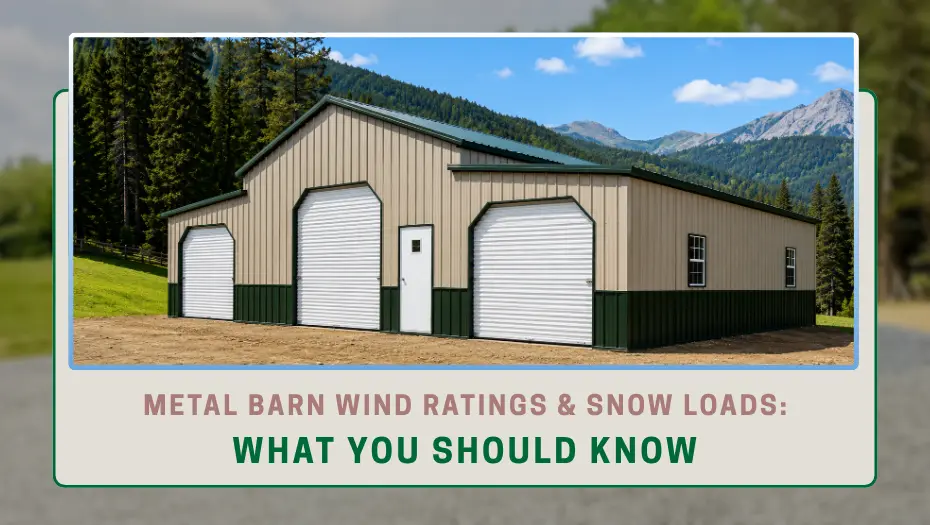
When investing in a barn, most buyers focus on size, layout, color, and functionality. While those factors are important, there is another aspect that deserves just as much attention: structural strength.
Your barn must be able to withstand the environmental conditions in your area. Strong winds, heavy snowfall, storms, and changing weather patterns can place significant stress on a building throughout its lifetime. This is why wind ratings and snow loads are among the most important specifications to understand before purchasing a barn.
Understanding these requirements can help you choose a structure that performs reliably for years to come. In this guide, we’ll explain what wind ratings and snow loads mean, why they matter, and how they affect the design of your building.
Why Wind and Snow Loads Matter for Barn Owners
Many buyers assume that all barns are built to handle the same weather conditions. In reality, structural requirements can vary significantly depending on where the building will be installed. A barn located in coastal Florida faces very different weather challenges than one located in Colorado or northern Michigan.
Every Location Faces Different Weather Conditions:
Local weather patterns play a major role in determining building requirements. Some regions experience strong hurricane-force winds, while others regularly receive heavy snowfall during winter months. Because of these differences, local building codes establish minimum requirements that structures must meet.
Factors that affect structural requirements include:
- Wind speed
- Snow accumulation
- Elevation
- Geographic location
- Historical weather patterns
- County building regulations
This is why two seemingly identical barns may have different engineering specifications.
Structural Ratings Help Protect Your Investment:
A barn is often used to protect valuable assets. Depending on the application, it may house:
- Livestock
- Farm equipment
- Vehicles
- Hay storage
- Feed supplies
- Business inventory
Choosing the proper structural rating helps ensure the building is prepared for local weather conditions while protecting everything stored inside.
What Is a Wind Rating?
Wind ratings are one of the most important engineering factors for any building. They indicate the wind speeds that a structure is designed to withstand under specific conditions. Understanding wind ratings helps buyers choose a building that aligns with local code requirements and environmental risks.
Wind Ratings Measure Structural Resistance:
A wind rating refers to the maximum design wind speed a building is engineered to resist. These ratings are commonly measured in miles per hour (MPH).
For example, a barn may be engineered for:
- 140 MPH winds
- 170 MPH winds
- 180 MPH winds
The required rating depends on the location where the building will be installed.
Why Higher Wind Ratings Matter:
Higher wind ratings typically involve stronger engineering components and additional reinforcement.
These may include:
- Heavier framing
- Stronger anchors
- Enhanced bracing systems
- Reinforced connections
The goal is to improve structural performance when the building encounters strong wind events.
Common Wind Rating Options for Metal Barns
Different regions require different levels of protection. Understanding common rating categories can help buyers better evaluate their options. Always remember that local building codes determine the final requirements.
140 MPH Wind Rating
A 140 MPH rating is commonly used in many areas throughout the United States. This level of engineering can provide protection against severe weather events while meeting many local code requirements. Many residential and agricultural projects fall into this category.
170 MPH Wind Rating
Coastal regions and hurricane-prone areas often require higher levels of protection. A 170 MPH wind-rated structure includes additional engineering measures designed to improve performance under extreme wind conditions. This option is often selected for properties located in areas with elevated wind exposure.
180 MPH Wind Rating
Some of the most demanding locations require even stronger structural engineering. Buildings rated for 180 MPH winds are designed for regions where local codes require maximum wind resistance. These structures typically include enhanced framing and anchoring systems.
What Is a Snow Load?
While wind receives a lot of attention, snow can create significant stress on a building as well. Snow accumulation adds weight to the roof system. If that weight exceeds design limits, structural problems can occur. This is why snow load requirements are a critical consideration in colder regions.
Snow Loads Measure Roof Weight Capacity
Snow load refers to the amount of weight a roof is engineered to support. It is typically measured in pounds per square foot (PSF). The higher the PSF rating, the greater the amount of snow the roof is designed to handle.
Why Snow Load Requirements Vary
Not every location receives the same amount of snowfall. A building in southern Texas faces very different conditions than one in Montana or New York. Local code officials establish snow load requirements based on historical weather patterns and regional conditions. As a result, snow load requirements vary significantly across the country.
Common Snow Load Options for Steel Barns
Snow load ratings help ensure the roof system can safely manage expected winter conditions. Several rating options are commonly available depending on location and intended use.
20 PSF Snow Load
This rating is often used in regions with relatively light snowfall. Areas with mild winter conditions may only require lower snow load capacities. However, local code requirements should always be verified before selecting a building.
30 PSF Snow Load
Many regions require moderate snow load ratings to accommodate seasonal accumulation. This level provides additional capacity compared to lower-rated systems and is common in numerous parts of the country.
40 PSF Snow Load
Buildings located in areas that regularly experience significant snowfall often require stronger roof systems. A 40 PSF rating helps provide additional structural support during heavy winter conditions.
60 PSF Snow Load
Some northern and mountainous regions require substantially higher snow load capacities. A 60 PSF rating is commonly associated with locations where large snow accumulations occur throughout the winter season.
Wind Ratings vs. Snow Loads: Understanding the Difference
Many first-time buyers assume wind ratings and snow loads measure the same thing. In reality, they address two completely different structural challenges. Both are important, but they protect the building in different ways.
Wind Loads Focus on Horizontal Forces
Wind applies pressure against walls, doors, roof panels, and structural framing. The building must be engineered to resist:
- Uplift forces
- Side pressure
- Suction effects
- Structural movement
Proper wind engineering helps keep the building stable during severe weather events.
Snow Loads Focus on Vertical Weight
Snow creates downward pressure on the roof system. As snow accumulates, the overall weight increases. The roof structure must be engineered to support that weight without excessive stress or deformation.
Wind and Snow Requirements Often Work Together
Many buildings require both wind and snow load engineering. For example, a northern state may require moderate wind protection and high snow load capacity. Meanwhile, a coastal state may require very high wind ratings but relatively low snow load requirements. Understanding both factors helps buyers choose the right building for their location.
How Building Design Affects Wind and Snow Performance
Structural ratings are not determined by engineering calculations alone. Design choices also influence how a building performs under environmental stress. Several design elements contribute to overall building strength.
Roof Style Plays an Important Role
The shape of the roof can affect how wind and snow interact with the structure. For example, buyers exploring regular roof-style metal barns should understand how roof geometry influences drainage, snow shedding, and overall performance. Selecting the appropriate roof style can improve long-term durability and weather resistance.
Steel Gauge Matters
The thickness of structural steel influences building strength. Many customers researching the right steel gauge for your barn discover that gauge selection plays an important role in overall engineering performance. The appropriate gauge depends on building size, location, and local code requirements.
Proper Insulation Can Improve Performance
While insulation does not directly increase structural ratings, it can improve comfort, reduce condensation, and support year-round usability. Property owners evaluating the best metal barn insulation options often find that insulation becomes especially important in regions experiencing large seasonal temperature changes.
How Local Building Codes Affect Wind and Snow Load Requirements
One of the most important things to understand when purchasing a barn is that structural requirements are not the same everywhere. A building that meets code requirements in one state may not automatically meet requirements in another. This is why engineering and permitting are critical parts of the planning process.
Building Codes Are Based on Local Conditions:
Local authorities establish building requirements based on the weather patterns and environmental conditions specific to their region. These requirements are designed to help ensure buildings can withstand the conditions they are likely to face throughout their lifespan.
Factors that influence local code requirements include:
- Historical wind speeds
- Average snowfall levels
- Elevation
- Coastal exposure
- Terrain conditions
- Geographic location
Because of these factors, buyers should never assume that a standard building package will automatically meet local regulations.
Permits Often Require Engineering Documentation:
In many areas, building departments require engineered plans before issuing permits. These plans verify that the structure is designed to satisfy local wind and snow load requirements. Working with an experienced supplier can simplify this process and help ensure the building complies with local regulations from the beginning.
How to Choose the Right Wind Rating for Your Metal Barn
Choosing a wind rating is not simply about selecting the highest number available. The goal is to choose a rating that satisfies local requirements while matching the specific conditions of your property.
Start With Your Building Location
The location of your property is the most important factor when determining wind requirements. Coastal regions often require higher wind ratings due to hurricane exposure, while inland areas may have different requirements based on local weather patterns.
Providing accurate site information during the planning process helps ensure proper engineering.
Consider Future Weather Events
Weather conditions can change over time. Many buyers choose higher-rated structures because they want additional confidence that their investment is prepared for severe weather events that may occur in the future. This approach is particularly common among buyers in storm-prone regions.
How to Choose the Right Snow Load Capacity
Snow load requirements should never be overlooked, especially in areas that experience regular winter weather. Even if snowfall seems manageable most years, occasional heavy storms can place substantial stress on a roof system.
Understand Local Snowfall Patterns
Historical snowfall trends often influence local code requirements. A property located in a mountainous area may require significantly higher snow load capacities than one located at lower elevations.
Understanding local conditions helps ensure the building is designed appropriately.
Think About Long-Term Use
Many buyers focus on current weather conditions but forget to consider future needs. A properly engineered custom metal barn can provide peace of mind by offering the structural capacity necessary to handle expected winter conditions throughout its service life.
Common Mistakes Buyers Make When Evaluating Wind and Snow Loads
First-time barn buyers sometimes focus on appearance and size while overlooking structural engineering. Unfortunately, this can lead to problems during the permitting process or create challenges later.
Choosing a Building Without Checking Local Requirements
One of the most common mistakes is selecting a building before confirming local code requirements. A structure that does not meet local standards may require redesigns, upgrades, or additional engineering before approval. Starting with accurate site information helps avoid these complications.
Assuming All Barns Are Engineered the Same
Not all barns are designed for the same environmental conditions. A prefab barn intended for one region may require significant modifications before installation in another area. This is why engineered design matters.
Focusing Only on Price
While budget considerations are important, structural performance should never be overlooked. A properly engineered steel barn provides value because it is designed to meet the demands of the location where it will be installed.
Why Engineering Is Important for Prefabricated Barn Buildings
Engineering is what transforms a basic structure into a building designed for specific environmental conditions. Without proper engineering, it becomes difficult to ensure the structure can perform as intended.
Engineering Matches the Building to the Site
Each property presents unique challenges.
Engineering takes into account:
- Wind exposure
- Snow loads
- Building dimensions
- Roof style
- Local regulations
These factors work together to determine how the structure should be designed.
Better Engineering Supports Long-Term Performance
A properly engineered prefabricated barn building is designed to provide dependable performance throughout changing weather conditions. This helps protect the building itself as well as everything stored inside.
Wind and Snow Considerations for Different Barn Types
Different types of barns often have different design priorities. Understanding those priorities can help buyers make informed decisions.
Horse Barns
A horse barn often includes enclosed areas designed to protect valuable animals throughout the year. Because livestock safety is important, proper engineering becomes a critical part of the planning process. Ventilation, roof design, and structural strength all contribute to overall performance.
Hay Barns
A hay barn is often used to protect harvested crops from moisture and weather exposure. Maintaining structural integrity helps ensure stored materials remain protected throughout the seasons. In regions with significant snowfall, roof engineering becomes especially important.
Livestock Barns
A livestock barn must provide reliable shelter during changing weather conditions. Structural strength helps ensure animals remain protected during wind events, storms, and winter weather. Buyers researching livestock metal barn often discover that engineering requirements vary depending on location and intended use.
Agricultural and Farm Buildings
A large metal farm building may store equipment, vehicles, feed, tools, and operational supplies. Because these buildings often represent a significant investment, choosing appropriate wind and snow load ratings is an important part of long-term planning.
Customizing a Barn for Your Region
One advantage of modern metal building systems is their flexibility. Buildings can often be customized to satisfy local requirements while supporting specific operational needs.
Structural Upgrades Can Improve Performance:
Customization options may include:
- Stronger framing systems
- Higher wind ratings
- Increased snow load capacities
- Enhanced anchoring systems
- Alternative roof styles
These upgrades help ensure the building aligns with local code requirements and property goals.
Design Flexibility Supports Multiple Uses:
Many buyers appreciate the ability to adapt their building to different applications. For example, customers exploring customization options for Seneca barn layouts often discover ways to improve storage, workflow, and operational efficiency while maintaining compliance with local requirements.
Quick Reference Guide to Wind and Snow Ratings
The table below provides a simple overview of common rating categories.
|
Rating Type |
Common Options |
Typical Purpose |
|
Wind Rating |
140 MPH | Many residential and agricultural applications |
| Wind Rating | 170 MPH |
High-wind and coastal regions |
|
Wind Rating |
180 MPH | Extreme wind exposure areas |
| Snow Load | 20 PSF |
Light snowfall regions |
|
Snow Load |
30 PSF | Moderate snowfall areas |
| Snow Load | 40 PSF |
Heavy snowfall regions |
|
Snow Load |
60 PSF |
Northern and mountainous areas |
Actual requirements vary based on state, county, and local building codes.
Final Thoughts
Wind ratings and snow loads are not the most exciting part of planning a barn, but they are among the most important.
Whether you’re purchasing a horse barn, a hay barn, or a large farm metal building, understanding these structural requirements helps ensure your investment is prepared for local weather conditions.
The right ratings depend on your location, local code requirements, and how the building will be used. Taking the time to understand these factors today can help prevent costly issues later and give you greater confidence in your building decision.
Before choosing a structure, always verify local requirements and discuss available engineering options. A properly designed barn is not just about storage space. It is about creating a building that can perform reliably year after year, regardless of what the weather brings.
Frequently Asked Questions
Expand each item below to explore a few helpful answers before moving to the next blog post.
Related articles