September 18, 2026



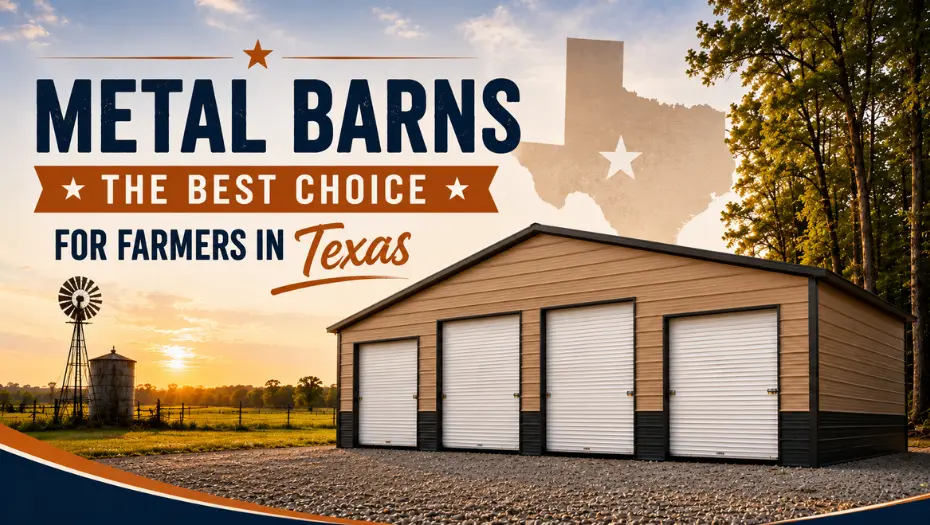
A barn built for Texas has to survive more than daily farm work. It must withstand scorching summers, sudden hailstorms, powerful wind gusts, heavy rain in some regions, and years of constant use. Choosing the wrong building material can lead to frequent repairs, higher maintenance costs, and a shorter service life.
That’s why more farmers, ranch owners, and equestrian facilities are investing in a metal barn Texas solution. Modern steel barns in Texas are engineered for the state’s demanding climate, offer flexible layouts for different farming operations, and provide dependable performance with minimal upkeep.
So, what makes steel barns the preferred choice across Texas? Let’s explore.
Every farm has different requirements, but the challenges across Texas remain remarkably similar. Farmers need buildings that can withstand harsh weather, protect valuable investments, and remain functional for decades with minimal upkeep. Unlike wood, steel does not warp, crack, or become vulnerable to termites, making it particularly suitable for the Texas environment.
Texas weather changes dramatically from one region to another. A barn located near the Gulf Coast faces high humidity and heavy rainfall, while one in West Texas experiences dry conditions, strong winds, and extreme summer temperatures.
In North Texas, hailstorms and occasional freezing weather create additional challenges. Modern metal building in Texas projects are engineered to perform across these varying conditions while maintaining structural integrity throughout the year.
|
Region |
Common Weather Conditions | Recommended Barn Features |
|
West Texas |
High winds, dry heat, dust | Higher wind ratings, vertical roof |
| Central Texas | Heat, thunderstorms |
Durable roofing, proper ventilation |
|
East Texas |
Humidity, rainfall | Moisture-resistant steel, ventilation |
| Gulf Coast | Salt air, hurricanes |
Corrosion protection, engineered framing |
| North Texas | Hail, seasonal freezes |
Strong roof panels and snow-ready framing |
Many older farms still use wooden barns because they were once the standard choice. While wood offers a traditional appearance, it requires regular painting, pest control, repairs, and replacement of damaged sections.
Steel buildings solve many of these long-term maintenance concerns.
Moisture is one of the biggest enemies of wooden barns. Repeated exposure to rain and humidity can cause wood to swell, rot, or develop mold over time. Properly coated steel panels resist moisture far more effectively and require significantly less maintenance.
Texas has one of the highest termite activity levels in the United States. Unlike wood, steel provides no food source for termites, reducing the risk of expensive structural repairs over the life of the building.
A well-engineered steel barn can provide decades of dependable performance with routine inspections and basic maintenance, making it a practical long-term investment for agricultural properties.
No single barn design fits every property. The best structure depends on how you plan to use the building, the size of your operation, and the local weather conditions.
Livestock barns prioritize ventilation, shade, and easy movement for animals. Proper airflow becomes especially important during the long Texas summers.
Farm machinery represents one of the largest investments on many properties. Steel barns provide wide openings, clear-span interiors, and enough height for tractors, combines, trailers, and other large equipment.
Hay must remain dry throughout the year. Proper roof design and ventilation help reduce moisture buildup while protecting stored feed from weather damage.
Texas has one of the largest horse populations in the country, making the metal horse barn one of the most popular agricultural building choices.
These barns can include horse stalls, tack rooms, wash bays, feed storage, riding aisles, and covered outdoor areas, all within one customized structure.
Purchasing a barn is only one part of the project. Before construction begins, landowners should understand the local requirements that may affect where and how the building can be installed.
Although regulations vary by county, several factors are commonly reviewed during the planning process.
Most counties require barns to maintain minimum distances from property boundaries, roads, utility easements, and neighboring structures.
These setback requirements help ensure safe access, drainage, and future development.
Some rural areas have fewer regulations, while others require permits before construction starts. Requirements often depend on factors such as building size, location, intended use, and whether utilities will be installed.
A properly prepared foundation helps the building perform as designed. Local soil conditions, drainage, and wind exposure all influence the type of foundation recommended for a steel barn.
Planning Checklist:
Before Ordering Your Barn, Make a Checklist
Working with experienced Texas barn builders can simplify this process because they understand common regional requirements and can help ensure your project starts on the right foundation.
The roof is one of the hardest-working parts of any agricultural building. Selecting the appropriate roof style helps improve drainage, reduce maintenance, and increase long-term durability.
A continuous roof barn uses uninterrupted roof panels that run from the ridge to the eaves. This design provides efficient water runoff, minimizes exposed fasteners, and performs particularly well in regions that receive frequent rainfall or experience strong winds.
Best For
A horizontal roof steel barn is often chosen for smaller agricultural buildings where weather conditions are less demanding. Although it remains a cost-effective option, areas with frequent rain or heavy debris may benefit from vertical roof systems that shed water and leaves more efficiently.
A vertical roof steel barn features roof panels that run from the peak down to the eaves. This design allows rain, snow, leaves, and dirt to slide off easily, reducing the chances of moisture buildup and roof damage. Vertical roofs are the strongest and most durable roofing option for metal barns. They also require less maintenance and can better handle Texas storms, making them the preferred choice for farmers looking for long-term performance.
Best For
|
Roof Style |
Best For | Performance |
| Continuous Roof | Large farms and high rainfall |
Excellent |
|
Vertical Roof |
All-weather protection, large farms, long-term durability | Excellent |
| Horizontal Roof | Small barns and budget projects |
Good |
Strong winds are a reality across much of the state. Whether a property is located on the open plains of West Texas or near the Gulf Coast, choosing the appropriate metal barn wind ratings helps protect both the structure and everything stored inside it.
Engineered steel barns are designed to meet local wind-load requirements, providing greater confidence during severe weather events. Understanding local wind conditions before purchasing a barn is one of the smartest decisions any property owner can make.
A metal barn is only as strong as the materials used to build it. While many buyers focus on the roof and wall panels, the building’s frame is equally important. Understanding both frame gauge and steel panel gauge helps you choose a barn that matches your budget, location, and farming needs.
The steel frame forms the structural skeleton of the barn. It supports the roof, walls, and everything stored inside. Most metal barns use either 12-gauge or 14-gauge galvanized steel framing, especially for the side walls and main support system.
A 12-gauge frame is thicker and stronger, making it the preferred choice for large agricultural buildings, commercial farms, and areas that experience high winds or heavy snow loads. It provides greater structural strength and is designed for demanding applications.
A 14-gauge frame is slightly lighter but still offers dependable performance for most residential and small farming needs. It is a cost-effective option for barns used to store equipment, hay, or livestock in regions with moderate weather conditions.
Read In Detail: 12-Gauge or 14-Gauge: Which is Good for Your Metal Barn?
Steel panels protect your barn from rain, sunlight, wind, and daily wear. Choosing the right panel thickness improves durability and reduces future maintenance.
26-gauge steel panels are thicker and more resistant to dents, hail, and strong winds. They are ideal for barn roofs that protect valuable livestock, machinery, or feed and are recommended for areas that experience severe weather.
29-gauge steel panels remain a popular choice for smaller agricultural buildings and storage barns. They provide dependable protection while keeping the overall project more affordable, making them suitable for farms located in areas with milder weather.
Read In Detail: 26-Gauge or 29-Gauge: Choosing the Right Gauge for Your Metal Barn Roof
Many Texas farmers want more than just enclosed storage. A lean-to extends the usable space of a barn without significantly increasing construction costs. Whether attached to one or both sides of the structure, a lean-to creates a covered outdoor area that remains protected from direct sunlight and rain.
For many ranches, adding a lean-to is one of the most cost-effective upgrades because it expands usable space without requiring another standalone building.
One of the biggest advantages of steel construction is flexibility. Unlike traditional barns that often require expensive remodeling, metal barns can be designed around your daily operations before construction even begins.
Popular customization options include:
Whether you manage a small hobby farm or a large commercial ranch, customization allows the building to match your workflow rather than forcing you to adapt to a standard layout.
Every farm grows differently. Some property owners only need equipment storage today but may expand into livestock or hay storage later. Choosing a slightly larger barn during the planning stage often saves money in the future. Below are common recommendations.
|
Farm Requirement |
Suggested Barn Size |
| Small equipment |
30′ × 40′ |
|
Livestock shelter |
40′ × 60′ |
| Horse barn |
48′ × 60′ |
|
Large equipment storage |
60′ × 80′ |
| Commercial ranch operations |
Custom engineered design |
Some larger ranches also choose specialty layouts such as a 66x60x20 step down metal barn when they need higher center clearance for equipment while maintaining convenient access on both sides.
A quality building is only as good as its engineering and installation. When comparing Texas barn builders, don’t focus only on the initial price. Consider the complete value offered throughout the project.
A reputable builder should also explain local permitting requirements, recommend suitable foundation options, and help customize the building based on your property’s location.
A barn is a long-term investment, not a temporary purchase. Although a steel barn may have a higher upfront cost than some traditional structures, its lower maintenance requirements and longer service life often reduce ownership costs over time.
|
Wood Barn |
Steel Barn |
| Vulnerable to termites |
Termite resistant |
|
Requires frequent repainting |
Low maintenance finish |
| Can rot and warp |
Resists moisture damage |
|
Higher repair costs |
Lower lifetime maintenance |
| Shorter lifespan |
Designed for decades of use |
For many Texas farmers, these long-term savings make steel one of the most practical building materials available.
Texas weather demands buildings that can withstand heat, wind, humidity, hail, and years of continuous agricultural use.
From protecting livestock and expensive machinery to storing hay and creating efficient workspaces, modern steel barns provide the durability and flexibility that today’s farmers need. Their resistance to termites, lower maintenance requirements, customizable layouts, and engineered performance make them a reliable investment for farms of every size.
Whether you’re comparing metal barns for sale in Texas, evaluating different steel barns in Texas, or planning a fully customized metal building in Texas, choosing a structure designed specifically for your property and local climate will provide better value for years to come.
Expand each item below to explore a few helpful answers before moving to the next blog post.