Loading...
A commercial metal barn is a long-term investment that protects valuable assets, whether you use it for livestock, farm equipment, hay storage, workshops, or business operations. While choosing the right steel frame and roof style is important, many buyers overlook one feature that has a huge impact on comfort, energy efficiency, and the lifespan of the building: insulation.
Without proper insulation, a metal barn can become extremely hot during summer and lose heat quickly during winter. Temperature changes can also lead to condensation inside the building, which may damage stored materials, encourage rust, and create an uncomfortable environment for both people and animals. That is why selecting the right insulation is just as important as choosing the building itself.
But with so many insulation options available today, how do you know which one is the right choice? In this guide, we’ll explain how different insulation materials work, compare their benefits, and help you choose the best solution for your commercial needs.
You Might Like: How to Insulate a Metal Barn: 9 Ways to Control Heat, Cold & Condensation
Why Insulation Matters In a Commercial Metal Barn
Unlike wood, steel is an excellent conductor of heat. This means the roof and walls can quickly absorb outdoor temperatures and transfer them inside the building. During summer, the interior can become unbearably hot, while in winter, valuable heat escapes much faster if the barn is not insulated properly.
Good metal barn insulation creates a protective barrier that slows down heat transfer. Instead of allowing outside temperatures to directly affect the inside environment, insulation helps maintain a more stable indoor climate throughout the year.
The benefits go far beyond temperature control. Proper commercial barn insulation can:
- Improve energy efficiency
- Reduce heating and cooling costs
- Minimize condensation
- Protect stored equipment and supplies
- Create a more comfortable workspace
- Increase the lifespan of the building
Whether you operate a farm, a warehouse, or a storage facility, insulation helps your building perform better every day.
Understanding the Most Common Types of Metal Barn Insulation
There are several insulation options available for metal buildings. Each one has its strengths, limitations, and ideal applications.
Single Bubble and Double Bubble Insulation:
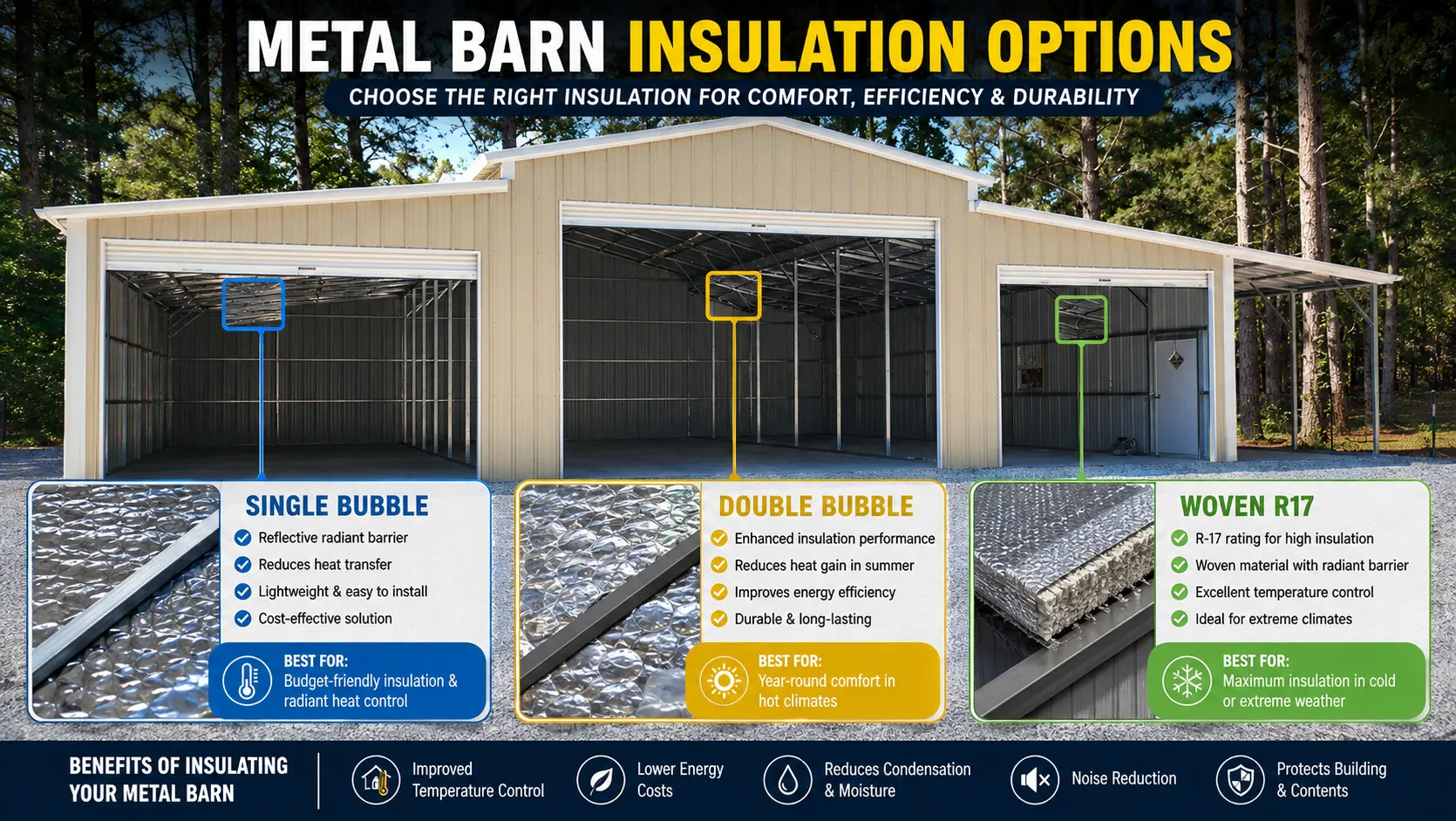
One of the most commonly used reflective insulation products is single bubble and double bubble insulation. These products consist of layers of reflective foil with one or two layers of air bubbles sandwiched between them.
They are lightweight, easy to install, and perform well by reflecting radiant heat away from the building. They also help reduce condensation when installed correctly.
However, bubble insulation offers limited thermal resistance compared to thicker insulation systems. While it works well for smaller buildings or mild climates, larger commercial barns often require insulation with a higher R-value for better year-round performance.
Fiberglass Insulation:
Fiberglass insulation has been used in commercial buildings for many years because of its affordability and good thermal performance.
It slows heat transfer effectively and is available in different thicknesses to suit various building requirements. However, if fiberglass becomes wet due to condensation or leaks, its performance can decline significantly. Proper installation and moisture protection are essential for achieving long-lasting results.
Spray Foam Insulation:
Spray foam expands after application, filling small gaps and creating an effective air seal. It provides excellent insulation and can help reduce air leaks throughout the building.
Although spray foam delivers strong performance, it is usually one of the more expensive insulation options. Professional installation is also recommended, which can increase the overall project cost.
Comparing Popular Metal Barn Insulation Options
Choosing insulation becomes easier when you compare the features side by side. Each option offers different advantages depending on your budget, climate, and the purpose of your building.
| Insulation Type | Thermal Performance | Moisture Resistance | Durability | Best For |
| Reflective Bubble Insulation | Moderate | Good | Good | Small storage buildings and mild climates |
| Fiberglass Insulation | Good | Moderate | Good when kept dry | General commercial buildings |
| Spray Foam Insulation | Excellent | Excellent | Excellent | Climate-controlled commercial spaces |
| Woven R17 Insulation | Excellent | Excellent | Excellent | Large commercial metal barns and agricultural buildings |
While every insulation system has its place, larger commercial buildings usually benefit from products that combine high thermal performance with long-term durability.
Read The Complete Guide on Spray Foam Insulation Vs. Fiberglass Insulation
Why Woven R17 Insulation Is Becoming a Preferred Choice
As commercial buildings continue to grow larger and energy efficiency becomes more important, many property owners are looking for insulation systems that combine durability with long-term performance. One solution that has gained significant attention is woven R17 insulation for metal buildings.
Unlike traditional insulation materials that may sag, absorb moisture, or require frequent replacement, woven insulation is designed to withstand demanding commercial environments while providing excellent thermal resistance.
Its durable woven facing also helps resist tearing during installation, making it a practical option for busy agricultural and commercial projects.
What Is Woven 17 Insulation?
Woven 17 insulation is a reinforced insulation system that combines high thermal performance with a strong woven exterior layer. This protective facing improves durability while helping the insulation maintain its shape over many years of use.
Because of its strength and reliable performance, it is increasingly being used in barns, warehouses, workshops, and other large metal structures where long-term efficiency is a priority.
In-Depth Guide for Woven R17 Insulation for Metal Buildings
Is Woven R17 Better Than Bubble Insulation?
This is one of the most common questions buyers ask when comparing insulation systems. The answer depends on how the building will be used.
If the goal is simply to reduce radiant heat inside a small storage structure, reflective bubble insulation may provide satisfactory performance.
However, larger commercial barns often require insulation that delivers stronger thermal resistance throughout the year. This is where comparisons such as woven R17 insulation vs double bubble become important. While both products help improve indoor comfort, woven R17 insulation generally provides better thermal performance for larger buildings that experience greater temperature fluctuations.
Instead of selecting insulation based only on price, it is important to evaluate the overall needs of the building, local climate, and expected long-term operating costs.
What Makes a Good Insulation Material?
Not every insulation product performs the same way. Some are designed mainly to reflect heat, while others reduce heat transfer by trapping air within their structure. Before choosing an insulation system, it is important to understand what makes one option better suited for commercial buildings than another.
Thermal Performance:
The primary job of insulation is to reduce heat flow between the outside and the inside of the building. Better thermal performance means the barn stays cooler during hot months and warmer during colder seasons without placing unnecessary strain on heating or cooling systems.
Moisture Resistance:
Metal buildings naturally experience condensation when warm, humid air comes into contact with cooler steel surfaces. If moisture is allowed to collect inside the building, it can lead to corrosion, mold, unpleasant odors, and damaged inventory.
A quality insulation system should help reduce moisture buildup while maintaining a dry indoor environment.
Durability:
Commercial buildings are expected to last for decades. The insulation should be able to withstand changing temperatures, humidity, and daily use without sagging, tearing, or losing its effectiveness over time.
Easy Maintenance:
A durable insulation system requires very little maintenance after installation. This helps reduce long-term ownership costs while ensuring the building continues performing efficiently year after year.
Matching the Right Insulation to Your Commercial Barn
Every commercial barn has different insulation needs. A building used to store expensive machinery requires different temperature control than one used to house animals or agricultural products. Choosing insulation based on how the building will be used helps improve comfort, protect your investment, and reduce long-term operating costs.
Livestock Barns:
Barns that house livestock need a stable indoor environment throughout the year. Sudden temperature changes can affect animal health, productivity, and overall comfort. The right insulation works together with proper airflow to maintain a more consistent indoor temperature, making it easier to protect livestock in extreme weather without relying entirely on heating or cooling equipment.
Equipment and Storage Barns:
Commercial barns used for tractors, machinery, tools, or inventory benefit from insulation that helps reduce condensation. Moisture can lead to rust, corrosion, and damage to valuable equipment over time. A properly insulated building also creates a more comfortable space for maintenance work and daily operations.
Workshops and Business Facilities:
If your metal barn serves as a workshop, fabrication area, or commercial workspace, insulation helps create a better working environment throughout the year. Employees can work more comfortably, while heating and cooling systems operate more efficiently because less energy is lost through the walls and roof.
Also Read: Single Bubble vs. Double Bubble vs. Woven R-17 Insulation: What Works Better?
Roof Design Also Influences Insulation Performance
Many buyers think insulation alone determines indoor comfort, but the roof design also plays an important role. A properly designed roof helps improve airflow, reduce moisture buildup, and support the insulation system throughout the life of the building.
For example, a Continuous roof barn allows rainwater to drain efficiently while creating a clean roof profile that works well with modern insulation systems. Better water drainage helps reduce long-term moisture issues and contributes to a healthier indoor environment.
Similarly, step down barns are designed with multiple roof levels to accommodate different building sections. When insulated correctly, these structures can maintain comfortable conditions across various work areas while allowing each section to serve a different purpose.
Insulation Works Best with Proper Ventilation
Even the highest-quality insulation cannot perform at its best if warm, moist air becomes trapped inside the building. That is why ventilation should always be considered alongside insulation rather than as a separate feature.
Many property owners ask how to improve ventilation inside a commercial metal barn. The answer usually involves combining roof vents, ridge vents, sidewall openings, and proper air circulation with a well-insulated building envelope. This balanced approach helps reduce condensation, improve indoor air quality, and maintain a more comfortable environment throughout the year.
Weather Conditions Should Guide Your Decision
Commercial barns are exposed to changing weather every day. Heat, rain, humidity, snow, and strong winds all place stress on the building over time. Choosing insulation without considering your local climate may lead to higher energy costs and reduced comfort.
If your property is located in an area that experiences frequent storms, it is also worth reviewing the metal barn wind ratings before selecting your building. A strong structural frame combined with quality insulation creates a more reliable building that performs well in demanding conditions.
Likewise, regions with long summers benefit from insulation that reduces heat transfer, while colder climates require products with higher thermal resistance to retain indoor warmth. So, many things go into deciding on the best metal barn insulation in 2026.
So, Make Every Season Easier with The Right Insulation
The best insulation for a commercial metal barn depends on how you plan to use the building, the climate in your area, and the level of performance you expect over the years. Looking only at the initial price may save money today, but choosing the right insulation can reduce energy costs, improve comfort, and protect your investment for decades.
Whether your barn is used for livestock, equipment storage, workshops, or commercial operations, insulation should never be treated as an afterthought. When paired with a well-designed steel structure and proper ventilation, the right insulation helps create a building that is comfortable, efficient, and built to perform in every season.
Frequently Asked Questions
Expand each item below to explore a few helpful answers before moving to the next blog post.
Related articles