Loading...
Installing a farm building, such as a metal barn, can be cost-effective in the long run. But what about the initial cost, the upfront price? Without knowing about it, you can’t decide on what features to add and what not. Often, you think of “How much the project will cost overall”. From the type of structure you choose to the land it sits on, every step has a cost attached to it.
That’s why understanding the full breakdown helps you plan better, avoid surprise bills, and choose the most cost-effective options. Don’t worry, we have made things easy for you so you can talk to a dealer with the right budget and confidence. We have talked about crucial factors to help you decide on the price. Let’s begin with the material cost.
Material Costs
Let’s start with the biggest foundation of your price: the materials used to build your barn. Metal barn strcutures vary in cost based on the type of steel, the framing strength, and the overall design.
1. Type of Metal Used
Most barns today are made with galvanized steel because it resists rust, harsh weather, mold, and fire. Thicker steel costs more but gives you better durability. That’s why many farms choose higher-gauge steel for framing and roofing, especially in snow-heavy states.
2. Gauge Thickness
Gauge refers to metal thickness.
- 12-gauge framing is stronger and more expensive.
- 14-gauge is more economical and works for normal weather regions.
3. Roof Styles
Roof design affects both protection and price.
- Regular roof: It is the most cost-effective roof style and costs less than other styles.
- Boxed-eave roof: This roof style falls on the higher end of the price spectrum but offers greater flexibility.
- Vertical roof: It is the strongest and most expensive due to extra support and vertical panels that shed rain and snow easily.
Together, these material choices make up a large chunk of your upfront cost. So, when you compare prefab barns, always check what type of steel and roof is included.
Some Regular Style Metal Barn Prices At a Glance:
These are steel frame prices of a regular roof metal barn. Since it’s the simplest structure, knowing its cost will help you understand at least this much money you have to spend. If you want to tailor the building and add features accordingly, the cost might increase.
| Regular Style | Estimated Prices |
|
36×21 |
$3170 |
|
36×26 |
$3895 |
|
36×31 |
$4610 |
|
36×36 |
$5225 |
| 42×21 | $3270 |
Size and Dimensions Impact on Cost
Another major price factor is size. Larger structures need more materials, and they require a big budget. Moreover, you will need a larger number of labourers and foundation work that might take long hours. All these things naturally increase the price.
1. Small Barns
Common sizes: 18×20, 20×20
These work well for small storage or a couple of animals. They are the most budget-friendly option.
2. Medium Barns
Common sizes: 24×30, 30×40
These barns serve as multipurpose farm buildings for feed storage, tractors, tools, and a few stalls.
3. Large Barns
Common sizes: 40×60, 60×70
These are ideal for large farms or horse barns. They cost more but give the space needed for equipment and livestock. Remember that the right barn size for horses isn’t always the biggest one; it’s the size that fits your herd, equipment, and future plans without stretching your budget.
Customization and Add-Ons
So, once you have selected the size, it’s time for add-ons. It is where the next cost layer comes from. The more features you add, the higher the price goes. However, some upgrades barely change the price, while others can double it. That’s why it’s smart to plan add-ons ahead.
Common Custom Add-Ons:
- Windows and walk-in doors
- Roll-up and sliding barn doors
- Ventilation upgrades
- Insulation (big cost but big comfort benefits)
- Lean-tos for shaded storage
- Interior walls and stalls
- Color upgrades
- Heavier framing or certified engineering for strong wind or snow regions
If you are unsure what to add, start by asking yourself:
“What will this barn do for me every single day?”
This helps you pick upgrades that matter and skip ones that don’t.
Site Preparation Costs
Before your barn arrives, the land must be ready for installation. Many first-time buyers forget this part, but it’s something you will need to budget for.
Common Site Prep Tasks
- Clearing trees, shrubs, and rocks
- Leveling and grading
- Adding drainage (especially in rainy areas)
- Removing old structures
Once the land is ready, you will need to pick a foundation type. Each has its price impact.
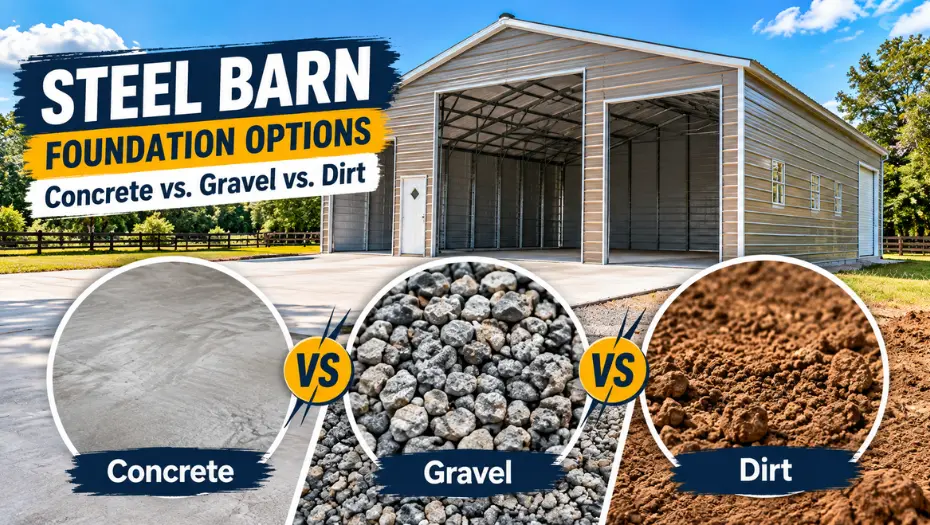
Foundation Options
The foundation is a crucial part of a barn. There is no need to talk about its benefits, as you know already. Here are some options you can go with.
- Gravel pad: cheapest, good for storage barns
- Concrete slab: most stable and durable, higher cost
- Concrete piers: mid-range, good for uneven land
We all know that site preparation is crucial; otherwise, the structure will not stand firm for a long time. This is why you should carefully choose the foundation options.
Labor and Installation Costs
Now that your site is ready, the next cost comes from installation. Pricing for installation varies from region to region and depends on how complex your barn is.
Factors Affecting Installation Cost:
- Barn size
- Number of crew members needed
- Weather conditions
- Height of the structure
- Amount of customization
- Location and distance
Some companies include installation in the barn price, while others charge separately. Therefore, you should clarify this early to avoid any confusion later. But choosing professional installation ensures durability and safety.
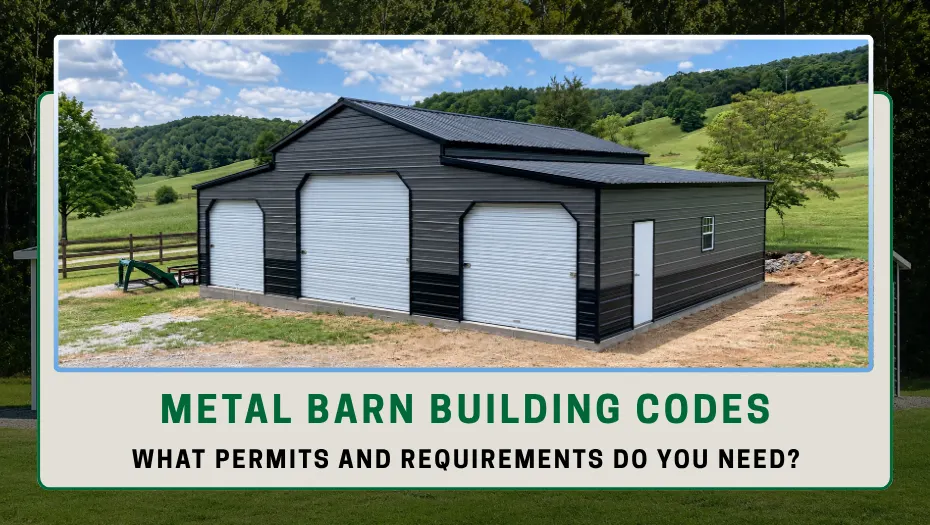
Permits and Local Regulations
This is the “paperwork cost” many people forget. Every region has its rules, and some areas require permits for all barn structures.
Here’s what you may need to budget for:
- Permit fees (vary widely by county)
- Engineering certifications for wind and snow
- Inspection fees
- Extra upgrades required by local codes
To avoid delays, ask your local office about requirements before buying.
Delivery and Transportation Fees
Once you place the order, the barn has to be delivered to your site. Delivery fees depend on distance, fuel rates, and whether your installation area is easily accessible.
Possible Delivery Charges:
- Fuel surcharge can be applicable
- An extra fee if you are far from the dealer
- Charges for navigating narrow or rough roads
- Fees for special lifting equipment
While some companies offer free delivery within a certain radius, always confirm before signing the order.
Total Cost Examples
Here are sample cost scenarios to help you understand what people typically pay:
1. Basic Storage Barn
- Size: 20×20
- Minimal customization
- Gravel foundation
- Estimated range: Low-cost tier
2. Medium Barn With Lean-To
- Size: 30×40
- One lean-to and two roll-up doors
- Concrete slab
- Estimated range: Mid-tier
3. Large Customized Barn for Horses
- Size: 40×60 or larger
- Stalls, insulation, ventilation, and interior walls
- Concrete slab
- Estimated range: High-tier
These examples will help you compare your needs with real spending. So, consider them for making better decisions.
What to Ask Before Getting a Quote
This is a very important step, especially for first-time buyers. Often you think you know all the details, but can’t express or tell to metal building dealer exactly what you want. You often forget key questions and end up surprised later. That’s why you should make a list of what to ask in a quote; it will leave no room for confusion. Ask all the questions related to site preparation, customization options, cost, delivery time, and steel gauge, because everything affects the final price of a prefab barn.
Your Clear Path to Budgeting the Perfect Metal Barn
So, it was all about the cost breakdown. Now you must be able to decide on the exact budget for your metal barn. Since it’s a big investment, giving some thought and analyzing what we have discussed above will make things easy for you to decide. When you understand all the parts clearly, you can design a barn that fits your land, your livestock, and your long-term farming goals without overspending. Whenever you are ready, you can walk into the barn-buying process with clarity, confidence, and a complete understanding of what you are paying for.
Related articles