August 14, 2026



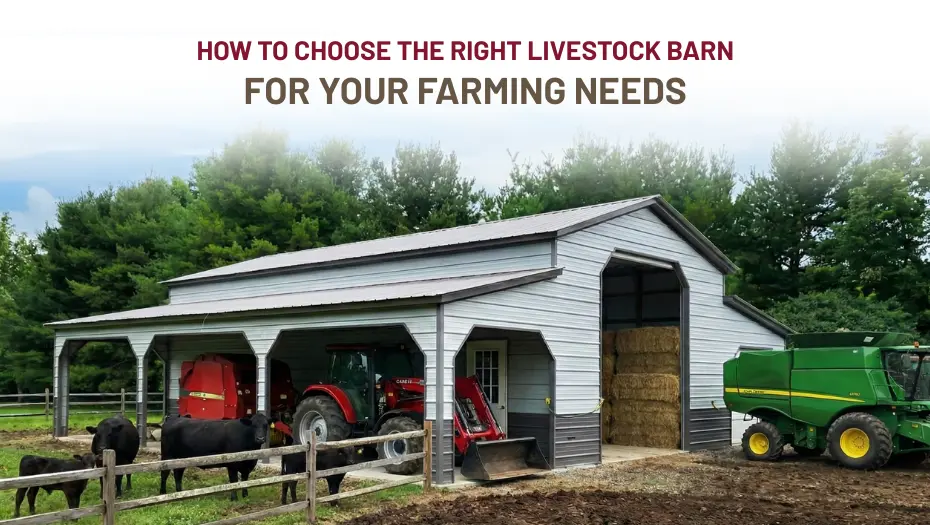
Your farming needs might be a few today, but they can grow in the future. If you run a livestock business, needs can be uncertain, and many. This is why a well-designed livestock barn is a must. It will provide comfort for your animals, such as horses, cattle, chickens, and sheep, and for the workers who handle them. Like that, you can handle the daily tasks of operating a ranching business efficiently.
But you can ensure the benefits only when you choose the right livestock barn building. We have simplified the process for you to select the best barns for livestock. So, ready to explore this practical guide and ensure what best suits your needs.
Before looking at designs or prices, think about your animals first. Every animal has unique space, light, and temperature requirements. The right barn should match how animals live, move, and rest; only then can you find the best animal barns for sale.
|
Animal |
Space Type | Key Need |
Example Setup |
|
Cattle |
Open barn with good airflow | Ventilation, shade |
Three-sided shed with open south side |
|
Horses |
Enclosed stable | Clean air, dry flooring |
Partitioned stalls with rubber mats |
|
Goats |
Dry, well-lit space | Draft-free shelter |
Small barn with raised floor |
|
Poultry |
Insulated and bright barn | Temperature control | Barn with automatic vents |
Tip: Observe how your animals behave during extreme weather. That will show whether they need more airflow, insulation, or shade so that you can decide on the best barns for livestock.
After you have analyzed your animal’s needs, you can start finding the right livestock. Here are the best ways that we have curated below.
1. Pick the Right Building Material
The material you choose affects everything. It involves the building’s cost, strength, maintenance, and service life. A barn that’s easy to clean and strong enough to handle daily, will save you years of effort. Here are the pros and cons of selecting different materials.
|
Material |
Pros |
Cons |
|
Wood |
Classic look, easy to modify |
High maintenance, termite risk |
|
Concrete |
Strong and fireproof | Expensive, not flexible |
|
Fabric |
Quick setup, cost-effective | Shorten lifespan |
| Metal Barns | Durable, pest-free, low-maintenance | Can get hot without insulation |
Example: If a farmer in Texas switches from a wooden barn to a metal one. Their structure can stay pest-free, needs no repainting, and handles summer heat far better.
2. Plan a Smart Layout
Once you have decided on the material, it’s time to plan how everything fits inside. A smart layout keeps the barn functional, clean, and easy to move around in. You need to consider some points while deciding on the barn’s layout.
Keep in mind:
Example: If you have 20 dairy cows, design a milking area near the storage area. It will save you several steps every day, and in farming, you understand better than anyone that every step counts.
3. Don’t Overlook Airflow and Temperature
Air circulation can make or break a livestock barn structure. Animals in poorly ventilated barns often suffer from heat stress or respiratory issues. Good airflow keeps them calm and healthy entire year.
Ways to improve ventilation:
If you live in a cold area, insulate your farm building’s walls and roof. It will help maintain warmth and save on energy costs. If you install metal livestock barns, choose the proper insulation to keep animals comfortable in summer.
4. Think of Roof Design
Your barn’s roof is the first protective factor against nature for your animals. But it is more effective when you choose the right roof style. Then it better protects everyone and everything inside from wind, snow, and rain while improving the barn’s lifespan.
Popular roof types:
5. Plan for Storage and Future Growth
When you run a ranching business, you have to handle various things. Sometimes you need tools, sometimes ploughing harvesting machines. You need a separate, well-thought-out space to keep these things safe. Apart from machines and animals, you will need space for hay, feed, and maybe a small office.
Consider adding:
Pro Tip: Build a barn structure slightly larger than your current needs. Most farmers expand faster than they plan. If you also have the same plans, go for building material that allows easy expansion. In this case, farm metal buildings are the best investment because steel frames are flexible and can be expanded easily.
6. Choose Easy-to-Maintain Materials
No one wants to spend weekends fixing the barn. Choosing materials that handle moisture, dust, and animal activity saves you from frequent repairs. So, to find such a space, you need to check whether the structure is flexible enough, affordable, and still requires little upkeep. But you still have to take care of a few things.
Maintenance checklist:
Example: If you want to install cattle buildings, you already understand how difficult it is to deal with them. They need enough space to avoid risks like kicking, goring, and crushing. Most importantly, keeping them away from diseases caused by an unhygienic space. Steel structures are popular because they resist rust, termites, and rot, and provide ample clean space for all the cattle.
7. Set a Realistic Budget
It’s easy to underestimate barn costs. Beyond the structure, you must account for site prep, lighting, and plumbing. Moreover, consider other factors that will affect the final price of your agribusiness structure.
Include these costs:
Example: A goat barn (30×40 ft) may cost $15,000–$25,000. A larger cattle barn with feeding areas can go above $40,000, depending on design and materials. Moreover, it’s always worth budgeting extra for ventilation and insulation; they pay off in animal health.
8. Follow Local Building Codes
Every area has specific rules about livestock structures; thus, you need to focus on legal and ethical requirements. These rules keep animals safe and protect your investment from unnecessary headaches because of legal issues. You can keep focusing on your business growth rather than getting stuck in legal terms.
Check things for barn installation:
But how will you know it all? For this, contact your local building office; they will inspect the site and let you know everything. It saves time, money, and future legal trouble.
9. Work with a Trusted Barn Builder
Even with the best plan, a poor build can ruin everything. Partnering with experienced builders ensures your barn meets safety, quality, and comfort standards. Additionally, you can tailor the space, keeping creative uses of steel buildings in mind, so you don’t need a different building for other activities.
Professional barn dealers can:
Example: Let’s say you manage a small mixed farm:
A simple yet efficient layout could be:
|
Section |
Size |
Purpose |
|
Cattle Area |
25×40 ft |
Feeding + resting |
|
Goat Shelter |
20×30 ft |
Milking + shade |
|
Poultry Area |
15×20 ft |
Nesting + roosting |
|
Storage |
10×15 ft |
Hay, feed, and tools |
|
Office Corner |
8×10 ft |
Record keeping |
This layout keeps movement easy, saves time, and ensures all animals stay comfortable. However, the dimensions can vary because different business owners have different requirements related to barn size.
Choosing the right livestock barn is one of the smartest investments a farmer can make. It’s not just a shelter, it’s a system that supports health, efficiency, and growth. Think about your animals first, plan your layout well, and pick materials that match your weather. Whether you choose wood, concrete, or metal, what matters most is how it aligns with your long-term goals.
This is why only a barn built with thought and care will protect your animals. It will lighten your workload and serve your farm for years to come.