May 20, 2026



Have you ever noticed modern farm layouts? You must have noticed the design that keeps popping up; it’s a step-down barn. Well, this type of structure is not new, but it has been getting popular for quite some time, especially when constructed in steel frames. Nowadays, people want storage spaces and shelters that are practical, flexible, and easy to manage, and a steel step-down barn fits these needs.
Step-down barns stand out because they solve a simple challenge: “How do I create different zones under one roof without building separate barns?” And that question is exactly what leads many property owners to explore this design.
Before you decide whether this structure is right for you, it helps to first understand what a step-down barn really looks like.
Let’s keep it simple for everyone. If you have not heard of this style of barn, learn below.
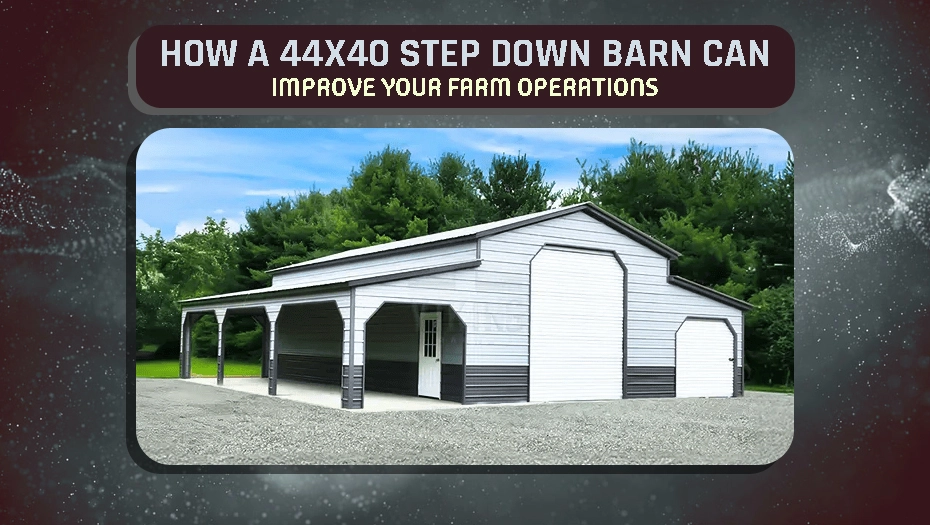
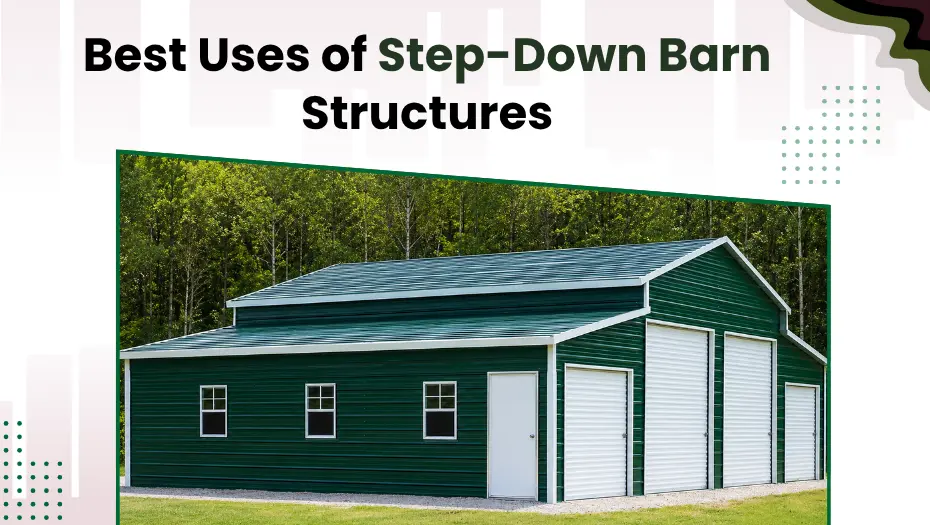
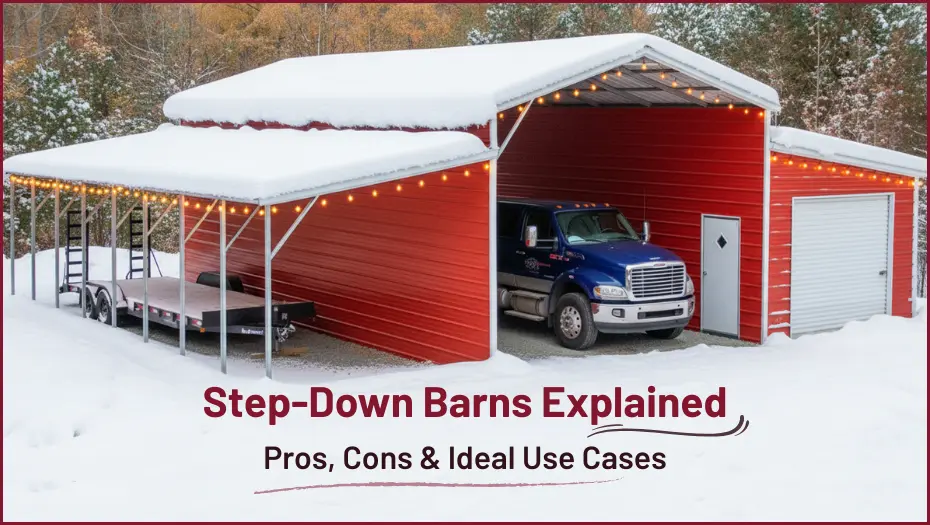
A step-down barn is a structure with at least two sections of different heights. The roofline “steps down” from a taller part to a shorter part, creating a tiered appearance. This drop in height is not just for looks; it serves a purpose.
The taller section might be used for animals or large equipment, while the shorter side often becomes a storage area, feed room, workshop, or tack room. This simple height difference gives owners more control over how each area is used.
People often ask short questions like, “Is a step-down barn good for horses?” or “Can one barn manage both equipment and animals?” This design is a popular answer to both. Once you understand the basic idea, it’s easier to see how these barns are constructed.
Because the structure includes separate height levels, builders have to plan the framing carefully. The taller part usually has a higher roof pitch and more interior space, while the lower part uses shorter framing members. When switching between heights, the roofline changes smoothly, giving the barn its stepped appearance.
Step-down barns can be built using wood or steel. Steel is often chosen because it’s strong and lasts longer with less maintenance. This is also where one common query arises: “Why does steel building gauge matter?” The answer is simple because thicker gauge steel offers better strength, especially for roofs and sidewalls. When you have different height sections, a stronger gauge helps support the weight distribution more reliably. Now that the structure is clear, let’s move into the good part: why people love step-down barns.
Step-down barns are also called Carolina barns because they also feature the same designs. The structure offers several benefits that make it appealing for farms, ranches, and multi-use properties. Here are the main advantages.
1. Better Ventilation: The higher central section allows warm air to rise while cooler air moves through the lower sections. This helps maintain a comfortable interior environment without extra equipment. Good airflow is especially helpful for livestock, tools, and feed.
2. Flexible Layout: Because each section has a different height and purpose, owners can divide the barn in a way that meets their specific needs. Taller areas can handle horses, cattle, or tall machinery, and smaller areas can hold supplies, feed, or workshops.
3. More Natural Light: A step-down look of the barn allows windows, vents, and openings to be place at different heights. This type of layout and design reduces the amount of artificial light you need throughout the day.
4. Cost Savings: Since the shorter side requires fewer materials, you can lower the overall cost compared to installing a full-height barn across the entire span. So, you get the space without needing to pay for unnecessary height.
5. Smooth Roof Water Flow: With the vertical roof, this structure can help direct water away from high-use areas. This reduces puddles and mud near entrances. These pros show why step-down barns work for so many property owners. However, there are also important things to consider before finalizing your choice.
Even though step-down barns are useful, they’re not perfect for every situation. Here are a few drawbacks to think about.
1. More Roof Planning: Different roof levels mean more joints, transitions, and angles. If the builder doesn’t get the alignment right, water can settle where it shouldn’t.
2. Drainage Must Be Correct: The stepped roof design needs proper gutters, downspouts, and grading to keep water flowing away from the structure.
3. Insulation Can Be Tricky: Since the structure is not straight and all three units are at different heights, temperature differences are found in the building. So, insulation is tricky in extreme weather conditions.
4. Snow Load Considerations: In areas with heavy snowfall, the step between roof levels must be designed carefully to prevent buildup. Some sections may need extra support.
Are step-down barns suitable for all people? They are perfect for people who want a single structure to meet their various needs for storage. This design works well for people who want flexibility, airflow, and space separation all in one place. If that sounds like you, a step-down barn might be a great fit.
Here are some examples.
There are many people already using this prefab barn for different reasons. Explore how they are using it and understand how it can benefit you as a farm building and for other purposes.
Now let’s explore some common use cases so you can picture this design in real life.
Step-down barns really stand out when you need different types of spaces under one roof. The stepped design makes it easy to create “zones” that match your daily routine. Here are the situations where they work best, and why:
1. Horse Barns With Organized Layouts: These barns are very popular among horse owners because the taller section can hold comfortable stalls with plenty of headroom and airflow. The shorter section becomes a natural space for tack rooms, feed storage, wash bays, or grooming areas. Because the height changes create a visual separation, it’s easier to keep clean areas clean and feed areas dry. Everything stays close, but not cramped.
2. Equipment Storage plus Repair Area: Many people who run farms or landscaping businesses need a place for tractors, mowers, ATVs, and tools. The tall section of a step-down barn easily handles big machinery. The lower side becomes a repair zone, tool storage, or even a small mechanical workshop. This layout keeps dirty work away from clean equipment and gives you better control over space.
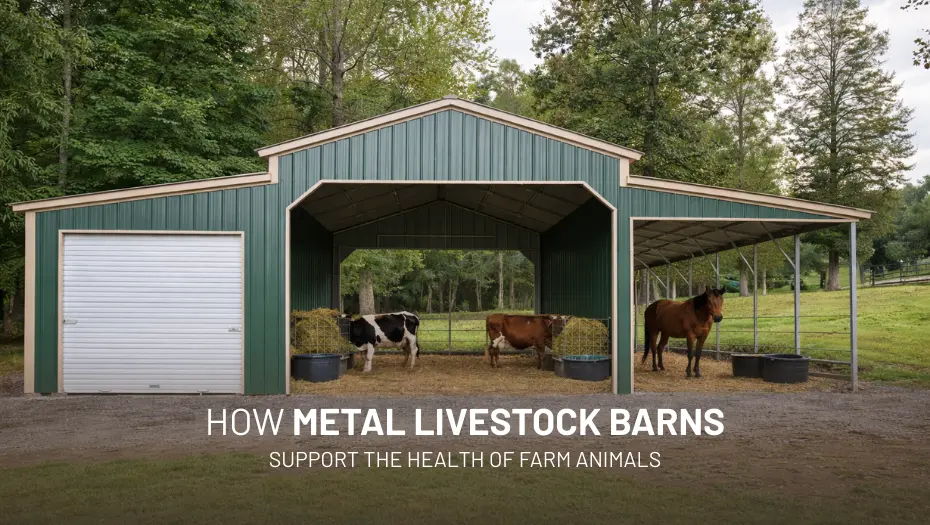
3. Livestock Shelter plus Feed or Supply Storage: If you raise animals like goats, sheep, poultry, or even cattle, you can use the tall side for shelter and the short side for feed, bedding, or healthcare supplies. The height difference naturally separates the two areas, which helps with hygiene, smell control, and easy feeding routines.
4. Hobby Farms and Homesteads: Hobby farmers often need a mix of everything: a space for small animals, a corner for gardening tools, and a room for storing hay. And, many other things are needed in an agribusiness. Since the step-down barn already has built-in sections, it’s easy for you to assign each part to a different task. This way, you will not need to install three different spaces for three different functions.
5. Storage for Seasonal Items: Some property owners simply want organized storage. The high section is perfect for tall items like boats, campers, trailers, or big farm tools. The short section works great for boxes, seasonal decorations, lawn care items, or outdoor furniture. This setup helps keep things sorted and easy to find.
6. Mixed-Use Rural Businesses: Small rural businesses like feed suppliers, plant nurseries, or repair shops also use step-down barns because they can mix office space, display areas, workshop corners, and storage all in one building. The stepped layout keeps the business side neat while still handling heavy-duty work.
When you think of installing a farm structure, whether for the first time or any time, cost is the major concern and a crucial factor to consider. Often, a higher initial cost is a concern for one, while high maintenance is a concern for others. Well, there are many factors that affect the final cost of a metal building. Here are the key ones to check out.
Costs can vary widely, so planning early helps you avoid surprises. And just like earlier, short questions from buyers often pop up here too, like “Is it cost-effective to build a step-down barn or a regular barn?” The answer depends on the design details, but step-down barns often save money because you don’t pay for full-height across the entire structure. Check out more about metal building prices for more clarity. Here you will get to know about price differences due to roof styles in steel barns.
So, for a mix of practicality and flexibility, this structure fits your needs perfectly. No need to install three different barns for three distinct tasks. Whether the tasks are related to farming or completely different, this one building is enough. The benefits of steel and the step-down design really make a great difference. However, buy your steel barn from a trusted dealer because poor-quality materials can hinder you from enjoying all the benefits.